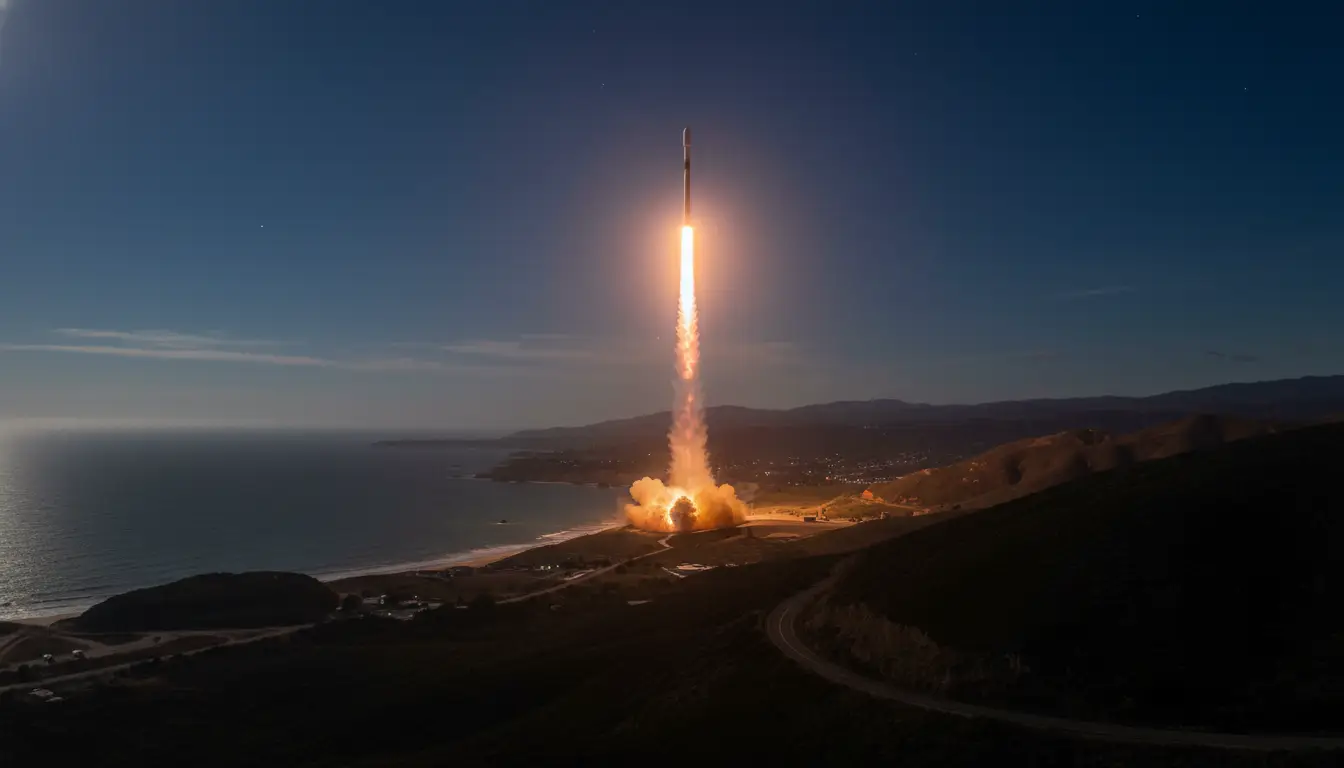
SpaceX Falcon 9 Successfully Launches Starlink Group 17-41
Recap of the SpaceX Falcon 9 launch from Vandenberg Space Force Base on Saturday, May 30, 2026. Mission successful.
SpaceX successfully launched another batch of Starlink satellites from California's Central Coast on Saturday evening, marking yet another milestone in the company's ambitious internet constellation project. The Falcon 9 Block 5 rocket lifted off from Space Launch Complex 4E at Vandenberg Space Force Base at approximately 7:45 PM PDT, carrying 24 satellites destined for low Earth orbit.
Spectators along the coast were treated to a spectacular sight as the rocket's nine Merlin engines ignited, illuminating the evening sky with a brilliant orange glow. The launch proceeded flawlessly through each phase, with the first stage separating cleanly and the second stage continuing its journey toward the target orbit. Mission controllers reported nominal performance throughout the ascent, and the payload fairing deployed on schedule to reveal the carefully packed satellites within.
This mission, designated Starlink Group 17-41, represents SpaceX's continued effort to expand its revolutionary space-based internet communication system. The Starlink mega-constellation aims to provide high-speed broadband access to underserved regions worldwide, particularly in remote areas where traditional internet infrastructure remains limited or nonexistent. Each satellite in this batch will join thousands of others already in orbit, working together to beam internet connectivity down to users equipped with specialized ground terminals.
Following a textbook launch sequence, the 24 satellites successfully reached their intended low Earth orbit approximately 65 minutes after liftoff. The spacecraft will now undergo a series of automated maneuvers to reach their operational positions within the constellation, a process that typically takes several weeks to complete. Once fully deployed and tested, these satellites will begin providing coverage as part of the expanding global network.
The first stage booster, making its seventh flight, executed a picture-perfect landing on the autonomous spaceport drone ship stationed in the Pacific Ocean. This successful recovery allows SpaceX to refurbish and refly the booster on future missions, significantly reducing launch costs and supporting the company's rapid launch cadence.
Space enthusiasts eager to witness the next launch from Vandenberg won't have to wait long, as SpaceX has another Falcon 9 mission scheduled for mid-June. The company continues to maintain an aggressive launch schedule from both coasts as it works toward completing the Starlink constellation while serving commercial and government customers.
Related Launches

More Articles
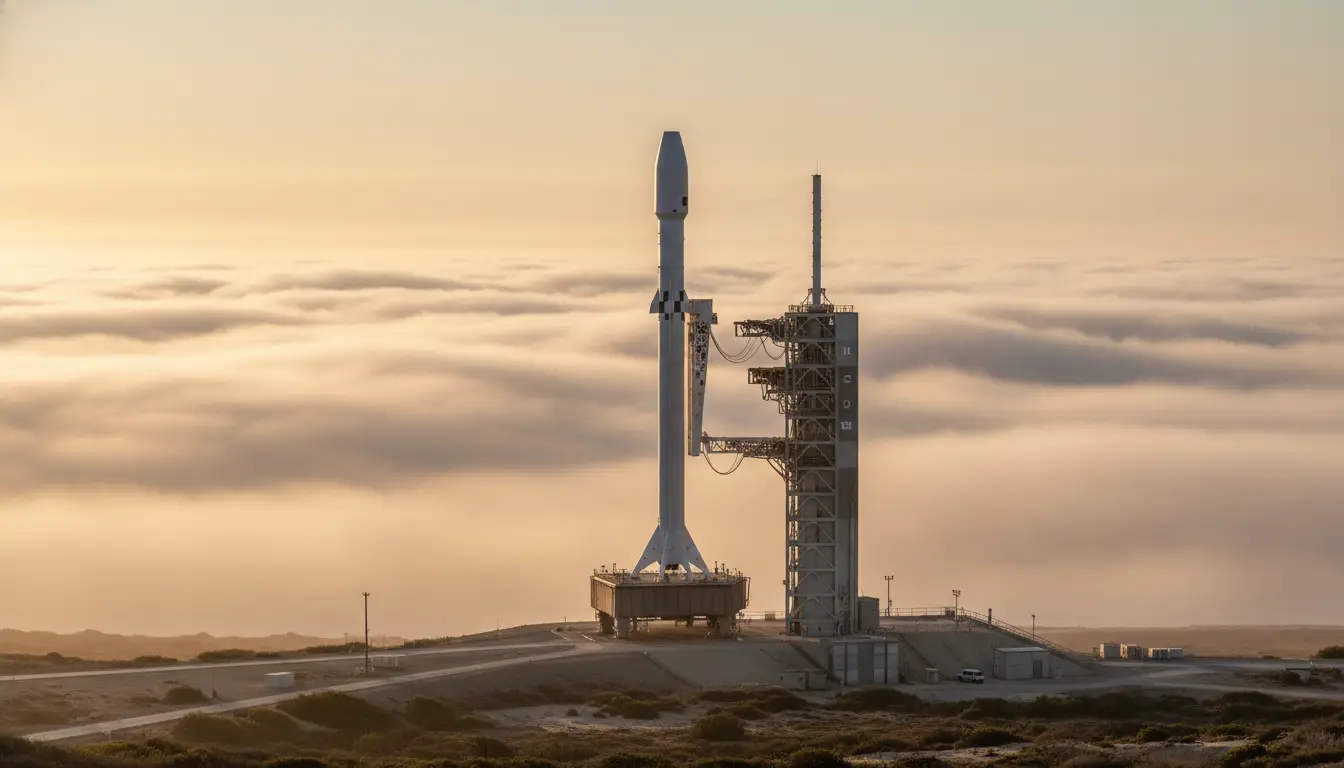
Falcon 9 Set to Launch Starlink Group 17-47 on June 3
Everything you need to know about the upcoming SpaceX Falcon 9 launch from Vandenberg Space Force Base, targeting Wednesday, June 3, 2026.
Launches Jun 3, 2026
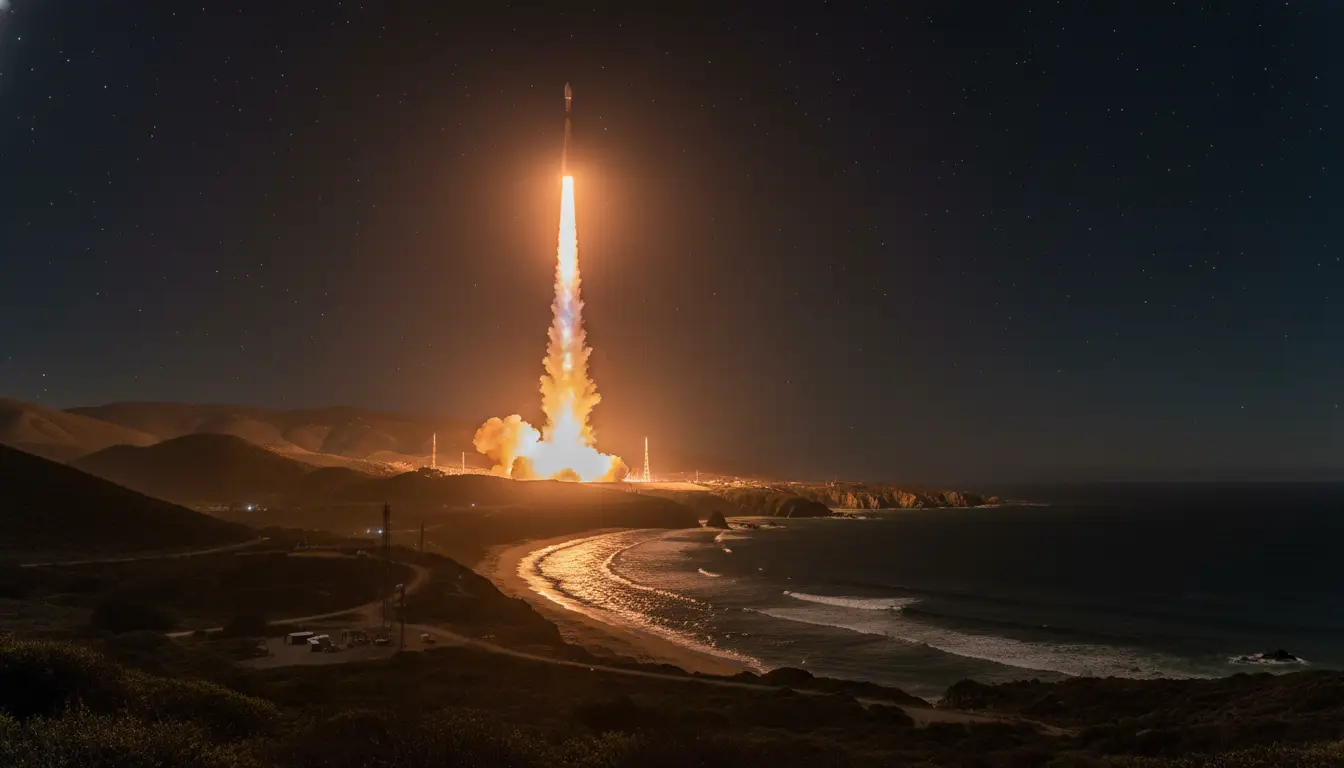
SpaceX Falcon 9 Successfully Launches Starlink Group 17-37
Recap of the SpaceX Falcon 9 launch from Vandenberg Space Force Base on Tuesday, May 26, 2026. Mission successful.
Launched May 26, 2026
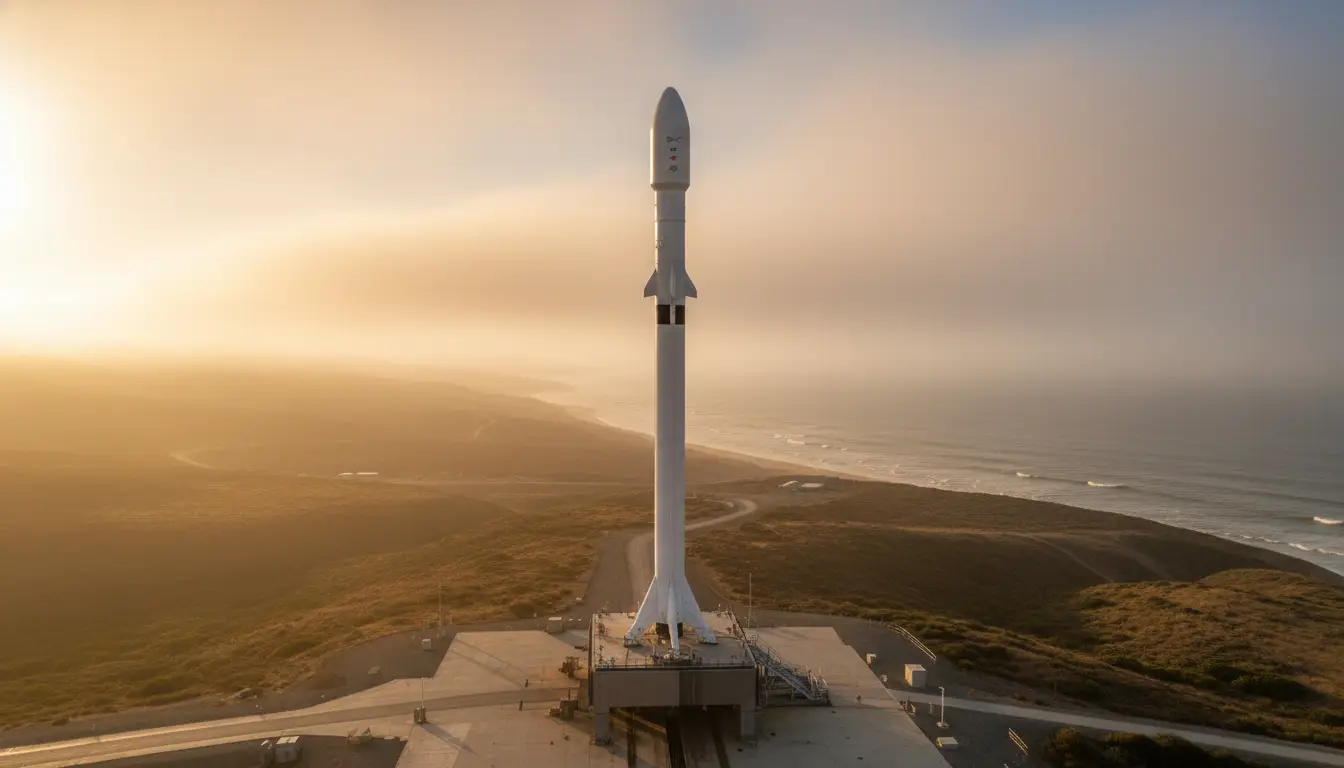
Falcon 9 Set to Launch Starlink Group 17-44 on June 10
Everything you need to know about the upcoming SpaceX Falcon 9 launch from Vandenberg Space Force Base, targeting Wednesday, June 10, 2026.
Launches Jun 10, 2026