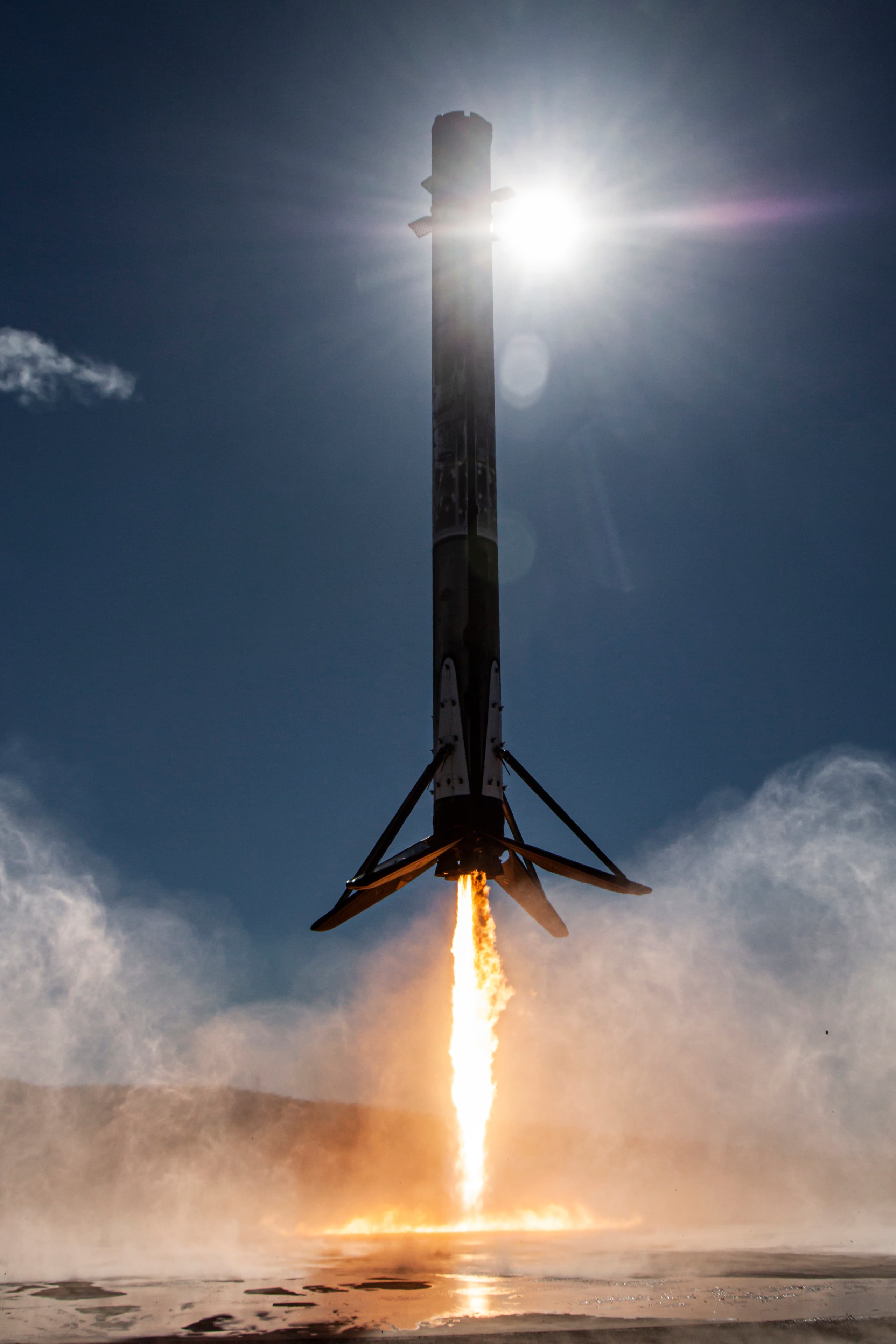
B1071
With 32 flights and a perfect landing record, booster B1071 has become one of SpaceX's most reliable Falcon 9 cores—and it's flying from the 805.
Total flights
35
Vandenberg
5
Landings
35/35
Since
2022
At a Glance
Booster B1071 is a Falcon 9 Block 5 first stage built by SpaceX, currently holding one of the more impressive flight records in the company's active fleet. Since its debut on February 2, 2022, carrying the NROL-87 mission for the National Reconnaissance Office, this core has completed 32 missions with 32 successful landings. That perfect recovery rate isn't just a statistical curiosity—it represents the maturation of reusable rocketry from experimental gamble to industrial routine.
The booster remains active as of spring 2026, with two launches completed from Vandenberg Space Force Base at Space Launch Complex 4E. Both missions supported Starlink Group 17 constellation builds, part of SpaceX's ongoing effort to blanket the planet in broadband coverage. For residents of the 805, B1071 is one of several workhorses now cycling through our coastal launch pads with the regularity of freight trains, minus the tracks and plus the occasional sonic boom.
The Career of B1071
The story of B1071 began not at Vandenberg but on the opposite coast, lifting a classified payload for the NRO from Kennedy Space Center. That first flight set the tone: B1071 would become a utility player, the kind of booster that doesn't grab headlines but keeps the launch manifest moving. Over the following four years, the core accumulated flights at a pace that would have seemed fantastical a decade ago, when the idea of reusing a rocket stage more than once was still subject to industry skepticism.
Its first Vandenberg appearance came on March 13, 2026, when it launched Starlink Group 17-31 from SLC-4E. The mission was textbook—liftoff in the pre-dawn hours, stage separation over the Pacific, booster recovery on the droneship Of Course I Still Love You somewhere west of Point Conception. For anyone watching from Refugio or Jalama Beach, the arc would have been familiar by now: the bright climb, the separation flash, the fade as the second stage pushed on toward orbit. Forty-six days later, on April 29, 2026, B1071 returned to the same pad for Starlink Group 17-36, its 33rd flight and second consecutive Vandenberg mission.
This clustering at Vandenberg reflects broader logistical realities. SpaceX rotates boosters between coasts based on turnaround schedules, payload requirements, and launch cadence. B1071's back-to-back assignments suggest it was in the right maintenance window at the right time, paired with missions that didn't demand a brand-new core. The booster has spent most of its career on Starlink duty, the bread-and-butter missions that fund SpaceX's ambitions and keep the reuse cycle spinning.
Vandenberg Missions
On March 13, 2026, B1071 lifted Starlink Group 17-31 from SLC-4E in its 32nd flight, a successful mission that added another batch of satellites to the growing constellation. The booster returned safely to the droneship, maintaining its unblemished recovery record. Six weeks later, on April 29, 2026, the core launched again from the same pad with Starlink Group 17-36, marking flight number 33 and its second Vandenberg departure in rapid succession.
Landings and Recovery
Most Falcon 9 missions from Vandenberg follow a southerly trajectory over the Pacific, which means the booster typically descends onto Of Course I Still Love You, the autonomous droneship stationed a few hundred miles offshore. The ship waits in pre-positioned coordinates, its thrusters holding station against swells, while the booster executes its re-entry burn, grid-fin adjustments, and final landing burn. By the time the core touches down, it has traveled hundreds of miles downrange, and the droneship begins the slow journey back to port—usually San Pedro or Port Hueneme—where the booster is offloaded, inspected, and prepped for its next turn.
A smaller subset of Vandenberg launches perform return-to-launch-site landings at Landing Zone 4, the concrete pad adjacent to SLC-4E. These are the flights that wake up Lompoc. The booster flips, burns back toward the coast, and descends over the base, producing a double sonic boom that rattles windows from Surf to Orcutt and occasionally startles tourists in Solvang who didn't check the launch schedule. B1071 has not yet performed an RTLS landing at Vandenberg, but given its flight rate and the variability of mission profiles, it remains a possibility for future assignments.
Still in the Game
With 32 landings and 32 flights, B1071 sits comfortably in the middle tier of SpaceX's most-flown boosters, well past the point where reuse skeptics would have predicted structural fatigue or cascading failures. The booster is active, flight-proven, and still drawing assignments. For those keeping score from the 805, that means more launches from SLC-4E, more pre-dawn light shows over the Channel Islands, and more reminders that Vandenberg has become one of the busiest spaceports in the country. B1071 won't be the last booster to cycle through our coastal fog, but it has earned its place in the fleet—and in the logbooks of anyone who watches the sky from the Central Coast.
Vandenberg Missions Flown by B1071
- #5
Falcon 9 Block 5 | Starlink Group 17-48
Jul 10, 2026Space Launch Complex 4ESuccess - #4
Falcon 9 Block 5 | Starlink Group 17-44
Jun 11, 2026Space Launch Complex 4ESuccess - #3
Falcon 9 Block 5 | CAS500-2 & Others
May 3, 2026Space Launch Complex 4ESuccess - #2
Falcon 9 Block 5 | Starlink Group 17-31
Mar 13, 2026Space Launch Complex 4ESuccess - #1
Falcon 9 Block 5 | Starlink Group 17-32
Feb 2, 2026Space Launch Complex 4ESuccess
Frequently Asked
At a Glance
Serial
B1071
Configuration
Falcon 9 Block 5
Manufacturer
SpaceX
First flight
Feb 2, 2022
Most recent
Jul 10, 2026
Key Facts
- 32 total flights since February 2022
- 32 successful landings from 32 attempts
- Active status—most recent flight March 13, 2026
- First launched on NROL-87 mission
- 2 Vandenberg launches from SLC-4E
- Falcon 9 Block 5 configuration