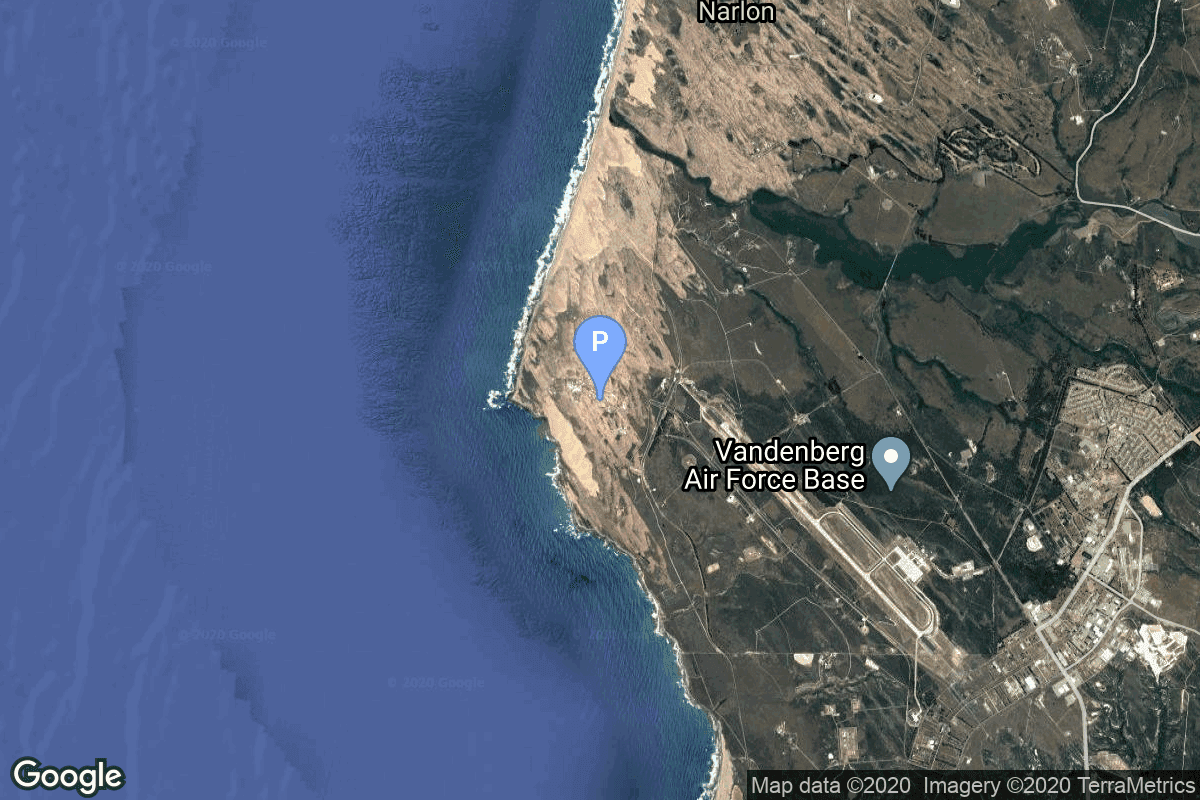
Launch Pad
SLC-2W — Space Launch Complex 2W
Once home to 261 Delta and Thor missions, Space Launch Complex 2W now serves as Firefly Aerospace's West Coast gateway to orbit.
Total Launches
99
Orbital Attempts
99
Active
2026
Location
Vandenberg SFB
At a Glance
Space Launch Complex 2W sits on the western edge of Vandenberg Space Force Base, roughly five miles north of downtown Lompoc and visible from most of the northern 805 on a clear day. Since 2018, the pad has belonged to Firefly Aerospace, the Cedar Park, Texas-based company flying its Alpha rocket from this historic complex. Before that transition, SLC-2W sent 261 Delta, Thor-Agena, and Delta II rockets into polar orbit over more than five decades of continuous service.
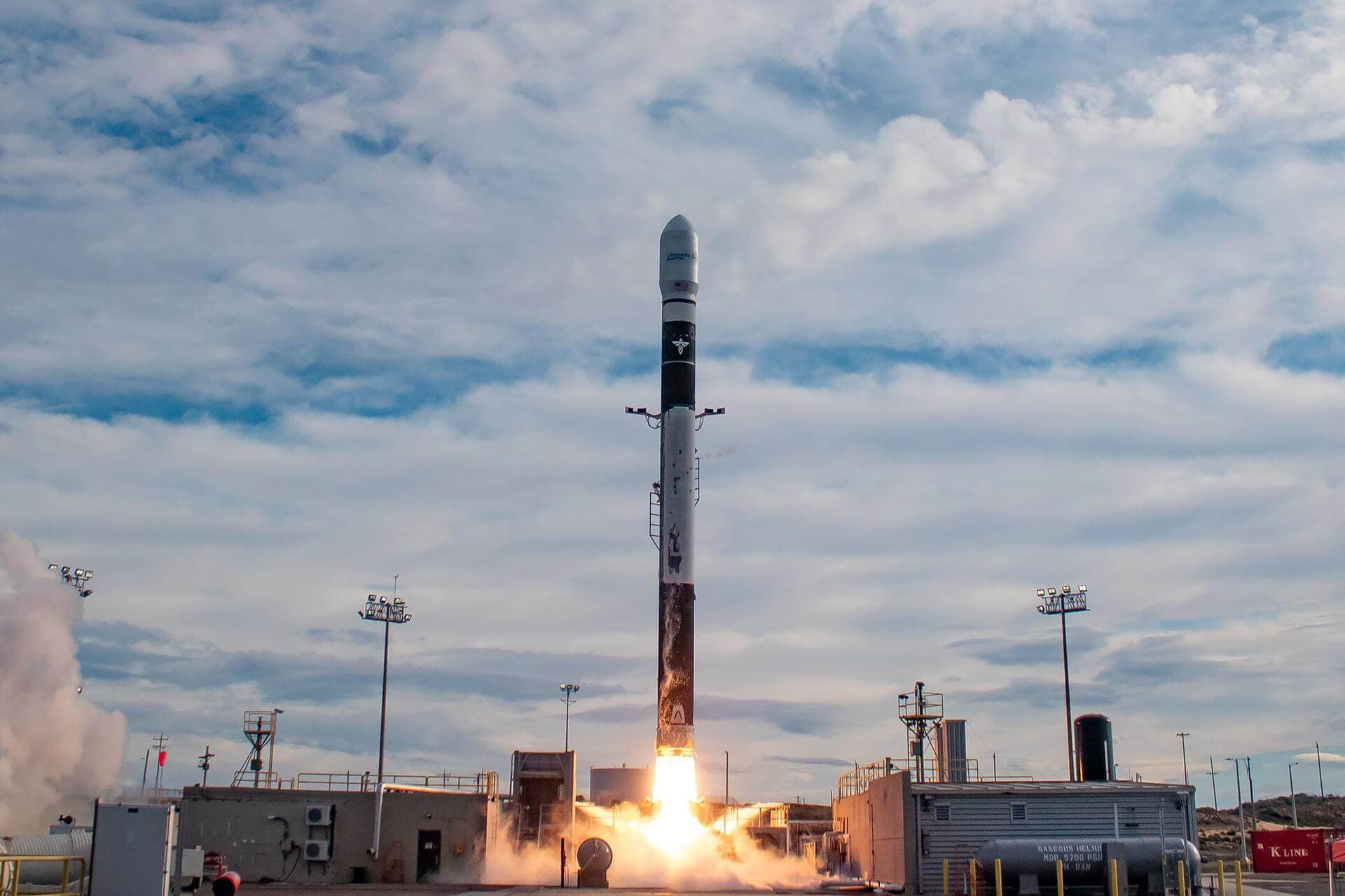
Today the pad hosts Firefly Alpha missions including national security payloads, commercial rideshare flights, and technology demonstration satellites bound for sun-synchronous orbit. Recent launches include the successful Stairway to Seven mission in March 2026 and the upcoming VICTUS HAZE Jackal flight scheduled for June 30, 2026. The 99 orbital launch attempts logged at SLC-2W in the current operational window reflect the pad's steady tempo as Firefly's western anchor.
The Story of SLC-2W
The origins of SLC-2W trace back to the early 1960s, when Vandenberg was still finding its footing as the nation's polar launch corridor. The complex was designed to accommodate Thor-Agena vehicles, the workhorse reconnaissance satellites of the Cold War, and later adapted for Delta family rockets. Its location on the western bluffs gave it a clean shot over the Pacific and into the high-inclination orbits that intelligence, weather, and Earth observation missions demanded. For decades, SLC-2W was one of the busiest spots on the base, launching everything from classified reconnaissance birds to NASA science satellites.
The last Delta II lifted off from SLC-2W in September 2018, closing an era that spanned 55 years and more than 260 missions. Within months, Firefly Aerospace leased the pad and began modifications to support its smaller, two-stage Alpha rocket. The company retained much of the infrastructure but reconfigured the service tower, propellant systems, and telemetry gear to match Alpha's kerosene-and-liquid-oxygen architecture. By late 2022, the pad was operational again, this time serving a commercial launch provider rather than a government-exclusive program.
The transition from Delta to Firefly reflects a broader shift across the Western Range. Legacy pads built for Cold War missions are now hosting private launch providers who can turn around missions in weeks rather than months. SLC-2W's longevity is a testament to its design and location. The concrete hardstands, flame deflectors, and integration facilities that supported Thor-Agena in 1963 now cradle a modern carbon-composite rocket designed in the 2020s, proving that good infrastructure ages well.
Who Launches from SLC-2W Today
Firefly Aerospace is the sole operator of SLC-2W. The company's Alpha rocket stands 95 feet tall and can deliver roughly 1,000 kilograms to low Earth orbit or 600 kilograms to sun-synchronous orbit, the high-inclination paths favored by imaging and reconnaissance satellites. Alpha uses four Reaver engines burning RP-1 kerosene and liquid oxygen on the first stage, and a single Lightning engine on the upper stage. Most missions from SLC-2W target orbits between 500 and 600 kilometers altitude, inclined between 90 and 98 degrees to the equator.
Firefly's customer base includes the U.S. Space Force, NASA, and commercial satellite operators. The VICTUS HAZE Jackal mission scheduled for June 2026 is part of the Space Force's responsive space initiative, designed to prove that a rocket can be readied and launched on short notice in response to emerging threats or opportunities. Other Alpha missions carry rideshare payloads for universities, technology demonstrators for startups, and Earth observation satellites for agricultural and climate monitoring. The cadence from SLC-2W has been steady, with launches roughly every quarter as Firefly scales production of its Alpha Block 2 variant.
Watching SLC-2W Launches from the 805
Lompoc holds the closest seat to SLC-2W, just five miles south of the pad. Residents along North H Street and the bluffs near Ocean Avenue Park get a direct sightline to the launch complex, especially on daytime missions when the white plume rises vertically before arcing south over the Pacific. Night launches from SLC-2W are even more dramatic. The Reaver engines ignite with a bright orange-white glow visible across the Lompoc Valley, and the ascending rocket traces a brilliant streak that persists for several minutes as the first stage burns through its propellant load.
Santa Maria, 25 miles to the southeast, offers excellent ascent visibility from higher ground along the Orcutt hills and Bradley Road. Night launches are especially clear here. The rocket appears as a moving star that brightens steadily, then dims as the first stage shuts down and separates. San Luis Obispo, 45 miles north, can catch the upper stages of the trajectory on clear nights, particularly from coastal vantage points like Montana de Oro or the hills above Shell Beach. The plume reflects sunlight even after local sunset, creating the eerie twilight phenomenon known as a twilight effect or noctilucent exhaust trail.
Santa Barbara, 60 miles south, has a more oblique view. Launches heading into polar orbit track southward along the coast, visible as a bright streak moving left to right when viewed from Shoreline Park or the Santa Barbara Harbor breakwater. Ventura and Ojai, both roughly 85 miles south, can see very bright plumes on clear days, though the intervening coastal mountains reduce visibility unless you're on an elevated ridgeline. Solvang, 25 miles east of the pad, benefits from north-facing viewpoints along Armour Ranch Road and the vineyards along Alamo Pintado Road, where the launch trajectory opens up against the western sky.
Notable Launches from SLC-2W
The Delta II era at SLC-2W delivered some of the most consequential Earth observation and navigation satellites in history. Among them were the first GPS Block IIR satellites in the late 1990s, which upgraded the accuracy and reliability of the Global Positioning System used by billions of devices today. NASA's Aqua satellite, launched in May 2002, still orbits Earth collecting climate data on ocean temperatures, atmospheric moisture, and ice coverage. The final Delta II mission from the pad in September 2018 carried NASA's ICESat-2, a laser altimetry satellite that measures ice sheet thickness in Antarctica and Greenland with centimeter precision.
Firefly's tenure at SLC-2W is shorter but already includes significant missions. The Alpha rocket's first orbital success came from SLC-2W in October 2022, delivering a cluster of small satellites for NASA and commercial customers. The Stairway to Seven mission in March 2026 marked the seventh Alpha launch overall and demonstrated the rocket's improved Block 2 configuration, which includes upgraded avionics and a stretched payload fairing. The upcoming VICTUS HAZE Jackal mission in June 2026 represents a new category of responsive space operations, where a rocket can be assembled, fueled, and launched within days rather than months.
The pad's 99 orbital launch attempts in the current database window reflect both the Delta II legacy and Firefly's emerging manifest. While the raw launch count may seem modest compared to busier complexes like SLC-4E or SLC-6, SLC-2W's history is defined by mission success and longevity. Few pads anywhere have operated continuously for six decades, adapting from Cold War reconnaissance to commercial smallsat rideshare without losing their strategic value. That adaptability is SLC-2W's real legacy.
Upcoming Launches from SLC-2W
Recent Launches from SLC-2W
Viewing Guide
Where to Watch SLC-2W Launches
7 viewing spots across the 805 with line-of-sight to this pad.
Frequently Asked
Key Facts
- 99 total orbital launches in current operational era
- Active since 1963, repurposed for Firefly Alpha in 2018
- Located at 34.7556°N, 120.6224°W
- Firefly Aerospace primary operator
- Closest 805 viewing: Lompoc, 5 miles
- Launch trajectory: southerly polar orbit