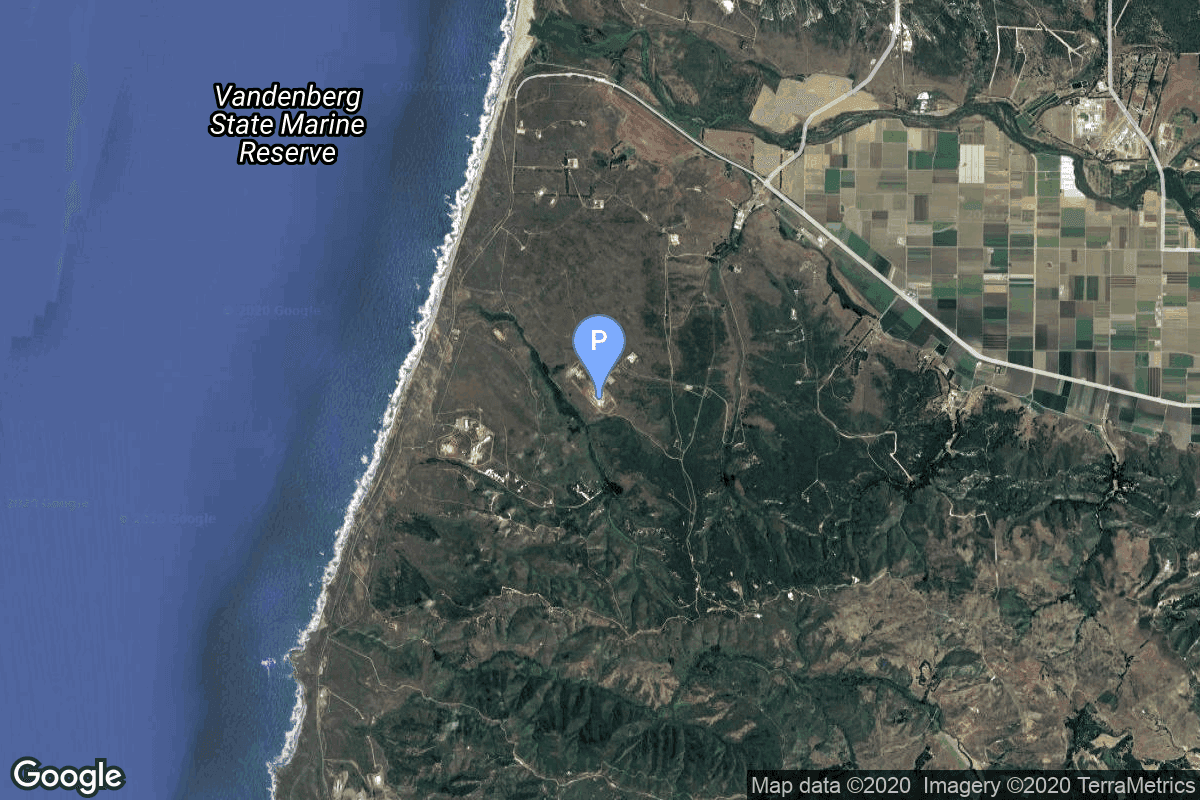
Launch Pad
SLC-3E — Space Launch Complex 3E
Space Launch Complex 3E has served Vandenberg for six decades, evolving from early-warning satellite launches to Atlas V missions and soon Vulcan Centaur.
Total Launches
48
Orbital Attempts
45
Active
—
Location
Vandenberg SFB
At a Glance
Space Launch Complex 3E sits on the southern tier of Vandenberg Space Force Base, a pad with a lineage stretching back to the early 1960s and the Cold War's most anxious hours. Originally constructed to launch satellites for the MIDAS program, an early-warning system designed to detect Soviet missile launches, SLC-3E has seen 48 missions over its operational life. After years of dormancy, the pad was refurbished in the early 2000s to support United Launch Alliance's Atlas V rocket, a workhorse that flew national security, scientific, and commercial payloads into polar and sun-synchronous orbits from this coastal perch.
The last Atlas V departed SLC-3E in November 2022, closing a chapter that spanned two decades. Now the pad is undergoing another transformation. United Launch Alliance is upgrading the infrastructure to accommodate Vulcan Centaur, the next-generation heavy-lift vehicle that will carry forward the Atlas legacy. The first Vulcan launch from SLC-3E is expected in 2025, marking the third era of flight operations from a complex that has quietly served as one of the West Coast's most historically significant launch sites.
The Story of SLC-3E
SLC-3E began its life in the shadow of nuclear threat. The MIDAS program, short for Missile Defense Alarm System, aimed to place infrared sensors in orbit capable of detecting the hot plume of an intercontinental ballistic missile within seconds of launch. Vandenberg, with its southerly trajectories over open ocean, was the natural choice for polar orbits that would allow satellites to scan the entire Soviet landmass as Earth rotated beneath them. SLC-3E was one of several pads built to support this mission, launching Atlas-Agena combinations that represented the cutting edge of American rocketry in the early 1960s.
After the MIDAS program wound down and satellite technology evolved, SLC-3E hosted a variety of missions through the 1970s and 1980s, then fell silent. The pad's second act began in the early 2000s when the Air Force and United Launch Alliance invested in a comprehensive refurbishment. New umbilical systems, upgraded propellant handling, and a mobile service tower turned the aging complex into a modern Atlas V facility. Between the early 2000s and November 2022, SLC-3E launched dozens of payloads, including classified National Reconnaissance Office missions, NASA's InSight Mars lander, and various weather and Earth-observation satellites.
With Atlas V production ending, ULA turned its attention to Vulcan Centaur, a rocket powered by Blue Origin's BE-4 methane engines and designed to be price-competitive in an era dominated by reusable launchers. The company chose to upgrade SLC-3E rather than build new infrastructure, preserving the pad's long history while adapting it for a vehicle that stands taller and burns different propellants. Construction crews have been modifying the service tower, installing new ground systems, and preparing the flame trench for the higher thrust and different exhaust chemistry of Vulcan's first stage.
Who Launches from SLC-3E Today
United Launch Alliance is the sole operator of SLC-3E, and the pad is now dedicated to Vulcan Centaur missions. ULA was formed in 2006 as a joint venture between Boeing and Lockheed Martin, consolidating their respective Delta and Atlas rocket families under one roof. The company has flown more than 150 missions with near-perfect reliability, and Vulcan represents its bet on the future of American heavy lift. SLC-3E will handle national security payloads, civil science missions, and potentially commercial customers who need the reliability and flexibility of a proven launch provider with West Coast access.
Vulcan's mission profile from Vandenberg mirrors what Atlas V accomplished: launching satellites into polar and sun-synchronous orbits, trajectories that are difficult or impossible to reach from Cape Canaveral due to geography. The National Reconnaissance Office, the National Oceanic and Atmospheric Administration, and NASA all have payloads that require these orbits, and SLC-3E will continue to serve as the West Coast gateway for high-value cargo heading south over the Pacific.
Watching SLC-3E Launches from the 805
Lompoc sits roughly five miles from SLC-3E, close enough that day launches produce a visceral rumble and a column of white exhaust that climbs straight up before the rocket arcs southward over the ocean. Residents on the north side of town have direct line-of-sight to the pad during clear weather, and the roar arrives several seconds after liftoff, a reminder of how sound lags behind light across the coastal plain. For night launches, the plume becomes a moving torch, bright enough to cast shadows and illuminate the low clouds that often hang over the Lompoc Valley in the early morning hours.
Santa Maria, about 25 miles to the southeast, offers excellent ascent visibility, especially for night launches when the rocket's exhaust catches sunlight at altitude and glows orange against the dark sky. San Luis Obispo, 45 miles north, sees a bright streak climbing out of the southern horizon on clear nights, visible for five to ten minutes as the vehicle climbs toward orbit. Santa Barbara, 60 miles to the southeast, catches southerly trajectories as they arc over the Channel Islands, the plume visible from coastal viewpoints on clear days. Ventura and Ojai, both around 85 miles away, require very clear weather and a high vantage point, but bright polar launches produce a visible plume that stands out against the twilight sky. Solvang, 25 miles east of the base, benefits from north-facing ridgelines where locals gather to watch the glow rise above the coastal hills.
Night launches offer the most dramatic views across the entire 805, but Vulcan's debut schedule is not yet public, so it is impossible to predict which cities will see twilight versus midday liftoffs. The best advice is to monitor ULA's launch windows and plan accordingly. Coastal fog is common in late spring and early summer, often obscuring the view from Santa Barbara and Ventura, while inland cities like Santa Maria and San Luis Obispo tend to have clearer skies. Winter and early spring offer the most reliable weather for viewing, with crisp air and high visibility across the region.
Notable Launches from SLC-3E
SLC-3E's historical roster includes both classified and public missions, though the National Reconnaissance Office rarely confirms details about the satellites it launches. What is known is that the pad has supported critical national security infrastructure, placing high-resolution imaging satellites and signals-intelligence platforms into sun-synchronous orbits that allow them to pass over the same parts of Earth at the same local time each day, optimizing lighting and data collection.
On the civil side, SLC-3E sent NASA's InSight lander toward Mars, the first interplanetary mission to launch from the West Coast. InSight lifted off in May 2018 and successfully landed in Elysium Planitia seven months later, deploying a seismometer that detected hundreds of Marsquakes and provided the first detailed look at the planet's internal structure. The mission demonstrated that Vandenberg could support deep-space trajectories, not just Earth-orbiting payloads, a capability that remains relevant as NASA plans future Mars and asteroid missions.
The pad also launched multiple weather satellites for NOAA, including elements of the Joint Polar Satellite System, which provides critical data for weather forecasting, climate monitoring, and environmental observation. These satellites fly sun-synchronous orbits that cross the equator at the same local time each day, a geometry that is uniquely suited to Vandenberg's southerly launch corridors. With Vulcan taking over, SLC-3E will continue this tradition, carrying the next generation of Earth-observation and national security payloads into the same orbits its predecessors pioneered six decades ago.
Viewing Guide
Where to Watch SLC-3E Launches
7 viewing spots across the 805 with line-of-sight to this pad.
Frequently Asked
Key Facts
- 48 total launches since MIDAS era
- Built for early-warning satellite program
- Last Atlas V flew November 2022
- Vulcan Centaur debut expected 2025
- 45 orbital launch attempts
- 34.64°N, 120.5895°W