Viewing Guide
Guadalupe-Nipomo Dunes
Fifteen miles north of the pad, the dunes and Oso Flaco Lake boardwalk offer elevated views of night launches when the exhaust plume lights up the Pacific sky.
Distance
~15 miles
Access
Moderate
Look toward
S
City
Santa Maria
At a Glance
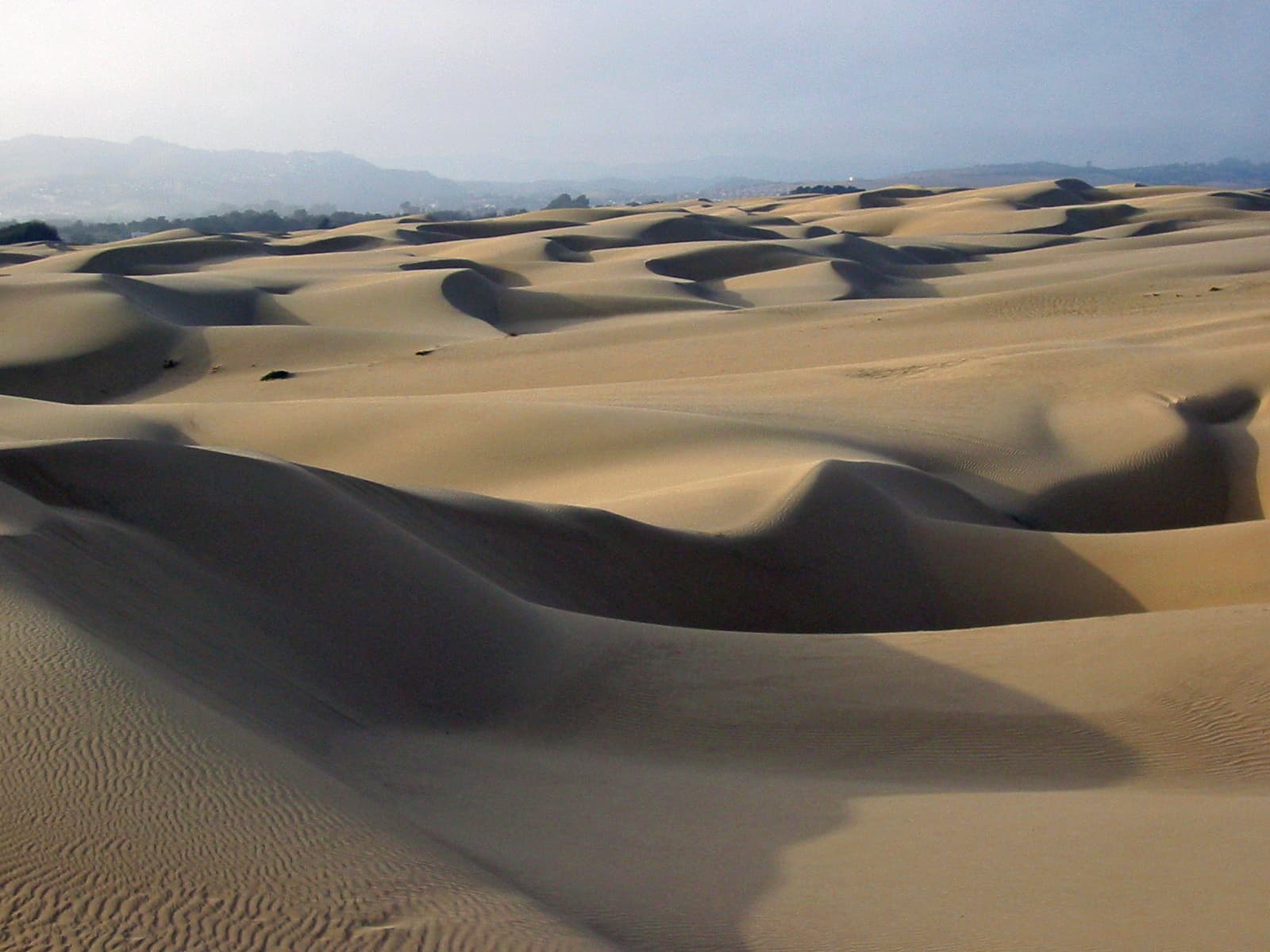
Guadalupe-Nipomo Dunes stretch along the coast north of Vandenberg Space Force Base, placing you about fifteen miles from the launch pads. The Oso Flaco Lake trailhead, on the Santa Maria side of the dune system, offers free parking and a raised boardwalk that cuts through the landscape, giving you a slightly elevated perspective over the sand and scrub. The spot draws photographers who want foreground texture and families willing to walk a bit for a peaceful vantage away from the crowds that gather closer to the Base.
The most important thing to know is that this location earns its reputation after dark. Night launches transform the dunes into a natural amphitheater, with the white sand reflecting the orange and pink glow of rocket exhaust as it climbs over the Pacific. During the day you will see the rocket, but from this distance it reads as a bright streak rather than the visceral, ground-shaking spectacle you would experience closer in.
What You'll See From Here
Vandenberg launches predominantly head out over the ocean on polar and sun-synchronous trajectories, and from the dunes you will watch the rocket lift, arc, and climb until it vanishes into the haze or darkness. At fifteen miles the visual is clear but distant. You will not feel the ground rumble beneath your feet the way you might at Surf Beach or Wall Beach. You will not hear the initial roar in real time. What arrives a minute later is a rolling, diffuse thunder that has traveled across the landscape, softened by distance and wind.
Night launches are where this spot pays dividends. The exhaust plume, backlit by the rocket's engines, spreads across the sky in a wide, glowing cone. The dunes themselves catch and hold that light, turning the sand into a luminous stage. If the launch occurs during the twilight window—when the rocket climbs into sunlight while the ground remains in shadow—you may witness the jellyfish effect, a surreal expanding cloud of ice crystals and exhaust that glows against the darkening sky. This phenomenon is visible for a hundred miles or more, and the dunes offer an unobstructed western horizon to watch it unfold.
During the day the experience is quieter. You will see the rocket rise, track its bright exhaust trail, and watch the first stage separate if you bring binoculars. The distance works against drama, but the openness of the dune landscape means nothing blocks your sightline. If SpaceX is flying a return-to-launch-site mission and brings the booster back to land at Vandenberg, you will hear the sonic boom—a double crack that rolls across Santa Maria and can rattle windows fifteen miles away. That sound, even from this distance, is startling and memorable.
Getting There and Parking
From Santa Maria, take Highway 1 south toward Guadalupe, then follow Oso Flaco Lake Road west until it ends at the trailhead parking area. Parking is free, and the lot can accommodate a couple dozen cars. The boardwalk begins at the lot and extends roughly half a mile through the dunes toward the lake and beach. The walk is easy but exposed—there is no shade, and the marine layer or afternoon wind can make it chilly even in summer. The boardwalk itself is elevated and stable, making it accessible for most visitors, though the distance from car to optimal viewing spot means this is not a quick roadside pull-off.
The Oso Flaco Lake boardwalk gives you a nice elevated vantage point. Night launches are spectacular from here—the dunes reflect the rocket exhaust glow. Arrive early if you want to claim a spot along the boardwalk rail, especially for a high-profile evening launch. For return-to-launch-site missions, some areas closer to the Base perimeter do close temporarily, but the Oso Flaco trailhead has remained accessible during past launches. Still, check Vandenberg's public affairs notices before you drive out, particularly if the mission is classified or involves a booster landing.
Best Launches to Watch From Guadalupe-Nipomo Dunes
This spot is built for night launches. The July 2026 Starlink missions—Starlink Group 17-48 on the eleventh and Starlink Group 15-14 on the thirteenth—are both Falcon 9 flights that will lift in the evening if the schedule holds. The darkness, the sand, and the wide sky combine to turn a distant rocket into a glowing brushstroke. Photographers favor this location because the dunes provide natural leading lines and the boardwalk offers a stable platform for long exposures. The reflected light on the sand creates a layered composition that is hard to replicate elsewhere.
Daytime launches are less visually dramatic from here, though the July 7, 2026 Transporter 17 rideshare mission will still be worth watching if you are already in the area. You will see the rocket clearly, track the first stage separation, and hear the delayed rumble. If that mission or a future flight involves a return-to-launch-site booster landing, the sonic boom will punctuate your afternoon. The dunes do not close for those events, but the auditory punch is a reminder that even from fifteen miles away, you are witnessing something genuinely powerful.
Tips for a Good Watch
Arrive at least an hour before the launch window opens, particularly for night flights. The boardwalk fills up, and you will want time to walk out, settle in, and let your eyes adjust to the darkness. Bring layers—coastal wind and marine fog are constants, and the temperature drops quickly once the sun goes down. A blanket or camp chair is useful if you plan to wait on the sand beyond the boardwalk, though most people stand along the rail for the actual launch. A red-filter flashlight will help you navigate in the dark without ruining night vision for yourself or the photographers around you.
If you are shooting photos, a sturdy tripod is essential. The boardwalk is stable but not motionless; people walking past will cause vibration. A wide-angle lens will capture both the dunes and the sky, and a cable release or timer will eliminate camera shake during long exposures. Start test shots early to dial in your settings before the rocket lifts. For daytime launches, binoculars will bring the distant vehicle into better focus, and a zoom lens will let you capture the trajectory as it arcs over the water. Weather along this stretch of coast can shift quickly—fog may roll in without warning, and while it rarely obscures a launch entirely, it can soften or scatter the light in unpredictable ways. Check the marine forecast in addition to the launch weather criteria.
Map
Guadalupe-Nipomo Dunes and the Launch Pad
This spot in relation to Vandenberg's SLC-4E pad, roughly 179° (S) away.
Frequently Asked
Next Launch to Watch From Here

Plan Your Visit
From the pad
~15 miles
Look toward
S (179°)
Parking
Free parking at Oso Flaco Lake trailhead
Insider tip
The Oso Flaco Lake boardwalk gives you a nice elevated vantage point. Night launches are spectacular from here — the dunes reflect the rocket exhaust glow.
Key Facts
- ~15 miles from the pad
- Free parking at Oso Flaco Lake trailhead
- Moderate accessibility
- Best for night launches and photography
- Elevated boardwalk vantage point
- Dunes reflect rocket exhaust glow