Discovering Shandon: A Central Coast Place Guide
805.life Editorial Team
Researched and reviewed by our Central Coast editorial team
July 3, 2026
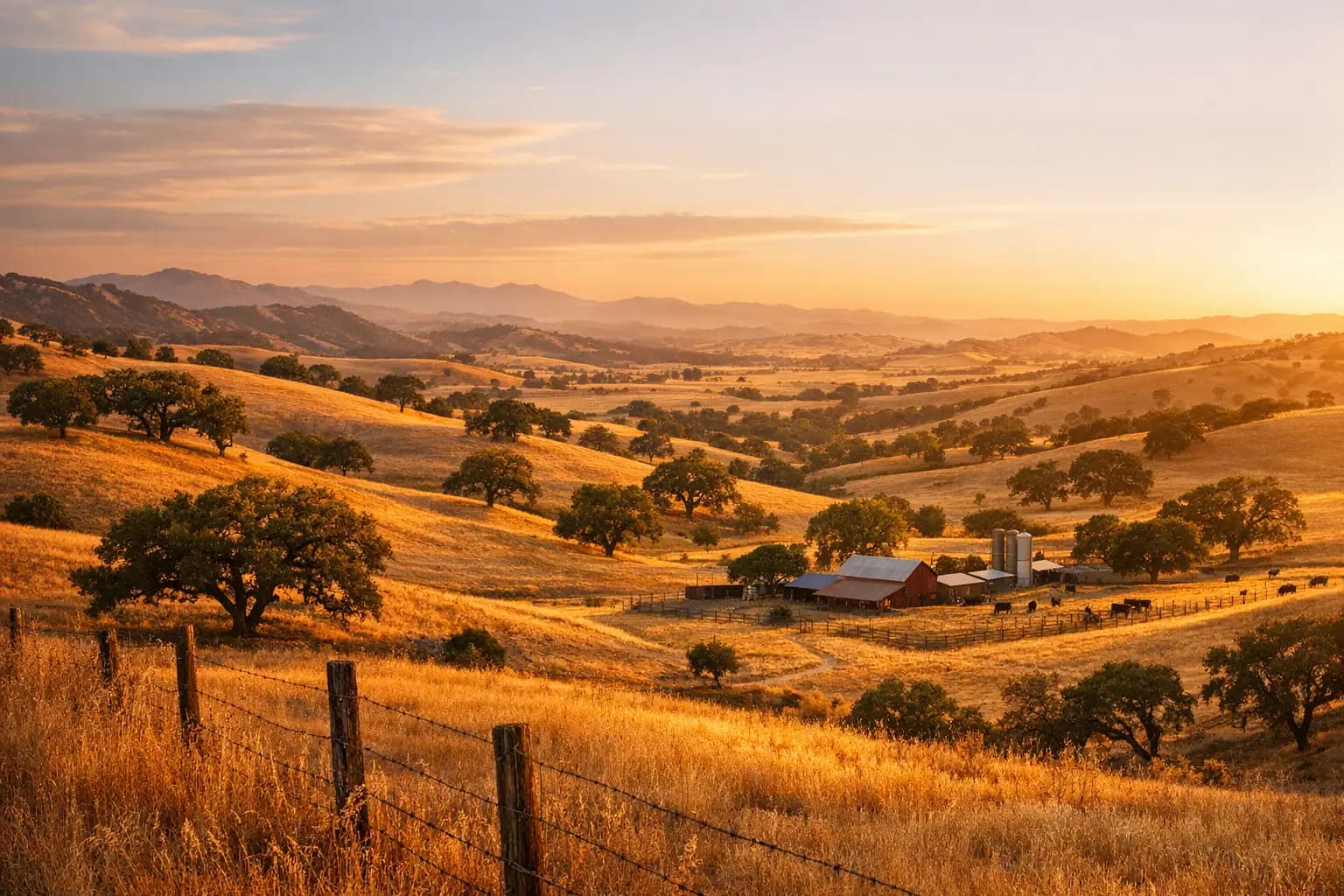
Far east of the coastal fog and the wine-country crowds, Shandon sits in the golden Estrella Valley as ranchland that refuses to hurry. It's the kind of place where summer evenings turn amber over oak-studded hills and the only rush hour is a cattle drive crossing the road.
Where Shandon Sits
Drive Highway 46 east from Paso Robles, past the last tasting room and the last olive stall, and you'll watch the landscape open into something wider and quieter. About 25 miles inland from US-101, Shandon occupies a gentle pocket of the Estrella Valley, where the terrain rolls between the Santa Lucia Range to the west and the Temblor foothills to the east. The elevation here hovers around 1,100 feet, high enough to catch afternoon breezes but low enough to feel the full weight of a Central Coast summer. Golden hills dominate — there's a reason the Spanish called this valley floor the Estrella, and by July the color palette runs from straw to copper to deep brown, broken only by the dark green of valley oaks and the deeper green of irrigated vineyards.
Tip: Take Highway 46 East from Paso Robles. The drive is roughly 30 minutes from downtown Paso. Fill your gas tank before you go — there are limited services in Shandon proper, and cell service can be spotty on stretches of the route.
A Brief History
Shandon's roots are ranching roots. The area was part of the Mexican land grant Rancho Estrella in the 1840s, and when American settlers arrived after statehood, they found grassland that was ideal for cattle. The town itself took shape in the late 19th century with the arrival of the Southern Pacific Railroad, which established a stop here and gave ranchers a way to move livestock and grain to market. For decades, Shandon functioned as a classic small agricultural hub — a post office, a school, a few stores, and a surrounding community of ranch families who knew every draw and every fence line for miles. The railroad eventually pulled out, as it did from so many of these small Central Coast towns, but the ranches stayed. Many of the cattle operations visible from the highway today are multi-generational, run by families who've worked this ground since before paved roads connected them to the coast.
The old Shandon School, which served generations of local kids, now functions as a community center — a familiar story in small California towns where declining enrollment closes a campus but the community refuses to let the building go. It stands as a quiet landmark, a place where the town still gathers for events, meetings, and the kind of neighborly interaction that defines life out here.
What Makes Shandon Distinct
What sets Shandon apart is what it is not. It is not a wine destination, though vineyards have crept into the valley floor over the past two decades. It is not a tourist stop with a downtown of curated boutiques. It is not trying to be discovered. Shandon is a working landscape, and its character comes from that authenticity. When you drive through, you see ranch fencing, cattle guards, and irrigation equipment. You see properties with equipment sheds and horse trailers parked under shade structures. The few commercial buildings along the highway are functional — they serve the people who live here, not visitors looking for a wine-country weekend. That's not a drawback. That's the point. If you're tired of places that have been polished for an audience, Shandon offers something rarer: a landscape that is simply itself.
The Summer Landscape
Summer in Shandon is dry and warm, with daytime temperatures regularly climbing into the mid-90s and occasionally tipping past 100. The heat is honest — this is not coastal mugginess but genuine dry Central Valley-adjacent warmth, the kind that makes you appreciate shade and a cold drink. Mornings are the gift. Dawn breaks cool, often in the low 60s, and the light on the golden hills during the first two hours after sunrise is genuinely beautiful — long shadows from the oaks, dew still clinging to fence wire, and the sky moving through shades of pink and amber. By late afternoon, the hillsides glow again as the sun drops, casting everything in that warm, honeyed tone that photographers chase but rarely capture because you have to be standing in it.
Tip: If you're visiting in summer, plan any outdoor activity — photography, walking, or just exploring back roads — for the early morning or the last hour before sunset. Midday heat is no joke. Always carry more water than you think you'll need.
The Estrella River Watershed
The Estrella River, which feeds the valley's groundwater and once supported more consistent surface flow, is now mostly a seasonal waterway — running during wet winter months and going dry or near-dry through summer. But its presence shapes the land. The old riverbed and its tributary creeks carved the gentle draws and low ridges that give the valley its character, and the alluvial soils deposited over millennia are what made this ground productive for both cattle grazing and, more recently, viticulture. Walking near any of the creek beds, you'll see the evidence — rounded river rock, lines of willows and cottonwoods marking where water once moved, and the rich, dark soil that contrasts with the pale dust of the upper hillsides.
Vineyards on the Edges
While Shandon itself doesn't have a walkable wine trail, the surrounding area has seen significant vineyard development over the past 20 years. The Paso Robles AVA's eastern expansion brought planted acres into the Estrella Valley and out toward Shandon, taking advantage of the calcareous soils and significant diurnal temperature shifts — hot days, cool nights — that help produce structured, concentrated wines. You'll see vineyards as you drive Highway 46 and on some of the side roads branching off toward the valley floor. Rhône varieties like Syrah, Grenache, and Mourvèdre do particularly well here, as does Cabernet Sauvignon on some of the warmer sites. The vineyards don't dominate the landscape the way they do closer to Paso Robles, but they're a visible part of Shandon's modern identity, a newer layer over the older ranching economy.
When to Go
Summer is honest Shandon — golden, hot, and unhurried. If you want the classic California golden-hills aesthetic, this is your season. The light is spectacular, the oak shadows are long, and the heat keeps everything quiet and still. Just plan around it: go early, carry water, and don't expect to find an open café or a visitor center. This is a driving landscape. You experience Shandon by rolling through it slowly, windows down, taking in the scale of the valley and the texture of the land.
Spring — late February through April — is the other ideal window. The wild mustard blooms turn the valley floor and hillsides electric yellow, and the hills are briefly green before the summer dry-down begins. This is when the area looks most like the classic Central Coast postcard image, and temperatures are mild and comfortable. Fall brings its own beauty: the heat breaks, the light softens, and if there's been early rain, the hills start to green up again by November.
Tip: Combine a Shandon drive with a stop at the Parkfield Bridge over the Cholame Creek, about 20 minutes further southeast. The Parkfield area is known as the 'Earthquake Capital of the World' due to its location on the San Andreas Fault, and the old bridge and surrounding rural landscape are worth the detour.
How to Experience Shandon
The best way to experience Shandon is to not try too hard. Drive Highway 46 East and take your time. Pull over where it's safe to let the landscape register. Take some of the side roads — Shell Creek Road, for instance, which runs north from Highway 46 and traces one of the valley's creek corridors. In spring, Shell Creek Road is one of the best wildflower drives in the region, with poppies, lupines, and goldfields blanketing the hillsides. In summer, it's quieter — sun-baked and still, with the creek bed dry and the oaks providing the only shade. Either way, it's a road that gives you a sense of the land's scale and texture in a way the highway can't.
There's no downtown to park in and walk, no cluster of shops to browse. That's part of Shandon's identity. It asks you to slow down and look rather than consume. Bring a picnic. Find a shaded pullout. Listen to the wind and the occasional lowing of cattle. Watch a sunset paint the Estrella Valley in colors that no filter can replicate. This is the appeal of Shandon — not what it offers, but what it allows. Space. Quiet. A reminder that not every worthwhile destination is a destination at all. Some are just places that exist, quietly, and are worth being in for no other reason than the being.
Tip: Shell Creek Road can be rough in stretches, especially after winter rains. A standard sedan is usually fine in dry conditions, but check recent road conditions if there's been weather. The road eventually connects to Highway 41, making it possible to loop back toward Paso Robles or continue toward the Carrizo Plain.
The Feel of the Place
I've driven through Shandon at different times of year and in different moods, and the constant is the sense of arrival into openness. After the relative density of Paso Robles and the wine corridor, the land here breathes. The sky feels bigger. The distances feel real. There's a particular quality of afternoon light in summer that I associate with this stretch of the Central Coast — warm, slightly hazy, and golden in a way that makes everything look like an old photograph. The oaks stand in it like sentinels, their shadows stretching east. And somewhere out on the hillsides, cattle move slowly through dry grass, doing what they've done here for 150 years. Shandon doesn't need to be more than that. It's enough.
City
ShandonGuide Type
destination-guide
Category
Travel
AI-curated guide based on local business data
Explore Shandon