Behind the Homes of Santa Barbara: What Homeowners Need to Know About ADUs in 2026
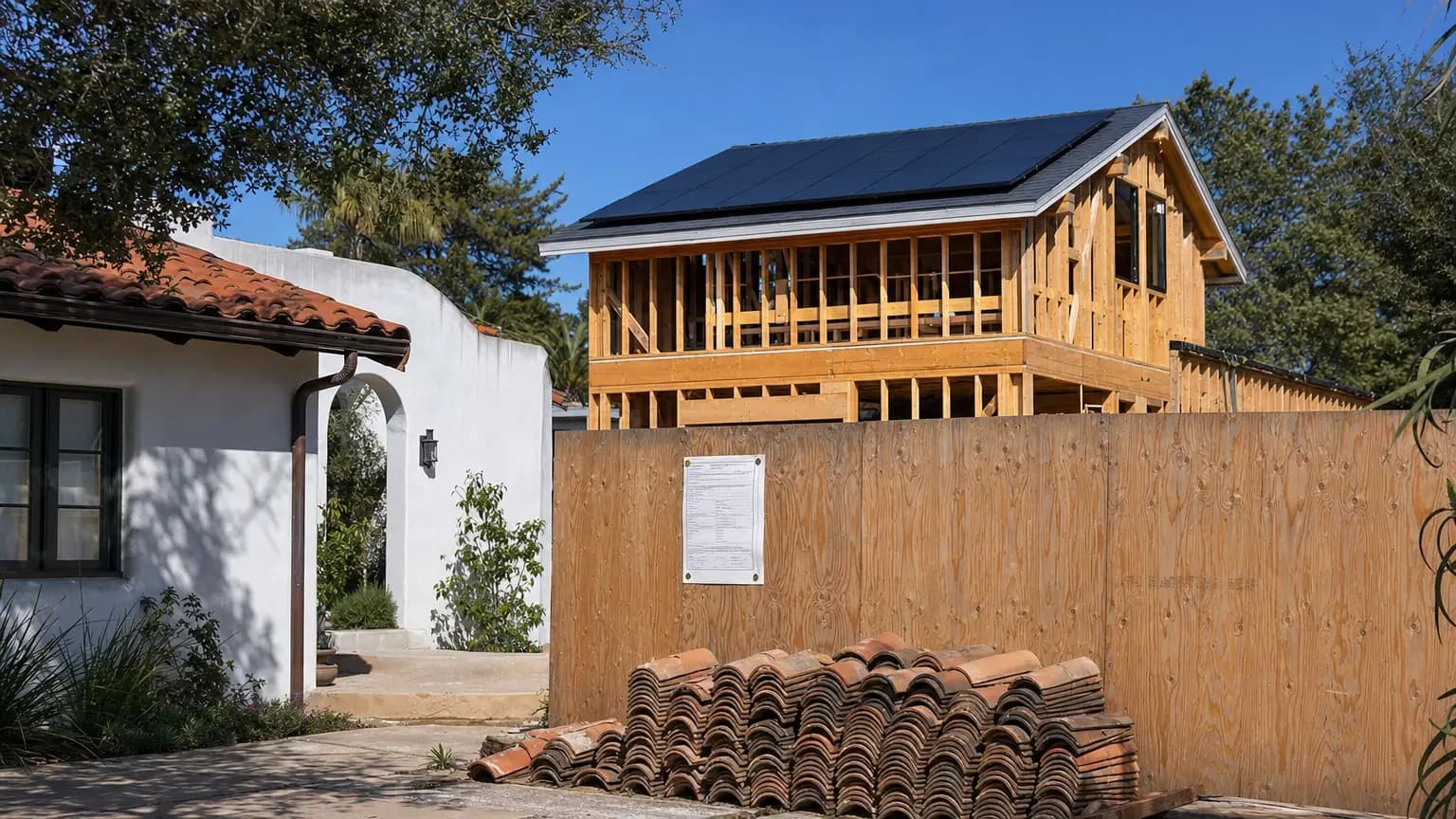
More ADU Flexibility, But Complex Rules Remain
Accessory dwelling units continue to evolve in Santa Barbara as California expands housing options through new legislation, according to the Santa Barbara Independent. Local planning expert Jarrett Gorin of Vanguard Planning recently outlined key changes for homeowners at a Santa Barbara Association of REALTORS® event.
Recent state legislation has streamlined several ADU processes. AB 543 now requires local agencies to determine application completeness within 15 business days, while AB 434 mandates that all cities offer pre-approved ADU plans by January 2026. AB 2533 creates new pathways for legalizing unpermitted ADUs built before January 1, 2020.
The 800-square-foot threshold remains significant under California law, which provides protections for detached ADUs up to that size. The maximum ADU size under state law is 1,200 square feet, though local restrictions may apply.
New Sale Option Available Elsewhere
A major change comes through AB 1033, which Governor Newsom signed in October 2023. The law allows cities and counties to adopt ordinances permitting ADU owners to sell their units separately from the primary residence as condominiums.
San Diego County adopted AB 1033 on March 4, 2026, with implementation beginning April 4. San Jose and Santa Monica have also opted in, with early conversions in San Jose showing strong buyer interest.
However, Santa Barbara has not adopted AB 1033, meaning ADUs cannot be sold separately from the primary residence locally. The law requires each jurisdiction to opt in through a local ordinance.
Fire Zones and Coastal Rules Add Complexity
Santa Barbara homeowners face additional considerations beyond state requirements. Properties in High Fire Hazard Areas can face extra limitations, while coastal zone properties must comply with additional policies until the city's ADU ordinance receives California Coastal Commission certification.
The city's ADU ordinance was certified by the Coastal Commission on April 6, 2022, making local regulations effective in coastal areas. However, parking requirements remain more restrictive in coastal zones to protect public access.
ADUs cannot be used for short-term vacation rentals and must be rented for 30 days or more, according to current regulations.
Permitting Process Moves Faster
Recent state law changes require agencies to approve or deny ADU applications within 60 days once deemed complete. Most ADUs can be permitted through the Building & Safety Division without discretionary planning review if they meet all code requirements.
The requirement that property owners live in either the primary unit or ADU was eliminated in 2020, though this requirement remains for junior ADUs (JADUs) under 500 square feet.
Gorin noted that while California has simplified some ADU rules, homeowners still face considerations around fire access, parking, setbacks, utilities, and permits that can complicate projects depending on the specific property.
Housing Crisis Context
The push for ADU expansion comes as Santa Barbara faces ongoing housing affordability challenges. The Independent reported that local leaders view ADUs as part of broader solutions for multigenerational living, workforce housing, and using existing properties more thoughtfully without consuming open space.
State housing mandates require local jurisdictions to plan for additional housing units to avoid "builder's remedy" concerns where developers could bypass local review processes. California has issued over 60,000 ADU permits since 2018, according to state housing data.
Reported by 805.life
Researched and written drawing on primary sources. Additional reporting: Santa Barbara Independent.
City
Santa BarbaraAdditional Reporting
Santa Barbara IndependentPublished
June 3, 2026
Reported and written by 805.life
Explore Santa BarbaraAll Santa Barbara NewsMore News from Santa Barbara
Al no haber arma homicida, el juicio contra Caleb Flynn se centra en la relación extramatrimonial y en el supuesto intruso
A murder trial unfolding just up the coast is drawing attention here in Santa Barbara, and it's the kind of case that's hard to look away from. Caleb Flynn's trial, reported by KEYT News Channel 3-12, has no murder weapon — instead, prosecutors are leaning on testimony about a secret church affair, thousands of deleted texts, and lies told to the FBI. Even the family dogs stayed eerily quiet that night, which has become a strange piece of the puzzle. For those of us in the 805, it's a reminder that even tight-knit communities aren't immune to the kind of drama you'd expect from a courtroom thriller. Cases like this can shake faith in neighbors and institutions, and they raise hard questions about trust and evidence. We'll be watching how the trial unfolds — not out of spectacle, but because it touches on the real lives of people not so far from home.
UCSB Recovers From Slow Start, Beats CS Northridge in Big West Volleyball Opener
Good news for Gaucho fans — UCSB women's volleyball finally got back in the win column Friday night at the Thunderdome, shaking off a slow start to beat Cal State Northridge in the Big West opener. After dropping the first set, the team looked like a squad still finding its footing following a tough preseason that ended on a six-match skid. But conference play is a fresh slate, and the Gauchos took advantage. For our Isla Vista and Goleta neighbors, there's something special about catching a match on campus — cheap tickets, loud student section, and a team that's easy to root for. Thanks to Noozhawk for the coverage. If you haven't been to a UCSB volleyball match yet, consider this your sign to check one out this season.
Cottage Health Hosts Sepsis Conference Focused on Early Recognition and Treatment
Cottage Health pulled together doctors, nurses, pharmacists, respiratory therapists and other clinicians from across the region on Friday, Sept. 18, for a conference zeroing in on one of medicine's trickiest foes: sepsis. If you've never heard the word, you're not alone — but it's a leading cause of death in hospitals, and the difference between a good outcome and a tragic one often comes down to how fast someone recognizes the signs. That's why this gathering matters here. Santa Barbara County spans a big, sometimes rural region, and not every clinic or ER has the same resources. When Cottage Health convenes providers from up and down the 805 to share protocols and lessons learned, it quietly raises the standard of care for all of us — whether you're in Goleta, Lompoc, Santa Maria or Santa Ynez. The Santa Barbara Independent first reported the conference, and it's the kind of unglamorous, behind-the-scenes work that keeps our community healthier. Next time you or a loved one lands in an ER with a puzzling fever, this is the preparation you'll be glad happened.