Build the Community “Living Room”
As Santa Barbara's City Council weighs the future of State Street, a new voice is adding to the chorus calling for decisive action: Sullivan Israel, a Santa Barbara resident whose letter to the Santa Barbara Independent argues that the moment has arrived to finally build the pedestrian-focused downtown that city planners have envisioned for more than half a century.
"Now is the time for bold action," Israel writes, framing the pending State Street Master Plan as the latest chapter in a long and sometimes unfinished story of civic design in California — one in which the difference between a plan on paper and a plan in concrete has shaped cities for generations.
A Century-Old Vision, Decades in the Making
Israel's letter situates the State Street debate within a broader history of ambitious urban planning, both realized and abandoned. The letter points to cautionary tales — the Olmsted brothers' plan for the Los Angeles River, which would have created a 50-mile linear park but instead yielded a concrete channel — alongside celebrated successes like the National Mall in Washington, New York's Central Park, and the reimagined waterfronts of San Francisco, Seattle, and Portland.
Santa Barbara's own contribution to that lineage, the letter argues, is El Pueblo Viejo. After the 1925 earthquake devastated downtown, the city embraced a vision of a Spanish-style, walkable core defined by distinctive architecture, paseos, and civic gathering spaces. Some elements of that vision were built; others were not. But as Israel notes, city planning "is never finished" — communities change, and unrealized ideas can be revived when the moment is right.
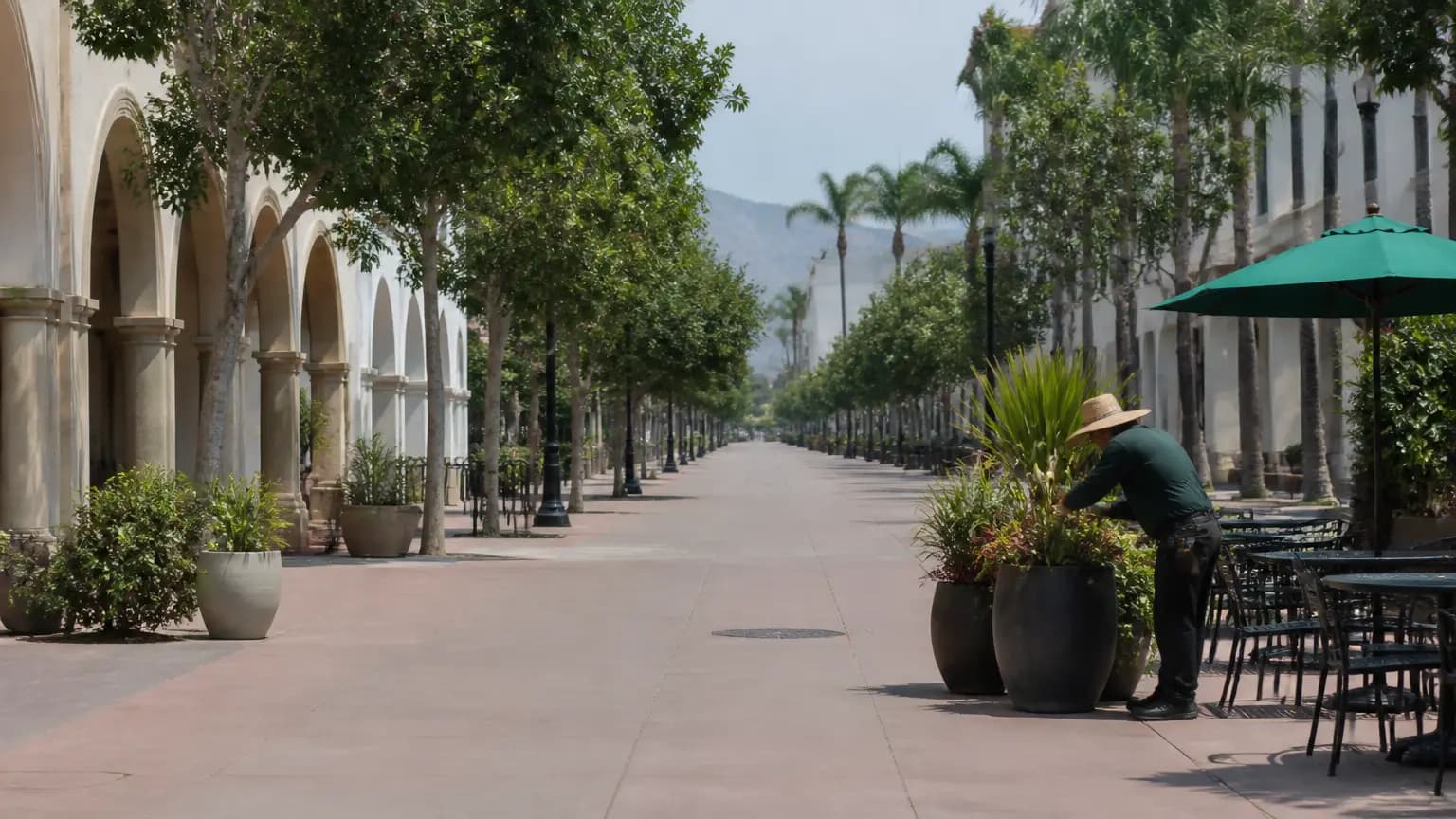
That moment, in the letter's telling, is now. Israel writes that Santa Barbara has envisioned State Street as a pedestrian-focused "community living room" — a place to live, relax, gather, shop, and celebrate — since at least the city's 1964 General Plan. The letter includes a rendering of "Paseo Estado," a concept illustrating how events like the Fiesta Parade could be staged in a downtown redesigned around people rather than cars.
The Price Tag Question
The letter acknowledges the central tension in the debate: the State Street Master Plan will be expensive. But Israel contends that great civic projects always are, and that Santa Barbara already demonstrates a willingness to invest heavily in public infrastructure when the case is made.
The letter cites the city's roughly $121 million expenditure on a new police station as evidence that major public investments pass muster when they serve clear civic needs. State Street, Israel argues, deserves the same standard of consideration — describing it as a public space used by millions of residents and visitors each year.
For a comparison, the letter turns to New York's High Line, the elevated park built on a former rail viaduct. That 1.5-mile project cost roughly $150 million to transform, according to the letter, and generated billions of dollars in economic returns for the surrounding neighborhoods. "State Street can be our High Line," Israel writes.
The letter also points to projections associated with the Master Plan: corridor sales tax revenue reaching 20 percent above 2019 levels by Year 8 of implementation, and roughly $50 million in private investment and development fees — figures that, if borne out, would help offset the public's upfront commitment.
Why It Matters for Downtown's Future
The State Street corridor has been at the heart of Santa Barbara's civic and economic identity for generations, and its post-pandemic recovery has been the subject of sustained community debate — spanning business closures, homelessness, event programming, and the question of whether the street's temporary pedestrian promenade, created during COVID-19, should be made permanent and upgraded.
Israel's letter lands squarely on the side of permanence and investment, arguing that the Master Plan represents the fulfillment of the El Pueblo Viejo vision: a strengthened downtown and a landmark civic space for generations to come.
The letter closes with a direct appeal to the city's decision-makers: "City Council: approve the State Street Master Plan."
What Comes Next
The immediate next step rests with the Santa Barbara City Council, which must decide whether to adopt the Master Plan and set in motion the funding, design, and construction phases that would follow. Approval would begin a multi-year transformation of the corridor; delay or rejection would leave the street's long-term configuration — and the fate of its pedestrian promenade — unresolved.
For residents, the stakes are practical as well as symbolic. A rebuilt State Street would affect everything from downtown traffic flow and parking to the scale and character of Fiesta celebrations, farmers markets, and everyday shopping trips. The projected sales tax gains, if realized, would feed city services; the projected costs would compete with other priorities in city budgets for years to come.
What the letter makes clear is that the debate over State Street is not simply about a street — it is about which version of Santa Barbara's century-old downtown vision the city chooses to build, and whether this generation seizes or squanders it.
This article is based on a letter to the editor by Sullivan Israel published by the [Santa Barbara Independent](https://www.independent.com/2026/08/31/build-the-community-living-room/) on August 31, 2026. Readers can follow City Council agendas for the latest on the State Street Master Plan's status.
Reported by 805.life
Researched and written drawing on primary sources. Additional reporting: Santa Barbara Independent.
City
Santa BarbaraAdditional Reporting
Santa Barbara IndependentPublished
August 31, 2026
Reported and written by 805.life
Explore Santa BarbaraAll Santa Barbara NewsMore News from Santa Barbara
 Santa Barbara
Dos Pueblos Boys Water Polo Captures League Crown With 17-12 Victory Over San Marcos
Dos Pueblos boys water polo is bringing another league title back to Goleta, and Charger fans have plenty to celebrate after a 17-12 win over rival San Marcos. The crosstown matchup is one of those Channel League showdowns that always draws a crowd, and this one delivered on both ends of the pool. Next up, the Chargers head to Ventura on Tuesday, while San Marcos looks to bounce back against Buena. For families with kids in local aquatics programs, nights like this are a reminder of how deep the water polo tradition runs here along the 805 coast. Thanks to the Santa Barbara Independent for keeping us posted on the postseason push. Grab a towel, pick a side, and go support these student-athletes — South Coast water polo is worth the drive.
 Santa Barbara
Dos Pueblos Boys Water Polo Clinches Outright Channel League Title with 17-12 Win Over San Marcos
Chargers fans, take a bow. Dos Pueblos boys water polo beat crosstown rival San Marcos 17-12 on the road Thursday, locking up the outright Channel League title and keeping that perfect 5-0 league mark intact. As Noozhawk reported, the Chargers sit at 20-6 overall with just Ventura left on the league schedule. There's something special about a Dos Pueblos–San Marcos matchup. These two schools share a city, a pool culture, and plenty of bragging rights, so a win like this means a little more than the standings show. Water polo runs deep here on the Central Coast, and nights like Thursday remind us why. One league game remains, but the banner is already theirs. Congrats to the players and coaches — go Chargers!
 Santa Barbara
Santa Barbara Police Make Arson Arrest Following Multiple Fires on Modoc Road
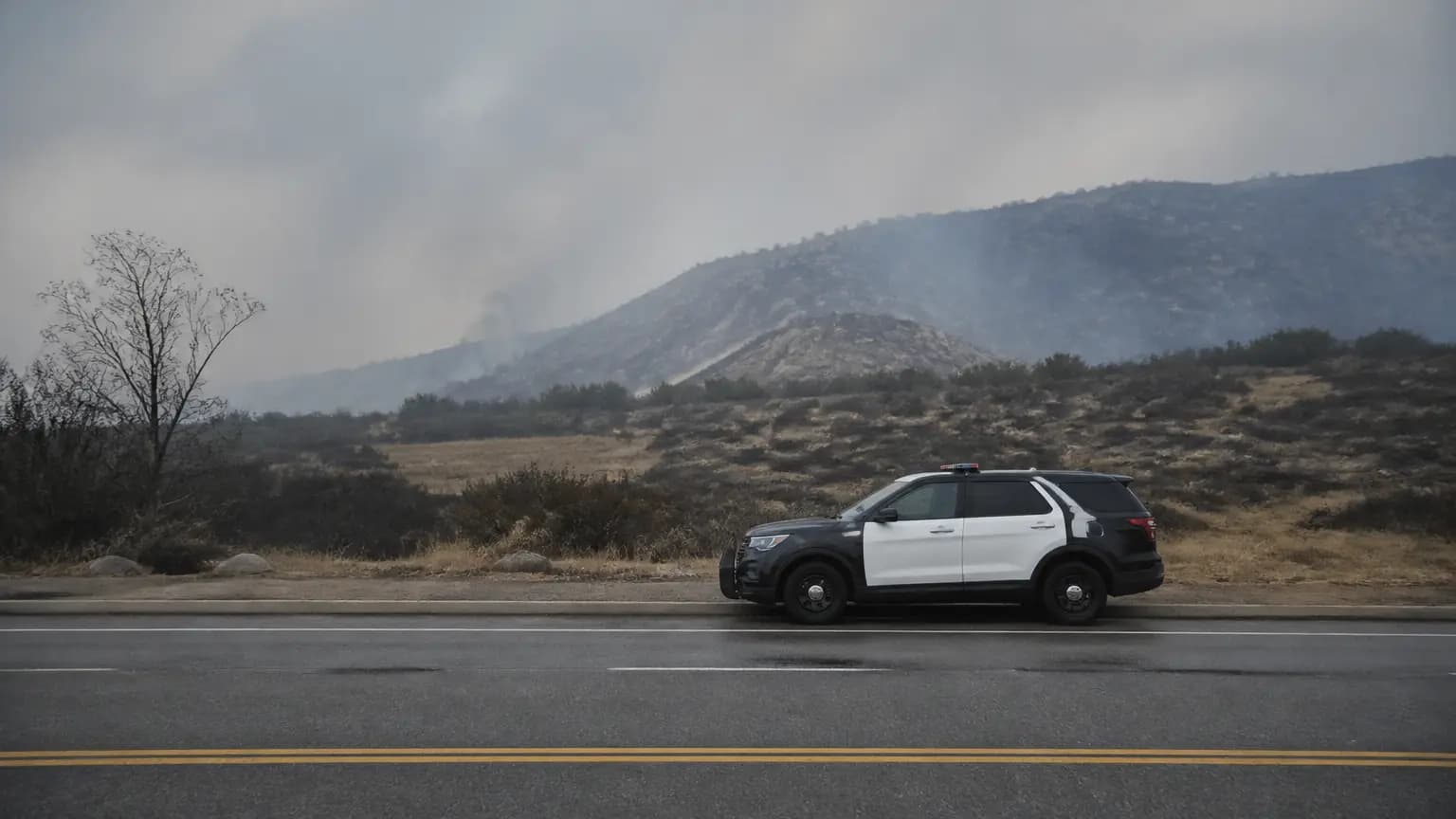
Neighbors on Modoc Road can breathe a little easier this week. Santa Barbara Police say they've arrested Calletano Bedolla-Bibiano, who allegedly admitted to setting three brush fires on Thursday and has been linked to four more last weekend. That's seven fires in a matter of days, all in one stretch of our community. It's easy to scroll past fire news when we're not in the thick of a red-flag warning, but this one hits close to home. Modoc Road runs along neighborhoods, near open space, and with our dry hillsides and fall winds, a single spark can turn into something no one can control. The fact that these were allegedly intentional makes it feel different, and honestly, a little unsettling. We're grateful to the Santa Barbara Police Department and the first responders who put these fires out before they grew. Thanks to the Santa Barbara Independent for staying on it. If you live nearby, keep an eye out, check on your neighbors, and report anything suspicious.