City of Paso Robles adds Spanish City Council agendas
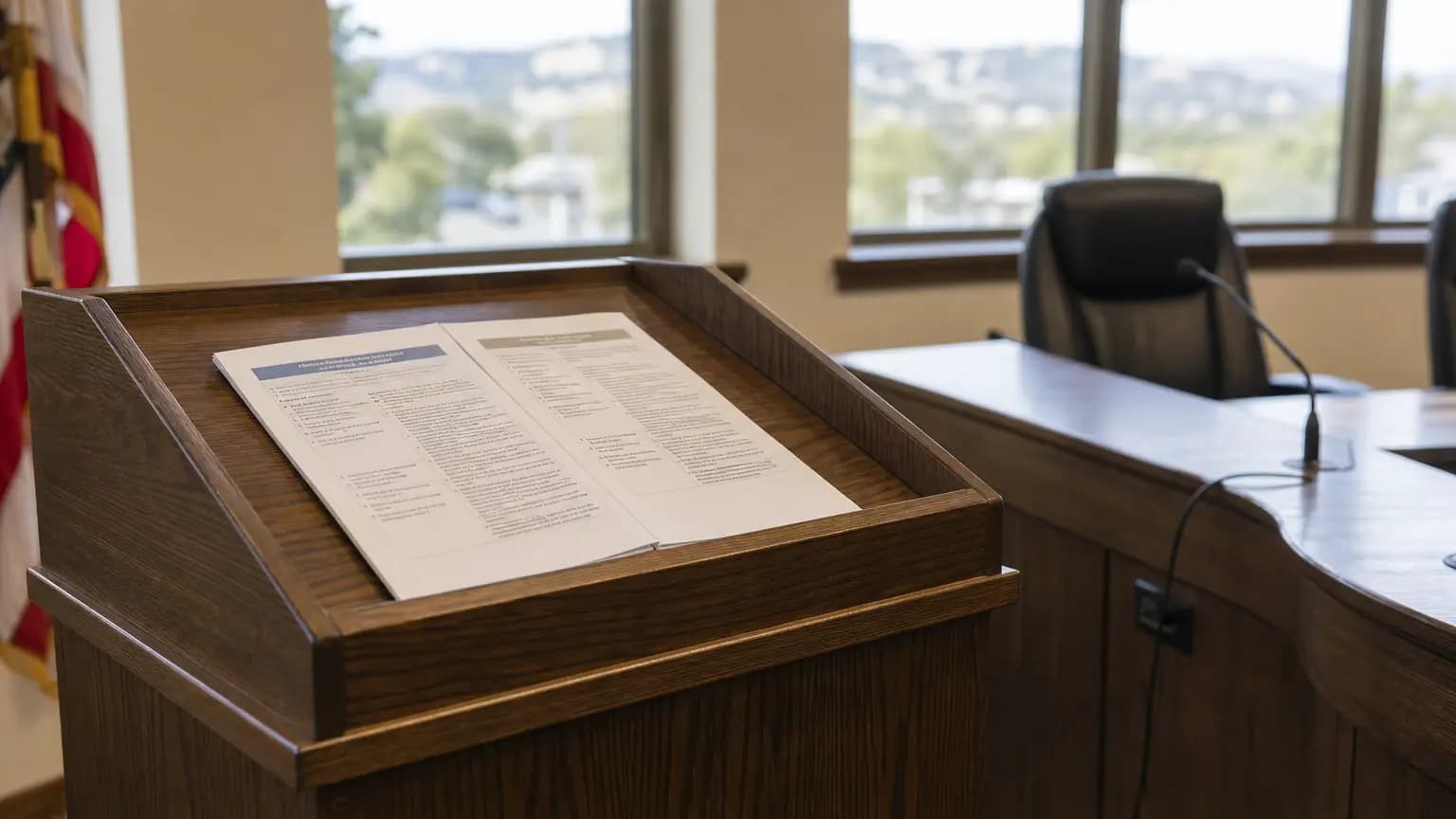
Residents attending — or trying to follow — Paso Robles City Council meetings will soon notice something new at the top of every published agenda: a Spanish-language version posted alongside the familiar English text. The change, which the Paso Robles Daily News first reported on July 18, 2026, is not optional. It is the direct result of a major rewrite of California's foundational open-meetings statute — and it is already in effect.
What Senate Bill 707 Requires
Senate Bill 707 — signed by Governor Newsom on October 3, 2025 — is a sweeping modernization of California's Ralph M. Brown Act, the foundational law that has governed open public meetings since 1953. The bill does two things at once: it makes permanent several pandemic-era teleconferencing provisions that were set to expire, and it introduces new, affirmative requirements for public agencies to actively remove barriers to participation.
The most consequential provisions for cities like Paso Robles kicked in on July 1, 2026. The law imposes new open-meeting and language-access standards on "eligible legislative bodies," requiring two-way remote public participation, real-time captioning, and translation of meeting agendas into applicable languages beginning July 1, 2026. Eligible legislative bodies include city councils and county boards of supervisors in jurisdictions with populations of 30,000 or more.
The bill requires the agenda for each meeting of an eligible legislative body to be translated into all applicable languages — defined as languages spoken jointly by 20% or more of the applicable population, provided that 20% or more of the population that speaks that language speaks English less than "very well," according to American Community Survey data.
The law is set to remain in force until July 1, 2030, giving cities a four-year window to embed the new practices before the Legislature reassesses the program.
Why Paso Robles Qualifies — and Why Spanish
At the 2020 census, the population of Paso Robles was 31,490 — just enough to clear the 30,000-resident threshold that makes the city's council an "eligible legislative body" under the statute. According to the city, approximately 24% of Paso Robles residents speak Spanish as their primary language, while about 73% speak English and the remaining 3% speak a variety of other languages. Because Spanish clears the law's 20% threshold, it is the one "applicable language" that triggers the translation requirement here.
That figure is consistent with the city's broader demographic profile. Hispanic or Latino residents made up 38% of Paso Robles's population at the 2020 census — a sizable community that has historically been rooted in the region's agriculture, construction, and hospitality industries. Having nearly a quarter of residents whose primary home language is Spanish, yet whose civic participation may have been hampered by English-only government documents, underscores why state lawmakers pushed for this change.
What Changes — and What Doesn't
The shift is more targeted than an all-encompassing translation of city documents. According to the city, City Council meeting agendas and instructions explaining how to participate will now be published in both English and Spanish. Full agenda packets — including staff reports and attachments — will not be translated.
The agenda itself, not the entire agenda packet, must be translated and posted concurrently with the English version under the Brown Act's agenda-posting deadlines. Each translation must also include instructions, in that language, for how to join the meeting via telephonic or internet-based service, including any registration requirements for public comment.
The Spanish-language agendas will be generated using online translation tools, as the law permits. SB 707 explicitly prohibits any cause of action regarding translation content or accuracy, whether produced by the agency, a digital or machine translation service, or the public. Cities may use AI or automated translation without fear of accuracy lawsuits. The English-language agenda will remain the official, legally controlling document.
The city is also going further than the law strictly requires: it will provide Spanish-language agendas for Planning Commission and Development Review Committee meetings, because those bodies hold decision-making authority. Officials said the practice follows the city's existing approach to making those meetings accessible in a manner similar to City Council meetings.
A Community Bulletin Board — and a Camera Upgrade
One lesser-noticed piece of SB 707 gives residents the right to post their own translations. Each eligible legislative body must maintain a publicly accessible location near where its official agenda is posted, for the purpose of allowing members of the public to post additional translations of the agenda. Paso Robles has designated a bulletin board on the first floor of City Hall for that purpose. The city has clarified, however, that community-posted translations will not be reviewed, verified, endorsed, or certified for accuracy, and that postings found not to be direct translations of the official agenda will be removed.
Before SB 707 took effect, the city already offered two-way telephone access to City Council meetings, allowing residents to listen remotely and submit verbal public comment by phone — a service that predates and satisfies the law's remote-participation mandate. What the current online broadcast has lacked is a live camera feed of the council chamber itself. That is about to change: a renovation of the Council Chamber currently underway will upgrade the audiovisual equipment and add a live camera view of the chamber to the online broadcast.
Council chambers are temporarily being held at the Norris Room, located at Centennial Park, 600 Nickerson Drive, Paso Robles. The renovation timeline was not specified by city officials.
What Residents Should Know
For Paso Robles residents — English- or Spanish-speaking — the practical upshot is greater transparency about what their elected officials are deciding and, critically, how to weigh in before a vote is taken. When agendas exist only in English, when meetings are in-person only, when there's no caption track for the resident who is hard of hearing — decisions get made without full community input. The residents most affected are often the least able to participate.
SB 707 also requires local agencies to make reasonable efforts to invite groups that do not traditionally participate in public meetings, such as outreach to media organizations serving non-English-speaking communities or civic engagement organizations.
Official agendas, full agenda packets, meeting notices, livestream information, and instructions for providing public comment are available at prcity.com/agendas. Residents may also contact the City Clerk's Office at (805) 237-3960 for assistance.
Reported by 805.life
Researched and written drawing on primary sources. Additional reporting: Paso Robles Daily News.
City
Paso RoblesAdditional Reporting
Paso Robles Daily NewsPublished
July 18, 2026
Reported and written by 805.life
Explore Paso RoblesAll Paso Robles NewsMore News from Paso Robles
 Paso Robles
Obituary notice: Charles ‘Chuck’ Hurley, 99, of Paso Robles
Paso Robles lost a true original this week. Charles "Chuck" Hurley, who called our town home for so many years, passed away at 99 after a brief illness — just shy of a century of life lived right here among us. Chuck belonged to that generation that quietly shaped Paso Robles into the place we love today. Neighbors who knew him will tell you he was the kind of man who showed up, pitched in, and never made a fuss about it. That's the North County way, and it's worth pausing to honor. Our thoughts are with his family and everyone who counted Chuck a friend. The Paso Robles Daily News shared his obituary this week; if you knew him, take a moment to remember a life well lived. He'll be missed.
 Paso Robles
Measure G-26: Investing in Our Kids and Our Community
If you've got kids in Paso Robles schools — or you just care about what our community looks like ten years from now — Measure G-26 is worth your attention. The Paso Robles Daily News reports that our school district just earned a credit upgrade while voters weigh this bond measure, which is basically a vote of confidence from the folks who watch the numbers for a living. Here's the local angle: good credit means better interest rates, and better rates mean more of our tax dollars go toward actual classrooms, repairs, and safety upgrades instead of debt costs. That's real money staying here in Paso Robles. We've watched our schools stretch tight budgets for years while our town keeps growing. Measure G-26 is our chance to invest in the kids who'll eventually run this place. However you vote, do your homework and show up — that's how Paso takes care of Paso.
 Paso Robles
Paso Robles woman sentenced to 9 years in prison for car break-ins, identity theft
A Paso Robles woman was sentenced to nine years in state prison this week for a string of car break-ins and identity theft, according to the Paso Robles Daily News. The judge dismissed a strike prior in the case, but the sentence could still grow to 11 years depending on what happens next. It's a sobering reminder for those of us who leave a purse, laptop, or wallet in the car while running into the store or grabbing coffee downtown. These crimes rarely stay small — stolen cards and IDs can haunt victims for months, long after the window is fixed. Good to see local law enforcement and the courts taking these cases seriously. Keep an eye on your belongings, Paso, and look out for your neighbors.