Congress Votes to Give Department of War Power over State on Behalf of Sable Offshore
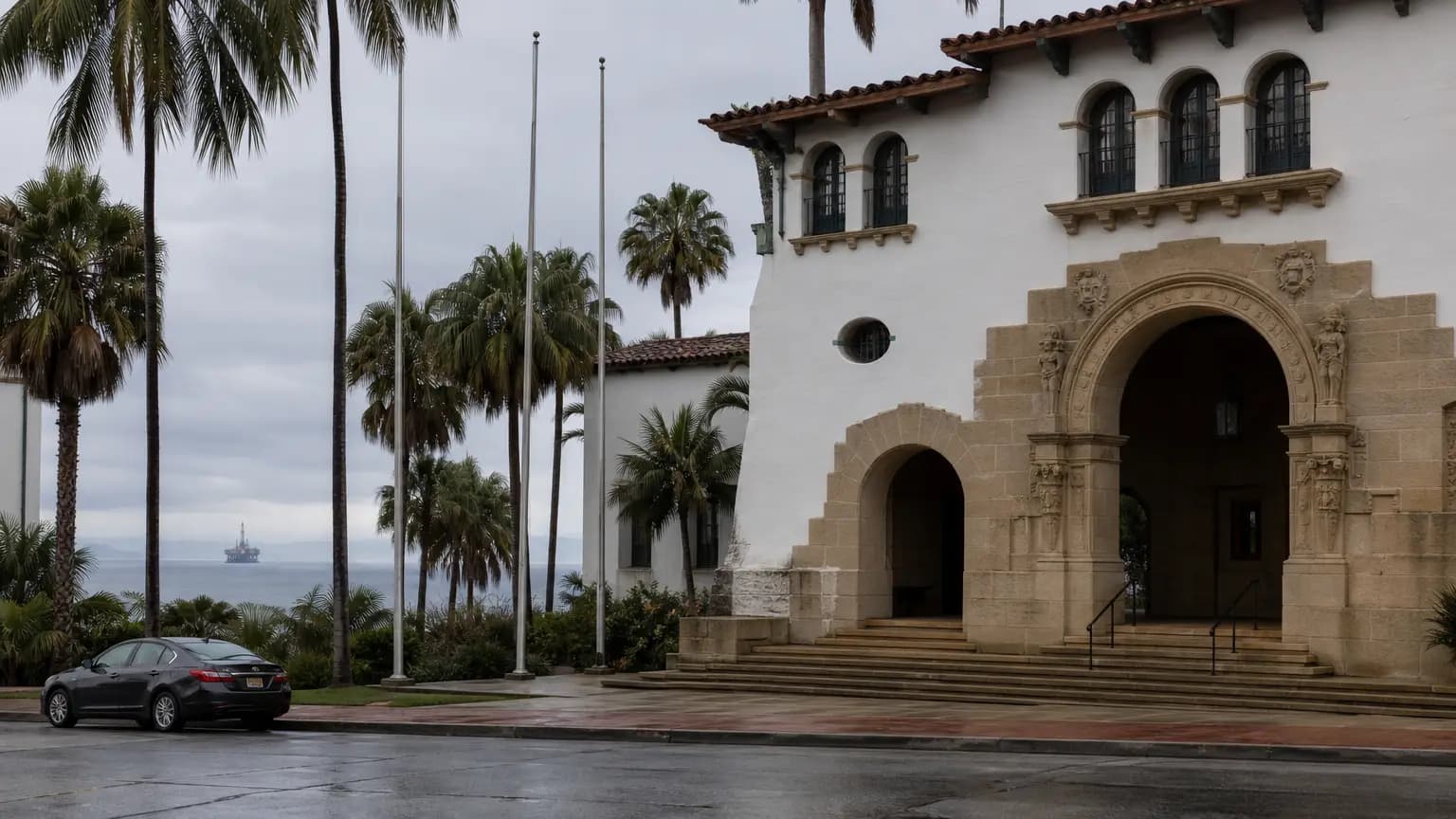
In a stark escalation of federal intervention into California’s coastal energy policy, the U.S. House of Representatives has narrowly approved a $1.15 trillion defense budget that includes a provision granting the Department of War unprecedented authority over state land. The measure, tucked into the National Defense Authorization Act (NDAA), specifically authorizes the federal government to condemn any state property necessary for Sable Offshore to transport crude oil from three offshore platforms off the coast of Santa Barbara.
The controversial provision, known as the Hunt amendment, passed by a razor-thin margin of 215 to 214 on Tuesday night, according to the Santa Barbara Independent. The broader NDAA subsequently cleared the House on Wednesday with a 216 to 212 vote. The legislative maneuvering has ignited fierce backlash from local environmental advocates and California lawmakers, who argue the federal government is weaponizing national security to bypass state environmental regulations.
A Targeted Override of State Authority
Authored by Republican Congressmember Wesley Hunt of Houston—a district where Sable Offshore is headquartered—the amendment explicitly names the Texas-based company. It outlines specific, legally contested pressure points where California state agencies have sought to limit, condition, or deny the company's applications to restart and operate its pipeline network.
Under the terms of the amendment, the Secretary of the Department of War would be granted the absolute authority to condemn state property in Santa Barbara and Kern counties. This condemnation power is intended to clear a path for Sable’s pipelines, which deliver oil from offshore platforms to commercial refineries. Furthermore, the bill's language renders such authorization irrevocable and irreversible, effectively preempting ongoing state and federal court deliberations regarding jurisdictional supremacy and safety compliance.
The legislation formally designates Sable’s unfettered production and transportation rights as a matter of national security. Proponents of the measure, including Sable Offshore, have argued that California's refining capacity has dropped to historic lows. Without adequate in-state production, the company claims, more refineries will close, leading to severe fuel shortages for military bases along the California coast and, consequently, compromising the nation's defense readiness.
'A Bailout for Polluters'
Santa Barbara Congressmember Salud Carbajal has emerged as a leading voice against the provision, forcefully condemning the amendment on the House floor. Carbajal, whose district includes the site of the devastating 2015 Refugio oil spill caused by severely corroded pipelines, dismissed the national security framing as a pretext for corporate favoritism.
“This is not about energy independence or national security. It’s about giving Big Oil special treatment at the expense of California,” Carbajal argued. “We know that the military does not need this provision to ensure a stable supply. We are already the largest oil producer in the world, producing nearly 14 million barrels a day.”
Drawing on the lingering trauma of past environmental disasters, Carbajal labeled the legislation a bailout for polluters, highlighting the irony of a lawmaker from Texas intervening to override the safety objections of a California community directly threatened by pipeline failures.
Deepening Federal Intervention
The House vote marks the most dramatic intervention by the federal government on Sable’s behalf, but it is far from an isolated incident. It represents the culmination of a broader strategy by the executive branch to expedite fossil fuel production under the guise of emergency powers.
Late last year, the federal agency responsible for pipeline safety asserted sweeping jurisdictional authority to approve pipeline repairs made by Sable. The agency simultaneously ruled that safety objections raised by the California Office of the State Fire Marshal were excessive, claiming state regulations were no longer aligned with modern technological realities regarding pipeline corrosion control.
Earlier this year, the Department of Justice authorized the Trump administration to invoke the Defense Production Act—a 1950 statute that allows the White House to mandate business operations for national security purposes. Acting on this authority, the Secretary of the Interior ordered Sable to commence production this March, a directive the company had actively requested.
What Comes Next for the 805 Region
While the House passage represents a significant victory for Sable Offshore, the battle is far from over. Eduardo Carrizosa, a spokesperson for Congressmember Carbajal, emphasized that the defense authorization bill is not yet final. The Senate has yet to vote on the NDAA, and Senate Democrats have successfully stalled the legislation thus far.
Republican senators have also expressed reservations regarding the massive defense spending bill. These concerns have been amplified by the ongoing economic toll and costs associated with the war with Iran, raising questions about the defense budget's long-term viability and political momentum.
For residents of the Central Coast, the stakes remain uniquely high. The outcome of the Senate vote will ultimately determine whether the Department of War can unilaterally bypass California’s environmental oversight, strip state agencies of their regulatory power, and permanently secure the infrastructure that local communities have spent years fighting to control. As the bill moves to the Senate, local advocacy groups and state environmental regulators are bracing for a final, decisive showdown over states' rights and coastal protection.
Reported by 805.life
Researched and written drawing on primary sources. Additional reporting: Santa Barbara Independent.
City
Santa BarbaraAdditional Reporting
Santa Barbara IndependentPublished
July 22, 2026
Reported and written by 805.life
Explore Santa BarbaraAll Santa Barbara NewsMore News from Santa Barbara
Al no haber arma homicida, el juicio contra Caleb Flynn se centra en la relación extramatrimonial y en el supuesto intruso
A murder trial unfolding just up the coast is drawing attention here in Santa Barbara, and it's the kind of case that's hard to look away from. Caleb Flynn's trial, reported by KEYT News Channel 3-12, has no murder weapon — instead, prosecutors are leaning on testimony about a secret church affair, thousands of deleted texts, and lies told to the FBI. Even the family dogs stayed eerily quiet that night, which has become a strange piece of the puzzle. For those of us in the 805, it's a reminder that even tight-knit communities aren't immune to the kind of drama you'd expect from a courtroom thriller. Cases like this can shake faith in neighbors and institutions, and they raise hard questions about trust and evidence. We'll be watching how the trial unfolds — not out of spectacle, but because it touches on the real lives of people not so far from home.
UCSB Recovers From Slow Start, Beats CS Northridge in Big West Volleyball Opener
Good news for Gaucho fans — UCSB women's volleyball finally got back in the win column Friday night at the Thunderdome, shaking off a slow start to beat Cal State Northridge in the Big West opener. After dropping the first set, the team looked like a squad still finding its footing following a tough preseason that ended on a six-match skid. But conference play is a fresh slate, and the Gauchos took advantage. For our Isla Vista and Goleta neighbors, there's something special about catching a match on campus — cheap tickets, loud student section, and a team that's easy to root for. Thanks to Noozhawk for the coverage. If you haven't been to a UCSB volleyball match yet, consider this your sign to check one out this season.
Cottage Health Hosts Sepsis Conference Focused on Early Recognition and Treatment
Cottage Health pulled together doctors, nurses, pharmacists, respiratory therapists and other clinicians from across the region on Friday, Sept. 18, for a conference zeroing in on one of medicine's trickiest foes: sepsis. If you've never heard the word, you're not alone — but it's a leading cause of death in hospitals, and the difference between a good outcome and a tragic one often comes down to how fast someone recognizes the signs. That's why this gathering matters here. Santa Barbara County spans a big, sometimes rural region, and not every clinic or ER has the same resources. When Cottage Health convenes providers from up and down the 805 to share protocols and lessons learned, it quietly raises the standard of care for all of us — whether you're in Goleta, Lompoc, Santa Maria or Santa Ynez. The Santa Barbara Independent first reported the conference, and it's the kind of unglamorous, behind-the-scenes work that keeps our community healthier. Next time you or a loved one lands in an ER with a puzzling fever, this is the preparation you'll be glad happened.