Conservationists Hold Town Hall in Santa Barbara on Protecting Roadless Forests
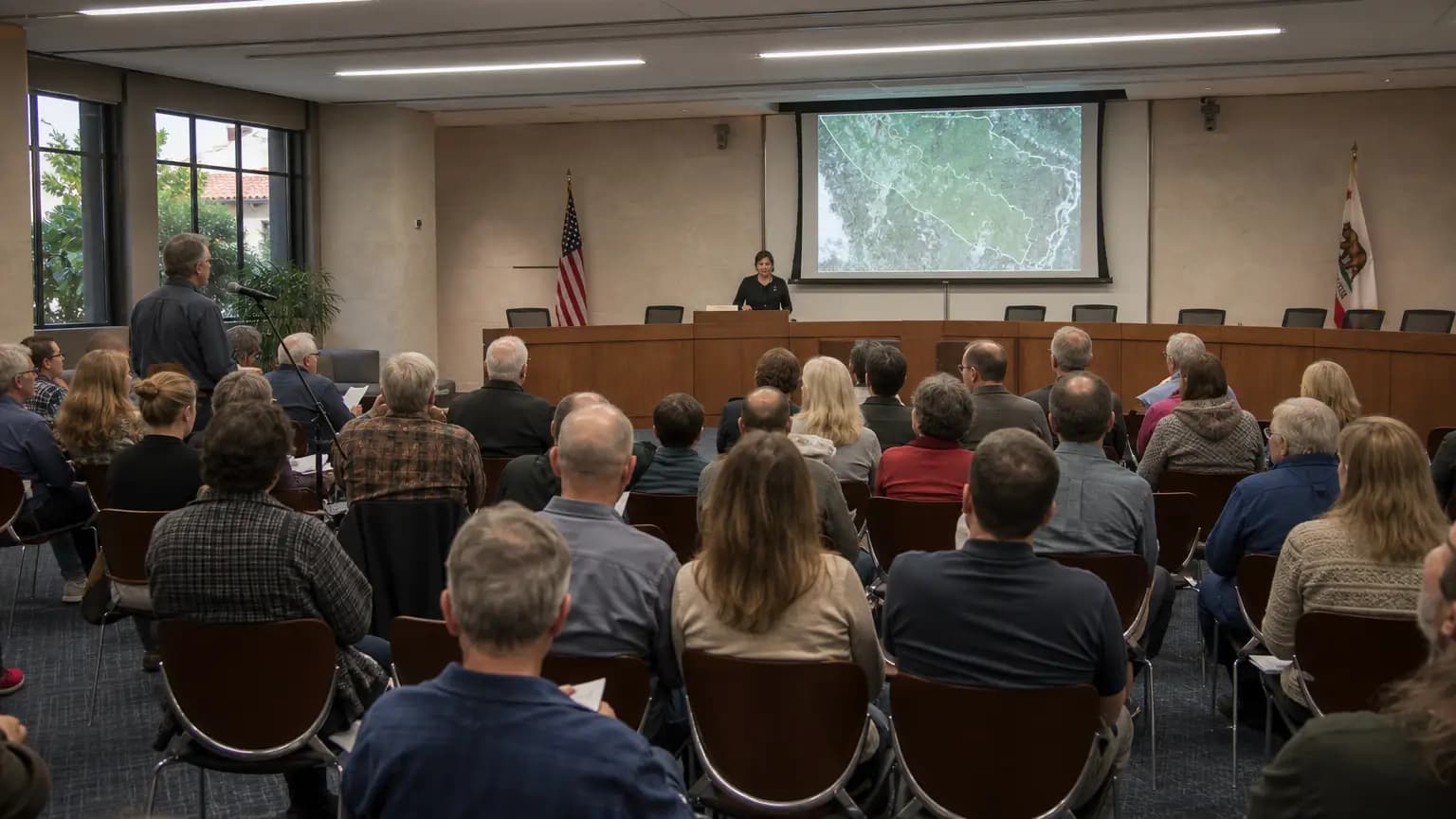
On the same morning that a U.S. Senate committee voted to gut one of the country's most popular forest-protection laws, about 50 Santa Barbara residents gathered at an outdoor courtyard on the Riviera to hear what losing that law might mean for their own backyard.
The June 10 town hall, hosted by nonprofit Los Padres ForestWatch at the Toad & Co. courtyard at 2020 Alameda Padre Serra, was timed to a crisis unfolding simultaneously in Washington, D.C. While attendees filed in, Sen. Mike Lee (R-Utah) was attaching a last-minute amendment to the previously bipartisan Wildfire Prevention Act that would permanently nullify the 2001 Roadless Area Conservation Rule — the federal regulation that has protected tens of millions of acres of national forest from new road construction and commercial logging for a quarter century. The amendment passed the Senate Energy and Natural Resources Committee on an 11-to-9, party-line vote, as the Santa Barbara Independent reported.
What the Roadless Rule Protects — and Why Santa Barbara Should Care
The Roadless Area Conservation Rule, enacted in 2001 after what Sen. Alex Padilla (D-CA) called "one of the most extensive and rigorous public rulemaking processes in history" — drawing over 1.6 million public comments — prohibits road construction, reconstruction, and commercial timber harvesting in inventoried roadless areas of National Forest System lands to preserve their ecological and recreational value.
For Santa Barbara County, the stakes are concrete. Los Padres National Forest contains 37 inventoried roadless areas totaling 635,106 acres spanning Santa Barbara, Ventura, Kern, San Luis Obispo, and Monterey Counties, according to Los Padres ForestWatch. Those acres harbor critical habitat for endangered species, feed the headwaters of local rivers, and contain the Chumash cultural sites and backcountry trails — 349 miles of them — that define outdoor life on the Central Coast.
One of those roadless units contains headwaters feeding Jameson Lake, a key water source for southern Santa Barbara County. Rescinding the rule would expose these lands to commercial logging, new roads, and infrastructure development — threats that ForestWatch says are no longer hypothetical given the current pace of federal action.
A Two-Track Assault on the Rule
The Senate committee vote is only one of two avenues the federal government is pursuing to dismantle the Roadless Rule. The Trump administration has been working in parallel through an administrative rulemaking process since Secretary of Agriculture Brooke Rollins announced in June 2025 the department's intent to rescind the 2001 rule. The USDA published a notice of intent in the Federal Register in August 2025 and accepted public comments through September 19, 2025. According to the U.S. Forest Service, the agency is now working toward publishing a draft Environmental Impact Statement and proposed rule, with a final decision expected in late 2026.
The legislative route Lee is pursuing is more sweeping: according to Outdoor Life, his amendment would not only nullify the existing rule outright but would also bar the Forest Service from ever issuing similar roadless protections in the future. The amended Wildfire Prevention Act now heads to the full Senate for a floor vote, where passage is expected to require 60 votes.
Californians pushed back hard in committee. Sen. Padilla argued from the floor that the Roadless Rule "helps protect almost 4 million acres of roadless areas" in California and supports the state's $74 billion outdoor recreation economy. He and other Democrats unsuccessfully moved to strike the repeal from the bill, calling it a "poison pill in what is a tremendous bipartisan opportunity."
The Wildfire Debate — and Why Roads May Make Fires Worse
The administration's central argument for rescinding the rule is wildfire prevention: more roads into the backcountry, the logic goes, means faster access for firefighters. USDA Secretary Rollins has called the rule "outdated" and "overly restrictive," saying its removal will enable "responsible timber production" and better fire management.
But conservationists — and a growing body of research — dispute that framing. A 2026 study cited by Sen. Ron Wyden (D-OR) found that wildfire ignition density within 50 meters of roads was roughly four times higher than in non-wilderness, non-roadless forests. The Forest Service's own data indicates that nearly 85 percent of wildfires are human-caused, and 90 percent of those begin within a half-mile of a road, according to Outdoor Life.
At the Santa Barbara town hall, Eric Cárdenas, the director of impact and advocacy at Santa Barbara Botanic Garden, put it simply: "Where roads go, people follow — fires follow," as the Independent reported.
Andrew Madsen, public affairs officer for Los Padres National Forest, told the Independent via email that fires in wilderness areas are already fought using aerial retardant, smokejumpers, and spike camps — and that half of Los Padres is wilderness, which by definition prohibits roads and mechanized equipment. The practical question, conservationists say, is whether any new roads built under a rescinded rule would be used solely for fire access or would become public roads — a distinction with enormous consequences for ignition risk.
The Center for Western Priorities found that the Forest Service treated roughly 35 percent fewer acres of hazardous fuels in 2025 than in 2024, a reduction attributed to federal agency downsizing — a trend that ForestWatch says makes protecting intact backcountry forests even more urgent. Meanwhile, the Wilderness Society notes that nearly 120 firefighters signed a letter to Congress in April attesting to the Roadless Rule's value for sustainable wildland firefighting.
What Comes Next — and How to Get Involved
The public's voice has been overwhelming on this issue: more than 99 percent of comments submitted during the USDA's administrative review opposed rescinding the rule, according to the Center for Western Priorities. But conservationists warn that the comment record has not slowed the administration.
A second, critical public comment window is coming. ForestWatch says the USDA's draft Environmental Impact Statement — and the comment period that will accompany it — could open at any time, though it has been delayed past the originally projected March 2026 timeline. That comment period may be as short as 15 to 30 days, organizers warned, and the agency has announced no public hearings.
On the legislative side, Santa Barbara Congressmember Salud Carbajal is among the co-sponsors of the Roadless Area Conservation Act, a bill that would codify the rule into permanent statute — essentially making it act-of-Congress law rather than an administrative rule that any administration can revoke.
ForestWatch is continuing its regional town hall series: a fourth event is planned for June 24 at Oddfellows Hall in San Luis Obispo (520 Dana St., 5:30–8 p.m., free admission), organized in partnership with the Sierra Club, CalWild, Latino Outdoors, and The Wilderness Society.
For Maureen Ellenberger, the Sierra Club's Santa Barbara-Ventura chair, the urgency is straightforward: "Once protections are gone, they do not come back easily."
Residents can track the comment period and find an interactive map of Los Padres roadless areas at forestwatch.org/roadless.
Reported by 805.life
Researched and written drawing on primary sources. Additional reporting: Santa Barbara Independent.
City
Santa BarbaraAdditional Reporting
Santa Barbara IndependentPublished
June 16, 2026
Reported and written by 805.life
Explore Santa BarbaraAll Santa Barbara NewsMore News from Santa Barbara
Al no haber arma homicida, el juicio contra Caleb Flynn se centra en la relación extramatrimonial y en el supuesto intruso
A murder trial unfolding just up the coast is drawing attention here in Santa Barbara, and it's the kind of case that's hard to look away from. Caleb Flynn's trial, reported by KEYT News Channel 3-12, has no murder weapon — instead, prosecutors are leaning on testimony about a secret church affair, thousands of deleted texts, and lies told to the FBI. Even the family dogs stayed eerily quiet that night, which has become a strange piece of the puzzle. For those of us in the 805, it's a reminder that even tight-knit communities aren't immune to the kind of drama you'd expect from a courtroom thriller. Cases like this can shake faith in neighbors and institutions, and they raise hard questions about trust and evidence. We'll be watching how the trial unfolds — not out of spectacle, but because it touches on the real lives of people not so far from home.
UCSB Recovers From Slow Start, Beats CS Northridge in Big West Volleyball Opener
Good news for Gaucho fans — UCSB women's volleyball finally got back in the win column Friday night at the Thunderdome, shaking off a slow start to beat Cal State Northridge in the Big West opener. After dropping the first set, the team looked like a squad still finding its footing following a tough preseason that ended on a six-match skid. But conference play is a fresh slate, and the Gauchos took advantage. For our Isla Vista and Goleta neighbors, there's something special about catching a match on campus — cheap tickets, loud student section, and a team that's easy to root for. Thanks to Noozhawk for the coverage. If you haven't been to a UCSB volleyball match yet, consider this your sign to check one out this season.
Cottage Health Hosts Sepsis Conference Focused on Early Recognition and Treatment
Cottage Health pulled together doctors, nurses, pharmacists, respiratory therapists and other clinicians from across the region on Friday, Sept. 18, for a conference zeroing in on one of medicine's trickiest foes: sepsis. If you've never heard the word, you're not alone — but it's a leading cause of death in hospitals, and the difference between a good outcome and a tragic one often comes down to how fast someone recognizes the signs. That's why this gathering matters here. Santa Barbara County spans a big, sometimes rural region, and not every clinic or ER has the same resources. When Cottage Health convenes providers from up and down the 805 to share protocols and lessons learned, it quietly raises the standard of care for all of us — whether you're in Goleta, Lompoc, Santa Maria or Santa Ynez. The Santa Barbara Independent first reported the conference, and it's the kind of unglamorous, behind-the-scenes work that keeps our community healthier. Next time you or a loved one lands in an ER with a puzzling fever, this is the preparation you'll be glad happened.