Council supports feasibility review for homeless housing project
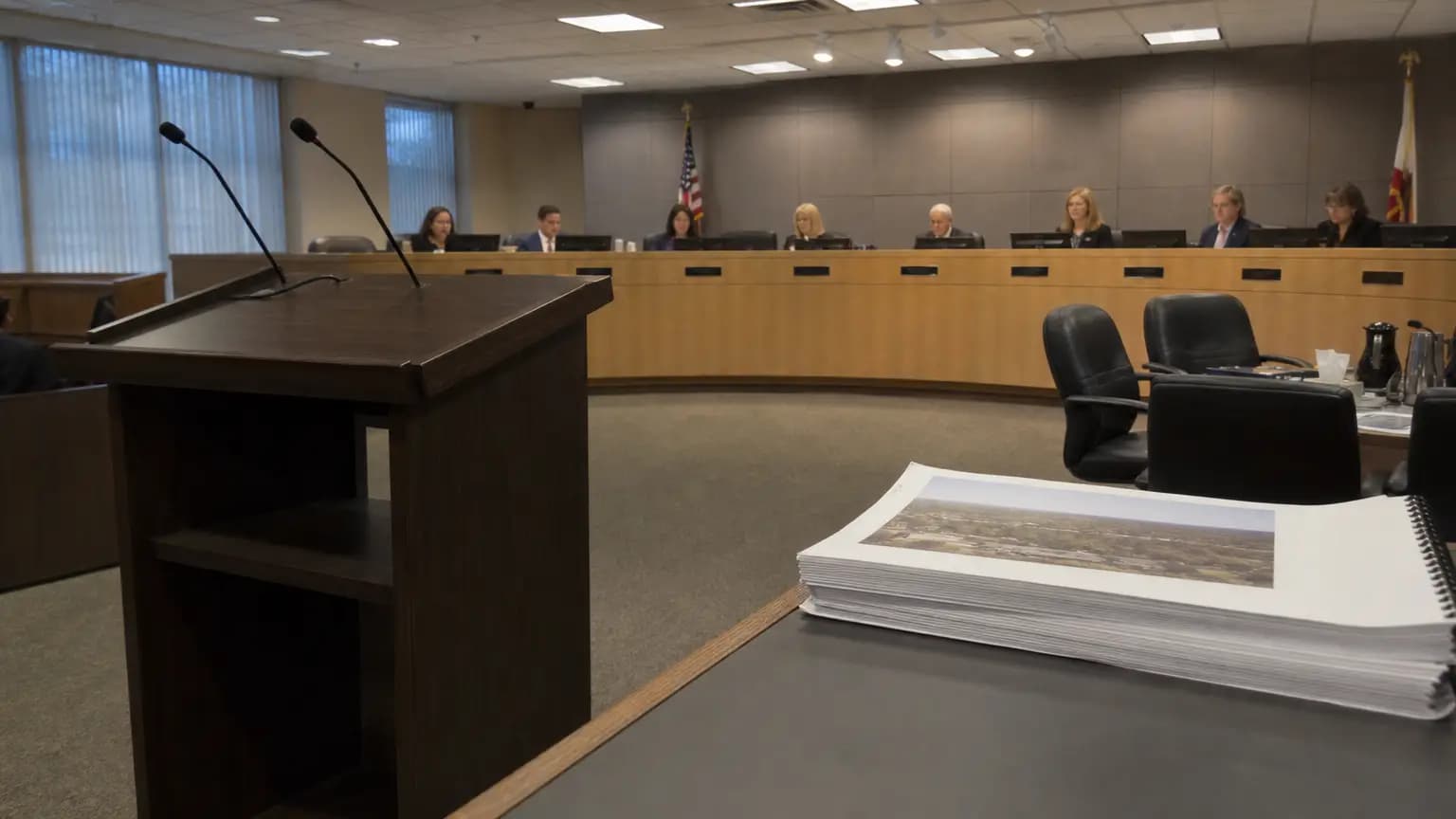
The Simi Valley City Council took a unanimous step toward addressing one of the city's most persistent community challenges on June 8, voting to formally back a feasibility study for a potential transitional housing development at the Samaritan Center on Royal Avenue — a move that, while nonbinding, signals a meaningful shift in how city leaders are approaching homelessness, the Simi Valley Acorn reported.
A Vote That Doesn't Commit — But Does Signal Intent
The council's action was a unanimous approval of a letter of support for the feasibility study — not a funding pledge or a green light for construction. City Manager Samantha Argabrite was explicit about that distinction at the June 8 meeting. "A letter of support does not obligate the city to support a future transitional housing project or provide funding," she said, according to the Acorn.
Still, the letter carries weight. It states the study will evaluate housing models, site feasibility, costs and service partnerships, and that the project could be positioned to compete for state and federal funding. It also makes clear that any future development would undergo full public review and require additional council approval — a reassurance likely aimed at neighbors and nearby institutions. The council's letter further notes the effort aligns with the city's fiscal year 2025-26 priorities on homelessness and housing stability, and encourages engagement from housing developers, funders and public agencies.
The proposed site is the Samaritan Center at 280 Royal Ave., which has served as one of Simi Valley's primary homeless services hubs for decades. According to Cal Lutheran's Center for Nonprofit Leadership, the organization recently marked 30 years of supporting the local unhoused community — a milestone that also underscores how long the underlying need has persisted without a permanent housing solution in place.
Filling a Gap the City Has Long Acknowledged
The council's enthusiasm for the study is rooted in a structural problem that has dogged Simi Valley for years: the city has no emergency overnight shelter and offers no direct homeless services of its own. The City of Simi Valley's own website notes that it "does not provide any direct homeless services or emergency housing" and instead provides referrals to outside agencies.
That reality has left organizations like the Samaritan Center as the primary safety net for the city's unhoused population. The nonprofit currently provides case management, housing navigation, food assistance and other wraparound services — but, critically, no overnight housing. GuideStar's profile of the organization notes that "currently, Simi Valley does not have an overnight shelter to support the unhoused population and with the high cost of rent, finding clients affordable housing is very challenging."
Samaritan Center President Doug Landon said the study would help determine what type of housing could be built on the site — including options such as tiny homes or more traditional structures — along with estimated costs and possible on-site configurations. Once the study is complete, he said the likely next step would be a competitive request for proposals to identify a developer or contractor with relevant experience. Landon estimated the study and early planning phase would take approximately six months.
Councilmembers: Survival Services Aren't Enough
Two councilmembers used the June 8 discussion to articulate why they believe the city must move beyond its current approach.
Councilmember Rocky Rhodes drew a sharp line between what existing programs do and what they fail to do. "Services for food and mental health are a great way to keep people alive, but they are not designed to transition people from where they are to where they need to be," Rhodes said, according to the Acorn. He also noted that residents are seeing more unhoused individuals in public spaces — at bus stops, on sidewalks and in commercial areas — following recent encampment dispersals, a visible consequence of displacement without a stable destination.
Councilmember Joseph Ayala pointed to the troubled track record of housing-first efforts in Los Angeles, where he said projects sometimes failed when they lacked sufficient supportive services. He said the Samaritan Center's model — which includes wraparound services and requires participants to qualify for placement — is designed to avoid that pitfall. "It's not just putting people into housing and hoping it works," Ayala said. "There are requirements, there's structure, and there are services built-in so people actually have a chance to move forward and stay housed."
The Arroyo Simi encampment has been a flashpoint in those discussions. The Simi Valley Acorn previously reported that an estimated 100 or more people were living along the Arroyo Simi at the height of the encampment — a situation that drew fire concerns from residents and neighboring Moorpark. Officials cleared the site in late 2025, but without transitional housing, those individuals had no clear stable destination.
Broad Community Support — Including Schools
One detail that sets this proposal apart from past discussions is the early community buy-in. The Samaritan Center has already discussed the concept with Simi Valley Unified School District officials and with administrators at nearby Madera Elementary School, both of which have expressed support for exploring the idea, according to the Acorn's reporting on the city's letter.
That early engagement with schools — institutions that often serve as community barometers — may help defuse concerns that sometimes derail similar projects. By contrast, Los Angeles and other large cities have seen proposed homeless housing developments bog down in neighborhood opposition before studies were even complete.
What Comes Next
For residents, the practical upshot is this: nothing is built, and nothing is funded yet. The six-month feasibility study is the next concrete milestone. It will determine whether the Royal Avenue site can physically and financially support a transitional housing development, what form that development would take, and what grant programs might be available to fund it.
If the study returns a positive result, the Samaritan Center would issue a competitive RFP to identify a development partner — a process that would further refine costs, design and funding strategy. Any actual project would still require a separate council vote and a public review process before breaking ground.
For a city that has long wrestled with homelessness while offering limited direct solutions, the council's unanimous letter of support is a notable — if early — turning point. As Councilmember Rhodes put it, what Simi Valley has been missing is a bridge: "something that helps people stabilize and actually get into permanent housing instead of just remaining in crisis." The feasibility study is, at minimum, the first plank of that bridge.
Reported by 805.life
Researched and written drawing on primary sources. Additional reporting: Simi Valley Acorn.
City
Simi ValleyAdditional Reporting
Simi Valley AcornPublished
June 19, 2026
Reported and written by 805.life
Explore Simi ValleyAll Simi Valley NewsMore News from Simi Valley
 Simi Valley
Leaders discuss county’s demographic dilemma
Friends, have you noticed it too? Ventura County is changing. We're getting older, fewer babies are being born, and young families—the ones who'd love to put down roots in Simi Valley—are finding it harder and harder to afford life here. That was the big topic at the Ventura County Civic Alliance's Future of the Region Conference in Camarillo on Sept. 14, as the Simi Valley Acorn reported. Leaders gathered to wrestle with what these demographic shifts mean for our workforce, housing, schools and public services down the road. This isn't just an abstract statistic. It's about whether our kids can afford to stay, whether local businesses can find workers, and whether our neighborhoods keep their vibrancy. Worth paying attention to—these decisions will shape Simi Valley for decades.
 Simi Valley
Park board plays out new budget for Simi/Oak Park
Big news for our corner of the 805: the Rancho Simi Recreation and Park District just approved a $70 million budget, and about $20 million of that is going straight into capital improvements. We're talking nearly $7.5 million for Activity Center Phase III and roughly $2.3 million for a new BMX track—projects that'll give Simi Valley and Oak Park families more places to play, gather, and stay active. If you've spent any weekend circling a packed parking lot or waiting on a field, you know how much our parks carry this community. This kind of investment isn't just concrete and dirt—it's birthday parties, after-school practices, and neighbors actually running into neighbors. Shoutout to the Simi Valley Acorn for keeping us posted on the details. Keep an eye on construction timelines, because these upgrades will shape our weekends for years to come.
 Simi Valley
Mayor puts the shine on Simi Valley’s future
Big things are brewing in Simi Valley, and Mayor Dee Dee Cavanaugh laid it all out at the annual State of the City. From a new office to handle the boom in filming around town, to the possibility of 1,000 fresh Pennymac jobs, to whispers of a professional hockey team calling our city home—there's a lot to keep an eye on. The mayor also highlighted a declining crime rate and nearly $28 million in new infrastructure projects, which means safer streets and smoother roads for all of us. As the Simi Valley Acorn reported, these developments could reshape our community in exciting ways. It's the kind of news that makes you proud to live here. Whether you're a longtime resident or new to the 805, these changes touch us all—so stay tuned, neighbors. Simi Valley's future is looking bright.