Council vote to decide downtown’s future
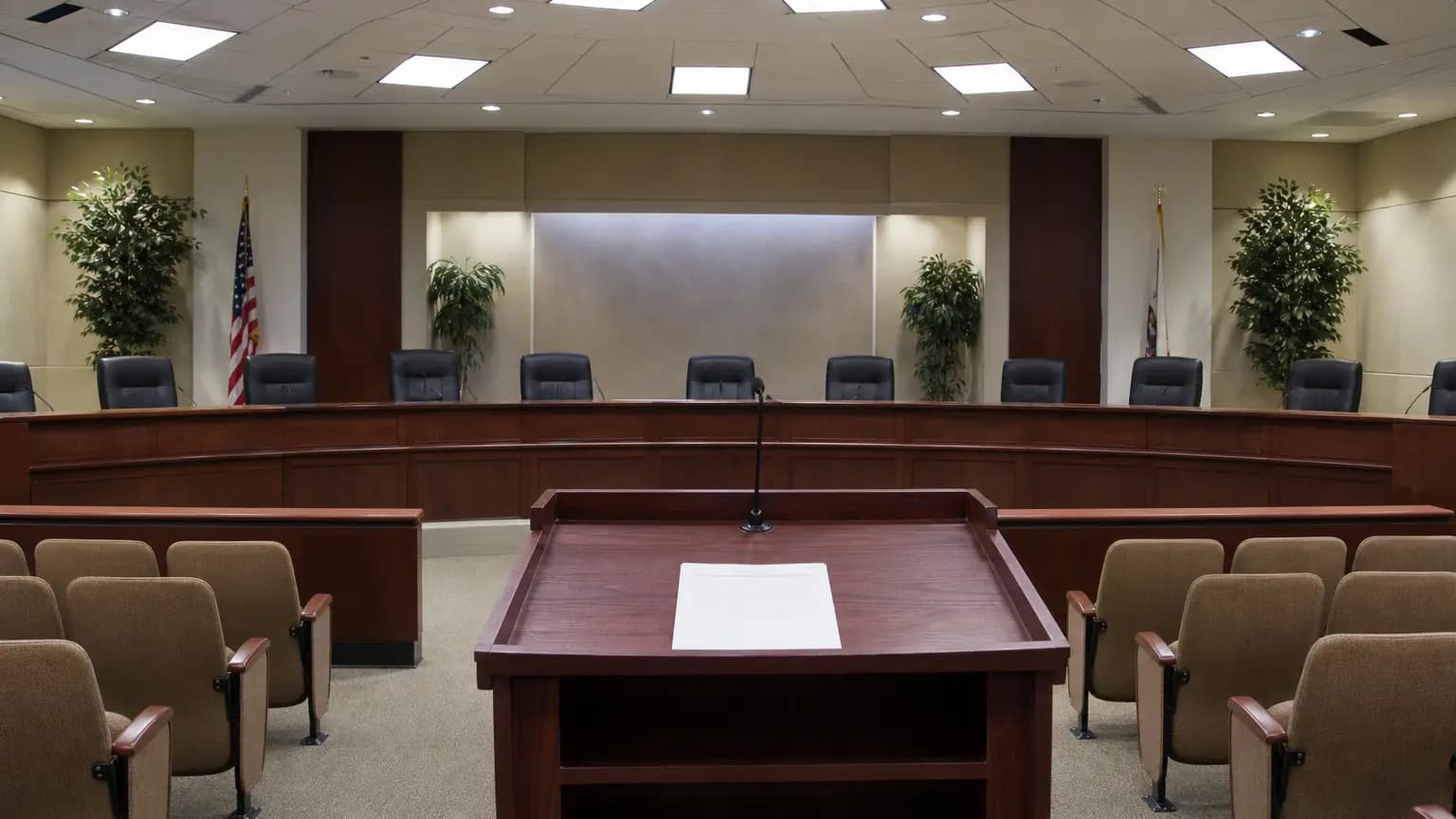
After decades of planning and years of community debate, Thousand Oaks is days away from a pivotal decision that could fundamentally reshape the city's civic core. The City Council is scheduled to hold a public hearing at 6 p.m. on Tuesday, June 23, at the Scherr Forum at City Hall on a sweeping package of land-use approvals for the Downtown Thousand Oaks Project — a mixed-use development that supporters say would finally give the city a true downtown, and that critics say would set a troubling precedent for density and height.
What the Council Will Decide
The June 23 agenda is substantial. According to the city's public hearing notice, councilmembers are being asked to certify a full Environmental Impact Report, approve a General Plan Amendment, amend the Civic Arts Plaza Specific Plan, adopt a Tentative Tract Map, and issue a Development Permit — all in a single meeting. The General Plan Amendment would redesignate approximately 5.33 acres near the Civic Arts Plaza from Institutional to Mixed-Use and allow for taller buildings on part of the roughly 17.68-acre project site, according to the CEQA filing on record with the state.
As the Thousand Oaks Acorn reported, the project would construct four new buildings: a seven-story, 142-room hotel totaling approximately 125,675 square feet; a seven-story, 161-unit mixed-use apartment building with 26 affordable units and a subterranean garage spanning roughly 258,000 square feet; a four-story, 79-unit mixed-use building with 13 affordable units totaling approximately 111,454 square feet; and a two-story restaurant building of about 6,725 square feet. Both seven-story structures would rise on either side of a new street carved between Thousand Oaks Boulevard and Highway 101, to the west of the Civic Arts Plaza and City Hall. Public amenities in the proposal include a park plaza with a children's play structure, a splash pad, an outdoor amphitheater, and flexible open space.
Because the site is city-owned land, Deputy City Manager Akbar Alikhan — not a private developer — has been the project's primary presenter at public hearings, the Acorn previously noted.
A Decades-Long Vision, Now at a Crossroads
The push for a downtown Thousand Oaks is not new. The City Council formally made the project a priority in 2017, and in 2018 adopted the Downtown Core Master Plan — a 68-acre vision for a more walkable, pedestrian-oriented civic center, according to prior Acorn coverage. The city, unlike neighboring communities such as Ojai, Fillmore, and Ventura, has long lacked a recognizable downtown, a gap that officials have described as a quality-of-life shortcoming for residents.
Even if the council approves the requested changes on June 23, actual construction would still be years away, the Acorn has reported. The vote would greenlight the regulatory framework — zoning, land use, and environmental clearance — needed before a shovel could break ground.
The project's path through the planning process has not been without friction. On May 18, the Planning Commission voted 4-1 to recommend the General Plan Amendment to the City Council. Commissioner Mic Farris cast the lone dissenting vote, arguing that the proposal exceeded the city's recently adopted 75-foot height limit for mixed-use buildings and bypassed the broader public process that established it, the Acorn reported. The May hearing drew roughly 40 residents who spoke on the single agenda item.
The Height Fight: 75 Feet vs. 90 Feet
The sharpest point of conflict centers on building height. The city's 2045 General Plan established a 75-foot height limit for mixed-use development, according to the Acorn's coverage of a prior hearing. The proposed seven-story hotel, however, would top out at 90 feet — 15 feet above that standard — requiring the council to approve an amendment to allow the taller structure.
"Seven stories completely opposes the face of this community," resident Michelle Riebeling said during public comment at the Planning Commission hearing, according to the Acorn. She and other opponents argued that the scale is incompatible with the low-profile character residents value about Thousand Oaks. Former planning commissioner Janet Wall warned that approving the project "will set a dangerous precedent" and urged the city to "maintain the charm and semi-rural ambience that defines us."
Opponents also raised concerns about increased traffic, the ability to safely evacuate during emergencies — a pointed concern given the region's wildfire history — the removal of protected trees, and potential strain on water supplies.
One additional wrinkle: Commissioner Farris noted that because the project sits on city-owned land, it is exempt from Measure E, the voter-approved slow-growth initiative that residents passed in 1996 to require voter approval for certain increases in residential dwelling units. That exemption has frustrated some critics who feel the community should have a direct say on a project of this scale.
The Case for the Project
Proponents argue the economic and housing data make a compelling case. Danielle Borja, president and CEO of the Conejo Valley Chamber of Commerce — which operates Visit Conejo Valley, the region's tourism improvement district — told the Planning Commission that local hotels carry an annual occupancy rate of about 68.4%, above the statewide average of 67.25%, while the Conejo Valley commands the region's highest average daily room rate at more than $162, the Acorn reported.
"When you have high occupancy paired with climbing room rates, it reveals a supply-side issue," Borja said. She also argued that what local hotels lack is not visitors, but "a centralized, walkable destination for those visitors to spend their time" — exactly what the downtown project aims to provide, according to the Acorn's earlier reporting.
On the housing side, the project's 240 total residential units — including 39 income-restricted affordable apartments spread across the two residential buildings — are cited by supporters as a meaningful contribution to the city's tight housing supply at a time when state pressure on local governments to build more homes is intensifying.
What Happens Next
Residents who want to weigh in before the council vote can attend Tuesday's meeting in person at the Scherr Forum, 2100 E. Thousand Oaks Blvd., or watch the live stream through the city's website. Public comment will be accepted at the meeting. More information on the agenda item is available at toaks.gov.
If the council approves the full package of amendments and permits on June 23, the city would still need to go through detailed design, financing, and contracting phases before construction begins. If the council rejects or substantially modifies the proposal, city officials would face the question of what comes next for a site that has been the focus of planning efforts and public spending for the better part of two decades. Either way, Tuesday's vote marks a defining moment for Thousand Oaks — one that will shape the skyline, and the character, of its civic heart for generations.
Reported by 805.life
Researched and written drawing on primary sources. Additional reporting: Thousand Oaks Acorn.
City
Thousand OaksAdditional Reporting
Thousand Oaks AcornPublished
June 18, 2026
Reported and written by 805.life
Explore Thousand OaksAll Thousand Oaks NewsMore News from Thousand Oaks
 Thousand Oaks
From decline to design
Some good news for our corner of the 805: after years of watching enrollment slip, Conejo Valley Unified may finally be catching its breath. The district reported 15,332 students this fall — just one fewer than last year — and board members say the long slide looks like it's hit pause. For Thousand Oaks families, that stability matters. Enrollment drives school funding, staffing and the programs our kids count on, so a leveling-off is worth paying attention to. As the Thousand Oaks Acorn reported, officials shared the numbers at the Sept. 3 board meeting and are hopeful the trend holds. It's a small sign, but a hopeful one for a community that values its schools. Here's to more classrooms full of neighbors' kids.
 Thousand Oaks
What San Jose drivers should know after a car accident
Neighbors, you may have seen the Thousand Oaks Acorn's recent piece on what San Jose drivers should know after a car accident, and it got us thinking about our own commutes here in the 805. Plenty of us log serious miles on the 101 and 23, and whether it's a fender-bender in Newbury Park or a pileup near the Thousand Oaks Auto Mall, knowing your rights under California law matters. The Acorn's report highlights how heavy Silicon Valley traffic fuels a steady stream of claims up north — a good reminder that our own roads get busy too, especially during rush hour and event nights at the Civic Arts Plaza. If you're ever in a crash, document everything, exchange info, and don't rush a settlement. Stay safe out there, Thousand Oaks. A little preparation goes a long way.
 Thousand Oaks
A morning that changed everything: Local residents remember 9/11, 25 years later
Twenty-five years ago this week, our corner of the 805 woke up to a world that would never feel quite the same. Many of us watched the towers fall from our living rooms in Thousand Oaks, from classrooms, from offices off the 101 — and some of our neighbors were in the skies above New York that morning, seeing it all firsthand. The Thousand Oaks Acorn recently gathered those local memories, and reading them is a reminder that 9/11 wasn't just a national story. It was a Thousand Oaks story too — of quiet car rides to school, of parents rushing home, of strangers comforting each other in parking lots. A quarter century on, sharing these recollections keeps the humanity of that day alive for neighbors who weren't old enough to remember. However you mark the anniversary, take a moment to check in on the people around you. That's the part of 9/11 we can still carry forward.