County considers new solar, battery project standards
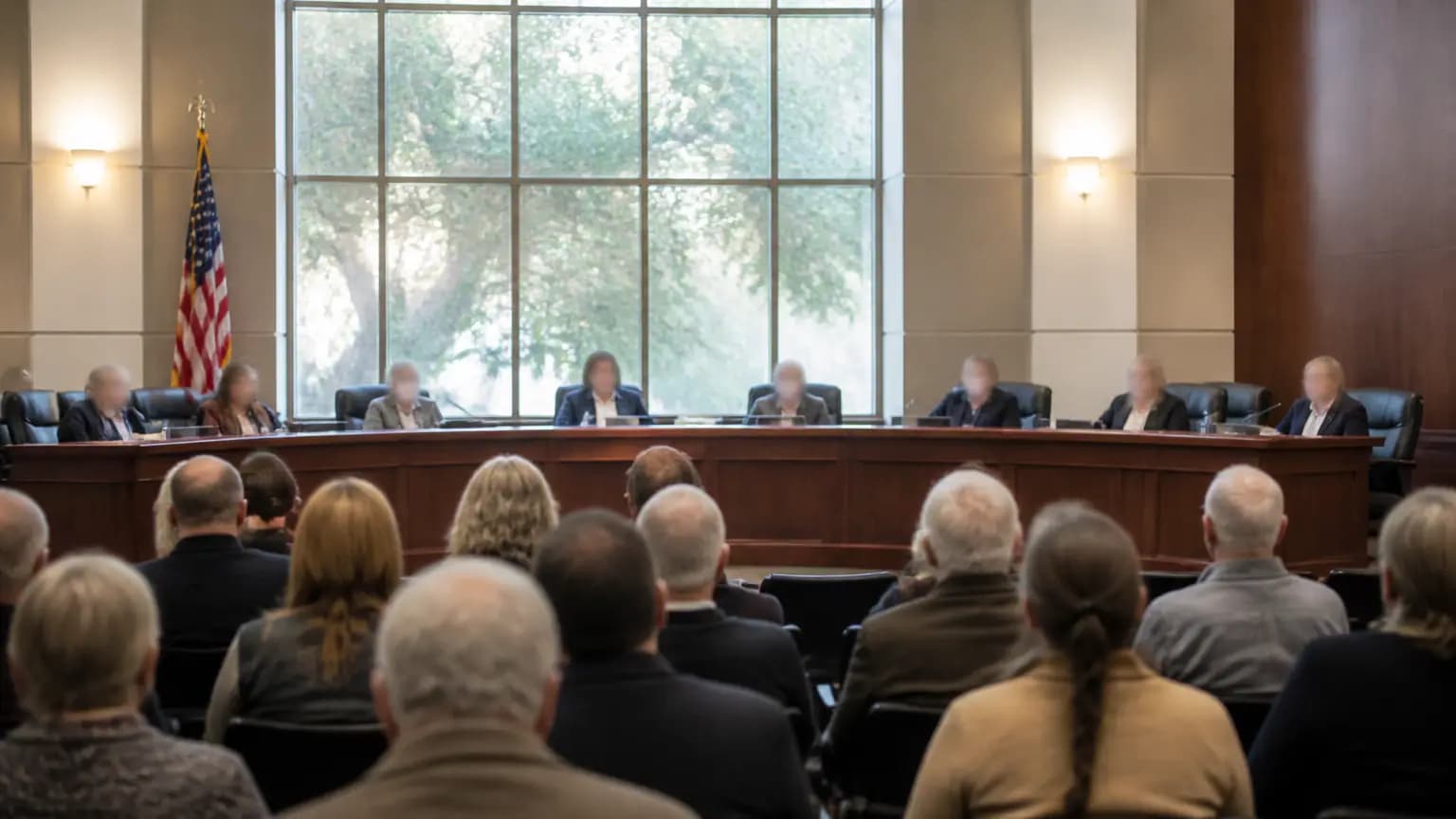
Santa Barbara County is one step away from adopting new standards governing solar and battery energy storage projects, a policy shift with real stakes for the Santa Maria Valley, where much of the county's prime agricultural land — and much of the pressure to build large-scale renewable energy — is concentrated.
The policy package passed its first reading before the Board of Supervisors on a 4-1 vote at the board's Sept. 1 meeting, according to the Santa Maria Sun. A second and final reading is scheduled for Sept. 22. If adopted, the amendments would bring multiple county ordinances into line with a new set of requirements for solar installations and battery energy storage systems, known as BESS.
What the new standards would do
The rules apply to solar and battery storage projects that encompass half an acre or more. Among the key requirements is a 50-foot setback between proposed projects and existing "sensitive receptors" — a category that includes school campuses and residential neighborhoods.
County planners say the amendments are also meant to clear up confusion about how the rules apply to the small end of the spectrum. At the Sept. 1 meeting, Planning and Development Deputy Director Alex Tuttle explained that staff added clarifying language distinguishing large industrial battery facilities from the kind of small battery packs homeowners and small businesses increasingly install.
"One thing through this cleanup we wanted to clarify is the notion of what happens when [someone says], 'Oh, it's just my Tesla battery pack on my garage wall,' or a small battery supporting a coffee shop or something like that," Tuttle said, according to the Sun. The sensitive-receptor requirement, he said, "really would not kick in until you get into those potentially larger systems that you don't typically see with single-family dwellings or for small commercial support."
For Santa Maria residents, that means garage wall chargers and small backup batteries won't trigger the same review as utility-scale facilities — but commercial-scale projects proposed near homes or schools would face new siting requirements.
A 16,000-acre cap — and a North County objection
The most contentious piece of the package is a countywide cap of 16,000 acres for large-scale solar projects, defined as projects covering more than half an acre.
Fourth District Supervisor Bob Nelson — whose district includes Santa Maria — cast the lone dissenting vote. Nelson said he would prefer a lower cap, and one split between North County and South County rather than applied countywide, according to the Sun's report.
"I think we're going to get 'solar-ed' over," Nelson said, expressing concern that agricultural land in the North County will be targeted for far more projects than land in the South County. "I would prefer the guardrail sooner, but I understand where the board majority is on this. So, we'll keep moving along."
The concern reflects a long-running tension in Santa Barbara County politics: the North County's flat, sunny farmland is attractive to solar developers, but it's also the backbone of a regional ag economy anchored in the Santa Maria Valley — strawberries, vegetables and wine grapes that depend on prime soils.
Ag industry pushes for a tighter limit
That concern was echoed during public comment. Claire Wineman, president of the Grower-Shipper Association of Santa Barbara and San Luis Obispo Counties, asked the board to adopt a countywide cap of 8,000 acres — half what supervisors proposed — arguing it would support the county's energy goals "without a disproportionate impact to agricultural resources in the communities they support, especially in the Santa Maria and Lompoc valleys," the Sun reported.
Wineman said her organization would be "open to revisiting an increase in the cap in the future if warranted." She also noted the California Farm Bureau has historically opposed some solar projects and legislation because of impacts to prime farmland.
The industry's position puts a concrete number on a debate that has played out across the Central Coast as California pushes to expand renewable energy generation and storage: where large projects should go, and how much farmland — if any — should be converted to energy production.
What's next
The Board of Supervisors is scheduled to take up the policy package for its second and final reading on Sept. 22. If approved on second reading, the ordinance amendments would take effect following the standard process for county code changes.
Key questions likely to linger for Santa Maria-area residents and growers:
- How quickly the 16,000-acre cap fills. Nelson and ag industry representatives worry the cap could disproportionately draw projects to North County land before anyone revisits the limit.
- How setbacks play out in practice. A 50-foot buffer from homes and schools is modest by some jurisdictions' standards, and its enforcement will fall to county Planning and Development staff.
- Whether the cap is revisited. Wineman's suggestion that an 8,000-acre cap could be raised later "if warranted" signals the industry isn't opposed to solar outright — it's opposed to what it sees as an unbounded commitment of farmland.
The debate also lands amid broader growth in battery storage across California, driven by the state's push for grid reliability during heat waves and wildfire-prevention power shutoffs. BESS facilities have drawn scrutiny elsewhere over fire safety concerns, which is partly why counties have moved to define setbacks and permitting pathways explicitly.
For now, the board majority has settled on 16,000 acres as the ceiling. Whether that number holds — and whether the Santa Maria Valley's share of it stays proportional — is the question Nelson says he'll keep watching.
Reported by 805.life
Researched and written drawing on primary sources. Additional reporting: Santa Maria Sun.
City
Santa MariaAdditional Reporting
Santa Maria SunPublished
September 10, 2026
Reported and written by 805.life
Explore Santa MariaAll Santa Maria NewsMore News from Santa Maria
 Santa Maria
No deal: Solvang staffers strike after rejecting City Council’s ‘last, best, and final’ pay raise offer
Solvang city workers made history this month — and not the charming Danish-village kind. About 30 unionized employees, including engineering technician Cole Phillips, walked off the job Sept. 15 after rejecting the City Council's "last, best, and final" pay offer. It's the first labor strike in Solvang's history, and it's a big deal for a small town where city staff keep the wheels turning. For those of us here in Santa Maria and across the 805, this is a reminder that the folks behind the counter at city hall, fixing our streets, and processing our permits are neighbors with bills to pay. When a city and its workers can't agree, residents feel it too — in slower services and a workforce that feels undervalued. The Santa Maria Sun has been following the standoff closely. Wherever you land on the politics, it's worth watching how this plays out up the valley. Small-town labor fights don't stay small for long.
 Santa Maria
Tie vote blocks Lompoc from censuring Steve Bridge
Lompoc's city council spent three hours on Sept. 15 wrestling with whether to censure one of their own, Councilmember Steve Bridge — and in the end, a tie vote meant the censure failed. Bridge's own appeal to the room was simple: remember the oath everyone stands and recites before every agenda, the same words our kids learn in kindergarten. Censure is a symbolic move, but symbols matter in small-town politics. It's the council's way of saying a colleague crossed a line, even when there's no formal punishment attached. A tie means half the dais wasn't willing to go there, and that split says as much about Lompoc's leadership as any resolution could. The Santa Maria Sun has the full account of that long meeting. For those of us up and down the 805, it's a reminder to keep an eye on our own councils — the local decisions that shape our towns often get decided by a single vote.
 Santa Maria
Santa Maria denies movie theater alcohol sales
Santa Maria moviegoers hoping to pair a cold one with their blockbuster will have to keep waiting. On Sept. 16, city planning commissioners turned down a proposal that would have let local theaters sell alcohol, making us the holdout while 55 other Regal cinemas across California already pour drinks alongside the popcorn. Commissioner Tim and others gave it a fair look, weighing the possible boost to our local cinema scene against the concerns that come with mixing booze and a dark room full of strangers. It's a very Santa Maria debate, honestly — we tend to be cautious about change, and that's not always a bad thing. The Santa Maria Sun first reported the decision, and it's worth a read if you want the full back-and-forth. So for now, it's soda and candy at the concession stand. Whether that keeps our theaters family-friendly or just keeps them losing ground to Atascadero and SLO, only time will tell. What do you think, neighbors?