Dow files brief with California Supreme Court opposing commutation of death sentences
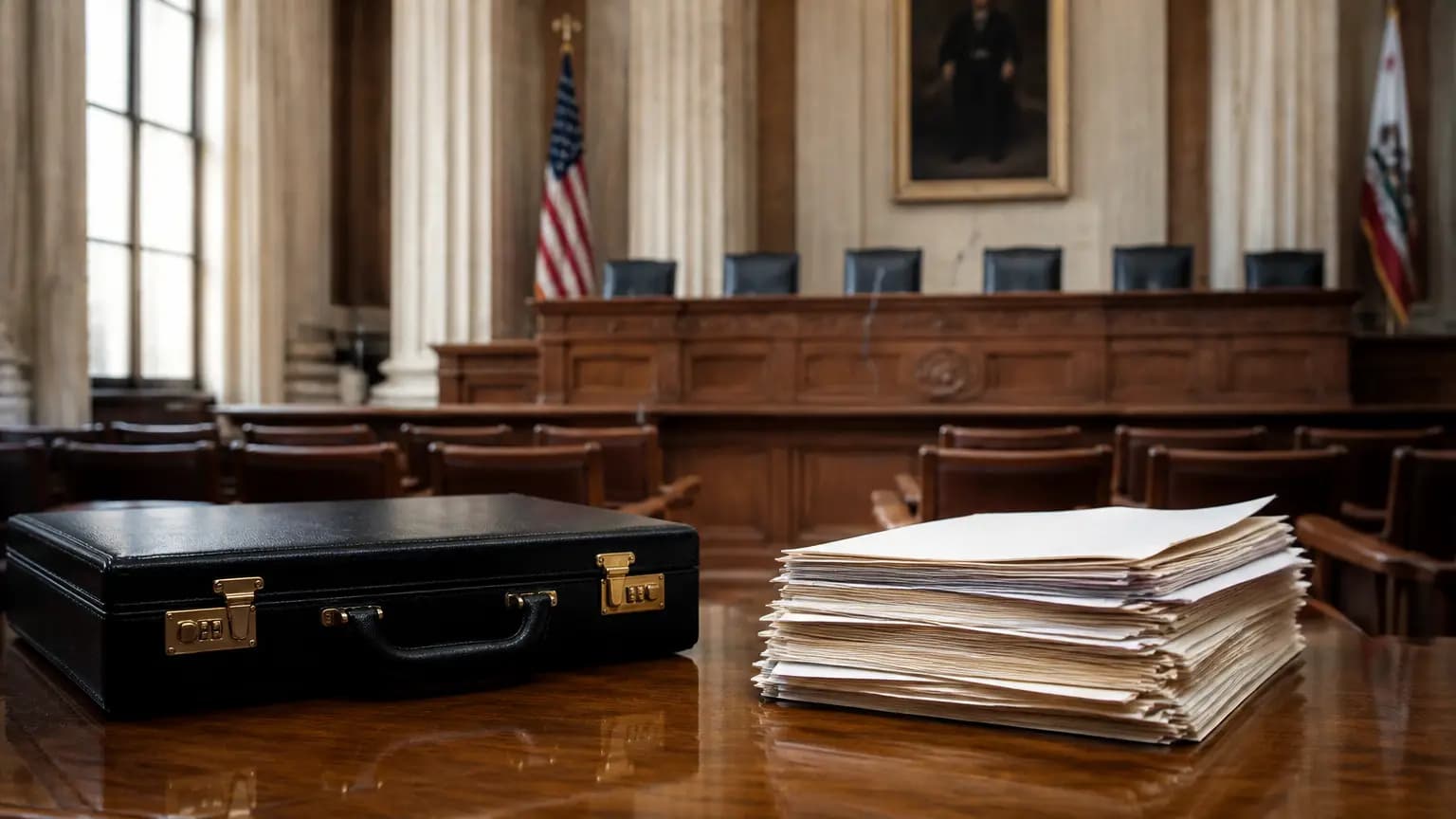
San Luis Obispo County District Attorney Dan Dow is taking his fight over California's death penalty to the state's highest court. On Monday, Dow's office filed an amicus brief urging the California Supreme Court to reject Gov. Gavin Newsom's attempt to commute the death sentences of condemned inmates across the state — a move that, if approved, would directly affect two men sentenced to death for murders committed in San Luis Obispo County.
The filing, first reported by CalCoastNews, is the local chapter of a much larger legal and political battle over capital punishment in California — a fight that has simmered since Newsom imposed a moratorium on executions in 2019 and now threatens to reshape the fate of death row entirely.
What the governor is proposing
On Nov. 5, Newsom announced his decision to commute the death sentences of all of California's condemned inmates to life in prison without the possibility of parole, according to CalCoastNews. But the governor's power to do so is not unlimited.
Under the California Constitution, commutation of a death sentence for an inmate convicted of two or more felonies requires approval from at least four justices of the California Supreme Court. Of California's 548 condemned inmates, 382 have been identified as having multiple felony convictions, meaning Newsom can act on his own only for the remaining 166.
On Nov. 9, the Supreme Court issued an order inviting interested persons and entities to submit amicus briefs in the matter. That invitation opened the door for prosecutors like Dow — whose office secured death verdicts that would be erased by a blanket commutation — to weigh in.
The arguments in Dow's brief
The San Luis Obispo County District Attorney's Office filed its brief Monday in opposition to clemency for the 382 condemned inmates with multiple felony convictions. The brief argues that blanket commutations would exceed the governor's executive authority and that Newsom bypassed established procedures for reviewing individual cases. It also contends that victims' families were denied a meaningful opportunity to be heard before the decision was announced.
In the brief, Dow accuses the governor of what he characterizes as an abuse of executive power, alleging Newsom is sidestepping the legislative process and attempting to nullify the will of California voters, according to CalCoastNews. The brief notes that voters have repeatedly weighed in on capital punishment at the ballot box.
"Four times the electorate has voted in favor of upholding capital punishment, and once to streamline the process," the brief states. "Moreover, a detailed legislative scheme exists to ensure commutations are not done summarily or dictatorially, and instead only after careful consideration of the circumstances of the incarceration, from inception to the present day."
Dow added that the same framework is intended to ensure that stakeholders, including victims and next of kin, have an opportunity for input before a decision is made.
Why it matters locally: Krebs and Whisenhunt
The stakes in San Luis Obispo County are not abstract. The amicus brief highlights two inmates sentenced to death for crimes committed here — Rex Krebs and Michael Whisenhunt — both of whom are among the death row population with multiple felony convictions.
Krebs was convicted of kidnapping, raping and murdering Cal Poly student Rachel Newhouse and Cuesta College student Aundria Crawford. A jury returned a death verdict for each of the murders, and the California Supreme Court unanimously affirmed the judgment in 2019, according to CalCoastNews. The case shook the San Luis Obispo community in the late 1990s and remains one of the county's most notorious criminal cases.
Whisenhunt was convicted of torturing and murdering 19-month-old Kesha Gurke in Paso Robles. A jury found the torture special circumstance to be true and returned a death verdict, which the state Supreme Court affirmed in 2008.
"The families in these cases went through an arduous trial, appeals and various attempts in reducing the sentence or avoiding the death penalty," the brief states. "Now the coup d'etat is a giant gubernatorial slap in the face. Their input simply is not welcome as it would only get in the way."
For the death sentences of Krebs and Whisenhunt to be commuted, at least four state Supreme Court justices would need to agree with Newsom's clemency recommendation.
What comes next
The California Supreme Court has not indicated when it will rule on the clemency requests. Under the constitutional framework, the justices' review applies to the 382 inmates with multiple felony convictions; the governor's authority over the remaining 166 is not subject to the same court approval, according to the figures reported by CalCoastNews.
The legal question now before the court is a relatively narrow one — whether to approve clemency for the affected inmates — but Dow's brief raises broader constitutional arguments about the limits of gubernatorial clemency power that could shape how future governors use it.
For San Luis Obispo residents, the outcome will determine whether two of the county's most consequential death verdicts stand. It also marks the latest chapter in the long-running tension between California's electorate, which has repeatedly affirmed the death penalty, and the state's executive branch, which has moved to end its use. Families of victims in the Krebs and Whisenhunt cases, prosecutors, and death penalty opponents across the state will be watching the court's docket closely in the months ahead.
Reported by 805.life
Researched and written drawing on primary sources. Additional reporting: CalCoastNews.
City
San Luis ObispoAdditional Reporting
CalCoastNewsPublished
November 25, 2026
Reported and written by 805.life
Explore San Luis ObispoAll San Luis Obispo NewsMore News from San Luis Obispo
 San Luis Obispo
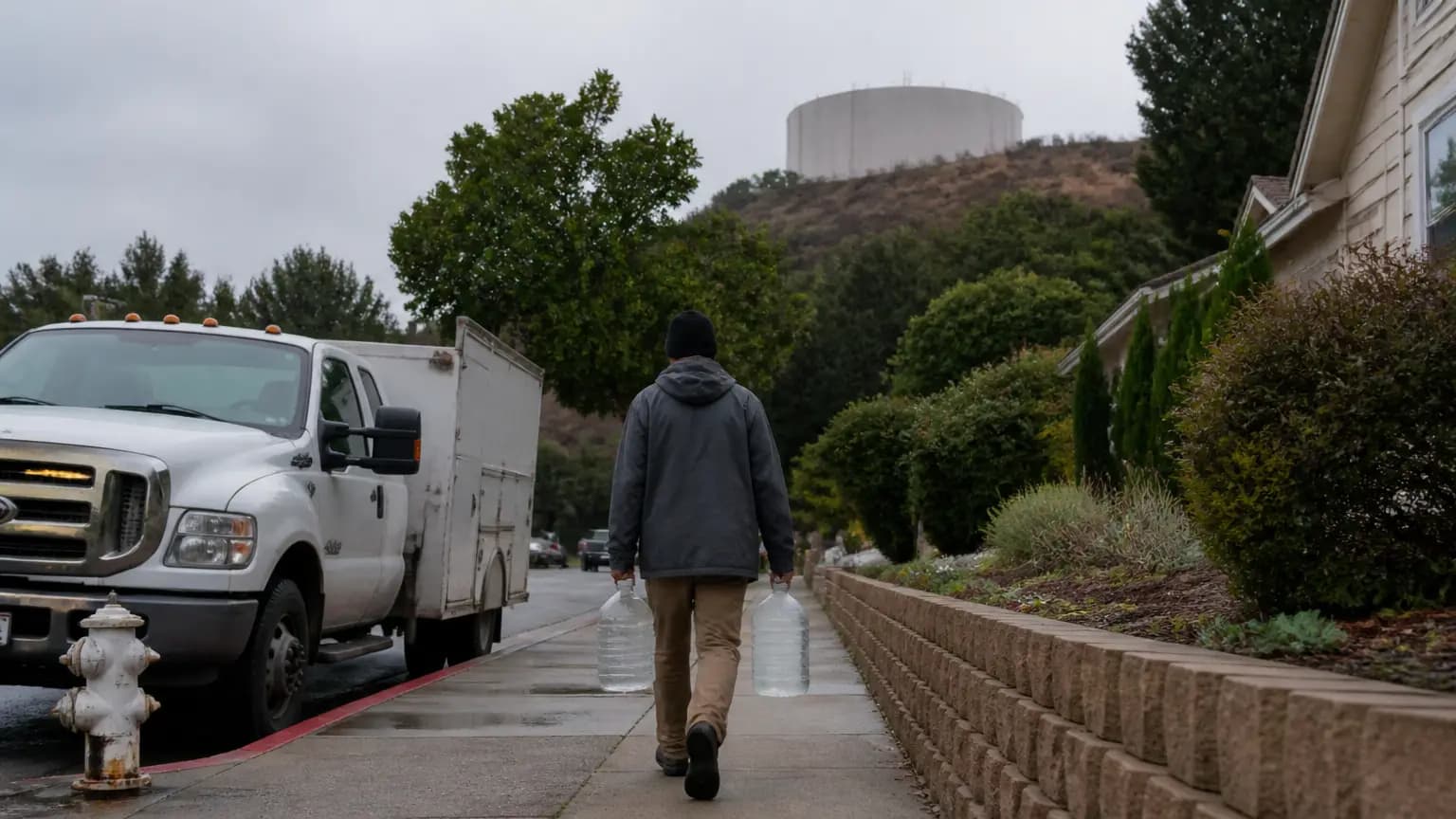
What’s the plan for SLO neighbors without vehicles during warning?
If you woke up Monday to a do-not-drink notice on Serrano or Patricia Drive, you weren't alone in wondering: what about folks without a car? A 3:30 a.m. alert about possible tampering at a city water tank is exactly the kind of moment when a quick run to the store for bottled water isn't so quick for neighbors who walk, bike, or rely on transit. CalCoastNews flagged the question, and it's a fair one for SLO to sit with. The precaution itself was smart — an alarm, a trespassing concern, and a city erring on the side of caution. But emergencies expose the gaps we don't think about until the taps are off. Our neighborhood associations and the city could get ahead of this by mapping who needs help and how water gets to them, not just how fast the alert goes out. Next time — and there will be a next time — let's make sure the plan includes everyone on the block, car or no car.
 San Luis Obispo
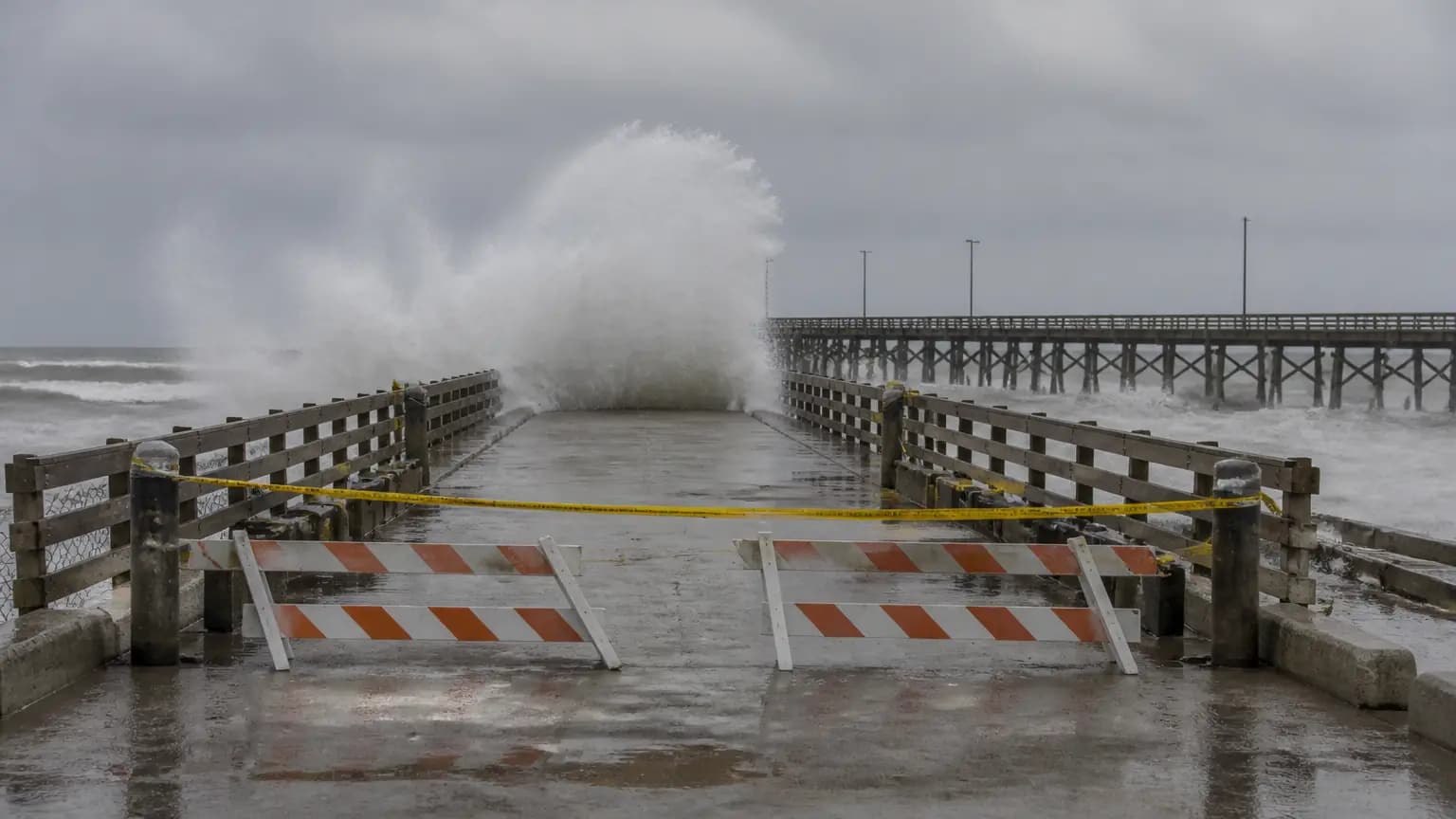
22 foot waves, record tides for Wednesday and Thursday in SLO County
If you've got errands on the coast this week, Wednesday and Thursday are the days to rethink them. The National Weather Service has issued high surf and flood warnings for SLO County, with waves forecast up to 22 feet — that's the kind of swell that rearranges driftwood and sends spray over the Embarcadero. CalCoastNews reports all piers in the county will be closed Wednesday, and low-lying spots like Cayucos, Morro Bay, and parts of Pismo are most vulnerable to flooding. This is a good reminder to keep an eye on the water and a safe distance from the surf line. If you live or work near the coast, move anything that doesn't like saltwater to higher ground, and skip the sunset pier walk until things calm down. Stay safe out there, neighbors — the ocean is beautiful, but it doesn't mess around.
 San Luis Obispo
See San Luis Obispo County rainfall totals, reservoir levels
If you've been wondering whether this wet start to the season is actually a big deal, the numbers say yes. CalCoastNews reports parts of SLO County have already picked up nearly 9 inches of rain, and with more storms on the way, November could set a record. That's a lot of water for a month that usually plays second fiddle to our real rainy stretch in December through February. For those of us here on the Central Coast, this isn't just small talk at the coffee shop. It means our reservoirs are getting a much-needed boost, the hills are turning that bright green we all love, and the creeks are actually running again. It also means keeping an eye on the roads and being smart when you're out and about — but honestly, after so many dry years, most of us are happy to see it. So next time you're grabbing groceries or chatting with a neighbor, you'll have the latest on just how wet this season has been. Stay dry out there, SLO County.