From Montecito Tragedy to Statewide Change
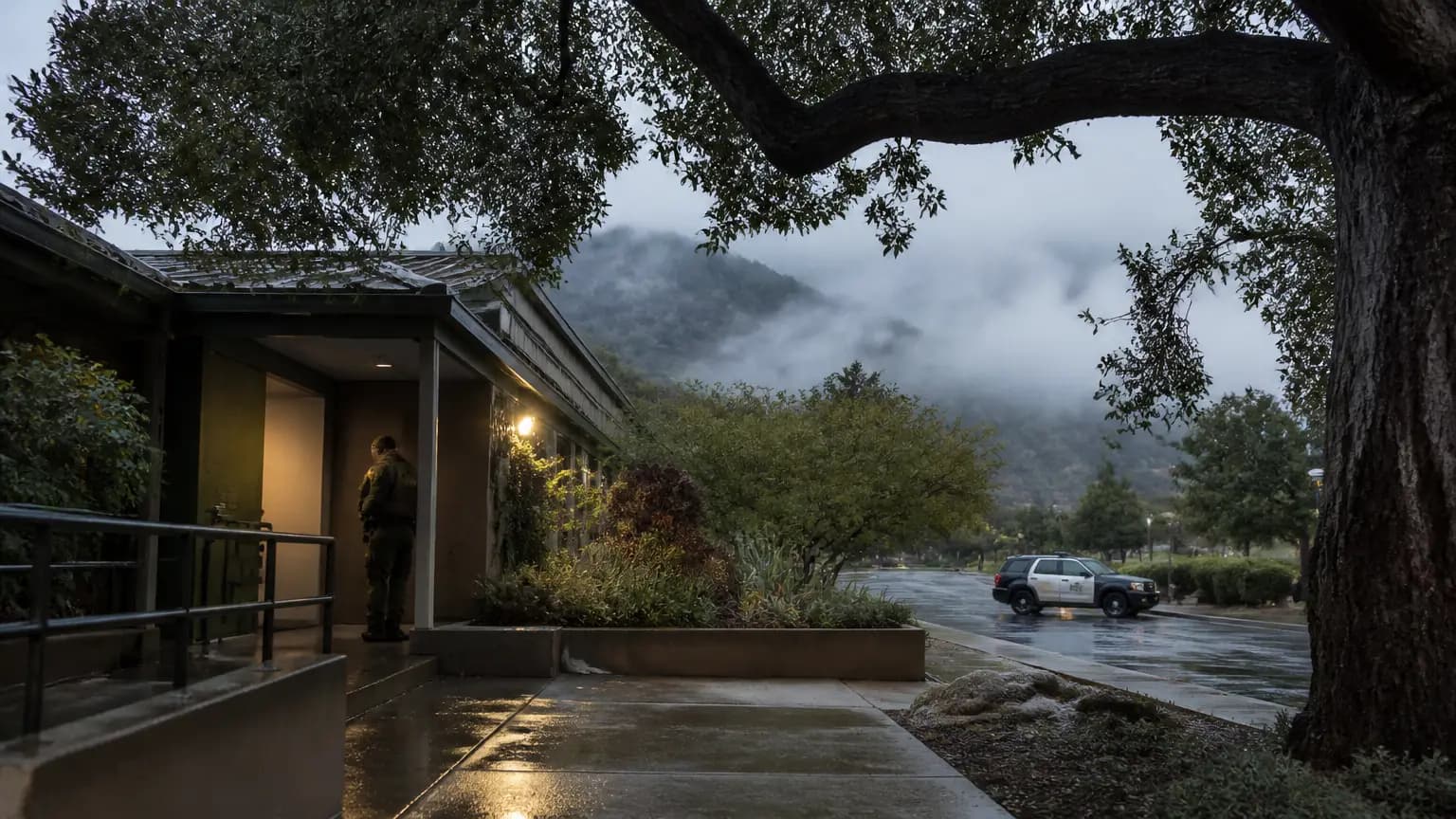
On January 9, 2018, Joyce Dudley woke in the dark to a sound like an airplane crashing into her front yard. She heard boulders tumbling and water rushing past her Montecito home but could see nothing outside. She called a county emergency official, then helped her husband — frail with advanced-stage cancer — climb to the highest part of their house, and waited as the debris flow tore through the community below.
Hours later came a phone call from Fire Chief Eric Peterson, a close family friend, with news about her son Sam, a Santa Barbara County firefighter who had been deployed into the disaster. Sam was safe. He had been through something difficult, the chief said, but he would tell his parents himself.
About a week later, Sam invited his parents to his home. There, he told them how he and three other firefighters had pulled a severely injured 2-year-old boy from the mud — and how Sam later found the child's older brother, who had died. The experience stayed with him. He couldn't stop thinking about it, and he sought counseling to help process the trauma of that night.
His mother saw courage in that decision. She also began thinking about all the first responders who didn't ask for help — or believed they couldn't.
A Statewide Program With a Local Name
More than eight years later, that concern has become something lasting and official. The California Commission on Peace Officer Standards and Training (POST) has voted to name its new law-enforcement wellness program the Joyce E. Dudley Organizational Wellness Initiative, as the Santa Barbara Independent reported.
The initiative provides training, guidelines, and resources to help law-enforcement agencies across California support the physical and mental health of officers, dispatchers, and professional staff throughout their careers — not only in the aftermath of a crisis. For Dudley, who spent more than three decades in public service, seeing the vision become a statewide program is what she calls a "dream come true."
For Santa Barbara, the naming carries particular weight. The debris flow killed 23 people, injured more than 160, and damaged hundreds of buildings, leaving an entire community to grieve — and leaving firefighters, law-enforcement officers, dispatchers, and medical workers to process what they witnessed while continuing to serve the public. The new initiative traces its roots directly to that night and to what one local family learned in the weeks that followed.
"It Wasn't About Him Anymore"
Dudley's response to the problem followed a pattern she had established long before she ever held elected office.
Before entering law, she worked in early-childhood education. Her decision to become an attorney, she has said, grew out of an incident in which she witnessed a father kick his young child. After reporting it, she learned the agency responsible for investigating was drowning in a backlog of cases. "If you want to change the system, why don't you become a lawyer?" an employee asked her. She did — attending law school at night while raising three sons.
Dudley joined the Santa Barbara County District Attorney's Office in 1990, spending 20 years as a deputy district attorney prosecuting violent crimes involving vulnerable victims. Voters elected her district attorney in 2010; she served until retiring in 2022. She also served on the California POST Commission, including a term as its chair, and was later appointed chair of the state's Peace Officer Standards Accountability Advisory Board.
Her son's experience after the debris flow expanded that lifelong focus — from protecting people who couldn't protect themselves to the people responsible for protecting everyone else.
"Once I became aware of the extent of the problem and the possible solutions, I couldn't let it go," Dudley told the Independent. "It wasn't about him anymore. It was about all the other first responders who work in the fields now or will work in those fields in the future."
Dudley's research took her far beyond Santa Barbara County. She traveled to New York to speak with firefighters about the aftermath of the September 11 attacks and with police officials confronting officer suicides, and she met with law-enforcement officers in Boston about their response to the marathon bombing. She brought public-safety leaders together and met repeatedly with lawmakers to press the case that first responders were trained to manage emergencies but often left with wellness support that was insufficient and varied widely from agency to agency.
What Grew From the Mud
Sam Dudley is candid that the disaster was emotionally difficult for many of the emergency personnel who worked it. But he also points to something that grew from it: expanded mental-health and peer-support programs within Santa Barbara County Fire.
"It was an unforgettable experience," he told the Independent. "Somehow there were some good things that came out of it, and that was one of the things."
Local first responders, he noted, are fortunate to have strong backing from community organizations — a level of support his mother recognized wasn't available everywhere. That gap is precisely what the statewide initiative is meant to close, giving agencies across California the tools to build wellness programs of their own, whether or not their communities can fund them locally.
A Legacy Written Into State Policy
Dudley's career has been defined by advocacy for victims and people whose voices often go unheard. The initiative that now bears her name extends that advocacy to a group that is easy to overlook precisely because of what they do: the people who run toward the disaster.
For a community still marked by the events of January 2018, the connection between the mud of Montecito and a statewide wellness program is a reminder that even the worst nights can produce enduring change — when someone refuses to let the issue go.
The Joyce E. Dudley Organizational Wellness Initiative is now positioned to shape how California's law-enforcement agencies care for their people across entire careers, from the academy through retirement. And every time an officer or dispatcher reaches for support they might once have believed was off-limits, a piece of that story — a mother's love, a son's honesty, a community's resolve — will be part of the reason it's there.
Reported by 805.life
Researched and written drawing on primary sources. Additional reporting: Santa Barbara Independent.
City
Santa BarbaraAdditional Reporting
Santa Barbara IndependentPublished
September 30, 2026
Reported and written by 805.life
Explore Santa BarbaraAll Santa Barbara NewsMore News from Santa Barbara
 Santa Barbara
Four Family Members Convicted of Running Countywide Commercial Sex Operation
Neighbors, this one hits close to home. Four family members were convicted of running illicit massage businesses, commercial sex operations, and money laundering across Ventura County, according to KEYT News Channel 3-12. The investigation began back in 2020 after anonymous letters tipped off multiple agencies to suspected prostitution and human trafficking at parlors countywide — a reminder that these operations often hide in plain sight, tucked into strip malls we drive past every day. While this case unfolded in Ventura County, it matters here on the Central Coast. Trafficking networks don't respect county lines, and the 805's highway corridor makes our communities vulnerable too. The conviction shows that quiet tips from ordinary people can unravel something big — so if something at a local business ever feels off, say something. Take care of each other out there, Santa Barbara.
 Santa Barbara
No Place for Hate, Racism, or Discrimination in Our Schools
Friends, we need to talk about something heavy happening right here in our own backyard. The Santa Barbara Independent reported this week that local students posed for a photo recreating an image of young African American boys, covered their faces in blackface, and shared it on social media. Hearing this hit differently when it's our community, our schools, our kids. Blackface isn't a joke or an old photo trend — it carries generations of pain and mockery aimed at Black Americans. That this happened in Santa Barbara, a place we love for its beauty and tight-knit feel, is a reminder that racism doesn't skip over paradise. It lives in group chats and classroom jokes until we name it out loud. So let's name it. Talk to your kids tonight. Ask what they saw, what they laughed at, what they stayed quiet about. Our schools should be the safest places our children know — and that starts with us refusing to look away.
 Santa Barbara
Derek Skinner Charged in August DUI Crash That Injured Passenger and CHP Officer
Neighbors, a sobering reminder came out of Ventura County this week. Derek Hansen Skinner of Santa Paula has been charged in connection with an August DUI crash that left his passenger and a CHP officer injured, according to KEYT News Channel 3-12. It's a tough story, and it hits close to home for those of us who drive the 101 and the back roads between Ventura and Santa Barbara every day. We share this not to sensationalize, but because these crashes ripple through whole communities. A passenger hurt, an officer hurt — those are real people with families, and it's a reminder that one decision behind the wheel can change lives in an instant. If you're heading out for a drink, plan a ride, call a friend, use a rideshare. It's a small choice that keeps our 805 neighbors safe. We'll keep following this case as it moves through the courts. In the meantime, look out for each other out there.