Guadalupe caps stipends for next year’s council at $150
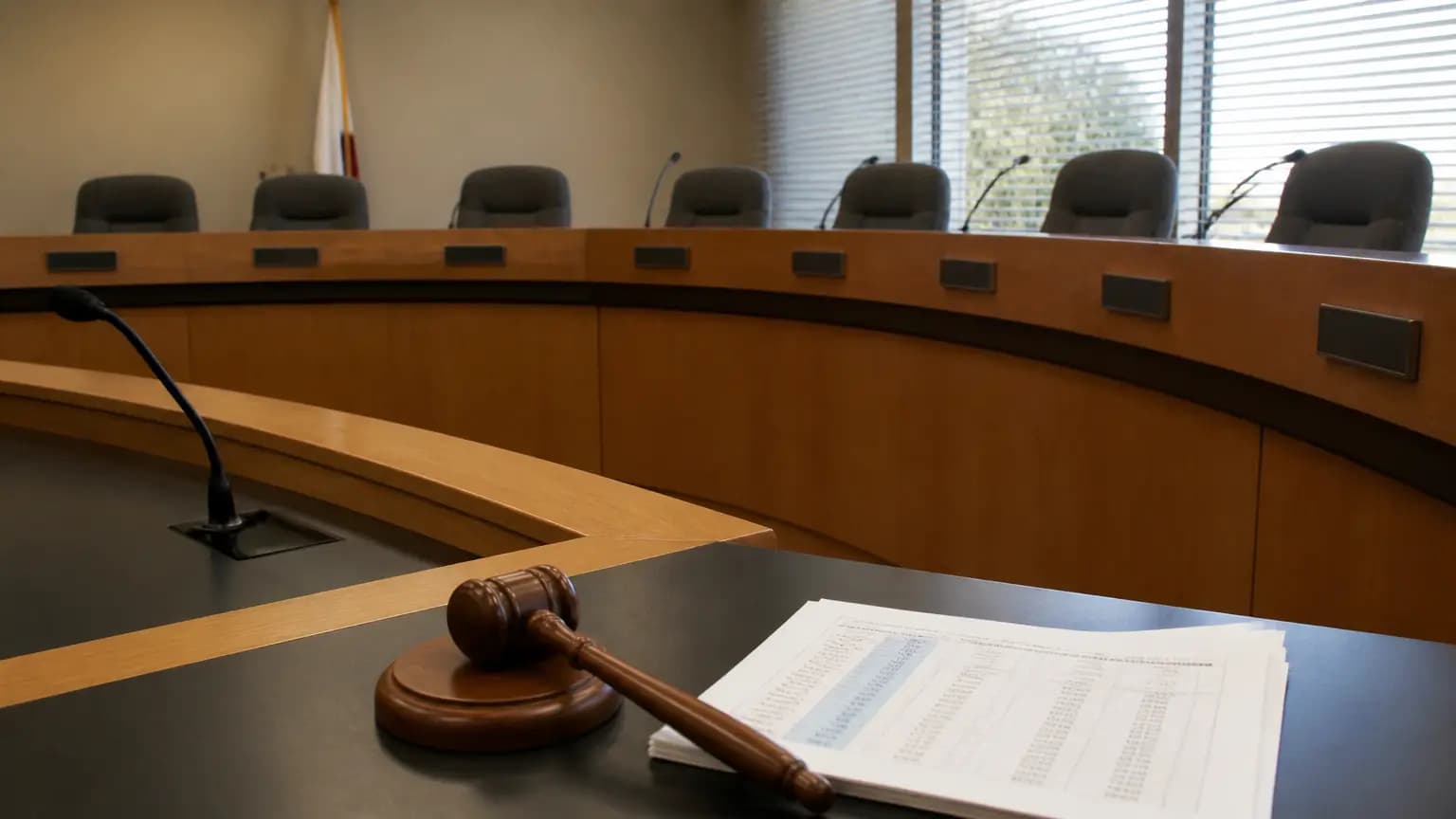
Elected leaders in Guadalupe will take a significant pay cut next year after the City Council voted to cap stipends for all seven elected positions at $150 per month — a move framed as a symbolic gesture of shared sacrifice as the small northwestern Santa Barbara County city works to close a $1.2 million general fund deficit.
The Santa Maria Sun reported that the 3-1 decision came at the council's Sept. 8 meeting, after a public hearing that began with a more modest proposal and ended with deeper cuts than city staff had recommended.
From $300 cuts to a flat $150 cap
City staff had originally proposed reducing the mayor's monthly stipend from $750 to $450, and cutting the stipends for the city clerk, city treasurer, and each council member from $500 to $200 — a savings of roughly $2,100 per month, or about $25,000 per year.
"It's not because you guys don't do a lot. You guys have a lot on your plate, obviously," City Administrator David Trujillo told the council, according to the Sun. "This is being presented as a reoccurring cost reduction measure, not anything else."
Mayor Ariston Julian acknowledged the cuts wouldn't make "a significant dent" in the deficit but said they signal "that we're a player in this." Trujillo echoed that theme, calling the reductions "a way to lead from the top down."
The deeper cuts came from Councilmember Amelia Villegas, who proposed going further than staff recommended: dropping stipends for elected officials other than the mayor to $150, and the mayor's pay to $300. Her motion was later revised to level all stipends — including the mayor's — at a flat $150.
Timing questions and a lone dissenter
The vote wasn't without friction. Councilmember Whitney Furness, the sole dissenter, argued the decision should wait until January, when three seats now up for grabs in November's election will be decided. Delaying, she suggested, would give incoming candidates clarity — and preserve enough compensation to attract a diverse field.
"You're not going to get the quality of people able to do this if we don't offer incentive to be here," Furness said, according to the Sun.
City Attorney Phil Sinco noted that any stipend decision made that evening wouldn't take effect until next year's council is seated — and that if the council took no action, current rates would remain locked in until 2028 under state law.
Notably, the November election looms over the council's composition. Julian and Councilmember Christina Hernandez — whose terms end in January — are both running for mayor. Councilmember Eugene Costa Jr., whose term also ends in January, is not seeking reelection and was absent from the meeting. Villegas and Furness hold the two seats with terms running through 2028.
Residents push back on the pay argument
Public speakers pushed back on the idea that modest stipends determine who runs. Robert Diaz, a council candidate running unopposed, urged the council to act now.
"When we get the city back on track, when it flourishes, then we can look at raising those again," Diaz said, adding that if a stipend reduction becomes a deal-breaker for a would-be candidate, "maybe that's for the best."
Former Mayor Frances Romero, a Guadalupe resident, was blunter: "I think that the idea that somehow you get a better person because of a couple hundred dollars, I'm not buying that at all."
In an unexpected turn during deliberations, Furness shifted her position and motioned to cut all elected stipends to zero. The motion failed for lack of a second. The council then adopted Villegas' flat $150 cap on a 3-1 vote, with Furness dissenting.
What it means for Guadalupe — and the region
For Guadalupe, a city of roughly 8,000 residents on the Santa Maria Valley's western edge, the stipend cuts are less about the dollars than the message. The roughly $25,000 in annual savings represents a small fraction of the $1.2 million hole in the general fund, meaning the heavy lifting on the budget will have to come from elsewhere — a challenge that will fall largely to the council seated in January.
The race for Guadalupe's leadership is already taking shape. With Julian and Hernandez vying for the mayor's seat, and Diaz and Randy L. Altergott running unopposed for the two open council seats, voters in November will effectively choose the officials who will serve under the new, lower pay structure.
The decision also lands amid broader budget scrutiny in small Central Coast cities, where part-time elected stipends have long been a point of debate — modest enough that they rarely attract career politicians, yet meaningful for working residents considering public service. Guadalupe's move to a flat $150 for every elected role, including the mayor, puts it among the leaner compensation structures in the region.
For Santa Maria-area residents, the story is a reminder of the fiscal pressures rippling through the 805's smaller municipalities — and of the choices local leaders face when the numbers don't add up. As Trujillo put it to the council, the cuts are "a step in the right direction," even if the road back to balance remains a long one.
The new stipend levels take effect when the incoming council is seated. Whether future councils choose to revisit the rates — as Diaz suggested, once the city's finances recover — will be a question for the leaders voters select this November.
Reported by 805.life
Researched and written drawing on primary sources. Additional reporting: Santa Maria Sun.
City
Santa MariaAdditional Reporting
Santa Maria SunPublished
September 17, 2026
Reported and written by 805.life
Explore Santa MariaAll Santa Maria NewsMore News from Santa Maria
 Santa Maria
No deal: Solvang staffers strike after rejecting City Council’s ‘last, best, and final’ pay raise offer
Solvang city workers made history this month — and not the charming Danish-village kind. About 30 unionized employees, including engineering technician Cole Phillips, walked off the job Sept. 15 after rejecting the City Council's "last, best, and final" pay offer. It's the first labor strike in Solvang's history, and it's a big deal for a small town where city staff keep the wheels turning. For those of us here in Santa Maria and across the 805, this is a reminder that the folks behind the counter at city hall, fixing our streets, and processing our permits are neighbors with bills to pay. When a city and its workers can't agree, residents feel it too — in slower services and a workforce that feels undervalued. The Santa Maria Sun has been following the standoff closely. Wherever you land on the politics, it's worth watching how this plays out up the valley. Small-town labor fights don't stay small for long.
 Santa Maria
Tie vote blocks Lompoc from censuring Steve Bridge
Lompoc's city council spent three hours on Sept. 15 wrestling with whether to censure one of their own, Councilmember Steve Bridge — and in the end, a tie vote meant the censure failed. Bridge's own appeal to the room was simple: remember the oath everyone stands and recites before every agenda, the same words our kids learn in kindergarten. Censure is a symbolic move, but symbols matter in small-town politics. It's the council's way of saying a colleague crossed a line, even when there's no formal punishment attached. A tie means half the dais wasn't willing to go there, and that split says as much about Lompoc's leadership as any resolution could. The Santa Maria Sun has the full account of that long meeting. For those of us up and down the 805, it's a reminder to keep an eye on our own councils — the local decisions that shape our towns often get decided by a single vote.
 Santa Maria
Santa Maria denies movie theater alcohol sales
Santa Maria moviegoers hoping to pair a cold one with their blockbuster will have to keep waiting. On Sept. 16, city planning commissioners turned down a proposal that would have let local theaters sell alcohol, making us the holdout while 55 other Regal cinemas across California already pour drinks alongside the popcorn. Commissioner Tim and others gave it a fair look, weighing the possible boost to our local cinema scene against the concerns that come with mixing booze and a dark room full of strangers. It's a very Santa Maria debate, honestly — we tend to be cautious about change, and that's not always a bad thing. The Santa Maria Sun first reported the decision, and it's worth a read if you want the full back-and-forth. So for now, it's soda and candy at the concession stand. Whether that keeps our theaters family-friendly or just keeps them losing ground to Atascadero and SLO, only time will tell. What do you think, neighbors?