Has the door closed on affordable living?

The Conejo Valley's housing problem has a paradox at its center: home prices and rents keep climbing while the region's population barely grows — and, in Thousand Oaks, actually shrinks. That tension took center stage Sept. 30 at "Growing Thoughtfully," a housing symposium at the Agoura Hills Recreation and Event Center organized by Many Mansions, the Thousand Oaks-based affordable housing provider, where Thousand Oaks Mayor Mikey Taylor and Agoura Hills Mayor Jeremy Wolf discussed how to expand housing options without eroding the character of the communities current residents moved here for.
The Thousand Oaks Acorn, which covered the forum, reported that the event's central question was stark: who can afford to live here at all?
A region that isn't growing
Many Mansions President and CEO Rick Schroeder opened with the demographic picture. Communities in the Conejo Valley and eastern Ventura County, he said, have "barely increased their population" since 2000. Thousand Oaks has lost population since 2010, according to Schroeder, while the share of seniors grows and the share of children declines.
Housing costs are a major driver of that shift, he argued. With the average price of a new home in the Conejo Valley now over $1 million and the average rent for a two-bedroom apartment exceeding $2,800 per month, the region risks locking out the very people — younger families, working adults and older residents looking to downsize — who keep a community functioning. The ability of local businesses to attract workers who can live nearby, Schroeder said, is essential to maintaining "a vibrant, healthy, inclusive community."
The 'missing middle'
The symposium's keynote perspective came from Chris Allen, director of strategic partnerships for the Incremental Development Alliance, a nonprofit that promotes small-scale development. Allen described a national "missing middle" problem: the duplexes, triplexes, quadplexes, courtyard apartments and small multifamily buildings that once filled the gap between detached single-family homes and large apartment complexes have largely disappeared from American construction.
"When the middle disappears, the choices disappear with it," Allen said, according to the Acorn — the housing options people need "as they transition through their lives."
Allen laid out a mismatch between demographics and housing stock: roughly 75% of American households have no children, yet 74% of U.S. housing starts in 2024 were detached single-family homes. Average household size has fallen from 3.9 people in 1950 to 2.1 today, while the average new single-family home has grown from 983 square feet to 2,647. The result is older residents unable to downsize and young families unable to buy in.
Zoning reform alone won't fix it, Allen cautioned. Small developers also face building and fire codes, utility constraints, environmental review, financing and appraisal hurdles. "We have allowed the regulatory regime in some of our communities to outstrip the need," he said.
What Thousand Oaks is doing
Mayor Taylor pointed to tangible progress. Since adopting its current Housing Element in 2022, the city has entitled roughly 2,000 housing units, with more than 1,000 now under construction, he said.
But he acknowledged the city's limits: Thousand Oaks approves housing but doesn't build it, and current market conditions — high construction costs, elevated interest rates — have made smaller projects especially difficult to finance. "This is commercial product, (and) very, very difficult to build," Taylor said.
To help, the city is working to streamline permitting and give developers clearer information about requirements up front, and it is considering shifting some development fees from the front end of projects to the back end — a change that could make it easier for smaller builders to break ground.
Agoura Hills' catch-up
Agoura Hills Mayor Jeremy Wolf noted his city has permitted 404 housing units since 2022, including 112 low-income units — notable because the city, incorporated in 1982 partly to slow development, had not permitted any affordable units before then. "So we are making up for that right now," he said.
Agoura Hills is also exploring converting vacant office space to housing, including the commercial area across from its Civic Center, which the city is eyeing for a community gathering space. Wolf pointedly avoided calling the potential project a "downtown," an implicit nod to the controversy that surrounded downtown redevelopment in Thousand Oaks. The city has also adopted objective design standards, cutting a review process that historically took two to three years down to roughly six months for qualifying projects.
Both mayors acknowledged that state housing laws — including rules governing accessory dwelling units and density bonuses — are reshaping local development whether cities like it or not. Wolf called the mandates "a blessing and a curse": ADU rules have curtailed local control over setbacks and shifted approvals to over-the-counter review, but the resulting units have housed multigenerational families and college students.
What comes next
For Thousand Oaks residents, the stakes are practical: whether their adult children can afford to stay in the community they grew up in, whether aging parents can downsize nearby, and whether local employers can fill positions with workers who don't face a punishing commute. With the region's population trends running the wrong direction, the symposium's title — "Growing Thoughtfully" — framed the choice facing the Conejo Valley: accommodate more and different kinds of housing, or continue watching the community's demographic mix narrow.
The conversation is likely to continue as both cities advance fee reforms, office-to-residential conversions and streamlined review in the months ahead.
Reported by 805.life
Researched and written drawing on primary sources. Additional reporting: Thousand Oaks Acorn.
City
Thousand OaksAdditional Reporting
Thousand Oaks AcornPublished
October 8, 2026
Reported and written by 805.life
Explore Thousand OaksAll Thousand Oaks NewsMore News from Thousand Oaks
 Thousand Oaks
Congressional forum puts key issues in the spotlight
Neighbors, if you couldn't make it out to Moorpark on Sept. 25, the race for our 26th Congressional District seat just got a lot more interesting. Republican Sam Gallucci and Democratic Assemblymember Jacqui Irwin went head-to-head on immigration, gun laws, transgender rights and the war with Iran — and by all accounts, the exchanges got sharp. The Thousand Oaks Acorn has the full rundown, and it's worth a read before your ballot arrives. This is the seat that represents Thousand Oaks and much of our corner of Ventura County, so the person who wins in November will be making calls on the issues we talk about at the dinner table. Debates like this are our best chance to see candidates without the campaign ads filtering everything. Mark your calendars, check your voter registration, and take 10 minutes with the Acorn's coverage. Local races are where your vote carries the most weight.
 Thousand Oaks
How a Payment System Learns Who Gets Paid
If you've ever sent money through an app and wondered how it actually finds the right person, a recent piece in the Thousand Oaks Acorn digs into exactly that. Turns out a payment system has to answer questions a simple price check never does: who gets paid, which customer they belong to, and which record gets updated when the money lands. It's the unglamorous plumbing behind every transaction. Here in Thousand Oaks, plenty of us run small businesses, side gigs, or freelance work that depends on digital payments arriving where they should. The article is a good reminder that the tech we tap on our phones rests on careful record-keeping, not just market prices. Worth a read if you're curious how the money actually moves. What do you think — do you trust the apps you use to route your payments correctly?
 Thousand Oaks
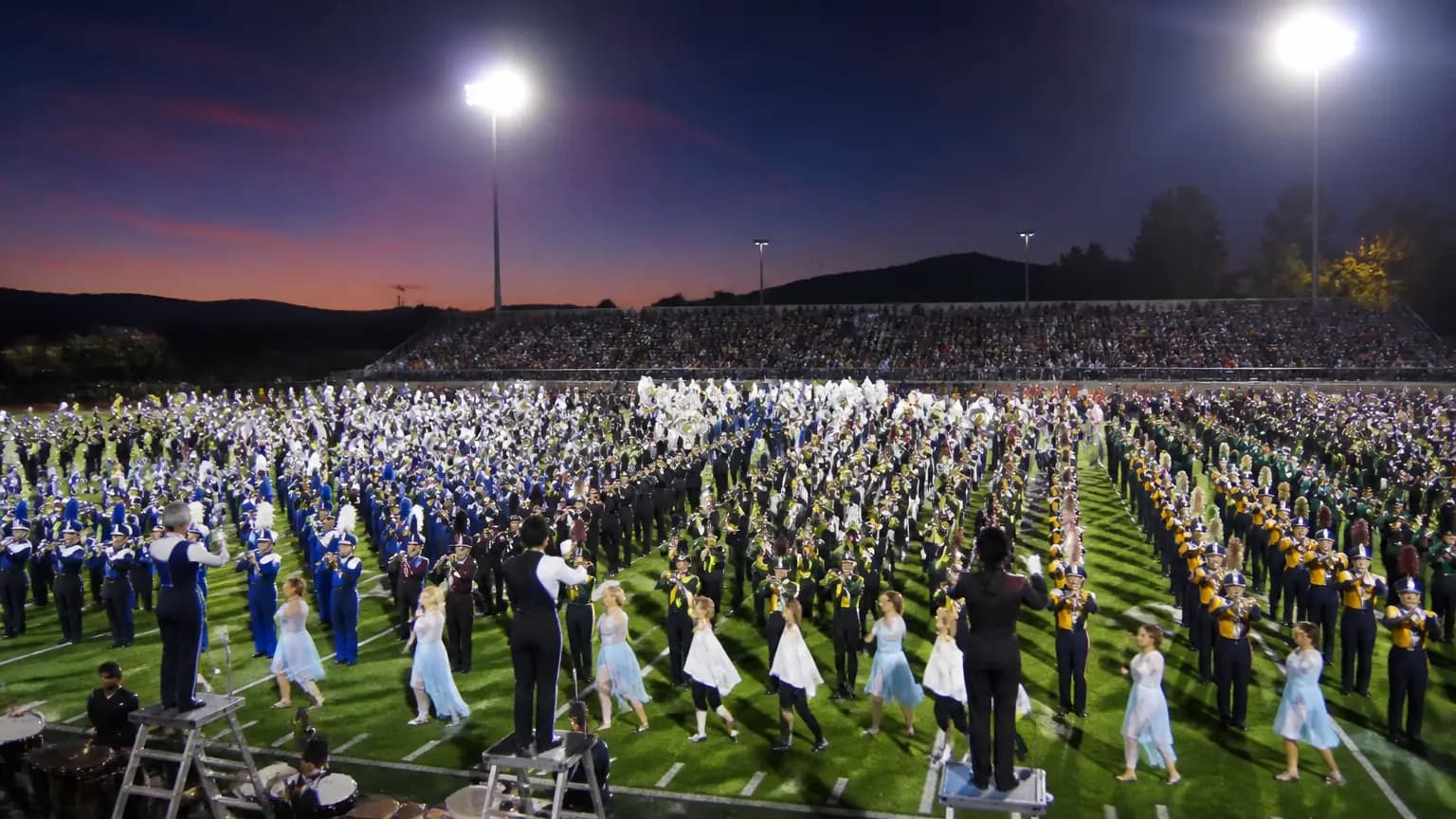
A symphony of schools
There's something about a marching band that gets you right in the chest, and Thousand Oaks got a full dose of it on Sept. 26 at the 18th annual Sounds of Conejo field show exhibition. Bands from all over the region took over the Thousand Oaks High School field, and if you've never stayed for a finale where every participating band rushes the field together, put it on your calendar for next year — it's a wall of sound that feels like the whole Conejo Valley showing up at once. Eighteen years is no small thing. That's nearly two decades of local kids learning discipline, teamwork, and how to hold a formation under Friday night lights, and it's a tradition worth protecting. Thanks to the Thousand Oaks Acorn for spotlighting it. If you've got a band kid, a band alum, or you just love a good halftime show, keep an eye on 805.life for more local happenings like this one.