Lompoc changes how it bills wastewater customers
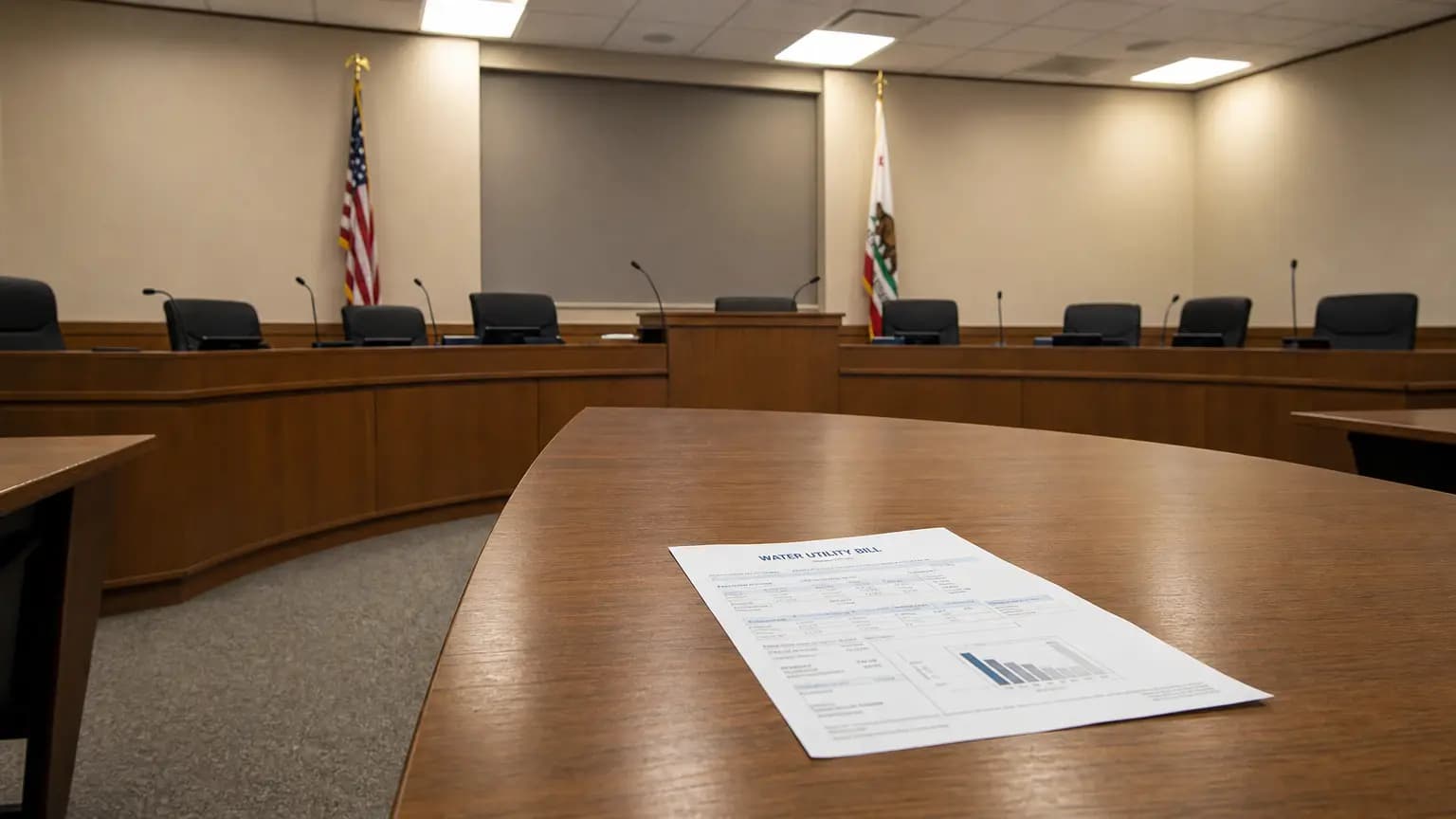
Residents and businesses in Lompoc are seeing a shift in how they are billed for wastewater services following a contentious city council vote. While the new billing model is designed to be simpler and more accurately reflect sewer usage, it has sparked concerns over how the changes will impact low-income residents, multi-family households, and those living on fixed incomes across the 805 region.
During the Lompoc City Council meeting on July 21, officials voted 3-2 to approve a new calculation method for wastewater rates. The decision dissented Councilmembers Victor Vega and Jeremy Ball, who raised concerns about the financial impact on the community's most vulnerable populations.
According to the Santa Maria Sun, the new policy is set to take effect on Oct. 1. Here is a look at what changed, the controversy surrounding the council's decision, and how it fits into the broader utility landscape on the Central Coast.
How the New Billing Formula Works
Under the previous system, Lompoc calculated wastewater bills based on a customer's average water usage over the past four years. The new method significantly shortens that timeline. Moving forward, customers will be billed based on a three-month winter average.
Management Services Director Bob Cross explained that taking water meter readings between January and April provides a more accurate measure of what actually goes down the drain. During the winter months, there is naturally less landscape irrigation, meaning most of the water consumed is entering the sewer system rather than being absorbed into the ground.
This new measurement will dictate a flat monthly bill for the customer for the entire fiscal year beginning in July. If a customer experiences and reports a leak during the three-month measurement window, the city will adjust their rate downward to reflect anticipated normal usage. Cross noted that a one-year average allows customers to impact their rates much faster than waiting out a four-year rolling average.
Equity Concerns and Fixed Incomes
Despite the streamlined approach, the transition proved to be a slippery debate. City staff estimates that while most customers will see no change or even a decrease in their bills, roughly 40 percent of residential, commercial, and industrial customers will see an increase.
This statistic drew sharp criticism from Councilmember Jeremy Ball, who asked staff about the demographics of those who would be forced to pay more. "Devil's in the details," Ball said during the meeting. "Is that apartment complexes or individuals? Is that low income? Median? Do we have any idea about that?" Cross admitted the city does not track customers based on senior status or income level, meaning the specific demographic impact remains unknown.
Councilmember Victor Vega echoed these concerns, pointing out that city officials lack a clear answer for constituents living on fixed incomes. During public comment, a volunteer with the 805 Undocufund expressed frustration over the cost of living, noting that Lompoc's large population of immigrants, farmworkers, and low-income families living in multi-family homes would be disproportionately affected.
Additionally, some conservation-minded residents pushed back on the city's baseline structure. The new policy retains a minimum charge for five units of water, applying to all customers even if their actual usage falls below that threshold. Resident Diana Diaz argued that punishing very low water consumers with a minimum fee penalizes those who took the region's historical drought issues to heart.
Revenue Realities for the City
The Lompoc wastewater plant, like many municipal utilities across California, is facing a pressing need for revenue. Mayor Jim Mosby did not mince words when addressing the reality of the city's utility funding needs, noting that the plant requires more money to operate. He pointed out that the city must either sell more water or raise rates to keep the utility solvent.
The base rates per unit, which were last adjusted around 2017, will remain unchanged for now. Residential customers continue to pay slightly more than $9 per unit, while commercial customers pay $12 and industrial customers pay $13 per unit.
However, a broader shift is on the horizon. Lompoc plans to conduct a comprehensive rate study next year, marking the first time prices have been evaluated in nearly a decade.
What This Means for the 805 Region
While the policy shift is centered in Lompoc, the debate mirrors wider utility challenges being felt across Santa Barbara County and the broader 805 region. As cities grapple with aging infrastructure and the rising costs of water treatment, local governments are increasingly tasked with balancing essential revenue generation with the economic realities of their residents.
For Santa Maria area residents and business owners, Lompoc's utility models often serve as a regional barometer. Water conservation has long been a way of life on the Central Coast, but as Lompoc's new wastewater billing structure shows, using less water doesn't always guarantee a lower utility bill—especially when municipalities are working to cover the baseline costs of keeping their treatment plants running.
Residents who want to lower their wastewater bills under the new system will need to be highly conscious of their indoor water usage during the winter measurement period, keeping a close eye on potential household leaks that could artificially inflate their monthly average for the rest of the year.
Reported by 805.life
Researched and written drawing on primary sources. Additional reporting: Santa Maria Sun.
City
Santa MariaAdditional Reporting
Santa Maria SunPublished
July 30, 2026
Reported and written by 805.life
Explore Santa MariaAll Santa Maria NewsMore News from Santa Maria
 Santa Maria
No deal: Solvang staffers strike after rejecting City Council’s ‘last, best, and final’ pay raise offer
Solvang city workers made history this month — and not the charming Danish-village kind. About 30 unionized employees, including engineering technician Cole Phillips, walked off the job Sept. 15 after rejecting the City Council's "last, best, and final" pay offer. It's the first labor strike in Solvang's history, and it's a big deal for a small town where city staff keep the wheels turning. For those of us here in Santa Maria and across the 805, this is a reminder that the folks behind the counter at city hall, fixing our streets, and processing our permits are neighbors with bills to pay. When a city and its workers can't agree, residents feel it too — in slower services and a workforce that feels undervalued. The Santa Maria Sun has been following the standoff closely. Wherever you land on the politics, it's worth watching how this plays out up the valley. Small-town labor fights don't stay small for long.
 Santa Maria
Tie vote blocks Lompoc from censuring Steve Bridge
Lompoc's city council spent three hours on Sept. 15 wrestling with whether to censure one of their own, Councilmember Steve Bridge — and in the end, a tie vote meant the censure failed. Bridge's own appeal to the room was simple: remember the oath everyone stands and recites before every agenda, the same words our kids learn in kindergarten. Censure is a symbolic move, but symbols matter in small-town politics. It's the council's way of saying a colleague crossed a line, even when there's no formal punishment attached. A tie means half the dais wasn't willing to go there, and that split says as much about Lompoc's leadership as any resolution could. The Santa Maria Sun has the full account of that long meeting. For those of us up and down the 805, it's a reminder to keep an eye on our own councils — the local decisions that shape our towns often get decided by a single vote.
 Santa Maria
Santa Maria denies movie theater alcohol sales
Santa Maria moviegoers hoping to pair a cold one with their blockbuster will have to keep waiting. On Sept. 16, city planning commissioners turned down a proposal that would have let local theaters sell alcohol, making us the holdout while 55 other Regal cinemas across California already pour drinks alongside the popcorn. Commissioner Tim and others gave it a fair look, weighing the possible boost to our local cinema scene against the concerns that come with mixing booze and a dark room full of strangers. It's a very Santa Maria debate, honestly — we tend to be cautious about change, and that's not always a bad thing. The Santa Maria Sun first reported the decision, and it's worth a read if you want the full back-and-forth. So for now, it's soda and candy at the concession stand. Whether that keeps our theaters family-friendly or just keeps them losing ground to Atascadero and SLO, only time will tell. What do you think, neighbors?