New Beds, Empty Chairs: Who Will Staff California’s Behavioral Health Overhaul?
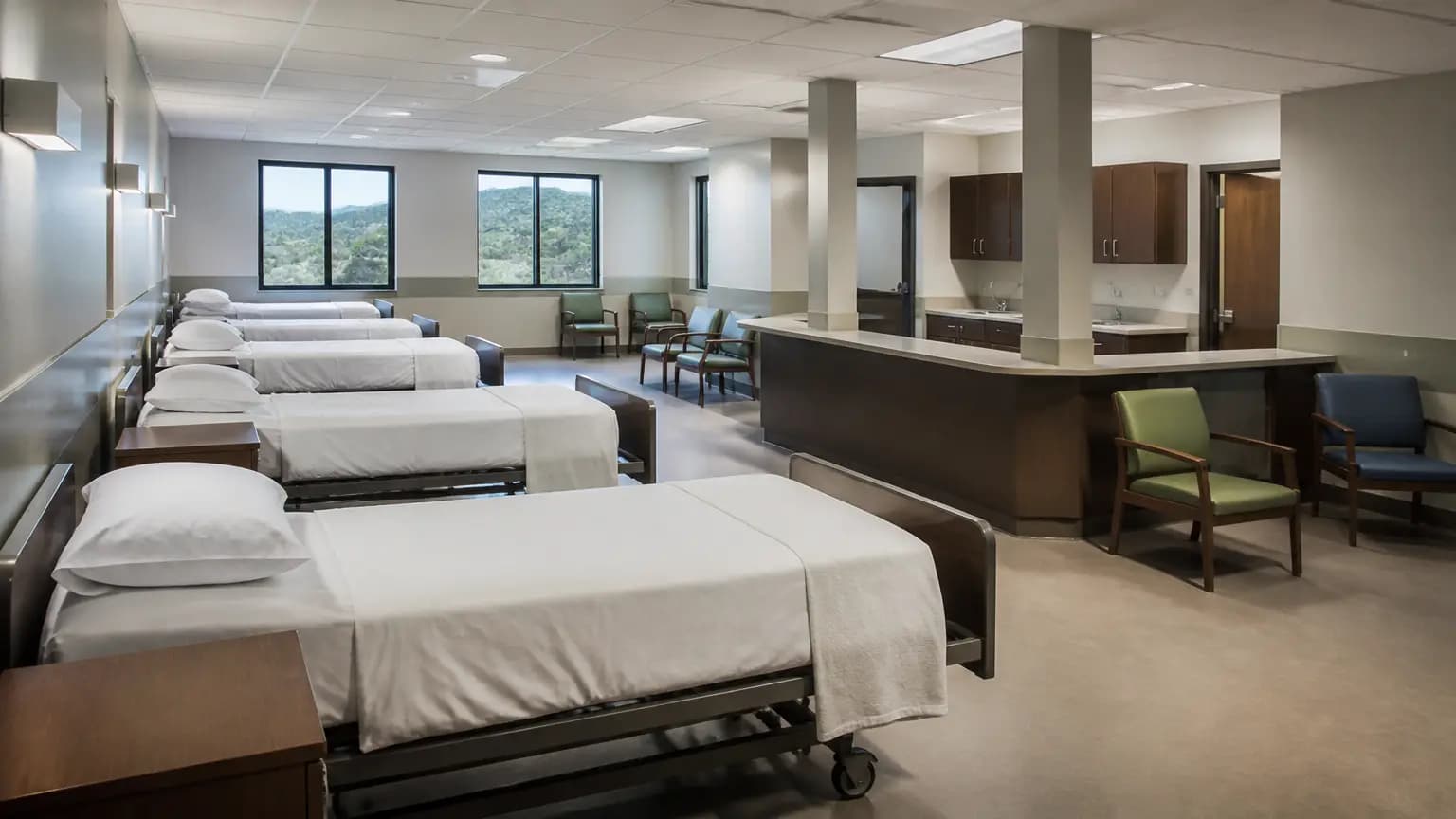
The next time you drive south on Lewis Road in Camarillo, past the old RAIN Transitional Living Center, take a look at what's happening there. Construction crews are converting the site into a 38-bed mental health rehabilitation center, and a crisis stabilization unit and psychiatric health facility are planned for the east county as well, The Acorn reported. Ventura County landed more than $93 million in state money for those projects — a slice of the biggest overhaul of behavioral health care California has attempted in decades.
But here's the catch, and it's the one that matters most to families in Agoura Hills and the Conejo Valley who have waited a long time for closer, better mental health care: buildings are the easy part. Every new bed and every crisis unit needs licensed clinicians to staff it, and the state is already short of them. A crisis unit without clinicians is just an expensive building.
What Prop 1 Actually Changed
Voters narrowly approved Proposition 1 in March 2024. It did two big things at once, according to The Acorn's reporting: it authorized a $6.38 billion bond for treatment facilities and supportive housing, and it rewrote the old Mental Health Services Act into the Behavioral Health Services Act.
That changeover finished this past summer, with all 58 counties moving to the new system in July. The state has now awarded $4.17 billion through Prop 1's infrastructure program to more than 330 projects statewide — capacity expected to add over 6,900 residential treatment beds and more than 27,500 outpatient treatment slots.
Every bit of that capacity depends on staffing. This gap has quietly become one of the most important workforce stories in California.
The Shortage Behind the Headlines
The state's own planners have been blunt about the problem. California needs roughly 58,856 additional licensed non-prescribing behavioral health clinicians, including licensed clinical social workers, according to the Department of Health Care Access and Information. The department's 2026–2030 workforce plan, as cited by The Acorn, found that more than 70% of counties struggle to fill core roles such as LCSWs, and it projects the gap could exceed 42% by 2033 if nothing changes.
Social workers sit at the center of that picture. They staff county clinics, run crisis teams, coordinate housing and treatment for people leaving hospitals or jails, and provide much of the therapy in community mental health. The new law leans heavily on exactly those services — which is why the state is putting money into the pipeline as well as the buildings, including stipends of up to $25,000 for MSW students who commit to working in public behavioral health after graduation.
Who Is Going Back to School
A familiar pattern shows up in social work classrooms: plenty of the new students are well past their early twenties. They're teachers who spent years watching kids struggle, nurses who want more time with patients, case managers who hit a ceiling without a license, and parents who finally have the bandwidth for a second career.
For people in Agoura Hills, Thousand Oaks, Simi Valley or Moorpark, picking up and moving to a university town for two years is usually out of the question. That's one reason hybrid programs have grown, mixing online coursework with regular in-person sessions and field placements arranged closer to home. The practicum is the heart of any MSW — students typically log more than a thousand hours in real agencies, from county clinics to hospitals, and those placements often turn into job offers.
The local angle matters here. A student placed at a Ventura County clinic learns the local system, the local agencies and the local community — exactly what the county needs as it opens these new facilities.
The Long Road to a License
Graduating with an MSW is only the first step. In California, social workers who want to provide therapy independently register as associate clinical social workers with the Board of Behavioral Sciences, then complete 3,000 hours of supervised experience over at least two years before sitting for the licensing exams.
That timeline is part of the challenge. Someone starting a program next fall could be close to the end of the decade before becoming fully licensed — which is why the state is also funding supervision and placement support for associates as well as students. Planners know the facilities being built now will need clinicians for decades longer than the construction crews will be on site.
A Conejo Valley Tradition
For Ventura County, the Lewis Road project and the planned east county facilities represent a real investment in care that families here have needed for a long time. Whether they work as intended depends on the people inside them.
The Conejo Valley has seen this play out before. Volunteers founded the Conejo Free Clinic in 1976 because the nearest county services were all the way in Ventura, and the clinic's 50-year history — counseling included — shows how much a committed group of local people can build when the need is close to home.
That makes the career decisions of a few hundred local residents more significant than they might seem. The teacher thinking about a career change, the case manager weighing a degree, the parent considering what comes next — they could end up being the clinicians those new buildings are waiting for. It's the quieter part of the story, but it may well be the most important one.
Reported by 805.life
Researched and written drawing on primary sources. Additional reporting: The Acorn (Agoura Hills).
City
Agoura HillsAdditional Reporting
The Acorn (Agoura Hills)Published
November 25, 2026
Reported and written by 805.life
Explore Agoura HillsAll Agoura Hills NewsMore News from Agoura Hills
 Agoura Hills
Environment a centerpiece of Agoura State of City address
Agoura Hills Mayor Jeremy Wolf used this year's State of the City address to put the environment front and center — and honestly, that feels right for a city that sits at the edge of the Santa Monica Mountains. The theme, 'Achieving New Heights,' wasn't just about big projects, but about protecting the biodiversity that makes our corner of the 805 so special and preparing for wildfire season, which is never far from any of our minds. Wolf also touched on infrastructure and quality-of-life efforts. It's the kind of local update that matters more than it might sound — these are the decisions that shape how our neighborhoods feel and function day to day. The Acorn (Agoura Hills) has the full rundown on what the mayor highlighted. If you missed the Nov. 5 address, it's worth a look. Whether you're a longtime resident or new to the area, staying informed on how the city plans to safeguard our open spaces and prepare for fire risk is time well spent.
 Agoura Hills
Casey Wasserman’s LA28 Olympic Vision Opens Door for Conejo Valley Businesses
Big news for our corner of the 805: the 2028 Olympics may be LA's moment, but the economic ripple could reach right here in the Conejo Valley. According to The Acorn (Agoura Hills), LA28 chairman Casey Wasserman is pushing a procurement strategy designed to open doors for smaller businesses — and that means companies in Thousand Oaks, Agoura Hills, Westlake Village and beyond could get a real shot at Olympic-related contracts. Why it matters locally: our small businesses are the backbone of the Conejo Valley, and opportunities like this don't come around often. Whether you run a catering company, a print shop, or a construction outfit, it's worth paying attention now rather than waiting until 2028 is on our doorstep. Keep an eye on how LA28's outreach unfolds — and if you're a local owner, start getting your paperwork and pitches ready. This could be our neighborhood's time to shine on an international stage.
 Agoura Hills
Agoura’s Klein Lopez takes 42nd Assembly seat
Big news for Agoura Hills — our own Mayor Pro Tem Deborah Klein Lopez is heading to Sacramento as the new Assemblymember for the 42nd District. She beat Republican Ted Nordblum by about 12 points in last Tuesday's election, according to The Acorn. That's a decisive win in a district that stretches across Calabasas, Malibu, Westlake Village, Thousand Oaks, and Simi Valley, so she'll be carrying a lot of local voices with her. What does this mean for us? For starters, Agoura Hills will have a familiar face representing us at the state level — someone who's been in the council trenches dealing with housing, traffic, and open-space issues we all care about. The 42nd is a big, diverse district, but having a mayor pro tem from our own backyard in the Assembly is a real advantage when it comes to getting our concerns heard. We'll be watching to see how she balances the needs of the western Valley and eastern Ventura County. For now, congratulations to Assemblymember-elect Klein Lopez — and Go Agoura!