Proposed East Los Olivos Street Project Impacts Life Safety of Residents in Mission Canyon Area
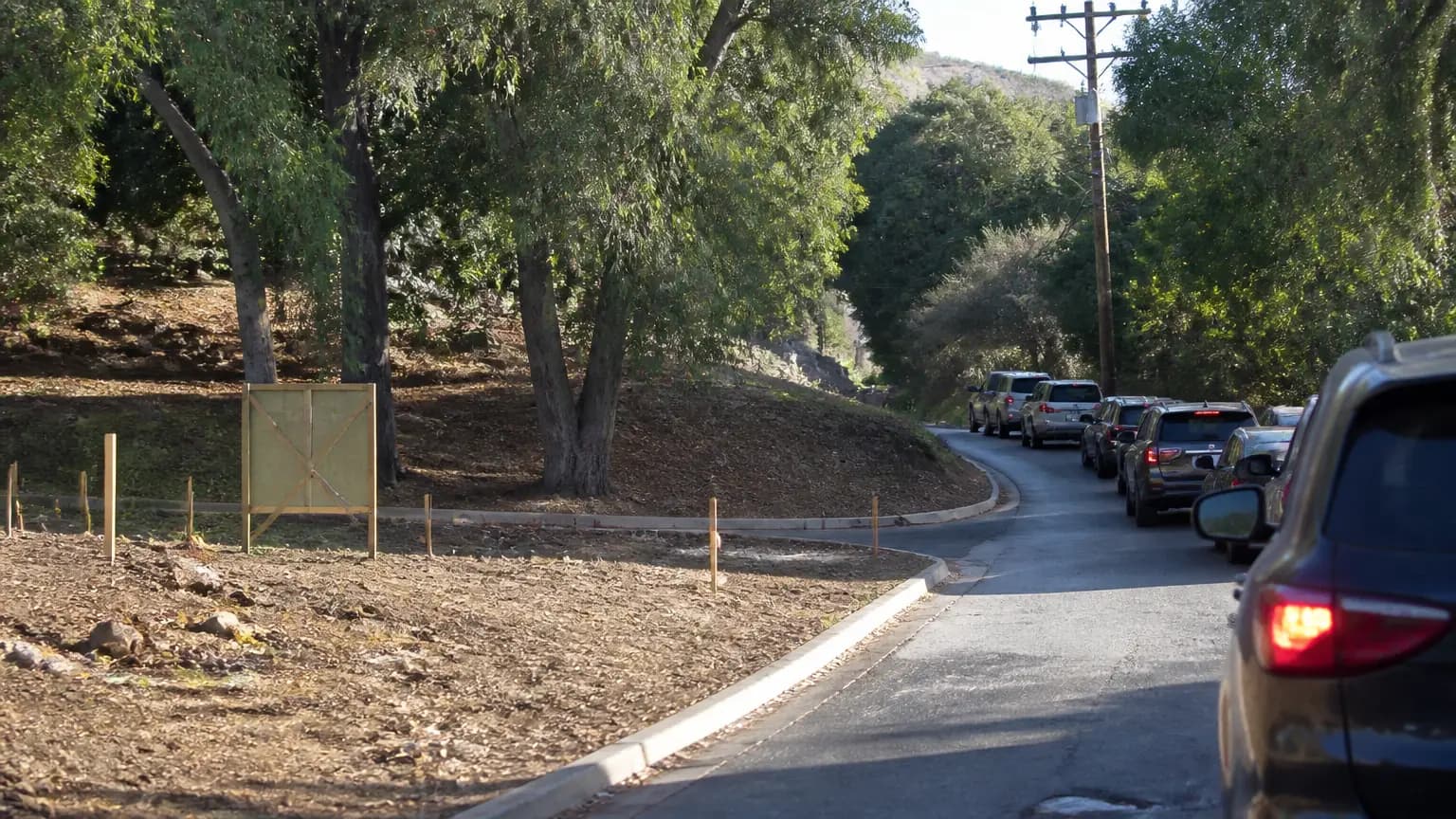
A group of five Santa Barbara architects is sounding the alarm over a proposed 10-story apartment complex at 505 East Los Olivos Street, arguing the project could endanger residents of Mission Canyon by choking off the neighborhood's already fragile fire evacuation routes during an emergency.
In an opinion piece published by the Santa Barbara Independent, architects Brett Ettinger, Cassandra Ensberg, Brian Cearnal, Kent Mixon, and Dennis Thompson — several of whom hold fellowship or membership in the American Institute of Architects — lay out their opposition to the project, which they say would add hundreds of residents and more than 400 vehicles to an intersection and roadway network already at capacity.
What's Being Proposed
The development, as described in the architects' letter, calls for 270 residential units and parking for 444 automobiles at the East Los Olivos Street site, near the base of Mission Canyon. The building would rise 10 stories, a scale the authors argue was never contemplated for the area and which they say conflicts with the City of Santa Barbara's General Plan.
The project would have a single vehicular entrance and exit onto Los Olivos Street — a design detail that sits at the heart of the architects' life-safety concerns. In an emergency, they argue, hundreds of vehicles attempting to leave the structure simultaneously could spill into an intersection that residents of adjacent neighborhoods say is already congested under normal daily conditions.
The Evacuation Math
The architects' most striking claim involves timing. They consulted parking-garage industry professionals and found that while no standardized metric exists for how long it takes a full parking structure to empty, there is an established benchmark for how long a single vehicle takes to pass through an operable parking gate: roughly 10 seconds. Extrapolating from that figure, they estimate it could take approximately 72 minutes — more than an hour — for 444 vehicles to clear the gate alone, before accounting for congestion on surrounding streets.
They are calling on the city to require the applicant to commission professional studies detailing how long it would take residents of the proposed development to evacuate in an emergency, and what the resulting traffic impacts would be for surrounding neighborhoods.
"Residents in adjacent neighborhoods currently experience congestion at the intersection directly outside the project's driveway entrance," the authors wrote. "The addition of 444 vehicles during an emergency evacuation scenario will create severe and potentially life-threatening traffic conditions."
Why Mission Canyon Is Different
Mission Canyon's geography is what makes the proposal uniquely contentious. The neighborhood, which sits largely in an extreme high fire hazard zone, funnels residents down steep, narrow switchback roads toward two exit routes to the south. The primary route — Mission Canyon Road — is further constrained by pinch points at the historic stone aqueduct and the narrow Mission Creek Bridge, both directly adjacent to the proposed project site.
That means a wildfire evacuation of Mission Canyon would push vehicles through the very intersection the new development would empty into. The architects argue the combination — a hillside community with limited egress and a new high-density project at the bottom of the canyon — cannot be mitigated given the physical constraints of the area.
The concern resonates deeply on the Central Coast, where the memory of regional wildfires — and the 2018 debris flow that devastated Montecito and killed 23 people after the Thomas Fire — remains fresh. Evacuation planning has become a central issue in land-use decisions throughout Santa Barbara's wildland-urban interface, and Mission Canyon has long been flagged by fire officials as a community with constrained escape routes.
A Familiar Housing Tension
The opposition comes as Santa Barbara, like much of California, faces intense pressure to add housing. State laws have increasingly limited cities' ability to reject projects, and taller, denser developments near downtown and transit corridors have become more common as officials work to meet regional housing mandates. Supporters of dense infill projects argue they help address the region's severe housing shortage and reduce sprawl into fire-prone open space.
But the Mission Canyon letter underscores a tension specific to Santa Barbara: even infill sites near the urban core can sit adjacent to terrain where emergency access and egress are already stretched thin. The architects' letter does not oppose housing development generally, but argues this particular location — at the mouth of a high-fire-hazard canyon with limited evacuation routes — is the wrong place for a project of this scale.
The five signatories bring significant professional weight to the debate. Ensberg and Thompson are Fellows of the American Institute of Architects (FAIA), the organization's highest member honor, and Cearnal and Mixon are AIA-member architects. Ettinger is also an architect.
What Comes Next
The project's fate will ultimately rest with Santa Barbara's city planning process, where it would need to clear design review and consistency determinations with the General Plan — the very document the architects claim it conflicts with. Whether the city requires the evacuation studies the group is demanding will likely shape the tenor of upcoming public hearings.
For Mission Canyon residents, the stakes are straightforward. As the architects put it in their letter: "We wish to express our grave concerns for our citizens' life safety that this project will impose and which we do not believe can be mitigated due to the constraints of the area and the current overloaded condition."
805.life will continue to follow this project as it moves through the city's review process.
Reported by 805.life
Researched and written drawing on primary sources. Additional reporting: Santa Barbara Independent.
City
Santa BarbaraAdditional Reporting
Santa Barbara IndependentPublished
September 21, 2026
Reported and written by 805.life
Explore Santa BarbaraAll Santa Barbara NewsMore News from Santa Barbara
Al no haber arma homicida, el juicio contra Caleb Flynn se centra en la relación extramatrimonial y en el supuesto intruso
A murder trial unfolding just up the coast is drawing attention here in Santa Barbara, and it's the kind of case that's hard to look away from. Caleb Flynn's trial, reported by KEYT News Channel 3-12, has no murder weapon — instead, prosecutors are leaning on testimony about a secret church affair, thousands of deleted texts, and lies told to the FBI. Even the family dogs stayed eerily quiet that night, which has become a strange piece of the puzzle. For those of us in the 805, it's a reminder that even tight-knit communities aren't immune to the kind of drama you'd expect from a courtroom thriller. Cases like this can shake faith in neighbors and institutions, and they raise hard questions about trust and evidence. We'll be watching how the trial unfolds — not out of spectacle, but because it touches on the real lives of people not so far from home.
UCSB Recovers From Slow Start, Beats CS Northridge in Big West Volleyball Opener
Good news for Gaucho fans — UCSB women's volleyball finally got back in the win column Friday night at the Thunderdome, shaking off a slow start to beat Cal State Northridge in the Big West opener. After dropping the first set, the team looked like a squad still finding its footing following a tough preseason that ended on a six-match skid. But conference play is a fresh slate, and the Gauchos took advantage. For our Isla Vista and Goleta neighbors, there's something special about catching a match on campus — cheap tickets, loud student section, and a team that's easy to root for. Thanks to Noozhawk for the coverage. If you haven't been to a UCSB volleyball match yet, consider this your sign to check one out this season.
Cottage Health Hosts Sepsis Conference Focused on Early Recognition and Treatment
Cottage Health pulled together doctors, nurses, pharmacists, respiratory therapists and other clinicians from across the region on Friday, Sept. 18, for a conference zeroing in on one of medicine's trickiest foes: sepsis. If you've never heard the word, you're not alone — but it's a leading cause of death in hospitals, and the difference between a good outcome and a tragic one often comes down to how fast someone recognizes the signs. That's why this gathering matters here. Santa Barbara County spans a big, sometimes rural region, and not every clinic or ER has the same resources. When Cottage Health convenes providers from up and down the 805 to share protocols and lessons learned, it quietly raises the standard of care for all of us — whether you're in Goleta, Lompoc, Santa Maria or Santa Ynez. The Santa Barbara Independent first reported the conference, and it's the kind of unglamorous, behind-the-scenes work that keeps our community healthier. Next time you or a loved one lands in an ER with a puzzling fever, this is the preparation you'll be glad happened.