Register All Lobbyists
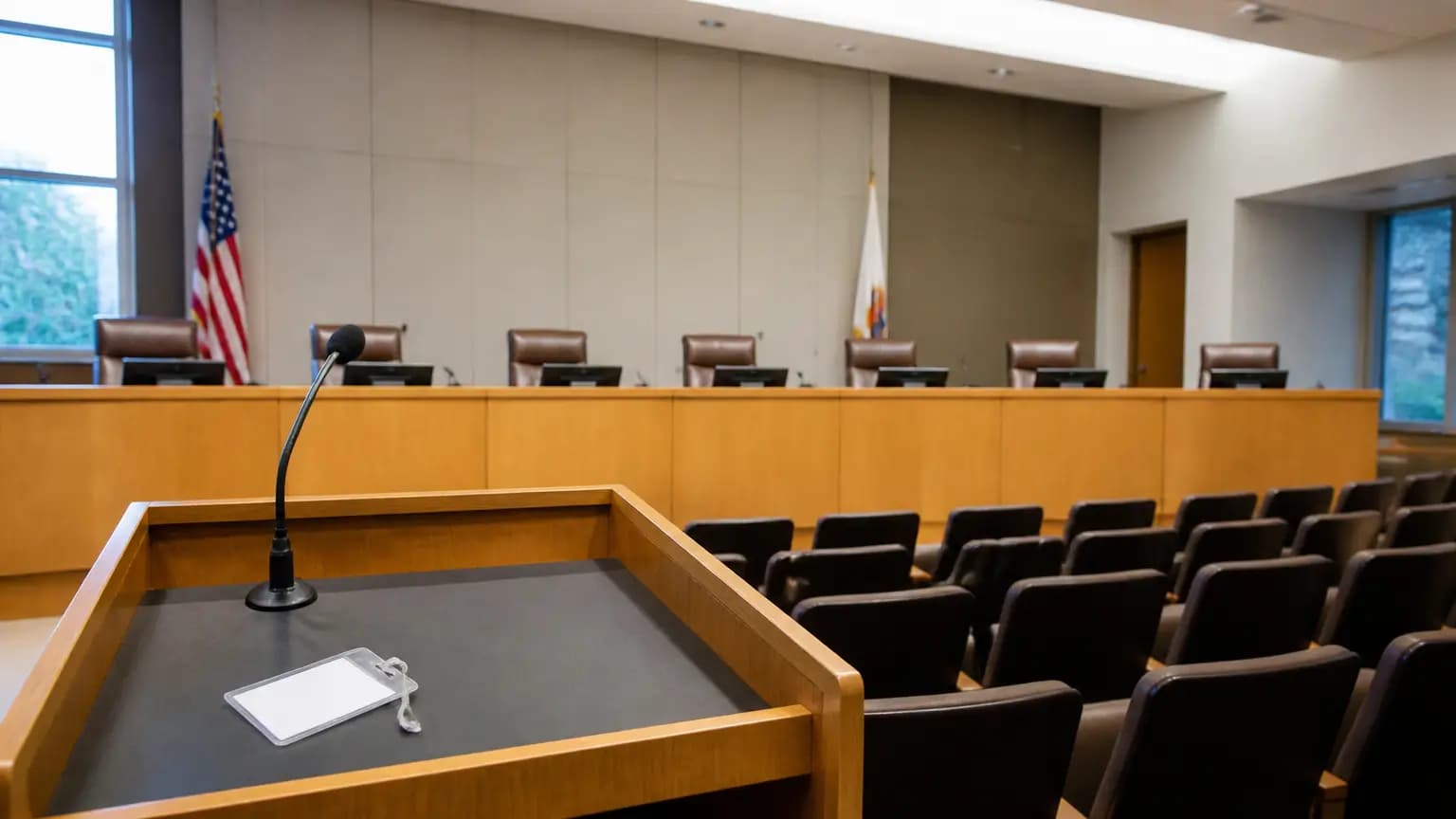
A longtime Santa Barbara County political organizer is calling on local officials to require paid lobbyists to register with the city and county clerks, an unglamorous transparency measure she argues would let residents see who is being paid to influence decisions before those decisions are made.
In a letter to the Santa Barbara Independent published November 2, Suzanne Cohen of Santa Barbara — who writes that she spent four years running a political organization in the county — draws on the county's own recent history to make the case. Her touchstone is the 2020 Santa Barbara County Civil Grand Jury report examining how the county's cannabis ordinances were drafted, a document whose findings, she notes, should trouble residents regardless of their views on cannabis itself.
The Grand Jury Finding That Started It
According to the grand jury's investigation, which Cohen cites in her letter, industry representatives and their lobbyists had "nearly unfettered access" to the Santa Barbara County Board of Supervisors as the county's cannabis rules were written — and that access "was undisclosed to the public." Jurors reviewed voluminous emails from cannabis lobbyists and growers to board members and found the tone and timing of the communications concerning enough to recommend that the county require public disclosure of who sought access, and when.
The board's response, as Cohen recounts, was largely dismissive: supervisors rejected 10 of the grand jury's 12 findings. That refusal is part of what animates her argument now — that the county declined even a modest transparency fix after being presented with evidence that behind-the-scenes influence had shaped one of the most consequential local policy debates of the past decade.
Santa Barbara County's cannabis ordinance, adopted in the mid-2010s, made the county one of the most permissive cannabis-growing jurisdictions in California, a decision that reshaped the Carpinteria Valley and other agricultural areas and remains a flashpoint in local politics. The grand jury's examination of how that ordinance came together struck many observers at the time as a rare public accounting of the industry's role in writing the rules it would operate under.
How Santa Barbara Compares
Cohen's letter points out that Santa Barbara is an outlier on this issue. Los Angeles County has required lobbyist registration since 1993, she writes, and a long list of California jurisdictions — including Sacramento, Oakland, Richmond, Malibu, Manhattan Beach, Santa Clara, San Jose, and San Francisco — maintain registration and reporting requirements, as do many smaller cities.
The common thread in those jurisdictions, she argues, is simple: a resident can look up who is being paid to sway a decision while that decision is still pending. In Santa Barbara, by contrast, no equivalent registry exists at the city or county level, meaning residents generally have no way to distinguish a neighbor's public comment from a compensated advocacy campaign.
Cohen is careful to frame the issue as one of disclosure rather than suspicion. Most people who lobby local officials are doing legitimate work, she writes, and some of it serves the public interest. The problem, in her telling, is narrower: "When someone is paid to argue for a company, we should be able to see it. Right now we can't."
What a Registry Would Look Like
The fix Cohen proposes is deliberately modest — no inspectors general, no new enforcement bureaucracies. She describes a registry housed at the city clerk's office and the county clerk's office that would record three basics: whom a lobbyist represents, what they are paid for, and which municipal or county matter they touched. The records would be public and searchable.
"Public, searchable, boring," she writes — a characterization that captures the prosaic nature of lobbyist registries elsewhere in California, which typically operate through routine disclosure filings rather than enforcement actions.
Such systems in other jurisdictions generally require lobbyists to register before contacting officials on covered matters and to file periodic reports on their clients and compensation. Violations are typically handled administratively, with fines, rather than as criminal matters — consistent with Cohen's framing that the goal is sunlight, not prosecution.
What Comes Next
Cohen closes with a direct ask of Santa Barbara residents: contact your city councilmember and county supervisor and ask where they stand on lobbyist registration. "More transparency in governance benefits us all," she writes.
The question now is whether local officials will take up the idea. The Santa Barbara City Council and the Board of Supervisors would each need to adopt ordinances establishing registration requirements within their jurisdictions, and neither body has scheduled such a measure, according to the letter, which does not indicate any pending agenda item. The board's earlier rejection of most of the 2020 grand jury's findings suggests county-level action faces an uphill climb absent sustained public pressure.
For residents, the stakes are practical rather than abstract. Land-use decisions, contract awards, and regulatory fights — from cannabis to housing to short-term rentals — all move through the supervisors' chambers and City Hall. A registry, advocates argue, wouldn't change who lobbies; it would simply let the public see the scoreboard while the game is still being played.
Cohen's letter, appearing in the Independent's opinion section, is a call to action rather than a policy proposal before a governing body. But it revives a debate that the 2020 grand jury report briefly forced into the open, and it puts a straightforward question to the officials who represent Santa Barbara's roughly 90,000 city residents and the broader county: if nearly every large city in California can disclose its lobbyists, why can't we?
The original letter is available at the Santa Barbara Independent.
Reported by 805.life
Researched and written drawing on primary sources. Additional reporting: Santa Barbara Independent.
City
Santa BarbaraAdditional Reporting
Santa Barbara IndependentPublished
November 2, 2026
Reported and written by 805.life
Explore Santa BarbaraAll Santa Barbara NewsMore News from Santa Barbara
 Santa Barbara
Manuel Alejandro Vasquez sentenced to 25 years to life after fleeing to Mexico following 1998 murder
Ventura County neighbors, some justice finally arrived this week. Manuel Alejandro Vasquez, 48, was sentenced to 25 years to life for the 1998 murder of Felipe Arambula, who was shot and killed in his own Ventura home. Vasquez fled to Mexico after the killing and was only recently brought back to face the consequences—he pleaded guilty to first-degree murder on September 30. It's a reminder that cold cases don't really go cold for the families who live with them. Twenty-eight years is a long time to wait for accountability, and while nothing brings Felipe back, there's something to be said for a system that kept the file open. For those of us in the 805 who remember the era, it's a sobering but meaningful close to a very old chapter. We first saw this reported by KEYT News Channel 3-12, and we're sharing it because local public-safety stories like this one matter to the community—even when the headlines come from just down the coast in Ventura.
 Santa Barbara
 Deserves Better Than Tear-Down Politics!
There's been a lot of talk around Santa Barbara lately about a candidate spending more energy tearing down an opponent than building up our community. The Santa Barbara Independent recently ran a piece making the case that when someone campaigns on attacks rather than ideas, it says more about them than the person they're targeting. Here in the 805, we know politics can get heated, but we also know our neighbors deserve better. Santa Barbara has always been a place where people show up for each other—whether it's supporting local businesses, volunteering, or just lending a hand. Tear-down politics doesn't fit that spirit. As we head toward the next election cycle, let's keep asking candidates to focus on solutions, not smears. Our community is stronger when we build each other up, not when we tear each other down. Read the full piece in the Independent and decide for yourself.
 Santa Barbara
SLO County DA announces election fraud charges against John Ruel S. Ambos
SLO County DA Dan Dow made headlines Monday with election fraud charges against 31-year-old John Ruel S. Ambos, following federal authorities flagging 63 suspected non-citizens registered to vote. As KEYT News Channel 3-12 reported, the local investigation kicked off just last week, and six others from the area are also named in the case. For those of us on the Central Coast, voting integrity hits close to home—whether you're in Santa Barbara, San Luis Obispo, or anywhere in the 805, fair elections are the bedrock of our communities. It's a reminder to stay informed and engaged as these local stories unfold. We'll keep an eye on how this develops and what it means for our neighbors. In the meantime, let's keep the conversation respectful and fact-based—democracy works best when we all participate.