Santa Barbara Council Votes to Ban Short-Term Rentals in Most Neighborhoods

Santa Barbara took one of its most aggressive steps yet against the short-term rental industry this week, with the City Council voting unanimously Tuesday to ban vacation rentals listed on platforms like Airbnb and Vrbo in most of the city's residential neighborhoods.
The decision, first reported by Noozhawk, ends years of debate over how the city should regulate the conversion of homes into part-time visitor accommodations. Under the new ordinance, short-term rentals are prohibited in all inland residential zones and in high-fire-risk areas, and are allowed only in non-residential or mixed-use residential zones — including the downtown corridor, the Milpas Street corridor and Upper State Street.
The rules take effect Jan. 11 for inland areas of the city. The portion governing the coastal zone, which includes the waterfront, the Funk Zone and the Coast Village Road area, must first be reviewed by the California Coastal Commission sometime next year before it can take effect.
What the ordinance does
The ordinance draws a sharp distinction between whole-home vacation rentals and "homeshares." Whole-home short-term rentals face the strictest limits, confined largely to commercial and mixed-use corridors. Homeshares — where a guest rents a room while the owner remains on the property — will be permitted in all residential and non-residential zones of the coastal zone.
The ordinance also imposes a two-night minimum stay for permitted rentals.
For residents who have spent years complaining about party houses on their blocks, the vote was a long-sought victory. Several told the council Tuesday about the cumulative toll of living next to homes that turn over to tourists every weekend — noise, fireworks, trash and parking chaos, and, in the foothills, the specter of wildfire sparked by careless guests.
Craig Leeds, who lives near Arroyo Burro Beach in the Yankee Farm area, told the council his neighborhood has contended with large parties, fireworks, a food truck and even a party bus blocking his driveway, according to Noozhawk's coverage.
"I am worried that a guest with no financial or emotional attachment to the neighborhood will either carelessly or unwittingly start a fire that could easily spread to the whole neighborhood," Leeds said.
Other residents said they bought homes in neighborhoods expecting neighbors — and instead found themselves surrounded by vacant properties used almost exclusively by tourists.
Councilman Mike Jordan was blunt in his assessment of the industry's impact on residential life.
"I don't think they're borrowing from the neighborhoods. I think they're stealing from the neighborhoods," Jordan said. "They are eroding what the expectation is of anybody who has been there longer than the thing that short-term vacation rentals are."
A hit to city revenue
The crackdown comes with a real cost to Santa Barbara's budget. City staff estimated that implementing the ordinance in the coastal zone will shrink the pool of short-term rental units paying transient occupancy tax from 265 to roughly 65 — a drop of between $2.3 million and $3 million in annual TOT revenue, which is collected from guests at hotels, motels and short-term rentals citywide.
Operators warned the council that the losses will fall on small property owners, not just corporate investors. Several said renting out their homes helps them pay their mortgages, and they questioned whether the homeshare model will attract guests at all.
Kelly Arie argued during public comment that the two-night minimum is out of step with how visitors actually use the city, noting that many guests come for just one night to attend weddings and other events.
"Losing that would cut our business by almost a third and the city's TOT along with that," Arie said.
Tony Shibata, who spoke against the homeshare model, said local hotels are simply too expensive for many tourists, according to Noozhawk.
Coastal Commission review looms
Because much of Santa Barbara's visitor activity happens within the state-designated coastal zone, the ordinance's fate there rests with the California Coastal Commission, which will review it next year.
Councilwoman Meagan Harmon, who currently chairs the commission, said she believes the city has threaded the needle between competing obligations — providing visitor-serving accommodations and coastal access while protecting residential neighborhoods.
"I really think that we have found a balance that speaks to our obligation to provide visitor-serving accommodation, to provide access, and to also maintain the quality of life that makes our coast so remarkable in the world," Harmon said.
Harmon noted the ordinance contains regulations similar to those the commission has supported in other jurisdictions, suggesting a smoother path to approval than some cities have faced.
West Beach could get a second look
One thread left unresolved: whether the city should allow multiple short-term rentals on a single parcel, specifically in West Beach.
Sean Black urged the council to reconsider the one-rental-per-lot limit there, noting that a duplex or two condos on one lot with separate owners would be limited to a single short-term rental between them.
"West Beach is exactly where we should want affordable accommodations," Black said. "It's a tourist district filled with hotels, steps from the beach, harbor, train station and State Street. No fire risk, no single-family residences. Preserve short-term capacity there and you have far more freedom to aggressively protect residential neighborhoods like the Mesa."
The argument appeared to resonate with some council members, though Councilwoman Wendy Santamaria cautioned that expanding short-term rentals in West Beach could take away units that could otherwise serve as long-term housing — a persistent concern in a city grappling with a tight rental market.
Jordan asked city staff to study allowing multiple short-term rentals per parcel in West Beach only, but adopting such a change now would have delayed the entire ordinance. City Administrator Kelly McAdoo said the city can explore that and other adjustments once enforcement mechanisms are in place.
What's next
For Santa Barbara homeowners currently operating whole-home short-term rentals in residential zones, the clock is ticking: the inland ordinance takes effect Jan. 11. Operators in the coastal zone will have to wait for the Coastal Commission's review next year to know exactly how the rules will apply to them.
For neighbors who have pushed for the crackdown, the unanimous vote sends a clear message that city leaders view residential neighborhoods as places to live — not as an extension of the hotel industry. For the operators and hosts who spoke Tuesday night, the fight over how Santa Barbara balances tourism and housing is far from over.
Reported by 805.life
Researched and written drawing on primary sources. Additional reporting: Noozhawk.
City
Santa BarbaraAdditional Reporting
NoozhawkPublished
October 7, 2026
Reported and written by 805.life
Explore Santa BarbaraAll Santa Barbara NewsMore News from Santa Barbara
 Santa Barbara
Why Does It Cost So Much to Remodel Here?
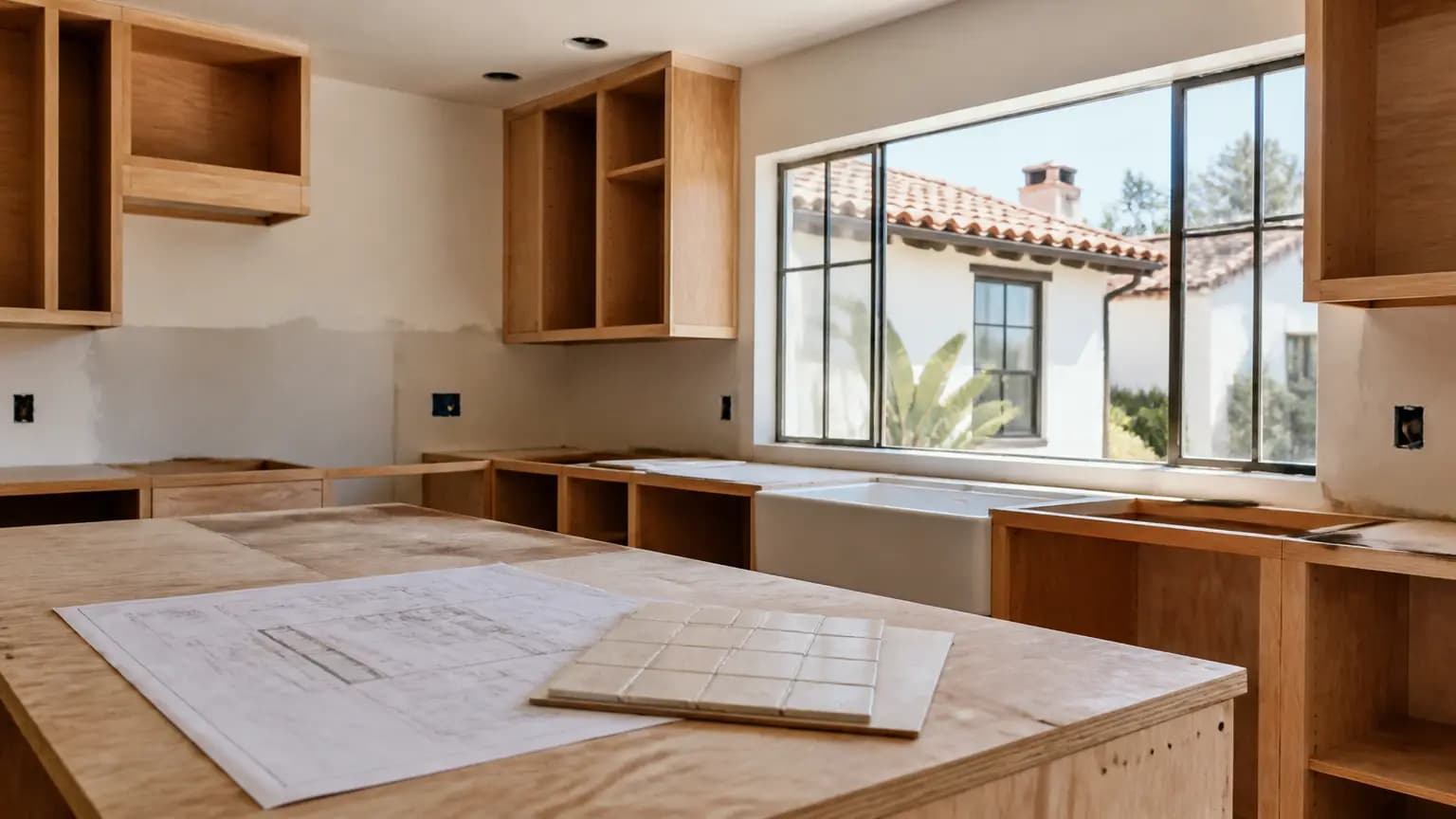
If you've gotten a remodel quote lately and felt your jaw hit the floor, you're not alone — and the Santa Barbara Independent just tackled the question everyone's asking: why does it cost so much to remodel here? The short answer: coastal permitting, limited contractors, and a market where demand never really cools down. It's not just sticker shock, though. It's a reminder that your Pinterest board and your budget need to live on the same planet before you demo a single wall. Overruns here come fast, and they come local — from Montecito to Goleta, the same forces are at play. Before you sign anything, talk to neighbors who've been through it, get multiple bids, and pad the budget. The Independent's piece is worth a read — it's the kind of practical reality check that saves 805 homeowners real heartache.
 Santa Barbara
Saving Naples, Once and for All
Big news for our little slice of paradise: the Land Trust has a purchase agreement in hand for Naples, the rugged stretch of coast and ranchland just west of Goleta that generations of 805 locals have hiked, surfed, and fought to protect. Now comes the hard part — a $16 million fundraising push to make the preserve permanent. Naples has been on the brink more times than we can count, and every close call has reminded us how rare this coastline really is. Sealing the deal means no future development, no last-minute saves, just open space for our kids and grandkids. The Santa Barbara Independent reports the clock is ticking on the campaign. If you've ever stood on those bluffs at sunset, you know why this matters. Let's get it done — once and for all.
 Santa Barbara
About the Retention Election for California Appellate Justices
Heads up, neighbors — there's a retention election coming up on your November 2026 ballot for California's appellate court justices, and the Santa Barbara Independent is urging a "yes" vote to keep them in place. If you've never paid much attention to these down-ballot races, you're not alone; they're easy to skip past when you're focused on the marquee contests. But here's the thing: these justices handle appeals from our local courts, meaning their rulings can shape everything from land-use disputes along the Gaviota coast to criminal cases out of Santa Barbara County. Retention votes are how we hold them accountable without turning the bench into a political circus. So before you fill out that ballot, take a few minutes to read up — the Independent's piece is a good place to start. Local courts matter, and so does showing up informed.