Santa Barbara County explores alternatives to emergency call boxes
The familiar yellow roadside call boxes that have stood watch over Santa Barbara County highways since 1987 may be nearing the end of the road — but not without reservations from Santa Maria's own mayor.
At its Aug. 20 meeting, the Santa Barbara County Association of Governments (SBCAG) directed staff to explore alternatives to the county's emergency call box network, which has dwindled from more than 350 phones at its peak to just 47 today. The move follows a broader statewide shift away from the fixed roadside phones, driven largely by near-universal cellphone ownership and a dramatic collapse in call box usage, as the Santa Maria Sun reported.
For Santa Maria drivers — especially those who commute or travel the rural stretches of Highway 166 toward the Cuyama Valley — the question is not merely academic. It's about what happens when a car breaks down or an emergency strikes in a spot where a cellphone can't get a signal.
A statewide trend, and a county holding out
Transportation Planner Peter Williamson told SBCAG board members that several jurisdictions across California have already removed their call box systems or are in the process of doing so — including Santa Barbara County's neighbors to the north and south.
San Luis Obispo County is the most recent. At its Aug. 5 meeting, the San Luis Obispo Council of Governments (SLOCOG) approved a multi-month phase-out that will incrementally remove all 41 of that county's remaining call boxes, which sit along U.S. 101 and state highways 1, 166, 33, and 41. The SLOCOG staff report justified the move bluntly: "All major cellular service providers report coverage along SLO County freeways and state highways, eliminating the original need for a fixed-roadside communication system."
Ventura County has also moved to dismantle its system, Williamson said, though he noted one quirky footnote — there was interest there in preserving a single call box for museum purposes.
If Santa Barbara County follows suit, Williamson warned, it risks becoming what he called "a call box island" — the last holdout in the region. But if it acts, the county could redirect the network's roughly $100,000 annual budget, which is funded by a $1 fee county residents pay as part of their vehicle registration costs.
"The allocation for the DMV $1 fee is dedicated to our county for motorist aid safety systems," Williamson told the board, according to the Sun. "They are dedicated to our region, and we can apply them how it makes sense to serve the motorists."
The numbers behind the decline
The case for change rests largely on usage data. Williamson reported that call box volume in Santa Barbara County has plunged 90 percent over the past decade. The 47 remaining boxes are, on average, used just 1.5 times per year — collectively, only a handful of calls annually across the entire network.
The boxes that remain are stationed in "rural, mountainous, or low-coverage corridors where cellular reliability varies," according to the staff report. And in a telling set of field tests, Williamson conducted calls and texts to emergency services near each box and reported successful connectivity at 43 of the 47 locations.
That evidence led some board members to conclude the technology has simply been overtaken. "What you're really telling us is it's so antiquated that it's gone the way of the buggy whip?" said SBCAG board member and Solvang Mayor David Brown. County 5th District Supervisor Steve Lavagnino, who also serves on the board, added that call boxes have "gone the way of phone booths and phone books."
Santa Maria's mayor: Not so fast on Highway 166
But the data didn't settle the matter for everyone. SBCAG board member and Santa Maria Mayor Alice Patino pushed back on the idea that cell coverage is reliable countywide, pointing specifically to the east-west corridor that connects Santa Maria to the Cuyama Valley and beyond.
"I travel 166 and there are a lot of dead zones on 166. I would hate to see people get stranded there," Patino said, according to the Sun. "I still think we need to maintain some of them on 166."
Buellton Mayor David Silva, another board member, asked Williamson whether he had observed "any unforeseen consequences" from call box removals in San Luis Obispo and Ventura counties. Williamson said he hadn't heard meaningful feedback — Ventura County's only ripple being the museum-box interest — and that it was too early to judge San Luis Obispo County's experience, since SLOCOG only approved its phase-out in August and expects the system to be removed over the next 12 months.
What comes next
SBCAG did not vote to remove the call boxes. Instead, the board directed staff to return with options for how the roughly $100,000 in dedicated motorist-aid funding could be redeployed — a list that, Williamson said, could include preserving some call boxes in problem areas and/or enhancing cellphone coverage in the dead zones that raise concerns.
That means Santa Maria residents who rely on Highway 166 — a remote stretch where the nearest services can be dozens of miles apart — could see the conversation shift from maintaining legacy hardware to filling cellular gaps, a solution that could benefit motorists regardless of whether their emergency involves a call box.
No timeline for the staff report was specified, and any final decision on the network's fate will return to the SBCAG board, whose membership includes mayors and supervisors from across the county, including Santa Maria.
For now, the 47 call boxes remain in place along the county's rural highways — relics of a 1987-era safety philosophy, still standing in an era when, at most locations, the phone in a stranded driver's pocket can already do the job.
Reported by 805.life
Researched and written drawing on primary sources. Additional reporting: Santa Maria Sun.
City
Santa MariaAdditional Reporting
Santa Maria SunPublished
August 26, 2026
Reported and written by 805.life
Explore Santa MariaAll Santa Maria NewsMore News from Santa Maria
 Santa Maria
Rematch: Jeremy Ball and Jim Mosby are battling in another Lompoc race, this time to become the city’s next mayor
Lompoc voters, we've seen this matchup before. Jeremy Ball and Jim Mosby are facing off again—this time for mayor—six years after Ball won their 2020 race for the 4th District seat. Mosby bounced back in 2024 by defeating Jenelle Osborne for mayor, and now the two council incumbents are squaring off once more. It's a rematch that says a lot about how small-town politics works here on the Central Coast: familiar faces, long memories, and neighbors who've watched both men serve. Mayoral races in Lompoc shape everything from downtown revitalization to public safety and housing decisions, so this one's worth paying attention to. The Santa Maria Sun has the full story. Whatever your politics, do your homework before the ballot arrives—local races like this hit closer to home than anything in Washington.
 Santa Maria
Police use drones as first responders in Lompoc
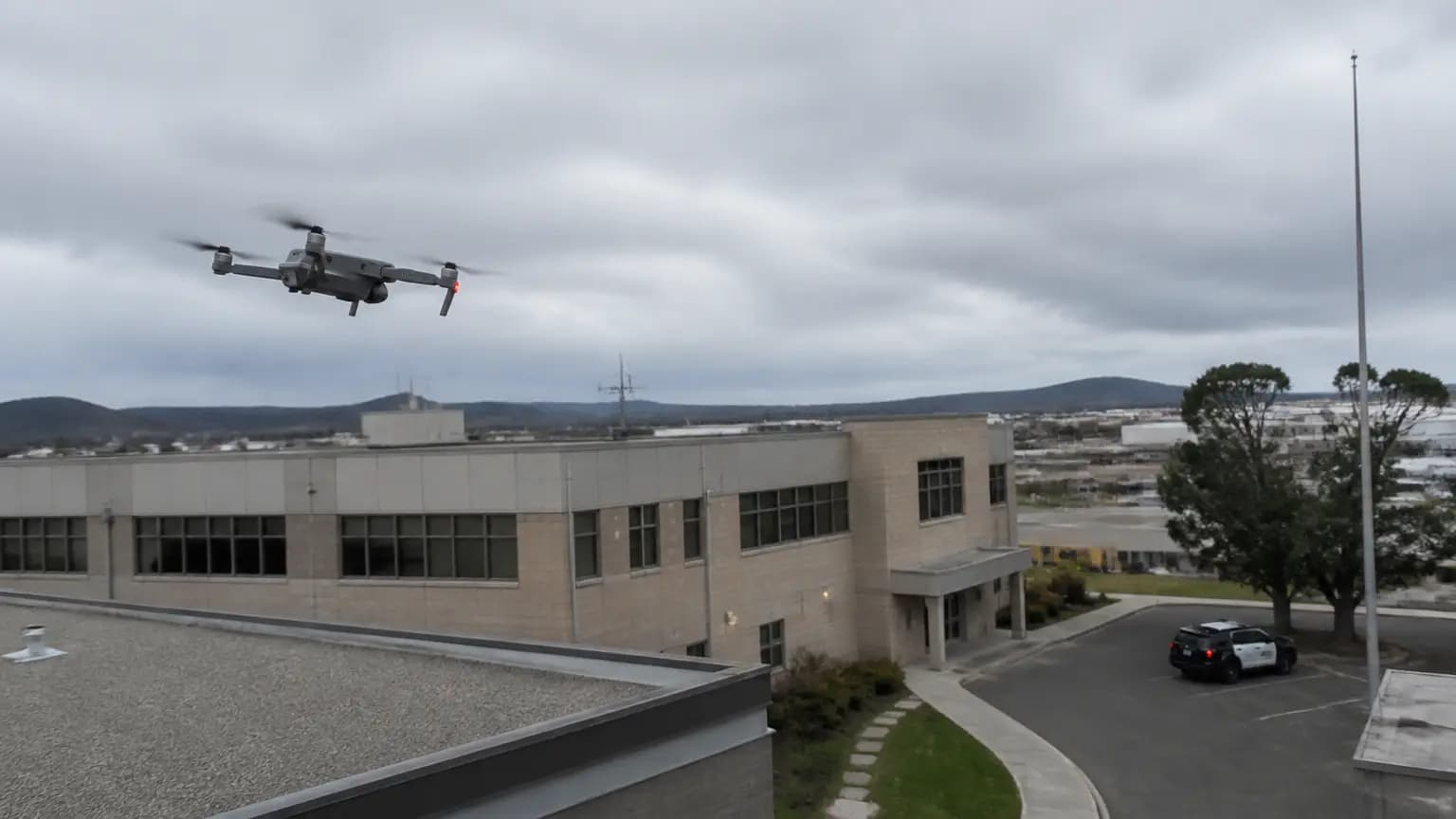
Lompoc's police department has been quietly testing something pretty futuristic since August: drones that launch from the roof of the station and get to emergencies before officers do. Two Flock Safety drones can cover a 3-mile radius, helping locate people and scope out tough terrain. Community Services Sgt. says it's been helpful in multiple cases. For those of us here in Santa Maria, it's worth watching. Lompoc is our neighbor up the 101, and what works there often shapes what other Central Coast departments try next. Drones as first responders could mean faster help in the backcountry and riverbeds, but it also raises fair questions about privacy and oversight. The Santa Maria Sun has the full story. We'll be keeping an eye on how this plays out across the 805.
 Santa Maria
State and local leaders condemn ICE arrest on Hancock campus
Santa Maria folks know the corner of College and Allan Hancock well — it's where we drop our kids off, grab a coffee, head to class. That's what makes this one hit close. A dad of five was taken into ICE custody right there while dropping his daughter off at Hancock, and by the next day the Board of Supervisors was weighing a resolution on National Immigrants Day. The timing says everything. Immigrant families are woven into the fabric of this town — our fields, our businesses, our schools. When a school drop-off turns into a detention, it shakes the trust that makes a community work. The Santa Maria Sun reports local and state leaders are speaking out, and whatever your politics, that matters here. Keep an eye on how the county votes and what support reaches this family. In Santa Maria, we look out for each other — that's not politics, that's just us.