Santa Barbara County’s housing credibility gap
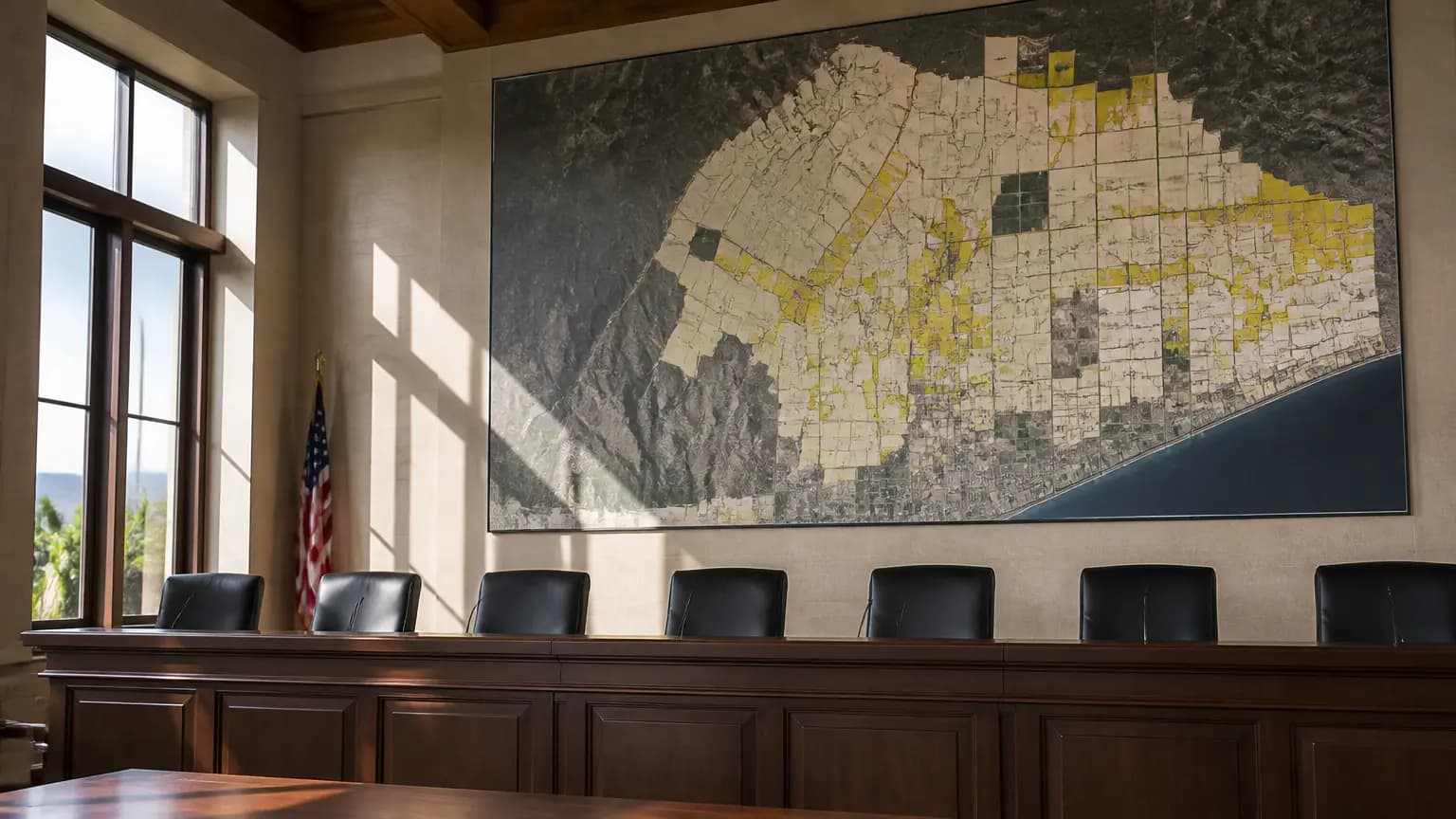
A new opinion column published by CalCoastNews is putting fresh pressure on Santa Barbara County's approach to its housing crisis — and it names San Luis Obispo as the model the county to the south should be following.
In the column, published Sept. 23, longtime Santa Barbara County watchdog Andy Caldwell argues the county has a "credibility gap" on housing: it has shown a willingness to rezone large tracts of agricultural land for solar energy development, he writes, while declining to rezone comparable land for housing amid a severe shortage. He says he posed that question directly to the Santa Barbara County Board of Supervisors and received no substantive answer, describing only a grimace from Supervisor Laura Capps in response.
The column is an opinion piece, and its arguments reflect the author's perspective. But the underlying policy tension it raises — how counties across the Central Coast balance agricultural preservation, renewable energy development, and state housing mandates — is one that resonates well beyond Santa Barbara County's borders, including here in San Luis Obispo.
The core argument
Caldwell writes that Santa Barbara County's land-use decisions amount to artificial scarcity. Quoting a decades-old statement he attributes to a former county planning and development director — that preserving the county's quality of life "includes limiting opportunities for others" — he argues that housing shortages in wealthy enclaves like the South Coast and the Santa Ynez Valley are, in part, a deliberate political choice.
He also criticizes a proposal he attributes to Capps to build housing on county-owned land for government employees, arguing it serves the "county family" while leaving the broader community — he uses the pointed term "serfs" — without solutions.
For San Luis Obispo readers, the critique is notable less for its partisan framing than for its policy specifics. Caldwell argues the county is actively undercutting its own cities' ability to meet state housing mandates through two mechanisms: opposing city boundary expansions before the Local Agency Formation Commission (LAFCO), and imposing "revenue neutrality" conditions that he contends strip cities of the fiscal resources needed to annex and develop new land. He cites the Richard's Ranch development proposal in the Santa Maria Valley as a current example, and Goleta's cityhood process as a past one.
Why SLO is held up as the example
Perhaps the most locally relevant thread in the column is Caldwell's praise for San Luis Obispo's land-use pattern. Writing that he has lived on the Central Coast for 58 years, he argues that "nobody can claim SLO resembles the San Fernando Valley or Orange County" — and that the region's tradition of allowing low-density and clustered development on non-prime agricultural land, often through city annexations, has kept growth compatible with ranching and open space.
He points to approaches such as vineyard estates and clustered rural housing as ways to let ranching operations continue while adding modest housing supply. He also calls for reviving what he describes as an agricultural cluster development ordinance that Santa Barbara County supervisors previously rejected — a policy he says would have allowed, for example, a 3,000-acre ranch to build 30 homes on two-acre parcels, leaving the vast majority of the land undeveloped.
His sharpest comparison involves the Gaviota Coast: Caldwell writes that he would rather see scattered homes along that scenic stretch than "thousands of acres of grotesque solar farms," referencing the county's move to rezone roughly 16,000 acres of agricultural land for solar panels — land he argues California already has in surplus for that use, unlike housing.
What the column recommends
Caldwell lays out a four-part agenda for the Santa Barbara County Board of Supervisors: a comprehensive review of agricultural land designations to identify parcels unsuitable for farming and rezone them for residential or mixed use; reforms to the LAFCO annexation process with clear timelines and reduced bureaucratic hurdles, avoiding prime farmland where possible; policies ensuring large-scale renewable energy projects don't displace residential growth opportunities; and incentives such as tax breaks, density bonuses, and expedited permitting for housing built on marginal agricultural land.
Context and caveats
Readers should note this is a single opinion column, not a news report of a specific board action, and the claims within it — including the solar rezoning acreage, the characterization of Capps' proposal, and the description of county conduct before LAFCO — reflect the author's account. CalCoastNews publishes the piece under an explicit "OPINION" label.
Still, the debate it feeds into is real and regionwide. Counties up and down the Central Coast are wrestling with state housing mandates, RHNA allocation targets, and the fiscal politics of annexation, while simultaneously facing state pressure to expand renewable energy development. San Luis Obispo County has faced its own versions of these fights over growth boundaries, agricultural subdivision rules, and where new housing should go.
Whether Santa Barbara County supervisors respond to the criticism — or whether the "credibility gap" Caldwell describes widens — remains to be seen. No board agenda items responding to the column's recommendations have been announced. For San Luis Obispo residents, the column is a reminder that the region's housing crunch is not confined to one county, and that how neighbors to the south solve it — or fail to — will shape the Central Coast's growth pressures for years to come.
Reported by 805.life
Researched and written drawing on primary sources. Additional reporting: CalCoastNews.
City
San Luis ObispoAdditional Reporting
CalCoastNewsPublished
September 23, 2026
Reported and written by 805.life
Explore San Luis ObispoAll San Luis Obispo NewsMore News from San Luis Obispo
Starbucks Coffee closing three store in San Luis Obispo
So it looks like we're losing three Starbucks locations here in SLO, part of a bigger wave of 250 closures across the U.S. and Canada that the company announced Thursday. CalCoastNews reports the chain didn't name the specific stores, but a Starbucks fan put together a list that includes three right here in San Luis Obispo. Whether you're a daily drive-thru regular or just grab a latte before hitting the Thursday night farmers market, this one hits a little close to home. Local coffee shops, of course, are probably raising an eyebrow — and maybe a mug — at the news. No word yet on which exact spots will close or when, so keep an eye out. In the meantime, this might be the perfect excuse to finally try that neighborhood café you've been meaning to visit.
 San Luis Obispo
Hundreds of San Luis Obispo County residents win quiet title lawsuit
Big news for hundreds of our neighbors across North County. A judge ruled Thursday that the 800-plus residents who joined a quiet title lawsuit to protect their right to use water from the Paso Robles Groundwater Basin without charge have won their case, according to CalCoastNews. That means water districts can no longer force these plaintiffs to pay fees or taxes just for using the groundwater beneath their own land. For a region where water is everything—ranches, vineyards, family homes—this isn't just a legal footnote. It's about who gets to decide how local water is used and paid for. Paso Robles has been at the center of California's groundwater debates for years, and this ruling gives these residents some hard-won certainty. We'll be watching to see how the districts respond and what it means for everyone else relying on the basin. For now, it's a genuine win for a lot of folks who just wanted to keep their water rights intact.
 San Luis Obispo
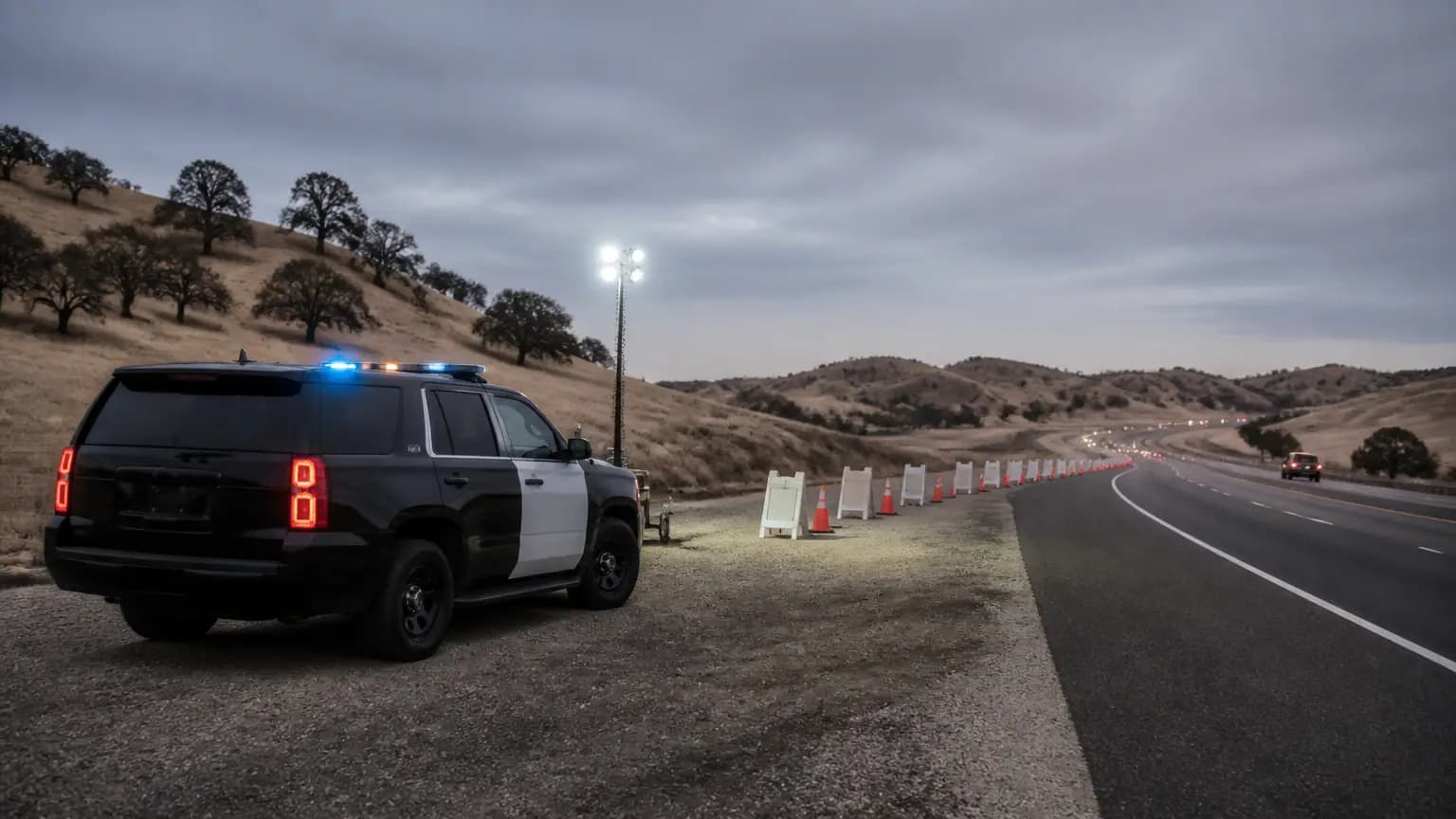
Templeton CHP officers holding DUI checkpoint Saturday night
Heads up, North County — Templeton CHP is running a DUI checkpoint somewhere in SLO County Saturday night. As always, they're keeping the exact spot under wraps, choosing it based on where crashes and DUI arrests have clustered in the past. If you're out on the 101 or winding home from a wine-country dinner, expect officers checking licenses and insurance, and keeping an eye out for signs of impairment. Here's the thing: checkpoints aren't really about catching folks off guard. They're about getting people to think twice before getting behind the wheel after a few glasses of Paso or Templeton wine. We love our tasting rooms and late dinners around here — that's exactly why this matters. Plan a designated driver, call a rideshare, or just stay put. CalCoastNews had the original heads-up, and we're passing it along because a little planning keeps everyone safer on our roads. Stay safe out there, neighbors.