Should San Luis Obispo County change its 911 system?
A debate over how San Luis Obispo County staffs and pays for emergency medical response is quietly reshaping one of the most basic services residents rely on: what happens when they dial 911. According to a CalCoastNews report published October 7, a proposal to move the county toward a public-private "alliance model" for ambulance service has divided the county's seven cities, with Paso Robles leading the push and Morro Bay standing alone in opposition.
At stake is a system that has been in place, in one form or another, for roughly eight decades. For about 80 years, the county contracted with San Luis Ambulance for ambulance transport. But the SLO County Board of Supervisors voted last year to put that long-standing contract out to bid, opening the door to a fundamental restructuring of how medical emergencies are handled countywide.
How the current system works — and who pays
Under the existing arrangement, county firefighters respond to all medical calls, while ambulances are generally dispatched a few minutes later. That structure is tied to what's known as the first-responder fee program — a mechanism, developed over the past three decades, that allows fire departments to bill for arriving first at medical emergencies. As structural fires have declined over the years, these fees have become a significant funding stream for fire departments, CalCoastNews reported.
The cost is substantial. San Luis Ambulance Service is facing first-responder fees of approximately $1,059,732 for the 2026-27 fiscal year — a cost that is built into what patients ultimately pay for an ambulance ride.
Critics of the current model point out that alternatives exist. Some California counties rely solely on private ambulance providers for medical transports, an approach CalCoastNews described as the cheapest option for consumers and one that some consider among the safest. At the other end of the spectrum, several counties have fire departments that fully own and operate their own ambulances — but that model, with larger salaries and early retirement packages, is generally the most expensive.
Paso Robles pushes the alliance model
Paso Robles has emerged as the driving force behind the proposed change. The city, which would control the new arrangement, issued a request for proposals to replace the current program with an alliance model — a public-private partnership that critics say would cement government's ability to charge for emergency response.
The response from the industry was tepid. Of the roughly 170 ambulance companies operating in California, only American Medical Response submitted a bid. Industry representatives argue the alliance model is not financially sustainable, citing an estimated startup cost of more than $12.5 million that would fall on local governments.
Of the seven cities in San Luis Obispo County, Morro Bay is the only one that has rejected the plan, according to the CalCoastNews report.
The Medicaid question hanging over the debate
A key part of the financial argument for government-run ambulance services may be on shaky ground. California has increased its Medicaid payments to government-run ambulance providers — a discrepancy CalCoastNews pegged at roughly $360 per transport for private ambulance companies versus more than $700 for government-run programs, a gap borne by federal taxpayers.
That financing structure is drawing scrutiny in Washington. Federal watchdogs have raised alarms, and the Trump administration is planning to tighten the rules. The Centers for Medicare and Medicaid Services has already proposed a rule that would end the extra funding to government agencies.
"These schemes distort Medicaid's financing structure, shift costs from the state to the federal government," Mark Howell and Chris Medrano of the Paragon Health Institute wrote in an analysis cited by CalCoastNews. "They are also fundamentally unfair because they give public providers a significant advantage over private providers."
If that extra federal funding disappears, the economics underpinning the alliance model could shift significantly — a risk local officials will likely have to weigh as the bidding process moves forward.
What it means for residents
For San Luis Obispo County residents, the practical consequences come down to cost and response times. Whatever model the county settles on will determine who shows up when someone calls 911 for a heart attack or seizure, how quickly an ambulance arrives, and how much the ride costs — either directly through ambulance bills or indirectly through taxes and fees that fund fire department participation in medical response.
Supporters of the current arrangement argue that fire-based first response provides critical early intervention, since firefighters often arrive before an ambulance. Skeptics counter that layering fees on top of a private ambulance contract inflates the price of every transport, and that a streamlined private model could deliver comparable care at lower cost.
With the county having opened the contract to competitive bidding after eight decades with a single provider, and Paso Robles pursuing its own alliance-model proposal that so far has attracted just one bidder, the next steps will unfold in board rooms and city council chambers across the county. Residents concerned about the direction of emergency services can expect the Board of Supervisors and their city councils to take up the issue as proposals are evaluated.
This article is based on reporting by [CalCoastNews](https://calcoastnews.com/2026/10/should-san-luis-obispo-county-change-its-911-system/). 805.life will continue to follow this story as it develops.
Reported by 805.life
Researched and written drawing on primary sources. Additional reporting: CalCoastNews.
City
San Luis ObispoAdditional Reporting
CalCoastNewsPublished
October 7, 2026
Reported and written by 805.life
Explore San Luis ObispoAll San Luis Obispo NewsMore News from San Luis Obispo
 San Luis Obispo
San Luis Obispo police investigating alleged arson near Madonna Inn
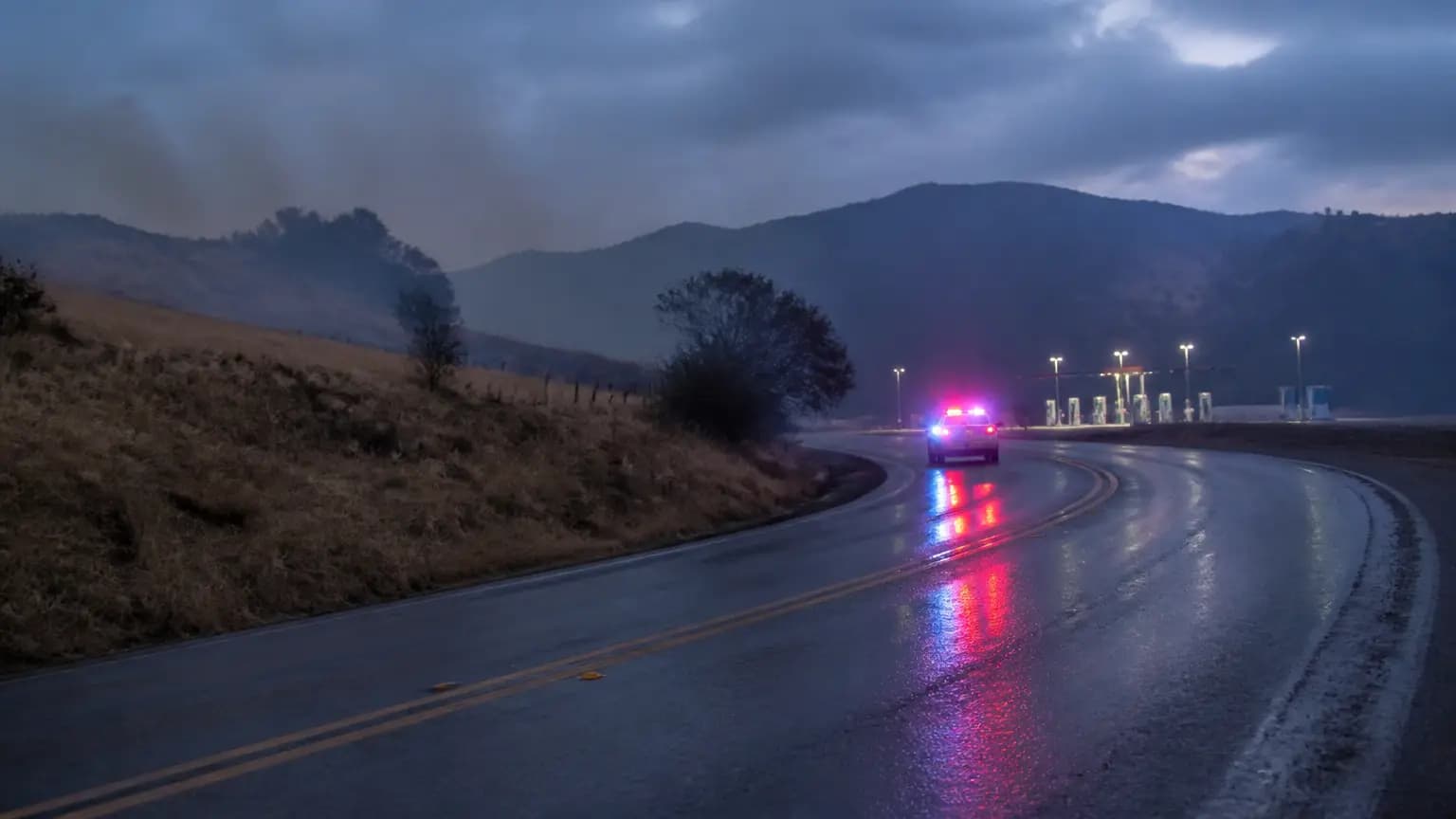
Neighbors, if you noticed some extra activity near the Madonna Inn Monday evening, here's what was going on. CalCoastNews reports that San Luis Obispo police are investigating an alleged arson fire that sparked just after 6 p.m. near the Tesla charging station on the 200 block of Madonna Road. Firefighters and officers responded to a small vegetation fire, and thankfully it stayed small. The Madonna Inn is one of our most recognizable landmarks, and that stretch of Madonna Road is busy with commuters, hotel guests, and EV drivers every day. Even a small fire in dry vegetation this time of year is a reminder of how quickly things can escalate on the Central Coast. If you saw anything unusual in the area that evening, SLO police would likely want to hear from you. We'll keep an eye on this one and share updates as the investigation develops.
 San Luis Obispo
Santa Barbara County inmate dies at nursing facility
A sad piece of news out of our neighboring county this week: a 79-year-old Santa Maria man, Ernest Lattimer, died while in custody at a nursing facility, according to CalCoastNews. He had been facing serious charges involving a minor and was receiving medical care outside the Northern Branch Jail when he passed. It's a reminder that our jails and courts here on the Central Coast increasingly serve an aging population, and cases like this raise hard questions about care, cost, and accountability. For those of us in SLO County, it's a moment to think about how we handle elderly inmates and victims' families alike. We'll keep following this story as more details emerge. If you have thoughts, our inbox is always open.
 San Luis Obispo
Settlements aren’t verdicts, name calling isn’t evidence, facts matter
If you've been following the District 2 race in Paso Robles, you've probably seen the Tribune's latest editorial calling Chris Bausch "disgraced" and "unfit." CalCoastNews pushed back this week with an opinion piece from Erik Gorham, arguing that a settlement isn't the same as a verdict and that name-calling doesn't count as evidence. Here on the Central Coast, local elections can get personal fast, and Paso Robles voters are the ones left sorting fact from theater before they cast a ballot. Whatever side you're on, it's worth reading past the headlines and asking what's actually been proven. Local opinion matters, but so does doing your own homework. Check the original sources, then decide for yourself.