Solar Canopies over California’s Canals?
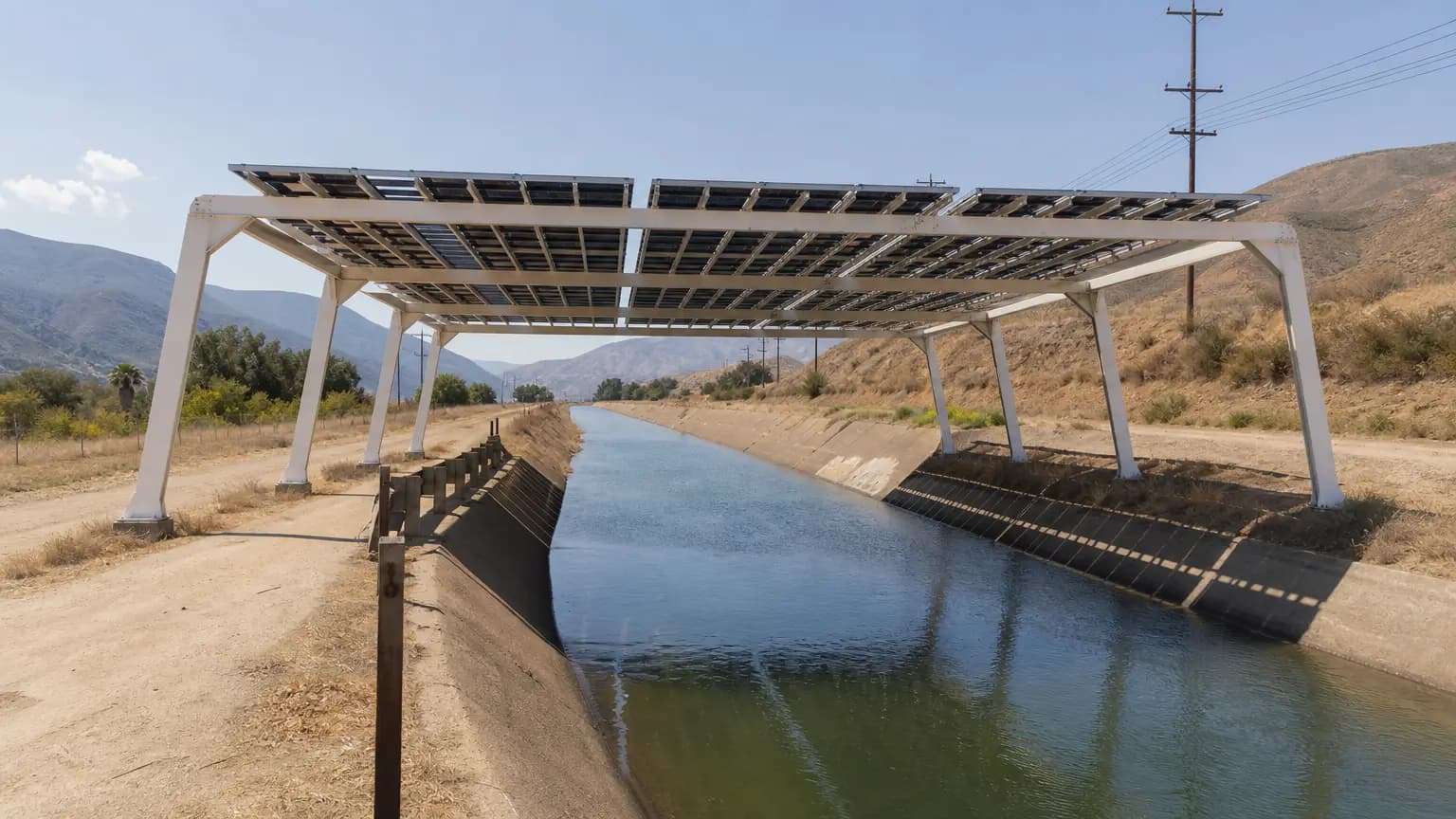
As California continues to grapple with the intertwined challenges of prolonged drought, land scarcity, and the rapid transition to renewable energy, an innovative infrastructure concept is gaining traction. Recent reporting by the Santa Barbara Independent highlights the promising early results of "Project Nexus," a pilot program that involves installing solar panels over the state's vast network of irrigation canals.
While the pilot installations are located hundreds of miles north of the 805 region, the data emerging from the Central Valley carries profound implications for Santa Barbara. Santa Barbara County relies heavily on the State Water Project, a sprawling system of aqueducts and canals that funnels water from Northern California to the southern half of the state. That same infrastructure represents a massive untapped canvas for clean energy generation.
The Genesis of Project Nexus
The concept of placing photovoltaic panels over irrigation waterways first took shape in 2012 with a pilot project in rural India. However, the financial viability of the idea in California historically lagged due to the 30 to 40 percent increase in installation costs when compared to traditional land-based solar arrays.
Enthusiasm shifted in 2021 following a comprehensive research report from the University of California, Merced. The study analyzed the potential of covering California’s approximately 4,000 miles of water canals. According to the findings, such an initiative could generate 13 gigawatts of renewable energy capacity—roughly half of the new power the state needs to meet its ambitious 2030 climate targets. Furthermore, researchers concluded that the canopies could prevent the evaporation of 63 billion gallons of water annually, an amount sufficient to meet the residential needs of two million people.
These synergistic benefits catalyzed the creation of Project Nexus. Spearheaded by UC Merced, the Turlock Irrigation District, and the solar development firm Solar Aquagrid, the project installed solar canopies over two distinct canals south of Modesto: one roughly the width of an alley and the other as wide as an eight-lane freeway. The initiative was backed by $20 million in state funding to thoroughly test the concept.
Early Returns on Water and Maintenance
For the past year, researchers and operators have been gathering data from the Project Nexus sites. Although the final, comprehensive report is slated for release in the coming months, early indications point to significant operational and environmental dividends.
Shade provided by the solar canopies has reportedly reduced water evaporation in the targeted segments by as much as 70 percent. Additionally, the lack of direct sunlight is cutting the growth of algae and aquatic weeds by roughly 85 percent. For canal operators, this reduction in biological growth translates into substantial savings on heavy machinery, labor, and chemical treatments currently required to keep the waterways clear.
The integration also provides a microclimate boost to the solar panels themselves. The cooling effect of the water flowing beneath the canopies helps lower the operating temperature of the photovoltaic cells. This increases the panels' energy generation efficiency and extends their operational lifespan. As detailed in the Independent, these overlapping environmental and economic benefits are what researchers call "synergistic solutions"—tackling multiple challenges, such as water conservation and energy generation, simultaneously.
What This Means for the Central Coast
For residents of the Central Coast, the success of Project Nexus could serve as a critical blueprint for local land-use strategy. California’s strict land-use regulations and the competing demands for agricultural and residential space make siting large-scale solar farms inherently difficult. By doubling up on existing infrastructure—using the surface area of water delivery systems—developers can avoid using valuable, undeveloped land.
This is particularly relevant as California pushes toward its "30x30" goal, an executive order mandating the conservation of 30 percent of the state’s land and coastal waters by 2030 to protect biodiversity. Covering canals with solar panels provides a pathway to expand renewable energy infrastructure without disrupting natural habitats or converting productive farmland.
Industry experts anticipate that as the final data from Project Nexus validates the economic model, the approach will scale in strategic increments. The short-term strategy for expanding the technology prioritizes canal segments that are situated near existing energy demands. These include water-pumping stations, newly established electric vehicle charging corridors along major highways, and areas where existing transmission infrastructure can seamlessly handle the additional power load.
While the Central Coast relies on water imported via the massive California Aqueduct rather than the smaller Turlock Irrigation District canals, the engineering and financial models remain identical. Local water districts and state agencies overseeing the coastal branch of the State Water Project will be reviewing the final Project Nexus report closely. If the total value of the generated electricity, conserved water, and reduced maintenance justifies the higher initial investment, solar canopies could soon become a familiar sight along the aqueducts that supply the 805 region.
Reported by 805.life
Researched and written drawing on primary sources. Additional reporting: Santa Barbara Independent.
City
Santa BarbaraAdditional Reporting
Santa Barbara IndependentPublished
July 30, 2026
Reported and written by 805.life
Explore Santa BarbaraAll Santa Barbara NewsMore News from Santa Barbara
Al no haber arma homicida, el juicio contra Caleb Flynn se centra en la relación extramatrimonial y en el supuesto intruso
A murder trial unfolding just up the coast is drawing attention here in Santa Barbara, and it's the kind of case that's hard to look away from. Caleb Flynn's trial, reported by KEYT News Channel 3-12, has no murder weapon — instead, prosecutors are leaning on testimony about a secret church affair, thousands of deleted texts, and lies told to the FBI. Even the family dogs stayed eerily quiet that night, which has become a strange piece of the puzzle. For those of us in the 805, it's a reminder that even tight-knit communities aren't immune to the kind of drama you'd expect from a courtroom thriller. Cases like this can shake faith in neighbors and institutions, and they raise hard questions about trust and evidence. We'll be watching how the trial unfolds — not out of spectacle, but because it touches on the real lives of people not so far from home.
UCSB Recovers From Slow Start, Beats CS Northridge in Big West Volleyball Opener
Good news for Gaucho fans — UCSB women's volleyball finally got back in the win column Friday night at the Thunderdome, shaking off a slow start to beat Cal State Northridge in the Big West opener. After dropping the first set, the team looked like a squad still finding its footing following a tough preseason that ended on a six-match skid. But conference play is a fresh slate, and the Gauchos took advantage. For our Isla Vista and Goleta neighbors, there's something special about catching a match on campus — cheap tickets, loud student section, and a team that's easy to root for. Thanks to Noozhawk for the coverage. If you haven't been to a UCSB volleyball match yet, consider this your sign to check one out this season.
Cottage Health Hosts Sepsis Conference Focused on Early Recognition and Treatment
Cottage Health pulled together doctors, nurses, pharmacists, respiratory therapists and other clinicians from across the region on Friday, Sept. 18, for a conference zeroing in on one of medicine's trickiest foes: sepsis. If you've never heard the word, you're not alone — but it's a leading cause of death in hospitals, and the difference between a good outcome and a tragic one often comes down to how fast someone recognizes the signs. That's why this gathering matters here. Santa Barbara County spans a big, sometimes rural region, and not every clinic or ER has the same resources. When Cottage Health convenes providers from up and down the 805 to share protocols and lessons learned, it quietly raises the standard of care for all of us — whether you're in Goleta, Lompoc, Santa Maria or Santa Ynez. The Santa Barbara Independent first reported the conference, and it's the kind of unglamorous, behind-the-scenes work that keeps our community healthier. Next time you or a loved one lands in an ER with a puzzling fever, this is the preparation you'll be glad happened.