Solvang goes solar to expand its surveillance capabilities

Just a short drive up the 101 from Santa Maria, the city of Solvang is ramping up its surveillance infrastructure. The Solvang City Council recently voted to approve a $40,000 contract increase to install solar panels for three new AI-enabled security cameras, bringing the system's total cost to $187,000. However, the August 10, 2026, decision has sparked a localized debate over privacy and the future of artificial intelligence on the Central Coast.
For residents of the Santa Maria Valley who frequently visit the Santa Ynez Valley for wine tasting, dining, and tourism, the expansion of AI surveillance in neighboring Solvang introduces new questions about digital privacy. While city officials assert the cameras are strictly for public safety, at least one council member is raising alarms about the technology's hidden capabilities.
The Shift to Solar-Powered Surveillance
According to the Santa Maria Sun, the push for solar power stemmed from logistical hurdles during the camera rollout. In 2025, the Solvang City Council unanimously approved a $147,000 agreement with Bakersfield-based provider XIT Solutions to install nine AI-enabled cameras throughout the city.
While six of those cameras were successfully installed and are currently operational, staff encountered an unexpected roadblock with the final three: a lack of reliable electricity at the targeted locations. Rather than abandon those strategic sites or find new locations, city staff determined that on-site solar generation was the most efficient workaround. The newly approved $40,000 contract amendment funds a pilot program to test the viability of solar panels to power the remaining devices.
Dormant AI Capabilities Spark Debate
The primary friction point at the August 10 hearing was not the power source, but the software housed within the cameras. During the meeting, Solvang City Councilmember Elizabeth Orona grilled city staff over the devices' latent functionalities, specifically highlighting their capacity for facial recognition and license plate reading.
"I'm going to say this as frankly as I can. I don't want to Trojan Horse a bunch of functionality in here that gets turned on later," Orona said during the hearing, noting that visitors to the region should not feel heavily surveilled.
City staff confirmed that while those advanced AI tools are currently disabled, they remain at the city's disposal. Olivia Uribe-Mutal, assistant to the city manager, clarified that activating the features would require a simple software toggle. While the current council has no intention of flipping the switch, the infrastructure allows for future policy shifts.
"That's exactly what we don't want to happen … in any instance," Orona countered, emphasizing her stance that the tourist destination should remain free of invasive monitoring.
How the Vote Unfolded
Despite the concerns raised over the cameras' hidden capabilities, the rest of the council remained largely silent on the issue. Following Orona's line of questioning, Mayor David Brown opened the floor to public comment. No residents or advocacy groups spoke on the matter.
With no further discussion from the dais, Councilmember Mark Infanti motioned to approve the contract increase to fund the solar panel pilot program. The motion passed in a 4-1 vote, with Orona serving as the sole dissenter.
The expansion builds upon a foundation laid in 2025, when the council voted 5-0 to adopt a formal video surveillance policy. At the time, Orona supported the overarching framework. City staff emphasized that the approved policy explicitly requires future council resolutions to alter any data-collection or data-sharing protocols, meaning the advanced AI features cannot be legally utilized without subsequent public votes.
The Broader Context for the 805 Region
The implementation of advanced surveillance tech in Solvang reflects a growing trend across California and the broader 805 region. Local municipalities are increasingly turning to AI-driven tools to enhance law enforcement capabilities and monitor public spaces. However, as this technology becomes more accessible, it frequently outpaces local regulations, forcing city councils into complex conversations about balancing security with civil liberties.
As various cities across Santa Barbara and San Luis Obispo counties evaluate their own public safety strategies, Solvang's pilot program may serve as a regional case study. Key questions remain for residents across the Central Coast: What is the acceptable threshold for digital monitoring in public spaces? And who ultimately controls the data?
Currently, Solvang's solar-powered camera pilot is primarily focused on keeping the lights on without relying on the traditional grid. Yet, as Councilmember Orona pointed out, the cameras' underlying architecture ensures that the debate over facial recognition and license plate tracking is likely far from over.
Reported by 805.life
Researched and written drawing on primary sources. Additional reporting: Santa Maria Sun.
City
Santa MariaAdditional Reporting
Santa Maria SunPublished
August 13, 2026
Reported and written by 805.life
Explore Santa MariaAll Santa Maria NewsMore News from Santa Maria
 Santa Maria
No deal: Solvang staffers strike after rejecting City Council’s ‘last, best, and final’ pay raise offer
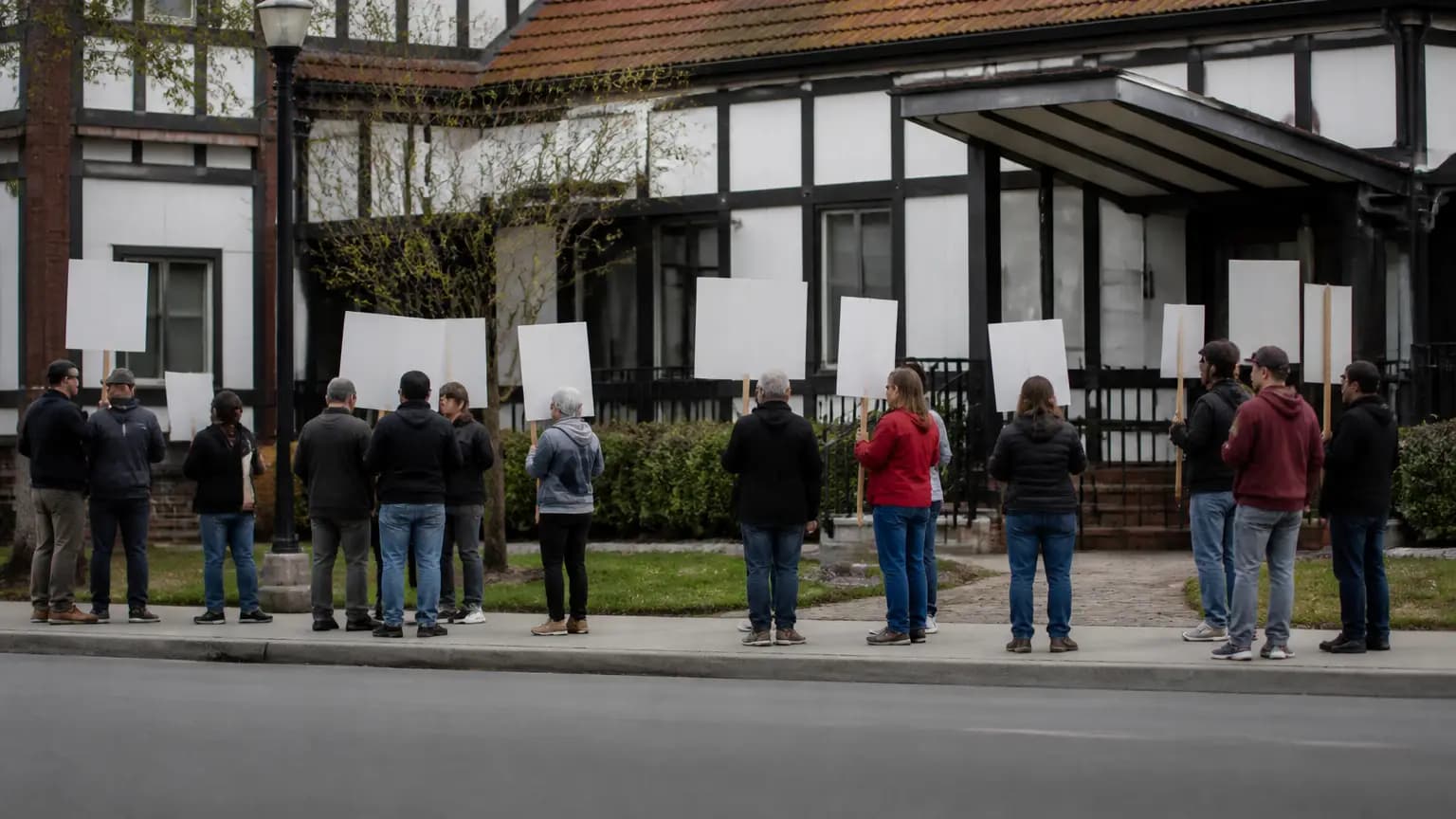
Solvang city workers made history this month — and not the charming Danish-village kind. About 30 unionized employees, including engineering technician Cole Phillips, walked off the job Sept. 15 after rejecting the City Council's "last, best, and final" pay offer. It's the first labor strike in Solvang's history, and it's a big deal for a small town where city staff keep the wheels turning. For those of us here in Santa Maria and across the 805, this is a reminder that the folks behind the counter at city hall, fixing our streets, and processing our permits are neighbors with bills to pay. When a city and its workers can't agree, residents feel it too — in slower services and a workforce that feels undervalued. The Santa Maria Sun has been following the standoff closely. Wherever you land on the politics, it's worth watching how this plays out up the valley. Small-town labor fights don't stay small for long.
 Santa Maria
Tie vote blocks Lompoc from censuring Steve Bridge
Lompoc's city council spent three hours on Sept. 15 wrestling with whether to censure one of their own, Councilmember Steve Bridge — and in the end, a tie vote meant the censure failed. Bridge's own appeal to the room was simple: remember the oath everyone stands and recites before every agenda, the same words our kids learn in kindergarten. Censure is a symbolic move, but symbols matter in small-town politics. It's the council's way of saying a colleague crossed a line, even when there's no formal punishment attached. A tie means half the dais wasn't willing to go there, and that split says as much about Lompoc's leadership as any resolution could. The Santa Maria Sun has the full account of that long meeting. For those of us up and down the 805, it's a reminder to keep an eye on our own councils — the local decisions that shape our towns often get decided by a single vote.
 Santa Maria
Santa Maria denies movie theater alcohol sales
Santa Maria moviegoers hoping to pair a cold one with their blockbuster will have to keep waiting. On Sept. 16, city planning commissioners turned down a proposal that would have let local theaters sell alcohol, making us the holdout while 55 other Regal cinemas across California already pour drinks alongside the popcorn. Commissioner Tim and others gave it a fair look, weighing the possible boost to our local cinema scene against the concerns that come with mixing booze and a dark room full of strangers. It's a very Santa Maria debate, honestly — we tend to be cautious about change, and that's not always a bad thing. The Santa Maria Sun first reported the decision, and it's worth a read if you want the full back-and-forth. So for now, it's soda and candy at the concession stand. Whether that keeps our theaters family-friendly or just keeps them losing ground to Atascadero and SLO, only time will tell. What do you think, neighbors?