Students facing homelessness in Lucia Mar navigate a system with few beds and massive funding gaps
For families living in the northern reaches of Atascadero, the commute down the Cuesta Grade to San Luis Obispo’s South County is often just a part of daily life. But for hundreds of families experiencing homelessness in the Lucia Mar Unified School District, navigating that geographic divide is a matter of basic survival.
While San Luis Obispo County’s most recent Point-in-Time Count reported a 22 percent decline in overall homelessness, the number of unhoused South County students is trending in the exact opposite direction. According to the New Times SLO (Atascadero), nearly 1 out of 5 students in the Lucia Mar Unified School District were identified as homeless during the 2024-25 school year—the highest rate of any school district in the county.
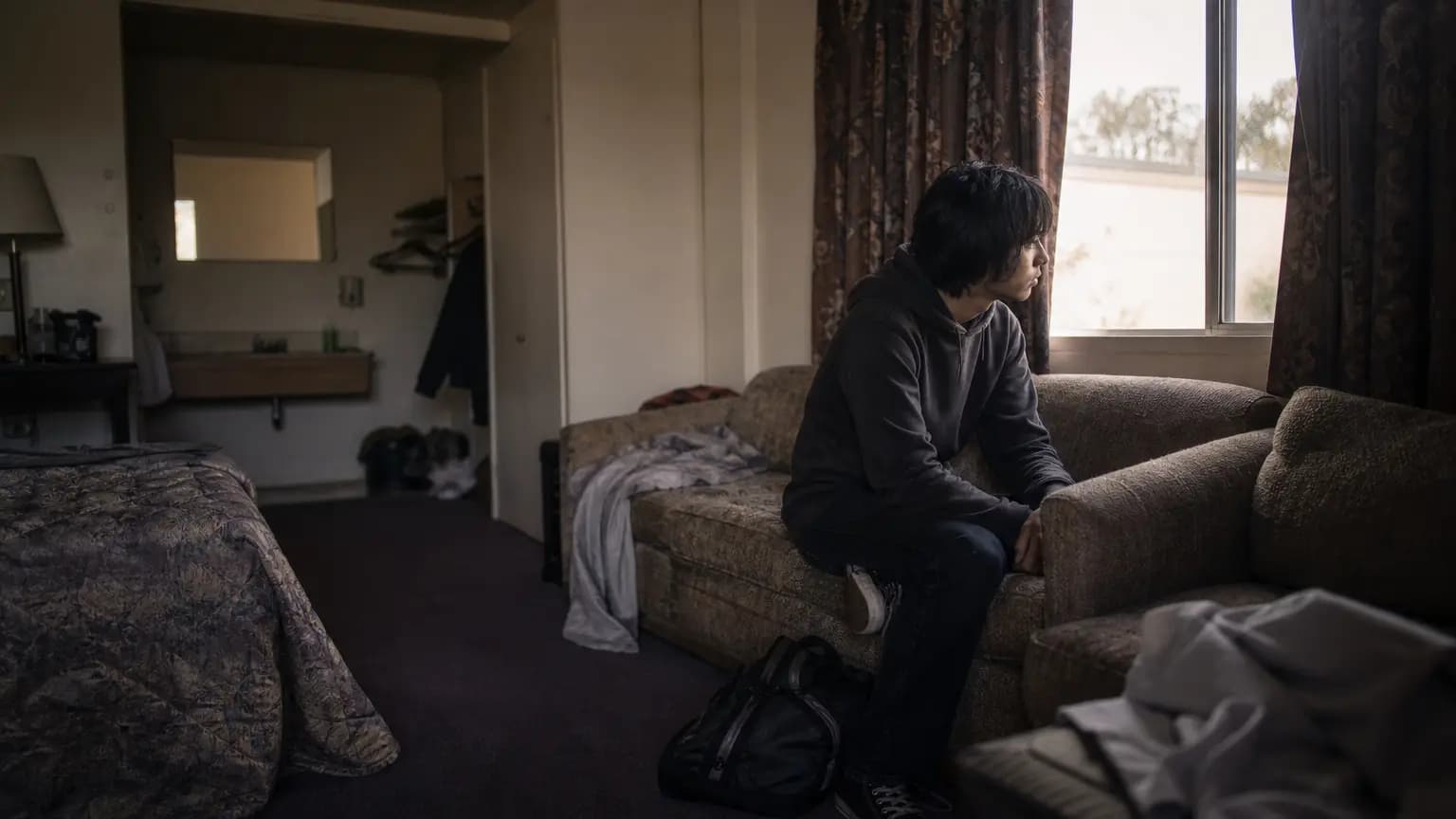
For these students, "home" is a constant moving target: a rotation of cramped hotel rooms, crowded living spaces, or the backseat of a car.
A Bureaucratic Catch-22
The sheer volume of homeless students in South County is colliding with a rigid bureaucratic system that lacks the resources to help them. The crisis is driven largely by a frustrating discrepancy between two government definitions of homelessness.
Lucia Mar identifies students’ homelessness status using the federal McKinney-Vento Homeless Assistance Act. This landmark education law includes "doubled-up" families—those sharing housing with others due to economic hardship. However, service providers like the Community Action Partnership of SLO County (CAPSLO) and the Five Cities Homeless Coalition (5CHC) must follow the stricter threshold set by the U.S. Department of Housing and Urban Development (HUD) to secure funding. HUD does not count doubled-up families as homeless.
Because of this gap, local organizations are denied the funding they desperately need to help these families find permanent stability.
The South County Shelter Desert
When families inevitably lose their temporary housing, they hit another massive roadblock: there are currently zero dedicated family shelters in South County.
Jack Lahey, CAPSLO’s Homeless Services Director, noted there is a "hyper-limitation" on family shelter beds. Families seeking refuge are routinely forced to look northward, either to the 40 Prado shelter in San Luis Obispo or the ECHO shelter right here in Atascadero.
While the McKinney-Vento Act requires school districts to provide transportation so displaced students can stay in their home schools, the reality of a daily commute from an Atascadero or SLO shelter back to South County is incredibly difficult. Lahey noted that students are "probably not going to make that commute every day."
Space is also critically tight. Only eight to 10 families can be accommodated at 40 Prado at any given time, with another two or three in local hotels. To bridge this gap, CAPSLO is actively pushing to build a "family campus" next to 40 Prado. Backed by a $5 million grant from the Bezos Day 1 Families Fund and state environmental cleanup funds, the project is meant to provide a stable home base for families bouncing between regions. However, Lahey cautioned that the project is still in the site-preparation phase.
"Right now, it’s still dirt," Lahey said.
Stretching Temporary Dollars
In the absence of dedicated shelters, local providers are stretching every dollar. Mariana Gutierrez, CAPSLO’s Family and Community Support Services manager, explained that the CalWorks Housing Support Program provides small aid packages funding temporary hotel stays.
However, these vouchers typically cover only about half of a month’s stay in SLO County. When the funds run dry, families are forced to live out of their cars or enter the overburdened shelter system.
Devon McQuade, executive director of the Five Cities Homeless Coalition, sees the daily toll of these funding gaps. Through a partnership with Lucia Mar’s Families in Transition program, 5CHC provides case management and "welcome home packages." But finding affordable housing for single-parent households relying on a single income is a profound challenge.
McQuade noted that the result is a dangerous rise in illegal doubling up. Families risk lease violations and over-occupancy, which can lead to sudden eviction. To combat this, 5CHC steps in to mediate. "If it’s a financial concern, the utilities haven’t been paid or the rent is late, then [the tenants] can bring us in," McQuade explained. "We can quickly resolve the situation so that they’re not ending up back in a situation where there’s a tenuous relationship."
An Invisible Population
The affordable housing crisis is particularly devastating for the region's farmworker population. While housing developers like People’s Self-Help Housing have dedicated units specifically for agricultural workers, accessing that housing has become increasingly difficult. McQuade pointed to the national political atmosphere, noting a noticeable decline in undocumented individuals seeking services due to a paralyzing fear of immigration enforcement.
Ultimately, until the federal government aligns its definitions of homelessness, local officials are left scrambling to braid together limited state and local grants. As SLO County Deputy Director of Homeless Services Linda Belch starkly summarized the effort to build affordable housing under these conditions: "It’s like trying to put together a puzzle piece with Jenga blocks that are missing."
Reported by 805.life
Researched and written drawing on primary sources. Additional reporting: New Times SLO (Atascadero).
City
AtascaderoAdditional Reporting
New Times SLO (Atascadero)Published
August 6, 2026
Reported and written by 805.life
Explore AtascaderoAll Atascadero NewsMore News from Atascadero
 Atascadero
Autumn Arts Annual 2026
Summer's still lingering here in Atascadero, but the calendar says fall, and New Times SLO (Atascadero) has rolled out its Autumn Arts Annual 2026 to prove it. If you've been waiting for an excuse to get out of the house and into something creative, this is your sign — exhibitions, performances, and all the seasonal happenings landing across the Central Coast. There's something special about autumn around here. The crowds thin out, the light turns golden over the North County, and our local galleries and venues finally get room to breathe. Whether you're a longtime Atascadero arts supporter or just curious about what's happening down the road, this roundup is worth a look. So grab a jacket — eventually — and go support the makers and organizers who keep our corner of the 805 interesting. Full details are over at New Times SLO.
 Atascadero
Atascadero council race draws four candidates for two seats
Atascadero folks, we've got a real race on our hands this November. Four candidates — incumbent Susan Funk, Emily Baranek, Mike Avila, and self-described outsider Ian Denchasy — are competing for two seats on the City Council, with Councilmember Heather Newsom stepping away. That's a big shift for a council that's been fairly steady in recent years. Housing and jobs are the headline issues, which won't surprise anyone who's watched rents climb and young families struggle to stay in North County. These are the decisions that shape what gets built, what gets approved, and what our town looks like a decade from now. Meanwhile, Mayor Charles Bourbeau runs unopposed for another two-year term. New Times SLO has the full candidate rundown, so do your homework before ballots arrive. Local elections are where your vote counts the most — this one's worth showing up for.
 Atascadero
SLO City Council refines confidentiality policy for elected officials
Our neighbors in SLO just tightened up the rules on keeping city business confidential, and it's worth a nod from those of us up here in Atascadero. The City Council unanimously adopted a resolution at its Sept. 15 meeting revising its policies and procedures manual, adding two specific guidelines on handling confidential information. This comes after Mayor Erica Stewart shared a confidential SLO County grand jury report—a reminder that even well-meaning officials can slip up. Why does it matter to us? Because transparency and trust in local government aren't just SLO issues. Every city on the Central Coast, including ours, benefits when elected leaders set clear expectations. It's a quiet but meaningful step toward accountability. New Times SLO (Atascadero) reported the story, and it's a good conversation starter for our own council. Small procedural changes can prevent big headaches down the road.