The Big Battle, Part Two
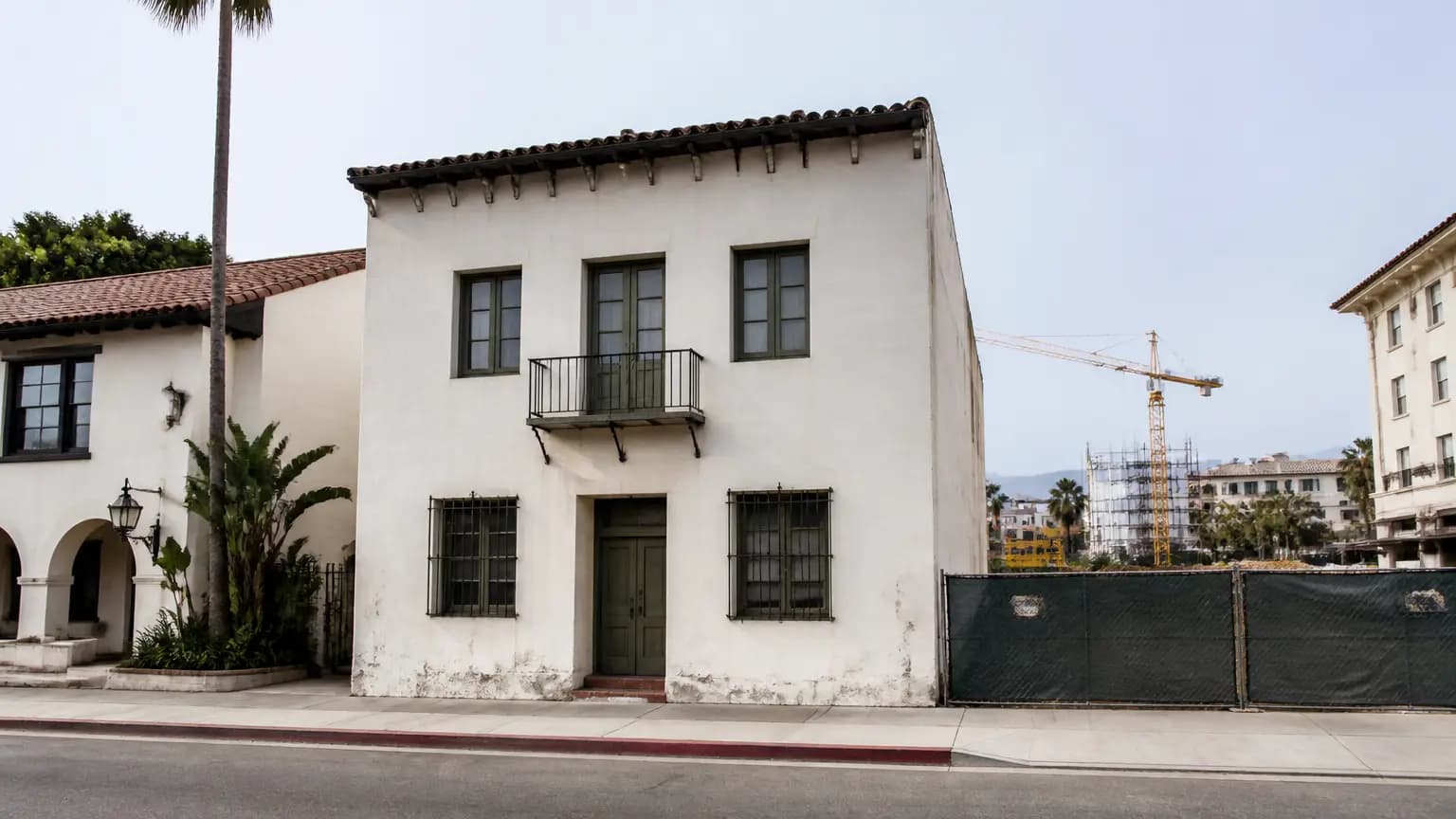
In the autumn of 1972, Santa Barbara voters did something remarkable: they wrote the city's low skyline into its own founding document.
The vote — 24,499 to 8,048 in favor of height limits — was the capstone of a years-long fight over two high-rise condominium towers planned for the block bounded by Micheltorena, Arrellaga, Garden, and Santa Barbara streets. That story, as the Santa Barbara Independent recently recounted in the second installment of its "Big Battle" series, is less about buildings than about what happens when a community decides who it wants to be.
The saga began, as these stories often do, with a plan and a lawsuit. The El Mirasol Investment Company — composed, the Independent notes, of leading members of the local business community — proposed the towers and secured city approvals. A citizens' group called Save Our City took both the developers and the City of Santa Barbara to court. And they won.
That courtroom victory could have been the end of it. Instead, it turned out to be the beginning.
From Courtroom to Classroom
Stunned by the defeat, the El Mirasol Investment Company said it would immediately put the property up for sale. But Save Our City's members understood something important: winning one case wouldn't stop the next high-rise proposal, or the one after that.
So they organized. Together with the Citizens Planning Association and several other local groups, they built a public education campaign — a lecture series offered as an adult education class through Santa Barbara City College, held at the historic Lobero Theatre. The title was a question posed directly to the community: "Should Santa Barbara Go High Rise: Community Environment and the High Rise."
The speakers they assembled were serious. They included San Francisco architect Robert A. Odermatt; urban economist Michael Marson; Sam T. Hurst, dean of USC's School of Architecture and Fine Arts and an acknowledged high-rise expert; Washington, D.C., development consultant William R. Ewald; and Simon Eisner, planning consultant for the City of Santa Barbara. It was a graduate seminar on urbanism, open to anyone curious enough to buy a ticket — or at least show up and listen.
The Measure That Made It Permanent
Education was one thing. Law was another. Opponents of high-rise development recognized the fight would be repeated again and again unless the city's practice of granting height variances was addressed and codified. The League of Women Voters took on the job of putting a height-limits measure on the ballot.
The result, in November 1972, was overwhelming. The amendment to the City Charter didn't just set numbers — it declared a philosophy: "It is hereby declared the policy of the City that high buildings are inimical to the residential and historical character of the City."
The specifics still govern the city today: 30 feet in areas zoned for single- and two-family dwellings; 45 feet for buildings with three or more units, hotels, motels, and offices; 60 feet in industrial, manufacturing, and commercial zones; and 39 feet for everything else.
Walk down State Street and look up — or, more precisely, notice how rarely you need to. That view is the 1972 vote, still working.
The Backlash Falls on Pearl Chase
Victory, of course, had a price, and much of it was paid by one woman.
Pearl Chase — the formidable civic leader who had spent decades shaping Santa Barbara's architecture and character — was singled out for retaliation after the court decision. Business leaders wrote bitter letters to the editor. Jerry Beaver, writing about the El Mirasol Investment Group, complained: "We have been damned, cursed, reviled, falsely accused and sued." He defended his colleagues' motives and challenged critics to put their own money down and develop the land themselves.
Louis Lancaster went further, framing the opposition as "that hard core of individuals who are committed to stopping every kind of activity in this area" — and questioning whether some opponents even owned property in town.
Chase herself was condescended to in print. One letter writer addressed her as "dear Miss Chase," sneering that she was "living in Santa Barbara's glamorous past" and insisting that "high-rise must come unless we wish every square foot of this old earth covered with concrete." Another demanded to know why she hadn't saved the original El Mirasol estate herself, asking whether she found it "easier to pull heartstrings than purse-strings."
Then the retaliation turned institutional. According to the Independent's account, the El Mirasol side filed a complaint with the IRS in an apparent attempt to strip the nonprofit Community Arts Association — the organization through which Chase and her allies had long pursued their civic work — of its tax-exempt status.
Why It Still Matters
More than five decades later, the echoes are easy to hear. Santa Barbara continues to wrestle with the same tensions the Lobero lecture series put on stage in the early 1970s: growth versus character, housing need versus scale, the rights of property owners versus the wishes of neighbors. State housing law has since curtailed some local control over development decisions, reopening arguments many thought were settled.
But the 1972 charter amendment remains a foundational fact of Santa Barbara life — a decision made by ordinary voters, armed with a court win, a lecture series, and the conviction that a city's shape should reflect its people's choices rather than its developers' ambitions.
Save Our City, in the end, did precisely what its name promised. The question the Lobero audience once debated — should Santa Barbara go high rise? — was answered at the ballot box, and the answer still stands, roughly 45 feet tall.
Reported by 805.life
Researched and written drawing on primary sources. Additional reporting: Santa Barbara Independent.
City
Santa BarbaraAdditional Reporting
Santa Barbara IndependentPublished
September 17, 2026
Reported and written by 805.life
Explore Santa BarbaraAll Santa Barbara NewsMore News from Santa Barbara
Al no haber arma homicida, el juicio contra Caleb Flynn se centra en la relación extramatrimonial y en el supuesto intruso
A murder trial unfolding just up the coast is drawing attention here in Santa Barbara, and it's the kind of case that's hard to look away from. Caleb Flynn's trial, reported by KEYT News Channel 3-12, has no murder weapon — instead, prosecutors are leaning on testimony about a secret church affair, thousands of deleted texts, and lies told to the FBI. Even the family dogs stayed eerily quiet that night, which has become a strange piece of the puzzle. For those of us in the 805, it's a reminder that even tight-knit communities aren't immune to the kind of drama you'd expect from a courtroom thriller. Cases like this can shake faith in neighbors and institutions, and they raise hard questions about trust and evidence. We'll be watching how the trial unfolds — not out of spectacle, but because it touches on the real lives of people not so far from home.
UCSB Recovers From Slow Start, Beats CS Northridge in Big West Volleyball Opener
Good news for Gaucho fans — UCSB women's volleyball finally got back in the win column Friday night at the Thunderdome, shaking off a slow start to beat Cal State Northridge in the Big West opener. After dropping the first set, the team looked like a squad still finding its footing following a tough preseason that ended on a six-match skid. But conference play is a fresh slate, and the Gauchos took advantage. For our Isla Vista and Goleta neighbors, there's something special about catching a match on campus — cheap tickets, loud student section, and a team that's easy to root for. Thanks to Noozhawk for the coverage. If you haven't been to a UCSB volleyball match yet, consider this your sign to check one out this season.
Cottage Health Hosts Sepsis Conference Focused on Early Recognition and Treatment
Cottage Health pulled together doctors, nurses, pharmacists, respiratory therapists and other clinicians from across the region on Friday, Sept. 18, for a conference zeroing in on one of medicine's trickiest foes: sepsis. If you've never heard the word, you're not alone — but it's a leading cause of death in hospitals, and the difference between a good outcome and a tragic one often comes down to how fast someone recognizes the signs. That's why this gathering matters here. Santa Barbara County spans a big, sometimes rural region, and not every clinic or ER has the same resources. When Cottage Health convenes providers from up and down the 805 to share protocols and lessons learned, it quietly raises the standard of care for all of us — whether you're in Goleta, Lompoc, Santa Maria or Santa Ynez. The Santa Barbara Independent first reported the conference, and it's the kind of unglamorous, behind-the-scenes work that keeps our community healthier. Next time you or a loved one lands in an ER with a puzzling fever, this is the preparation you'll be glad happened.