Unusual Amount of Oil and Tar Reported on Beaches Across South Coast
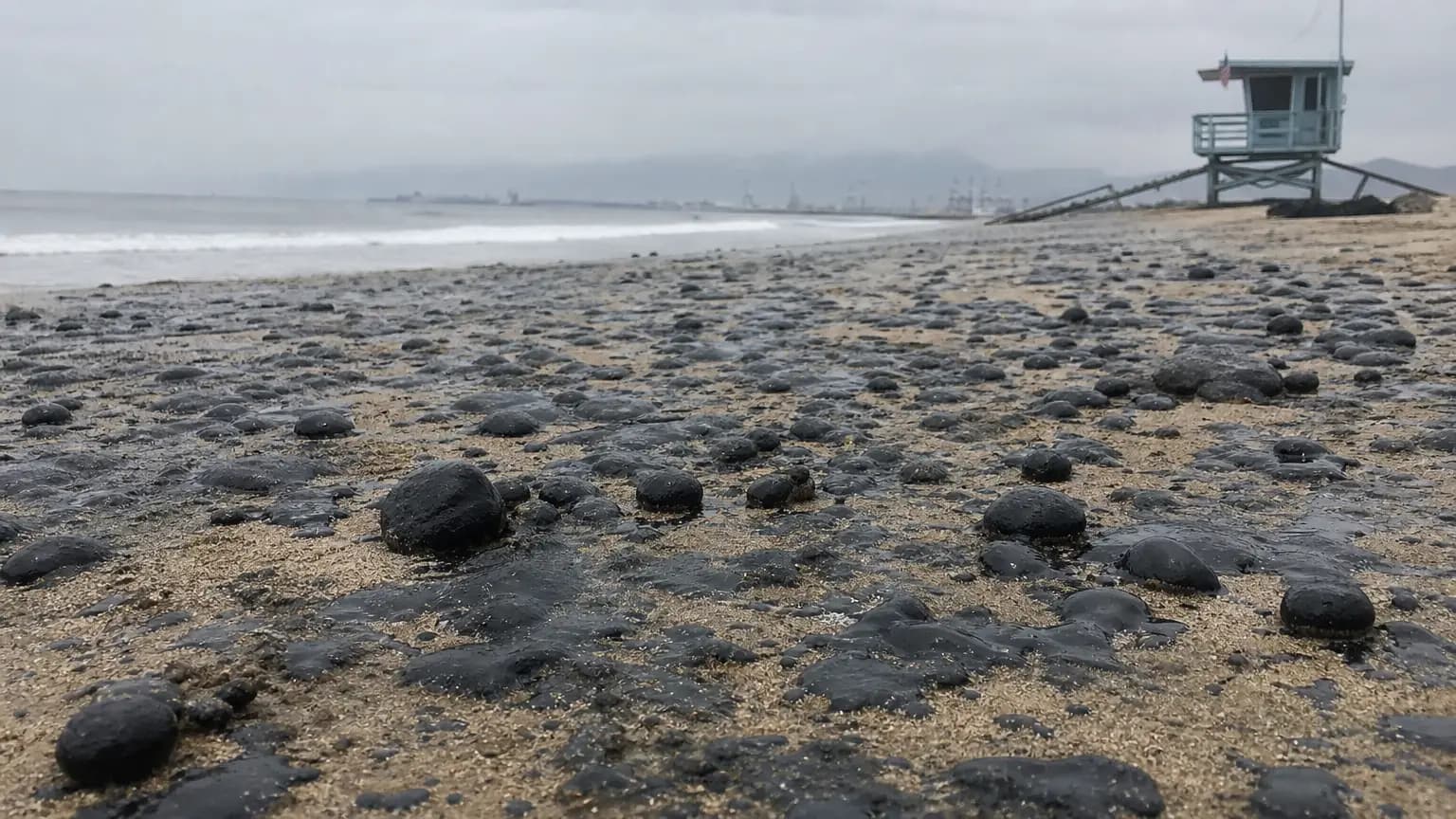
Beachgoers along Santa Barbara's South Coast woke Thursday to a pungent, petroleum-soaked shoreline — from Carpinteria's Santa Claus Beach all the way north to East Beach in downtown Santa Barbara — as an unusually heavy surge of crude oil and tar blanketed the sand in some of the heaviest volumes residents and environmental monitors have seen in years.
What Happened — and Where
The scene at East Beach was striking. A morning walker heading down Milpas Street described the smell of petroleum catching his attention well before he reached the water, according to the Santa Barbara Independent, which first reported the story Thursday evening. Clumps of crude as large as tennis balls were rolling in with the breaking waves, and the water running from the nearby Cabrillo Pavilion showers had turned a blackish-brown as swimmers tried to rinse off.
Further south, a Carpinteria resident wrote to the Independent's tip line that "a huge oil slick rolled in and completely covered the shoreline with giant globs of tar" at Santa Claus Beach on Wednesday. By Thursday morning, surfers at Shoreline Park had filed a report with the California Governor's Office of Emergency Services (CalOES) saying they had to leave the water because their bodies and boards were covered "head to toe" in oil, and that large oil slicks — some spreading an estimated 50 by 200 feet — were visible from the shoreline to a mile offshore, the Independent reported.
CalOES records compiled Thursday show tar hitting at least six stretches of coastline in a single day: Shoreline Park, Miramar Beach, Summerland Beach, Padaro Beach, Hammond's Beach, and Carpinteria Beach. Heal the Ocean Executive Director Karina Johnston told the Independent that the oil appears to extend even farther north, though the full magnitude was still being assessed.
Who Is Investigating and What They Found
The response involved multiple agencies. U.S. Coast Guard Petty Officer Kesley Underwood confirmed her agency is working alongside the California Department of Fish and Wildlife's Office of Spill Prevention (CDFW-OSPR) to assess conditions. CDFW teams collected oil samples from Carpinteria State Beach Thursday morning, and those samples have been sent to a petroleum chemistry laboratory in Sacramento, where they "will be analyzed and compared against known samples of oil to determine if a source match can be made," CDFW's Eric Laughlin told the Independent.
Heal the Ocean's field adviser Harry Rabin, who has been tracking South Coast tar events for years, told the Independent he believes the oil "came from Coal Oil Point" near Isla Vista — one of the most prolific natural marine seep systems in the world. That suspicion aligns with patterns seen in a nearly identical event in June 2026, when edhat reported that a blob of oil had come ashore at Butterfly Beach, Hammond's, and Miramar, with Rabin pointing to the Coal Oil Point area and offshore Platform Holly as a likely origin based on wind and current patterns at the time.
The City of Carpinteria issued a formal beach alert Thursday, attributing the tar and oil to natural seeps and stating it "will not initiate a remediation response." Environmental Program Manager DeLayni Millar said swimming remains safe at Carpinteria beaches, though she added the decision to recreate is "up to the individual discretion."
A Channel With a Long History of Seeping Oil
For Santa Barbara residents, the stench and sticky black globs are nothing new — they are, in a geological sense, the oldest feature on the beach. Research published in *Science* documented that natural seeps off Coal Oil Point alone introduce roughly 50 to 70 barrels of oil per day into the Santa Barbara Channel, producing slicks several hundred meters wide whose tarry residue washes ashore for miles. Wikipedia's entry on the Coal Oil Point seep field notes the seeps have been continuously active for at least 500,000 years, and that Captain George Vancouver recorded the smell of tar drifting off the coast as early as 1792.
The Chumash people used the tar — called "yop" — to waterproof their tomol plank canoes and traded it as a valuable commodity across a wide region, according to historical records compiled by Goleta History.
But what makes this week's event notable is its geographic reach and intensity. In a similar episode last August, Heal the Ocean and its partner Earthcomb collected more than 450 pounds of tar across just 50 yards of Hammond's Beach and another 100 pounds from Leadbetter Beach, the Santa Barbara Independent reported at the time. Earlier this spring, a coating of oil at Sands Beach near UCSB prompted Heal the Ocean field consultant Rabin to say he hadn't "seen a coating like that in 30 years" in that area, the Independent reported in May. The county confirmed those May sightings were also from natural seepage events, Noozhawk reported.
Scientists have noted that tidal and pressure dynamics can cause seeps to release oil in sudden, larger pulses. KEYT reported last summer that Rabin compared the process to a clogged glue bottle: when seals harden over an active vent and pressure builds, the oil "can come flying out."
The Cleanup Gap: A Funding Problem With No Easy Fix
For beachgoers hoping for a swift cleanup, the legal and financial landscape offers little comfort. As of Thursday, no government agency has announced plans to remove the tar. Petty Officer Underwood told the Independent: "There is no method of funding for natural seep clean-up."
That's because the federal Oil Spill Liability Trust Fund — the primary mechanism for oil-spill remediation costs — requires an identifiable responsible party before cleanup funds can be accessed, according to the EPA. When the source is confirmed to be a natural seep rather than a spill from a vessel, pipeline, or platform, no liable party exists, and the trust fund cannot be tapped. The lab results from Sacramento will be critical: if chemistry analysis links the oil to a man-made source rather than a natural seep, the financial and legal calculus changes entirely.
In the meantime, environmental nonprofit Heal the Ocean is the most likely first responder on the ground. Johnston's organization has been fielding reports from across the county since Wednesday and has been passing concerns along to all relevant agencies, she told the Independent. Heal the Ocean is also midway through a Summerland Oil Mitigation Study aimed at mapping and potentially capping leaky offshore wells — work that could eventually help reduce the frequency and severity of events like Thursday's.
What Residents Should Know Right Now
Authorities say the beaches themselves are not formally closed, and Carpinteria officials have stated that swimming is not prohibited. That said, residents and visitors should expect sticky, dark tar on their feet and anything they bring to the beach. Petroleum-based products like baby oil or mineral oil are commonly used to remove tar from skin and surfboard decks.
Anyone observing unusual concentrations of oil or tar is encouraged to report directly to Heal the Ocean at (805) 965-7570 or to CalOES. Lab results from CDFW's Sacramento analysis are expected to be the pivotal next step — determining not just where Thursday's surge came from, but whether any party bears legal responsibility for what coated miles of South Coast shoreline.
Reported by 805.life
Researched and written drawing on primary sources. Additional reporting: Santa Barbara Independent.
City
Santa BarbaraAdditional Reporting
Santa Barbara IndependentPublished
July 16, 2026
Reported and written by 805.life
Explore Santa BarbaraAll Santa Barbara NewsMore News from Santa Barbara
 Santa Barbara
Dos Pueblos Boys Water Polo Captures League Crown With 17-12 Victory Over San Marcos
Dos Pueblos boys water polo is bringing another league title back to Goleta, and Charger fans have plenty to celebrate after a 17-12 win over rival San Marcos. The crosstown matchup is one of those Channel League showdowns that always draws a crowd, and this one delivered on both ends of the pool. Next up, the Chargers head to Ventura on Tuesday, while San Marcos looks to bounce back against Buena. For families with kids in local aquatics programs, nights like this are a reminder of how deep the water polo tradition runs here along the 805 coast. Thanks to the Santa Barbara Independent for keeping us posted on the postseason push. Grab a towel, pick a side, and go support these student-athletes — South Coast water polo is worth the drive.
 Santa Barbara
Dos Pueblos Boys Water Polo Clinches Outright Channel League Title with 17-12 Win Over San Marcos
Chargers fans, take a bow. Dos Pueblos boys water polo beat crosstown rival San Marcos 17-12 on the road Thursday, locking up the outright Channel League title and keeping that perfect 5-0 league mark intact. As Noozhawk reported, the Chargers sit at 20-6 overall with just Ventura left on the league schedule. There's something special about a Dos Pueblos–San Marcos matchup. These two schools share a city, a pool culture, and plenty of bragging rights, so a win like this means a little more than the standings show. Water polo runs deep here on the Central Coast, and nights like Thursday remind us why. One league game remains, but the banner is already theirs. Congrats to the players and coaches — go Chargers!
 Santa Barbara
Santa Barbara Police Make Arson Arrest Following Multiple Fires on Modoc Road
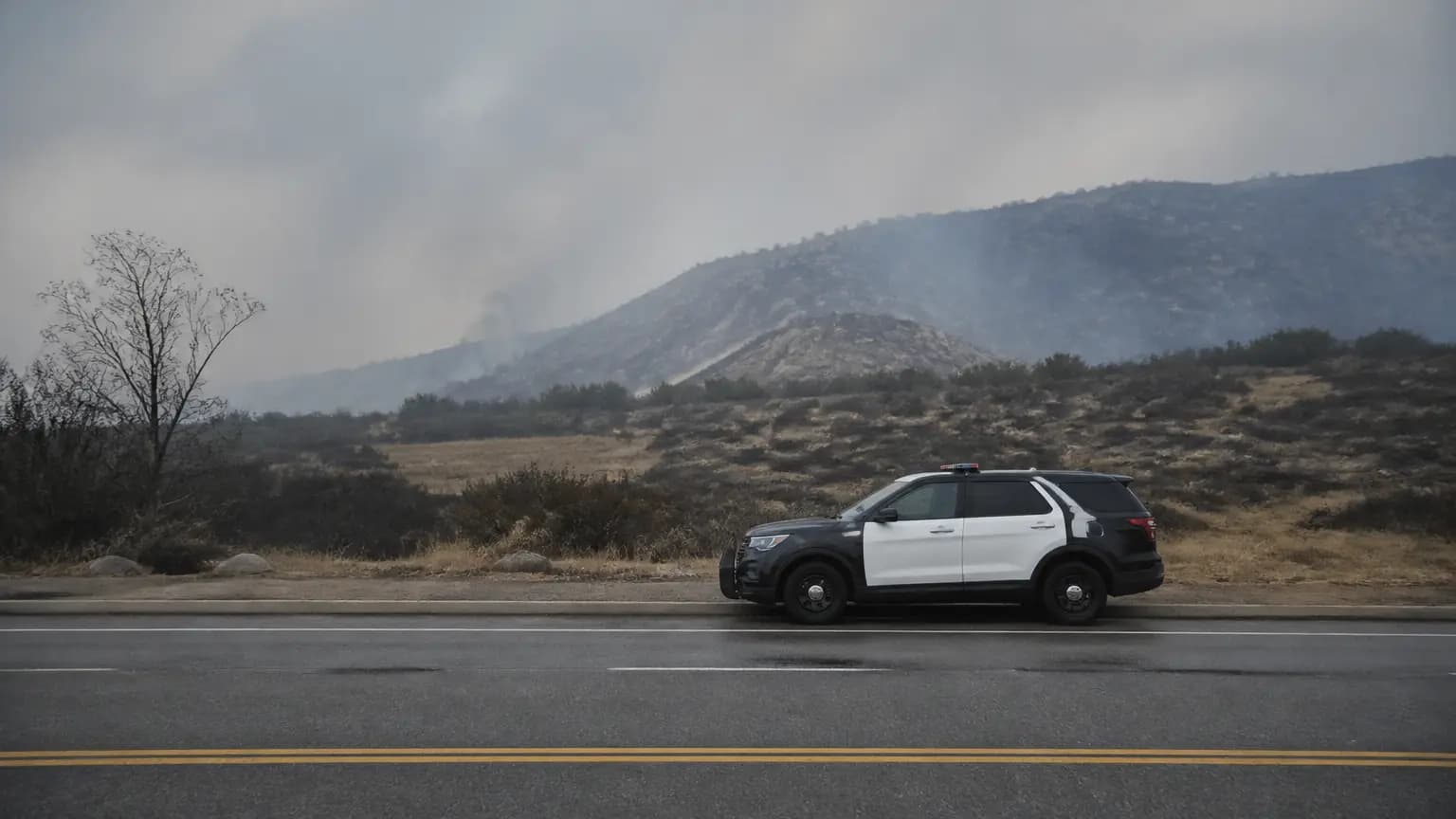
Neighbors on Modoc Road can breathe a little easier this week. Santa Barbara Police say they've arrested Calletano Bedolla-Bibiano, who allegedly admitted to setting three brush fires on Thursday and has been linked to four more last weekend. That's seven fires in a matter of days, all in one stretch of our community. It's easy to scroll past fire news when we're not in the thick of a red-flag warning, but this one hits close to home. Modoc Road runs along neighborhoods, near open space, and with our dry hillsides and fall winds, a single spark can turn into something no one can control. The fact that these were allegedly intentional makes it feel different, and honestly, a little unsettling. We're grateful to the Santa Barbara Police Department and the first responders who put these fires out before they grew. Thanks to the Santa Barbara Independent for staying on it. If you live nearby, keep an eye out, check on your neighbors, and report anything suspicious.