Vaccine Refusal: Decisions Have Consequences You May Not Have Considered
Two decades after a Santa Barbara mother's cover story about her son's whooping cough became national news, her warning is resonating again — this time amid a sharp rise in pertussis cases across California.
In a widely shared opinion piece published by the Santa Barbara Independent, longtime local writer Cheri Rae revisits the family ordeal she first chronicled in her 2005 Independent cover story, "The 100-Day Hack." Her son, vaccinated as an infant against pertussis, still contracted whooping cough as a young schoolchild after a large share of his classmates at a Santa Barbara public school held "personal belief" exemptions from immunization. He, several other children, and a teacher were infected.
The essay lands at a moment when vaccine-preventable diseases are resurging nationally. According to figures Rae cites from the Johns Hopkins Bloomberg School of Public Health, U.S. pertussis cases fell to a low of 1,010 in 1976, but have spiked periodically amid vaccine refusal — including 48,277 cases in 2012, roughly 35,000 in 2024, and nearly 29,000 in 2025. California has reported more than 700 pertussis cases so far in 2026, the most of any state, with Washington second at 320, according to the column.
What Happened to One Santa Barbara Family
Rae's account details the long tail of a disease many dismiss as a routine childhood illness. Her son's recovery from the cough itself took months; a full return to health took years. He was eventually diagnosed with reactive airway disease and treated by an asthma specialist for damaged bronchial tubes, requiring daily medications and emergency treatments.
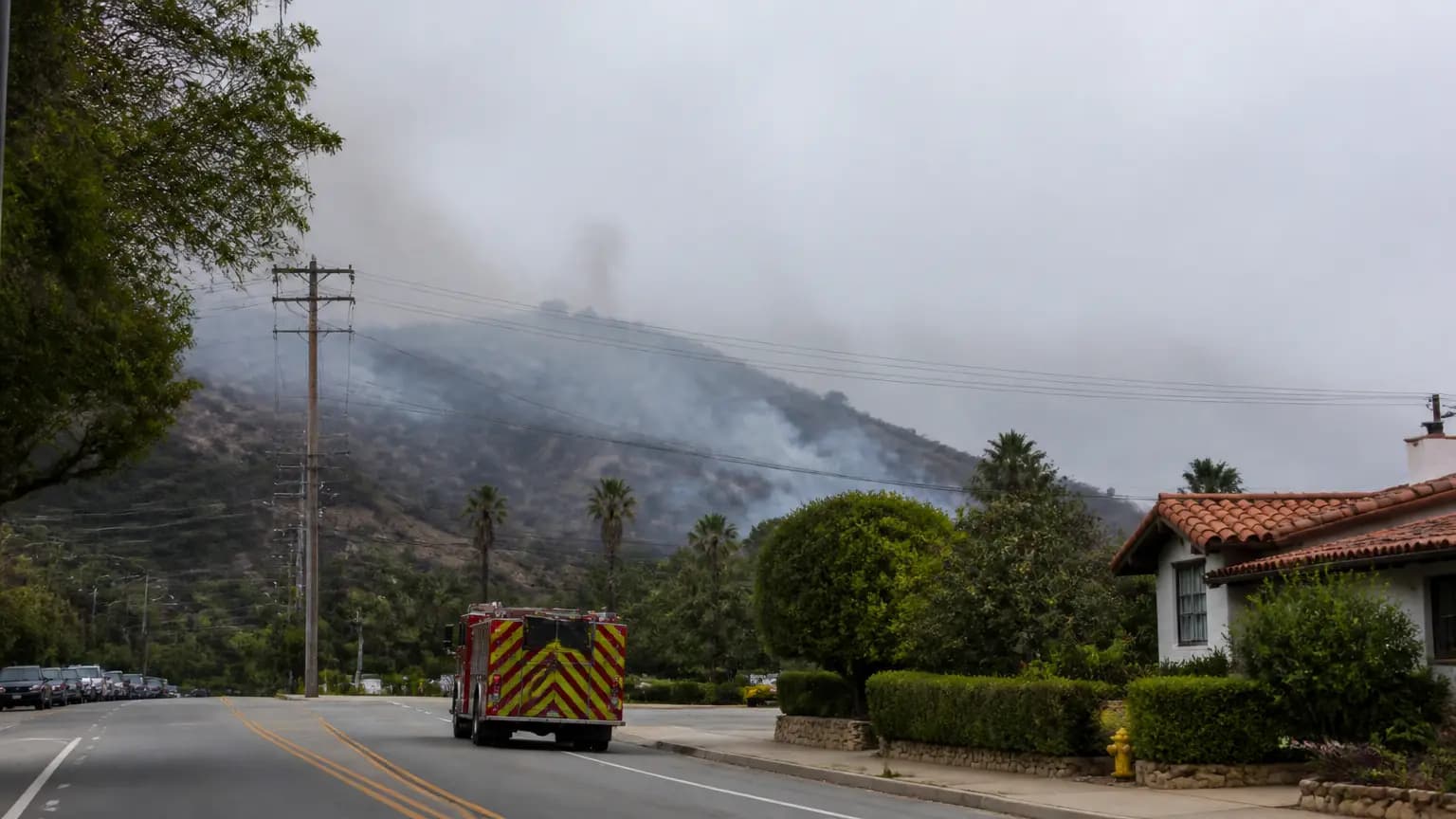
During Santa Barbara's recurring wildfire seasons, when smoke degraded air quality, the family sometimes left town for days at a time just so the boy could breathe comfortably, she wrote. The emotional toll was equally lasting: Rae says her son later confided that, because the coughing was so severe and the treatments so constant, he assumed he would die while still a little boy.
Her original 2005 story drew national attention — it was reposted by the Children's Hospital of Philadelphia, and Rae was interviewed by a Today Show crew and by the PBS program Second Opinion. It also drew fierce pushback. Rae writes that she was labeled a "sheeple" by anti-vaccine commenters, a term she says vaccination opponents proudly claimed.
California's Rules Have Changed — But Gaps Remain
The policy landscape has shifted since Rae's son fell ill. California eliminated the personal belief exemption for vaccines required at public and private schools through legislation that took effect in 2015. Students may still obtain a medical exemption from a licensed physician, and vaccinations are not required for home-based private schooling or independent study programs.
That leaves meaningful gaps, Rae notes. Vaccinated and unvaccinated children still mix constantly — on playgrounds, sports teams, at dance practice and religious classes — and pass illnesses to each other and to family members, including vulnerable infants.
On the medical front, the Tdap booster vaccine, approved for older children and adults in the U.S. shortly after her son's illness, is now routinely recommended for pregnant women to protect newborns, for whom whooping cough can be fatal. It's also recommended for grandparents-to-be to prevent unknowingly infecting infants too young to be fully vaccinated.
Why It Matters Now
Pertussis follows a cyclical pattern, typically peaking every three to five years, and health watchers have anticipated another surge. While national attention has focused heavily on measles and the MMR vaccine schedule — with infections and deaths continuing to rise nationally, as Rae notes — whooping cough case counts have received less scrutiny, and the full 2026 picture remains unclear.
For Santa Barbara residents, the stakes are local and concrete. Rae's case was reported to the Santa Barbara County Public Health Department two decades ago; many others in that outbreak, she writes, were never reported at all — a reminder that official case counts likely understate the true spread of the disease.
Whooping cough, caused by bacteria, is no ordinary cough. Rae describes coughing spasms so violent they can cause vomiting and broken ribs, followed by months of recovery and, for some, lasting respiratory damage — the kind her son lived with for years.
What Residents Can Do
Public health guidance emphasizes that vaccination remains the most effective protection against pertussis. Expectant parents, grandparents, and anyone around newborns are encouraged to speak with their physician about the Tdap booster. Parents of school-age children can check immunization records and consult their pediatricians about catch-up schedules if doses were missed.
Rae's broader argument is aimed at the growing ranks of vaccine refusers, whom she says have been emboldened in the current political climate. "Bacteria and viruses are not deterred by personal beliefs," she writes — a blunt reminder from a parent who lived through the consequences in a Santa Barbara classroom.
Her message to the community is simple: decisions about vaccination ripple far beyond one family, and the diseases Americans once nearly eliminated are proving willing to return.
"Vaccine Refusal: Decisions Have Consequences You May Not Have Considered," by Cheri Rae, was published Sept. 3, 2026 by the [Santa Barbara Independent](https://www.independent.com/2026/09/03/vaccine-refusal-decisions-have-consequences-you-may-not-have-considered/)."
Reported by 805.life
Researched and written drawing on primary sources. Additional reporting: Santa Barbara Independent.
City
Santa BarbaraAdditional Reporting
Santa Barbara IndependentPublished
September 3, 2026
Reported and written by 805.life
Explore Santa BarbaraAll Santa Barbara NewsMore News from Santa Barbara
Al no haber arma homicida, el juicio contra Caleb Flynn se centra en la relación extramatrimonial y en el supuesto intruso
A murder trial unfolding just up the coast is drawing attention here in Santa Barbara, and it's the kind of case that's hard to look away from. Caleb Flynn's trial, reported by KEYT News Channel 3-12, has no murder weapon — instead, prosecutors are leaning on testimony about a secret church affair, thousands of deleted texts, and lies told to the FBI. Even the family dogs stayed eerily quiet that night, which has become a strange piece of the puzzle. For those of us in the 805, it's a reminder that even tight-knit communities aren't immune to the kind of drama you'd expect from a courtroom thriller. Cases like this can shake faith in neighbors and institutions, and they raise hard questions about trust and evidence. We'll be watching how the trial unfolds — not out of spectacle, but because it touches on the real lives of people not so far from home.
UCSB Recovers From Slow Start, Beats CS Northridge in Big West Volleyball Opener
Good news for Gaucho fans — UCSB women's volleyball finally got back in the win column Friday night at the Thunderdome, shaking off a slow start to beat Cal State Northridge in the Big West opener. After dropping the first set, the team looked like a squad still finding its footing following a tough preseason that ended on a six-match skid. But conference play is a fresh slate, and the Gauchos took advantage. For our Isla Vista and Goleta neighbors, there's something special about catching a match on campus — cheap tickets, loud student section, and a team that's easy to root for. Thanks to Noozhawk for the coverage. If you haven't been to a UCSB volleyball match yet, consider this your sign to check one out this season.
Cottage Health Hosts Sepsis Conference Focused on Early Recognition and Treatment
Cottage Health pulled together doctors, nurses, pharmacists, respiratory therapists and other clinicians from across the region on Friday, Sept. 18, for a conference zeroing in on one of medicine's trickiest foes: sepsis. If you've never heard the word, you're not alone — but it's a leading cause of death in hospitals, and the difference between a good outcome and a tragic one often comes down to how fast someone recognizes the signs. That's why this gathering matters here. Santa Barbara County spans a big, sometimes rural region, and not every clinic or ER has the same resources. When Cottage Health convenes providers from up and down the 805 to share protocols and lessons learned, it quietly raises the standard of care for all of us — whether you're in Goleta, Lompoc, Santa Maria or Santa Ynez. The Santa Barbara Independent first reported the conference, and it's the kind of unglamorous, behind-the-scenes work that keeps our community healthier. Next time you or a loved one lands in an ER with a puzzling fever, this is the preparation you'll be glad happened.