Veterinary Staff Burnout: A Crisis Beyond Santa Barbara County
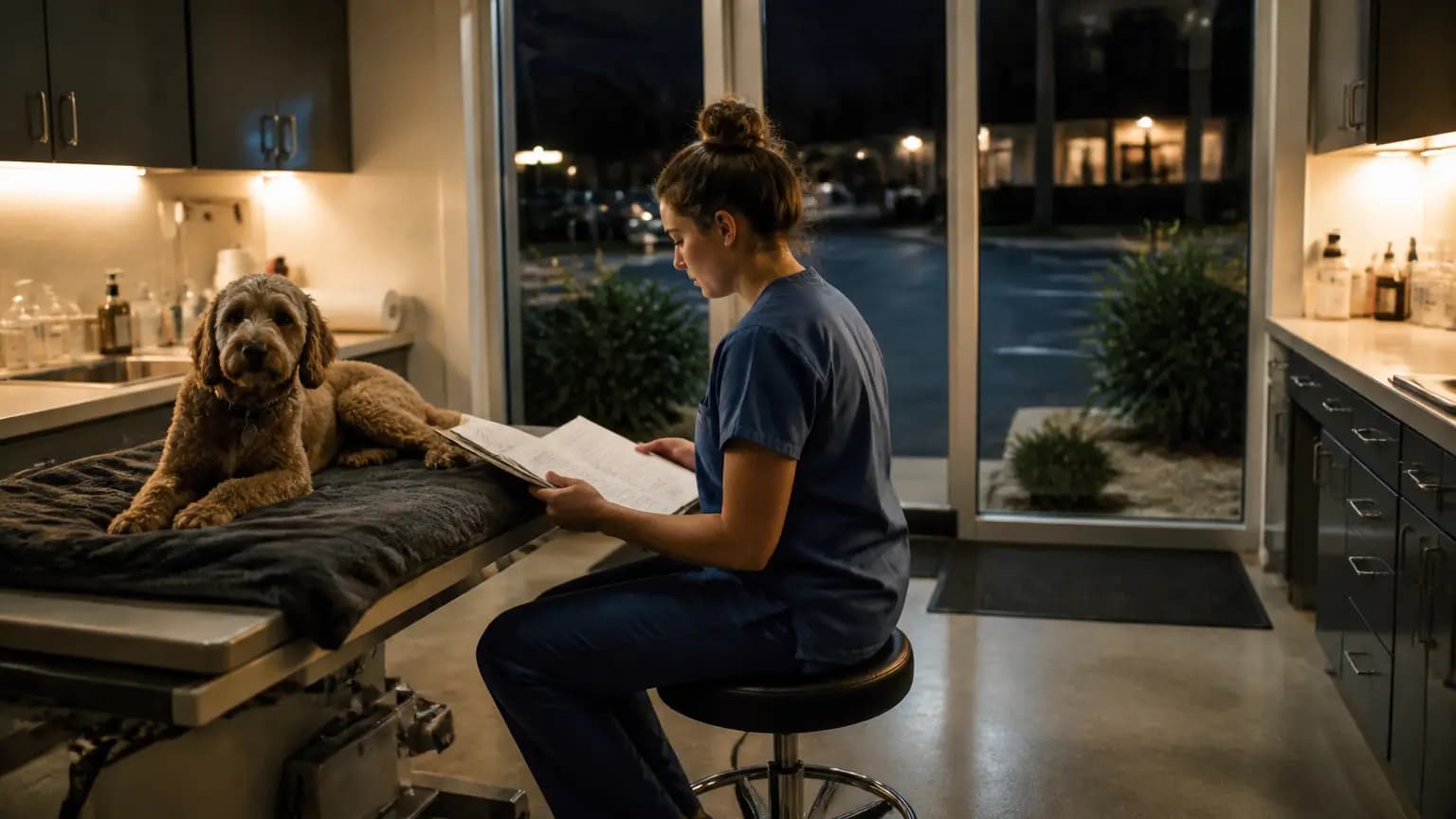
When a beloved dog collapses at 11 p.m. on a Saturday in Santa Barbara, the options are startlingly few. Just two 24/7 emergency veterinary hospitals serve the entire county: PETS Hospital in Orcutt and Advanced Veterinary Specialists in Santa Barbara. And as a recent Noozhawk investigation detailed, the reason isn't simply a lack of facilities — it's a workforce running on fumes.
The article, the second in a two-part series on emergency veterinary access, paints a portrait of a profession in quiet crisis, one that stretches from the Central Coast across the country. Pet owners feel it as long drives and long waits. The people behind the exam tables feel it as exhaustion, grief, and — in the most tragic cases — loss that ripples through the local veterinary community.
A Numbers Problem With a Human Face
The scope of the shortage is stark. According to UC Davis, California is projected to fall short of 2,500 veterinarians by 2030, as Noozhawk reported. In Santa Barbara County, the pressure intensified after the closure of the area's third 24/7 emergency facility, VCA Care, which shifted more demand onto the two remaining hospitals.
Becoming a veterinarian in the first place demands extraordinary investment: typically eight years of schooling after high school, plus a licensing exam. The financial toll follows graduates for decades. The American Veterinary Medical Association found that in 2025, 40% of new veterinarians left school with $200,000 in debt, and roughly 6% carried $400,000 or more.
That math collides painfully with Santa Barbara's cost of living. Officials said last year that a single person needs $111,602 annually to afford basic needs in the county — a figure that makes recruiting veterinary professionals to the South Coast especially difficult.
Inside the Orcutt ER
At PETS Hospital on South Bradley Road in Orcutt, 25 to 30 staff members keep the 24/7 operation running, with two or three doctors on site at any given time, medical director Dr. Deanna Brown told Noozhawk. Doctors work 12½-hour shifts and often stay two to three hours longer tying up loose ends; staff shifts run eight to 12 hours.
Michelle Wright, the hospital's administrator, described the impossible breadth of the job: "They're a cardiologist, a radiologist, an oncologist, they're … a surgeon for multiple species. The amount of knowledge that's packed into their brains is unbelievable."
Since VCA Care closed, Brown said PETS has leaned on promoting and training from within — pointing with pride to a registered technician who arrived with "zero" experience and has now spent five years at the facility. But retaining people in a field whose hours are, in Brown's words, not "compatible with the rest of society" remains a struggle.
Then there's the burnout. Nationally, Brown said, the average career of an emergency veterinary doctor lasts just two to three years. "The people who stay in it for 20 years, like me, are the exception," she said. "In a really healthy hospital, like what we have, we do a lot to counteract the burnout, but it still exists."
'A Side of Veterinary Medicine That the Public Doesn't Always See'
In Santa Barbara, Dr. Addie Crawford owns Urgent Veterinary Care on De la Vina Street, which keeps extended evening and weekend hours specifically to relieve pressure on the local emergency rooms. She catalogued the forces driving people out of the profession: long hours, repeated exposure to death, compassion fatigue, and — perhaps least understood by the public — hostile interactions with clients.
Her team can be "yelled at, insulted, threatened or publicly accused of not caring, even while they are working incredibly hard under very difficult circumstances," Crawford told Noozhawk. People are "understandably frightened and emotional when a beloved animal is sick," she acknowledged, but that fear and grief is too often aimed at the professionals trying to help.
The data backs her up. One study found that 52.7% of veterinarians reported experiencing verbal or physical abuse from pet owners. Brown added that her staff sometimes function as human therapists as much as medical providers, absorbing grief that not every owner processes well.
"You can't solve a veterinary staffing shortage by burning out the veterinary professionals who are already here," Crawford said.
When the Toll Turns Tragic
The mental-health consequences of those working conditions are documented and sobering. A Centers for Disease Control and Prevention study found veterinarians in the United States are at an increased risk of suicide — male veterinarians 1.6 times more likely, and female veterinarians 2.4 times more likely, than the general population.
For Santa Barbara, that statistic is not abstract. Dr. Hilary Quinn, owner of Wilder Animal Hospital in the Goleta Valley, told Noozhawk the community has lost two veterinarians to suicide in the past decade.
Working in veterinary medicine is a "tough field," Quinn said. "We're all in it because we love animals, and there's really no other motive behind it."
That motive — a genuine love of animals — runs through every conversation about this crisis. The people staffing Santa Barbara County's two round-the-clock animal ERs aren't in it for the money or the hours. They're in it for the dog collapsed at 11 p.m., the cat that swallowed something it shouldn't have, the frightened owner in the waiting room.
The fix, as Noozhawk's reporting makes clear, can't simply be another hospital building. It has to be a profession people can afford to enter, sustainably staff, and survive — emotionally and financially — in a county as expensive as this one. Until then, the late-night drive to Orcutt, and the strained teams waiting there, remain the safety net for the 805's animals and the people who love them.
Reported by 805.life
Researched and written drawing on primary sources. Additional reporting: Noozhawk.
City
Santa BarbaraAdditional Reporting
NoozhawkPublished
September 14, 2026
Reported and written by 805.life
Explore Santa BarbaraAll Santa Barbara NewsMore News from Santa Barbara
Al no haber arma homicida, el juicio contra Caleb Flynn se centra en la relación extramatrimonial y en el supuesto intruso
A murder trial unfolding just up the coast is drawing attention here in Santa Barbara, and it's the kind of case that's hard to look away from. Caleb Flynn's trial, reported by KEYT News Channel 3-12, has no murder weapon — instead, prosecutors are leaning on testimony about a secret church affair, thousands of deleted texts, and lies told to the FBI. Even the family dogs stayed eerily quiet that night, which has become a strange piece of the puzzle. For those of us in the 805, it's a reminder that even tight-knit communities aren't immune to the kind of drama you'd expect from a courtroom thriller. Cases like this can shake faith in neighbors and institutions, and they raise hard questions about trust and evidence. We'll be watching how the trial unfolds — not out of spectacle, but because it touches on the real lives of people not so far from home.
UCSB Recovers From Slow Start, Beats CS Northridge in Big West Volleyball Opener
Good news for Gaucho fans — UCSB women's volleyball finally got back in the win column Friday night at the Thunderdome, shaking off a slow start to beat Cal State Northridge in the Big West opener. After dropping the first set, the team looked like a squad still finding its footing following a tough preseason that ended on a six-match skid. But conference play is a fresh slate, and the Gauchos took advantage. For our Isla Vista and Goleta neighbors, there's something special about catching a match on campus — cheap tickets, loud student section, and a team that's easy to root for. Thanks to Noozhawk for the coverage. If you haven't been to a UCSB volleyball match yet, consider this your sign to check one out this season.
Cottage Health Hosts Sepsis Conference Focused on Early Recognition and Treatment
Cottage Health pulled together doctors, nurses, pharmacists, respiratory therapists and other clinicians from across the region on Friday, Sept. 18, for a conference zeroing in on one of medicine's trickiest foes: sepsis. If you've never heard the word, you're not alone — but it's a leading cause of death in hospitals, and the difference between a good outcome and a tragic one often comes down to how fast someone recognizes the signs. That's why this gathering matters here. Santa Barbara County spans a big, sometimes rural region, and not every clinic or ER has the same resources. When Cottage Health convenes providers from up and down the 805 to share protocols and lessons learned, it quietly raises the standard of care for all of us — whether you're in Goleta, Lompoc, Santa Maria or Santa Ynez. The Santa Barbara Independent first reported the conference, and it's the kind of unglamorous, behind-the-scenes work that keeps our community healthier. Next time you or a loved one lands in an ER with a puzzling fever, this is the preparation you'll be glad happened.