Viva La Chumash
When the sun sets over Santa Barbara, the rhythms of the city shift. By day, the historic Lower Eastside and its main artery, Milpas Street, can feel like any other bustling commercial district, threaded with luxury cars and the steady hum of commuter traffic. But as night falls, a different community emerges to claim the streets. Taco trucks and sidewalk stands light up the sidewalks, serving the working-class families who form the backbone of the region's service economy.
This duality—the visible and the invisible, the celebrated and the marginalized—is at the heart of a growing community conversation in the 805. As the city gears up for its most famous cultural heritage event, Old Spanish Days Fiesta, residents and local writers are asking a critical question: whose history are we celebrating, and whose are we leaving behind?
In a recent thought-provoking piece for the Santa Barbara Independent, native Santa Barbaran Paul López highlighted this disconnect. López, who grew up near the Santa Barbara County Bowl, observed the irony of a city that enthusiastically embraces Latino and Hispanic culture for commercial and civic celebration, while the modern, working-class people of that culture remain largely on the margins.
The Invisible Workforce of the 805
During the day, the workers who keep Santa Barbara’s hotels running, landscapes manicured, and restaurants bustling are often unseen. López draws a parallel to sociologist William Julius Wilson’s concept of the "underclass"—a demographic pushed to the edges of society not by a lack of work ethic, but by systemic shifts and economic segregation.
In Santa Barbara, this invisible workforce is largely made up of Mexican and Central American immigrants. Their contributions are essential to the local economy, yet they navigate daily life under the heavy weight of decades of anti-immigrant rhetoric and the persistent threat of ICE raids, which rely heavily on racial profiling. As López poignantly notes, the very individuals who build and maintain the city’s luxury homes and businesses remain in the shadows, only truly visible when the sun goes down and the luxury vehicles retreat to the hills.
A Deeper, Unvarnished History
The marginalization of this community is particularly jarring given the deep, historical roots of Mexican Americans in California. As López points out, the U.S.-Mexico border is a relatively recent construct in the long arc of history. This land was once part of Mexico, and long before the Treaty of Guadalupe Hidalgo in 1848, Mexican families lived, worked, and thrived here. They predate the arrival of Anglo Americans by generations.
Despite this, the dominant cultural narrative has long framed Mexican and Hispanic individuals as "foreign." This painful hypocrisy is not new. López reminds readers of the Great Depression, when Mexican workers—originally recruited to help build the American economy—were scapegoated during the economic collapse. Mass deportation campaigns tore apart families, targeting not only recent immigrants but also U.S.-born Mexican Americans.
This history of displacement extends even further back, to the original stewards of the Central Coast. The broader narrative of the 805 region often jumps from Spanish colonization to American statehood, skipping over the devastating impact these transitions had on the Indigenous populations.
Reimagining Old Spanish Days
Every August, Old Spanish Days Fiesta takes over Santa Barbara with parades, rodeos, and performances that romanticize the city's Spanish and Mexican past. It is a deeply beloved event, drawing locals and tourists alike to celebrate beneath the Mexican and Spanish flags. The annual Fiesta Parade is a staple of the festivities, culminating in the crowning of a grand marshal, an individual often drawn from the city's civic and economic elite.
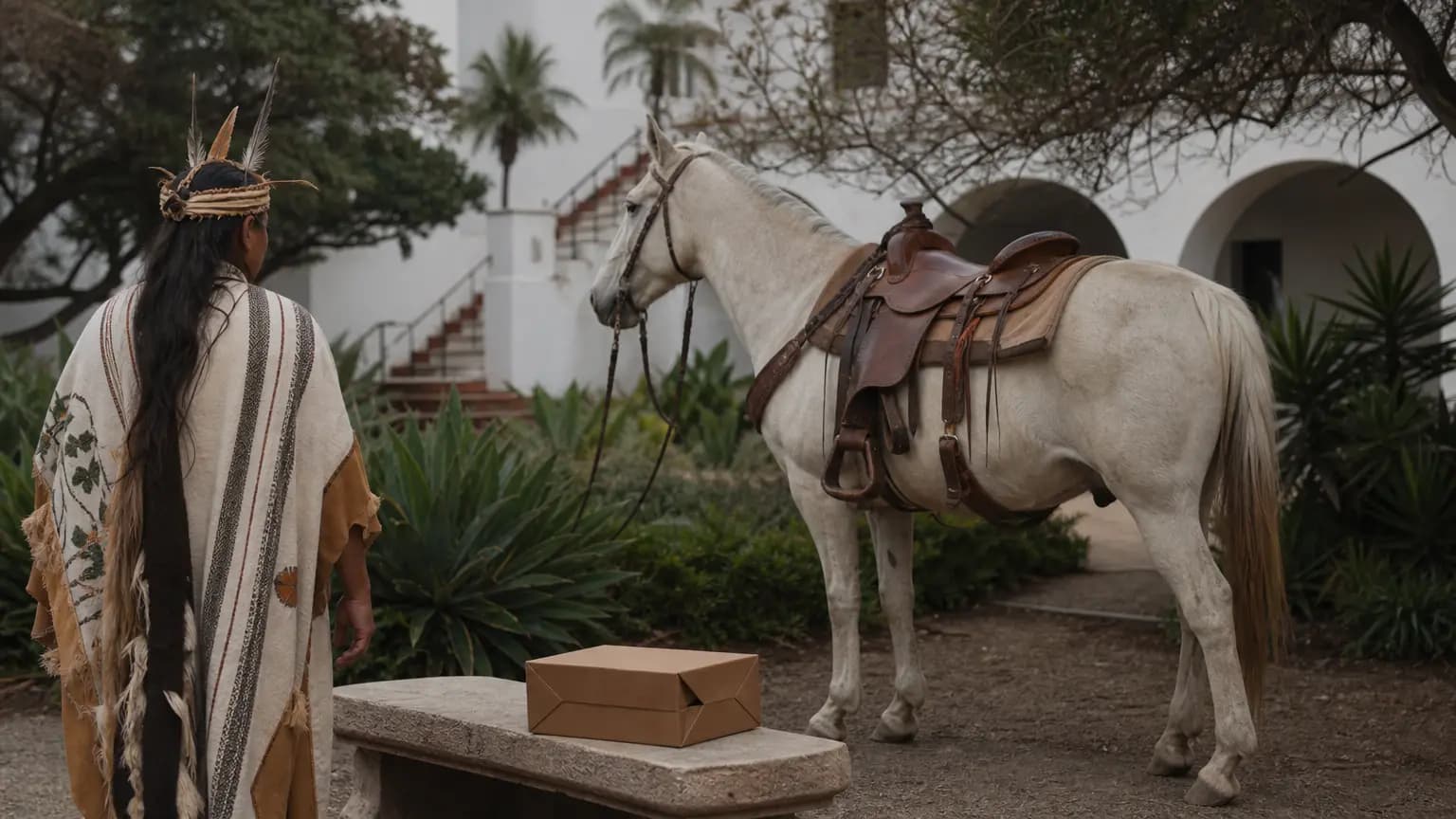
But as the Santa Barbara Independent reported, a growing chorus of locals is suggesting a simple, yet profoundly impactful change: alternating the Fiesta parade marshal every other year to select a representative from the Chumash community. Honoring the Santa Ynez Band of Chumash Indians, who have inhabited the Central Coast for millennia, would serve as a powerful acknowledgment that Santa Barbara's history did not begin with the Spanish or the Yanquis.
This call for deeper representation is not entirely without precedent. In 2023, the community celebrated a milestone when Ernestine Ygnacio-de Soto, a prominent Chumash activist, served as a Grand Marshal of the event. Ygnacio-de Suto has long been a vocal advocate for preserving Chumash history, famously pushing for the preservation of the historic Chumash village site of Syuxtun near the Santa Barbara Museum of Natural History. Establishing a permanent, alternating tradition of Chumash marshals would ensure this recognition is not just a one-time event, but a core feature of the celebration.
Beyond Caricature
Embracing a fuller, more honest history does not mean abandoning Fiesta or diminishing the city’s appeal. On the contrary, it would enrich Santa Barbara's story, offering residents and visitors a more authentic look at the forces that shaped the 805. It means celebrating shared heritage without relying on sanitized or mythical narratives that conveniently erase conquest, displacement, and inequality.
López’s observations serve as a stark reminder of the work that remains to be done. He noted the disheartening sight of young women performing at a private Fiesta party wearing fake mustaches as costumes. It is a modern echo of a much older problem: the tendency to reduce a rich, complex culture to mere entertainment or caricature, while the very people who carry that heritage are treated as marginal.
As Santa Barbara moves forward, there is an opportunity to lead with empathy and truth. By elevating the stories of the Chumash and the working-class Latino community, the city can move beyond the "American Riviera" postcard and forge a celebration that honors everyone who calls the 805 home.
Reported by 805.life
Researched and written drawing on primary sources. Additional reporting: Santa Barbara Independent.
City
Santa BarbaraAdditional Reporting
Santa Barbara IndependentPublished
August 2, 2026
Reported and written by 805.life
Explore Santa BarbaraAll Santa Barbara NewsMore News from Santa Barbara
Al no haber arma homicida, el juicio contra Caleb Flynn se centra en la relación extramatrimonial y en el supuesto intruso
A murder trial unfolding just up the coast is drawing attention here in Santa Barbara, and it's the kind of case that's hard to look away from. Caleb Flynn's trial, reported by KEYT News Channel 3-12, has no murder weapon — instead, prosecutors are leaning on testimony about a secret church affair, thousands of deleted texts, and lies told to the FBI. Even the family dogs stayed eerily quiet that night, which has become a strange piece of the puzzle. For those of us in the 805, it's a reminder that even tight-knit communities aren't immune to the kind of drama you'd expect from a courtroom thriller. Cases like this can shake faith in neighbors and institutions, and they raise hard questions about trust and evidence. We'll be watching how the trial unfolds — not out of spectacle, but because it touches on the real lives of people not so far from home.
UCSB Recovers From Slow Start, Beats CS Northridge in Big West Volleyball Opener
Good news for Gaucho fans — UCSB women's volleyball finally got back in the win column Friday night at the Thunderdome, shaking off a slow start to beat Cal State Northridge in the Big West opener. After dropping the first set, the team looked like a squad still finding its footing following a tough preseason that ended on a six-match skid. But conference play is a fresh slate, and the Gauchos took advantage. For our Isla Vista and Goleta neighbors, there's something special about catching a match on campus — cheap tickets, loud student section, and a team that's easy to root for. Thanks to Noozhawk for the coverage. If you haven't been to a UCSB volleyball match yet, consider this your sign to check one out this season.
Cottage Health Hosts Sepsis Conference Focused on Early Recognition and Treatment
Cottage Health pulled together doctors, nurses, pharmacists, respiratory therapists and other clinicians from across the region on Friday, Sept. 18, for a conference zeroing in on one of medicine's trickiest foes: sepsis. If you've never heard the word, you're not alone — but it's a leading cause of death in hospitals, and the difference between a good outcome and a tragic one often comes down to how fast someone recognizes the signs. That's why this gathering matters here. Santa Barbara County spans a big, sometimes rural region, and not every clinic or ER has the same resources. When Cottage Health convenes providers from up and down the 805 to share protocols and lessons learned, it quietly raises the standard of care for all of us — whether you're in Goleta, Lompoc, Santa Maria or Santa Ynez. The Santa Barbara Independent first reported the conference, and it's the kind of unglamorous, behind-the-scenes work that keeps our community healthier. Next time you or a loved one lands in an ER with a puzzling fever, this is the preparation you'll be glad happened.