When the Teachers Aren’t Safe Either
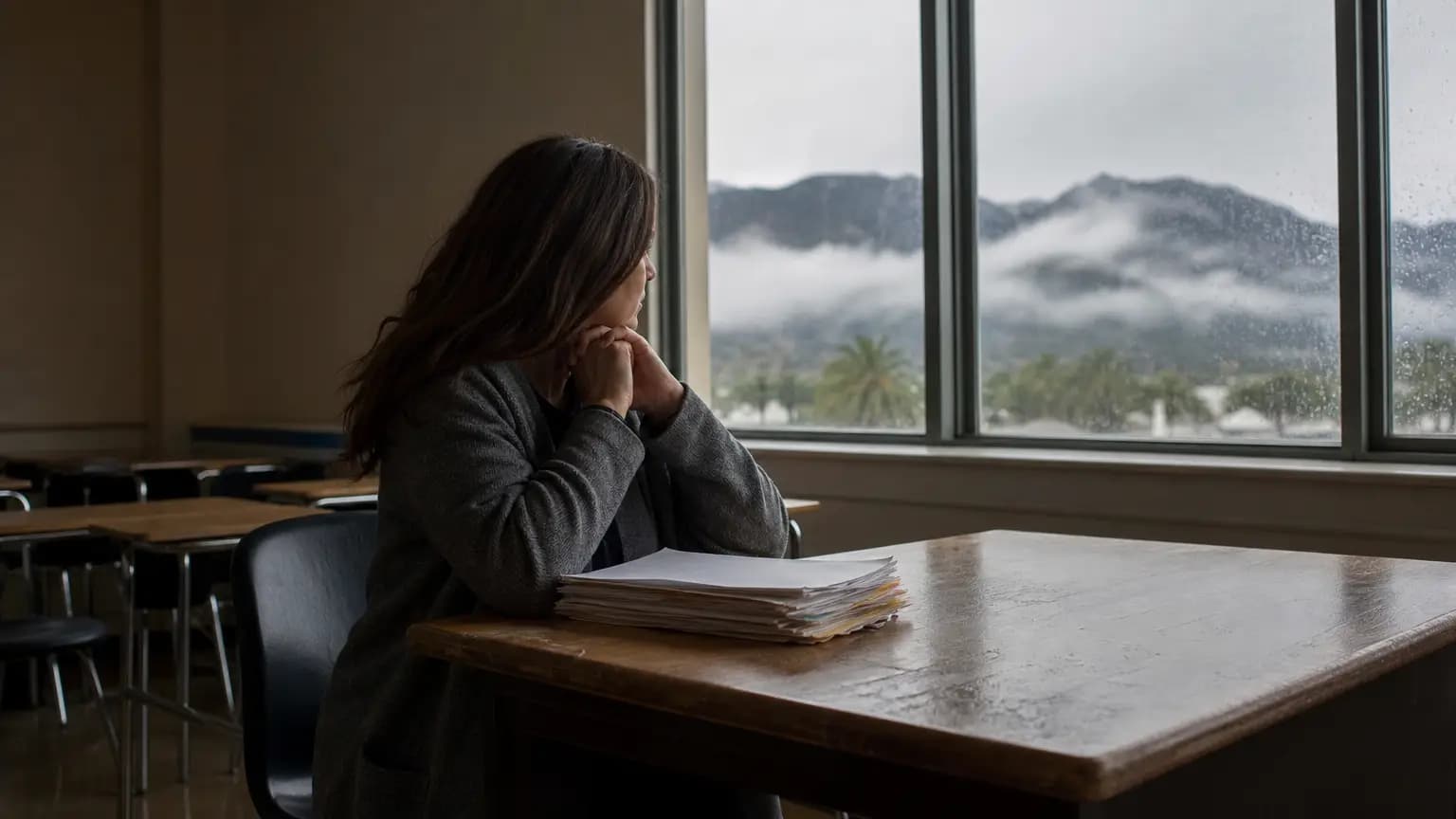
When you picture the California Central Coast, you likely imagine gentle ocean breezes, Spanish architecture, and a progressive, welcoming community. It is a place where many assume the sharp edges of systemic prejudice have been worn smooth by the coastal climate.
But beneath the idyllic surface of Santa Barbara, a more troubling reality is bubbling to the surface. A powerful recent op-ed in the Santa Barbara Independent has sparked a necessary and uncomfortable conversation about race within the Santa Barbara Unified School District (SBUSD)—revealing that the toxicity isn't confined to the student body, and educators are often left unprotected.
Written by Ariel Phoenix, a former English teacher at San Marcos High School who devoted eight years to education before arriving in the 805, the piece is a heartbreaking look at what happens when the very people tasked with guiding our youth are subjected to the same bigotry they are trying to dismantle.
A Racial Slur and a Failure to Act
Phoenix’s account is anchored in a chilling scene that unfolded during a lunch detention at San Marcos High. She recalls picking up a piece of paper left behind by a student. Scrawled across the top in large letters was the N-word, complete with the hard "R."
In that moment, Phoenix wrestled with the instinctive question so many marginalized people face in professional settings: Was she overreacting? A quick scan of the room provided the sobering answer. Who else in that room could it have been meant for?
But it wasn't just an isolated incident of a hate note. Phoenix describes a campaign of escalating harassment from a small group of students. Classroom defiance metastasized into intimidation. The situation grew so severe that campus security was forced to monitor her classroom. On one occasion, a group of students effectively trapped her inside her own room after the final bell, only dispersing when a security officer finally arrived.
When she brought these incidents to school administrators, the response was painfully familiar. As the Santa Barbara Independent reported, officials expressed sympathy but insisted their hands were tied until the situation turned physical. For Phoenix, the realization was grim: if a teacher is seriously considering filing a police report over student harassment, the line of "too far" was crossed miles ago.
The Covert Culture of Coastal Prejudice
Phoenix moved to Santa Barbara from Houston, Texas. Like many transplants to the 805, she harbored a specific hope for the Golden State. She imagined a California where her race would be a footnote rather than a focal point, allowing her to simply focus on her true calling: teaching teenagers to wrestle with big ideas.
Instead, she stepped into a different kind of prejudice—one that doesn't always announce itself with a slur but is instead woven into the cultural fabric.
In Santa Barbara, Phoenix frequently felt watched, scrutinized, and treated as an interloper. Conversations with other Black residents in the area mirrored her own experiences. The discrimination was subtle, hiding in plain sight within systemic patterns. It revealed itself in who was deemed credible, whose voices carried weight in meetings, and whose legitimate concerns were casually dismissed or explained away.
This dynamic extended to her relationships with administrators. Phoenix threw herself into her role, building bridges with families and utilizing the district's language line to connect with Spanish-speaking parents. Yet, she found herself caught in a web of constantly shifting expectations. She was encouraged to build rapport, then reprimanded for doing so. She was expected to strictly enforce rules that her colleagues casually ignored. The goalposts moved so frequently that she resorted to documenting every administrative directive just to protect herself.
An Ambush in the Principal’s Office
The breaking point came when Phoenix requested a meeting with her principal, desperate for an opportunity to explain the hostile environment she was navigating. She walked in expecting a conversation—a chance for leadership to finally listen.
Instead, she found a Human Resources representative already seated and waiting. The meeting wasn't an inquiry; it was an execution. The decision had already been made. There was no interest in understanding the racism and harassment she had endured. The system had simply chosen to close the file rather than address the root of the problem.
Her experience mirrors the broader pattern of institutional failure. Her op-ed was written in response to a prior piece by the Independent in which Black students detailed the relentless racism they experience within SBUSD. Phoenix believed them implicitly because she had lived it.
Who Protects the Educators?
The students featured in the local reporting asked what happens when public schools fail to shield Black students from hate. Phoenix poses a corollary that strikes at the heart of our local educational system: What happens when the teachers aren’t safe either? Who steps in for us?
As a community, Santa Barbara prides itself on inclusion, sustainability, and civic engagement. Yet, public institutions like our school districts often lag behind the progressive rhetoric. Meaningful change, as Phoenix points out, doesn't require a magic cure for all of society's ills. It simply requires leadership willing to listen before becoming defensive. It requires a culture shift where reporting racism is treated as an act of profound courage rather than a bureaucratic inconvenience.
Black students in Santa Barbara deserve to feel safe. Black teachers deserve fundamental respect. And Black families deserve the peace of mind knowing their children will be genuinely valued. These aren't radical demands. They are the absolute bare minimum. Until the 805 confronts the quiet, insidious nature of its own prejudices, the educators who travel across the country to teach our kids will continue to find that the paradise we sell them comes with a heavy, hidden cost.
Reported by 805.life
Researched and written drawing on primary sources. Additional reporting: Santa Barbara Independent.
City
Santa BarbaraAdditional Reporting
Santa Barbara IndependentPublished
August 1, 2026
Reported and written by 805.life
Explore Santa BarbaraAll Santa Barbara NewsMore News from Santa Barbara
Al no haber arma homicida, el juicio contra Caleb Flynn se centra en la relación extramatrimonial y en el supuesto intruso
A murder trial unfolding just up the coast is drawing attention here in Santa Barbara, and it's the kind of case that's hard to look away from. Caleb Flynn's trial, reported by KEYT News Channel 3-12, has no murder weapon — instead, prosecutors are leaning on testimony about a secret church affair, thousands of deleted texts, and lies told to the FBI. Even the family dogs stayed eerily quiet that night, which has become a strange piece of the puzzle. For those of us in the 805, it's a reminder that even tight-knit communities aren't immune to the kind of drama you'd expect from a courtroom thriller. Cases like this can shake faith in neighbors and institutions, and they raise hard questions about trust and evidence. We'll be watching how the trial unfolds — not out of spectacle, but because it touches on the real lives of people not so far from home.
UCSB Recovers From Slow Start, Beats CS Northridge in Big West Volleyball Opener
Good news for Gaucho fans — UCSB women's volleyball finally got back in the win column Friday night at the Thunderdome, shaking off a slow start to beat Cal State Northridge in the Big West opener. After dropping the first set, the team looked like a squad still finding its footing following a tough preseason that ended on a six-match skid. But conference play is a fresh slate, and the Gauchos took advantage. For our Isla Vista and Goleta neighbors, there's something special about catching a match on campus — cheap tickets, loud student section, and a team that's easy to root for. Thanks to Noozhawk for the coverage. If you haven't been to a UCSB volleyball match yet, consider this your sign to check one out this season.
Cottage Health Hosts Sepsis Conference Focused on Early Recognition and Treatment
Cottage Health pulled together doctors, nurses, pharmacists, respiratory therapists and other clinicians from across the region on Friday, Sept. 18, for a conference zeroing in on one of medicine's trickiest foes: sepsis. If you've never heard the word, you're not alone — but it's a leading cause of death in hospitals, and the difference between a good outcome and a tragic one often comes down to how fast someone recognizes the signs. That's why this gathering matters here. Santa Barbara County spans a big, sometimes rural region, and not every clinic or ER has the same resources. When Cottage Health convenes providers from up and down the 805 to share protocols and lessons learned, it quietly raises the standard of care for all of us — whether you're in Goleta, Lompoc, Santa Maria or Santa Ynez. The Santa Barbara Independent first reported the conference, and it's the kind of unglamorous, behind-the-scenes work that keeps our community healthier. Next time you or a loved one lands in an ER with a puzzling fever, this is the preparation you'll be glad happened.