Will We Destroy the Planet That Sustains Us?
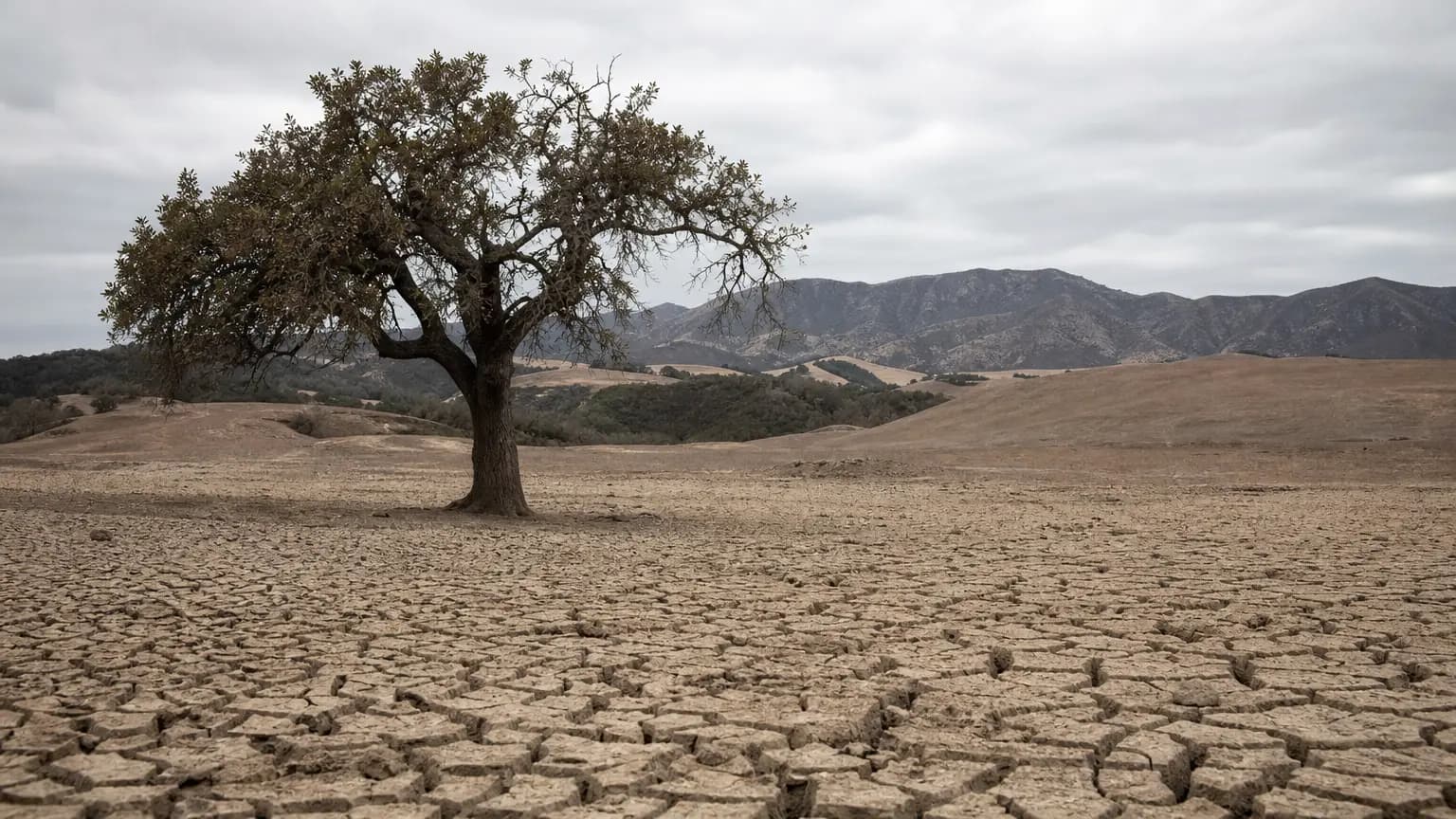
A Lifetime of Watching the Ocean Change
Bob McMillen has spent more than six decades diving in the waters off Santa Barbara, watching the California coast transform beneath the waves. What he's witnessed in those thousands of hours underwater has shaped his understanding not just of marine ecosystems, but of humanity's relationship with the planet that sustains us.
Writing in a recent opinion piece for the Santa Barbara Independent, the 85-year-old reflects on dramatic changes he's observed firsthand. When he first entered the water as a young diver, giant kelp forests covered vast stretches of the California coastline. Abalone were abundant. Marine life flourished in places that today bear little resemblance to what he remembers.
The Collapse of Underwater Forests
McMillen's observations align with scientific research documenting significant changes in California's marine ecosystems. Recent studies show that Northern California's kelp forests have declined by more than 95 percent, with most of that loss occurring between 2014 and 2019 following an unprecedented marine heat wave.
Local Santa Barbara Channel ecosystems have faced similar pressures. Research from UC Santa Barbara's Marine Science Institute shows how marine heatwaves have emerged as "disruptive forces in the kelp forest, threatening marine biodiversity and wild fisheries." These warming events create what scientists describe as a "stress test" for marine ecosystems, with consequences that appear to be very negative and happening rapidly.
The collapse hasn't been gradual. As McMillen notes, "Over the years I watched pollution take its toll in some areas, overharvesting in others, and more recently the collapse of ecological relationships that once kept marine environments in balance."
Beyond the Shoreline: Connecting Environmental and Human Crises
What sets McMillen's perspective apart is his recognition that environmental issues cannot be separated from economics, politics, immigration, or war. His decades of observation have taught him that "nature functions as a unique system. Every plant and animal plays a role. When enough pieces are removed or damaged, the effects eventually spread throughout the entire ecosystem."
This systemic thinking extends to human society. Climate change, McMillen argues, acts as a "force multiplier," making existing problems worse. When drought affects agriculture, food becomes more expensive and livelihoods disappear. When fisheries collapse, coastal communities suffer. When fresh water becomes scarce, competition increases.
Santa Barbara County faces many of these interconnected challenges. Local climate assessments show the region has experienced drought conditions for 62% of weeks since 2000, with 24% of those weeks classified as Extreme or Exceptional drought. The area is also vulnerable to increased wildfire risk, with climate change creating hotter, drier conditions.
A Call for Systemic Change
McMillen's message carries particular weight given his deep personal connection to the ocean and his advanced age. "I worry about it because I have children and grandchildren," he explains when asked why environmental issues matter to him at 85.
His concern extends beyond individual species or habitats. "What I have seen convinces me that protecting the environment is no longer simply about saving whales, forests, kelp beds, or endangered species. It is about protecting the foundation upon which human civilization itself depends."
The paradox he highlights is stark: humanity possesses remarkable intelligence and technological capability—we've walked on the moon, mapped the human genome, and created powerful computers. Yet despite these achievements, we continue to damage the natural systems that make our existence possible.
A Legacy of Witness
McMillen's decades of underwater observation provide a unique long-term perspective on environmental change. His account offers something increasingly rare: first-hand testimony of how dramatically our local marine environment has transformed within a single lifetime.
"Perhaps future generations will someday look back and wonder how a species capable of such extraordinary accomplishments could have been so careless with the planet that sustained it," he reflects. "I hope they never have to ask that question."
That hope, more than anything else, is why he continues speaking out—a voice from beneath the waves, warning us about the connections between the health of our oceans and the future of human civilization.
Reported by 805.life
Researched and written drawing on primary sources. Additional reporting: Santa Barbara Independent.
City
Santa BarbaraAdditional Reporting
Santa Barbara IndependentPublished
June 6, 2026
Reported and written by 805.life
Explore Santa BarbaraAll Santa Barbara NewsMore News from Santa Barbara
Al no haber arma homicida, el juicio contra Caleb Flynn se centra en la relación extramatrimonial y en el supuesto intruso
A murder trial unfolding just up the coast is drawing attention here in Santa Barbara, and it's the kind of case that's hard to look away from. Caleb Flynn's trial, reported by KEYT News Channel 3-12, has no murder weapon — instead, prosecutors are leaning on testimony about a secret church affair, thousands of deleted texts, and lies told to the FBI. Even the family dogs stayed eerily quiet that night, which has become a strange piece of the puzzle. For those of us in the 805, it's a reminder that even tight-knit communities aren't immune to the kind of drama you'd expect from a courtroom thriller. Cases like this can shake faith in neighbors and institutions, and they raise hard questions about trust and evidence. We'll be watching how the trial unfolds — not out of spectacle, but because it touches on the real lives of people not so far from home.
UCSB Recovers From Slow Start, Beats CS Northridge in Big West Volleyball Opener
Good news for Gaucho fans — UCSB women's volleyball finally got back in the win column Friday night at the Thunderdome, shaking off a slow start to beat Cal State Northridge in the Big West opener. After dropping the first set, the team looked like a squad still finding its footing following a tough preseason that ended on a six-match skid. But conference play is a fresh slate, and the Gauchos took advantage. For our Isla Vista and Goleta neighbors, there's something special about catching a match on campus — cheap tickets, loud student section, and a team that's easy to root for. Thanks to Noozhawk for the coverage. If you haven't been to a UCSB volleyball match yet, consider this your sign to check one out this season.
Cottage Health Hosts Sepsis Conference Focused on Early Recognition and Treatment
Cottage Health pulled together doctors, nurses, pharmacists, respiratory therapists and other clinicians from across the region on Friday, Sept. 18, for a conference zeroing in on one of medicine's trickiest foes: sepsis. If you've never heard the word, you're not alone — but it's a leading cause of death in hospitals, and the difference between a good outcome and a tragic one often comes down to how fast someone recognizes the signs. That's why this gathering matters here. Santa Barbara County spans a big, sometimes rural region, and not every clinic or ER has the same resources. When Cottage Health convenes providers from up and down the 805 to share protocols and lessons learned, it quietly raises the standard of care for all of us — whether you're in Goleta, Lompoc, Santa Maria or Santa Ynez. The Santa Barbara Independent first reported the conference, and it's the kind of unglamorous, behind-the-scenes work that keeps our community healthier. Next time you or a loved one lands in an ER with a puzzling fever, this is the preparation you'll be glad happened.