Bipartisan Senate bill would sharpen Space Force training for conflict with China
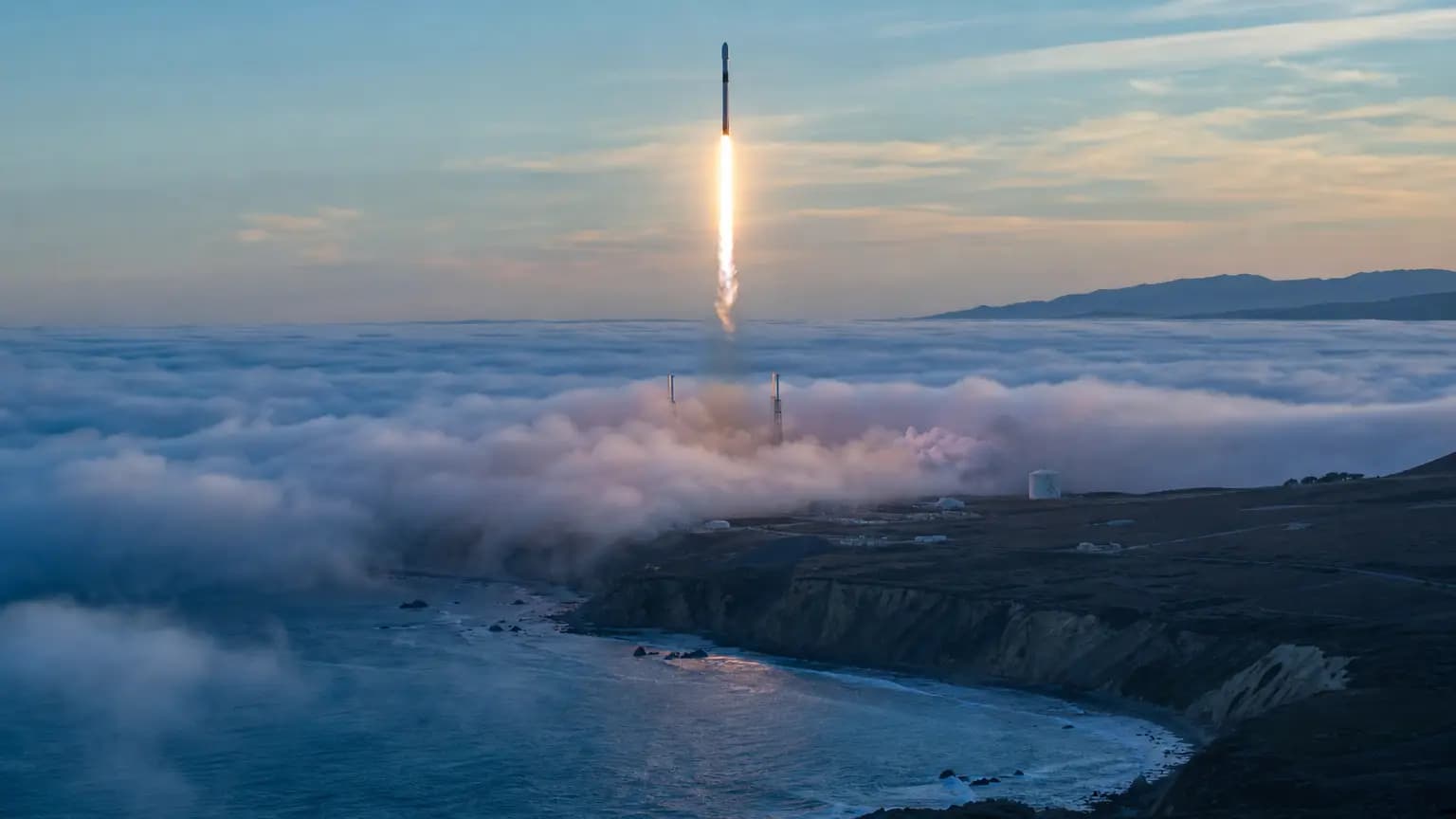
For launch watchers up and down the Central Coast, Vandenberg Space Force Base is usually synonymous with fiery twilight launches, sonic boom rumors, and the steady rhythm of Falcon 9s climbing into polar orbit from SLC-4E. But a new bipartisan Senate bill is a reminder that the base's mission goes far beyond launching rockets — and that the training pipeline for the Guardians who work there could be getting a significant sharpening.
According to SpaceNews, Sens. Catherine Cortez Masto (D-Nev.) and Katie Britt (R-Ala.) have introduced the Space Superiority Readiness Act, legislation designed to strengthen the U.S. Space Force's preparation for a potential conflict with China. The proposal would expand wargaming, modeling, simulation, and tactical training for space control operations — the kind of high-stakes orbital chess that Vandenberg's Guardians may increasingly be called upon to execute.
What the bill would actually do
The legislation, filed as an amendment to the fiscal 2027 National Defense Authorization Act, directs the Pentagon to expand the Space Force's capacity for wargaming and simulation of peer conflicts in space. SpaceNews reported that it also requires an unclassified report to Congress within 180 days of enactment on China's commercial space capabilities and their potential military applications.
For Vandenberg observers, the most relevant detail is what the bill does not do: it doesn't create a new training organization. Instead, it reinforces and seeks to expand the Space Force's existing Operational Test and Training Infrastructure — dubbed OTTI — a network of simulators, live training ranges, and adversary representations designed to let Guardians train against realistic threats without tying up operational satellites.
That matters locally because Vandenberg isn't just a launch pad. The base hosts critical space domain awareness, missile warning, and range operations missions. Any expansion of realistic, China-focused training would likely ripple through the daily work of the Guardians stationed along the Central Coast.
Why a China focus resonates at Vandenberg
Vandenberg's geographic position on the California coast makes it the nation's premier launch site for polar and sun-synchronous orbits — trajectories that are essential for intelligence, surveillance, and reconnaissance satellites monitoring the Indo-Pacific. Every Falcon 9 carrying a national security payload southward from SLC-4E is a visible reminder that the space domain is woven into broader strategic competition.
SpaceNews noted that Britt framed the legislation as a direct response to China's growing military space capabilities, saying the bill "underscores how critical space is as a warfighting domain." Cortez Masto echoed that urgency, stating that providing Guardians with the right tools and training ensures they'll "be ready to confront any threat."
The legislative push reportedly stems from a bipartisan congressional delegation to the Arctic in May, where both senators visited Pituffik Space Base in Greenland and received briefings on missile warning and strategic competition with Russia and China. The experience underscored how contested the space domain has become — a reality that Vandenberg launch fans witness from a different angle every time a national security mission lights up the evening sky.
The commercial space angle
The bill's reporting requirement on China's commercial space sector is worth watching for anyone who follows the broader launch industry. The Defense Department already publishes assessments of China's military space programs — including anti-satellite weapons, electronic warfare systems, and counterspace capabilities. But the new report would focus specifically on how China's rapidly expanding commercial space industry could support military operations.
Because the assessment would be unclassified, SpaceNews noted, it would give industry and outside analysts additional insight into the blurred lines between civilian and military space activity in China — a dynamic that has direct implications for U.S. launch providers, satellite operators, and national security planners alike.
What happens next
The full Senate has not yet begun floor debate on the NDAA, and neither Cortez Masto nor Britt serves on the Senate Armed Services Committee. A spokesperson for Cortez Masto told SpaceNews the senator "will continue to pursue every avenue to get it passed into law," including the standalone bill introduction.
For the 805 launch community, the proposal is a signal that the pace and complexity of space operations from Vandenberg are only going to intensify. Whether it means more training exercises, expanded simulator infrastructure, or a sharper strategic focus on the Pacific theater, the Guardians on the Central Coast are likely to feel the effects — even if the most dramatic evidence visible from Santa Barbara and San Luis Obispo counties remains those familiar Falcon 9 contrails arcing southward over the Pacific.
Reported by 805.life
Written for Central Coast launch fans, drawing on original reporting by SpaceNews.
Additional Reporting
SpaceNewsPublished
August 7, 2026
Topic
Vandenberg
More Launch News
 Vandenberg
SpaceX Falcon 9 to launch classified mission for U.S. Space Force from West Coast
A classified U.S. Space Force mission launching from the West Coast points to Vandenberg SFB, where national security Falcon 9 flights originate from SLC-4E. The 7 a.m. PDT window offers Central Coast fans a convenient morning viewing opportunity. As a classified payload, details will be sparse, but expect typical Western Range road and beach closures ahead of liftoff.
 Vandenberg
Google just picked SpaceX for its first step into orbital AI
Google's first Project Suncatcher AI satellite is set to fly on SpaceX's Transporter-18 rideshare, another sign of growing rideshare demand from tech and AI companies. Transporter missions typically lift off from Vandenberg SLC-4E, so Central Coast launch watchers may get a local viewing opportunity. Details are thin, so check the official mission page for launch date and range status.
 Vandenberg
Live coverage: SpaceX to launch 27 Starlink V2 Mini satellites on Falcon 9 rocket from Vandenberg
A Falcon 9 is set to carry 27 Starlink V2 Mini satellites from Vandenberg's SLC-4E, with the launch window opening at 6:47 p.m. PDT — an evening liftoff that should be visible across the Central Coast. It marks the 81th Starlink mission of the year, continuing SpaceX's high launch cadence on the Western Range.