Fire detectors, military tech demos, 3D printers among SpaceX rideshare payloads launching on midnight Falcon 9 flight
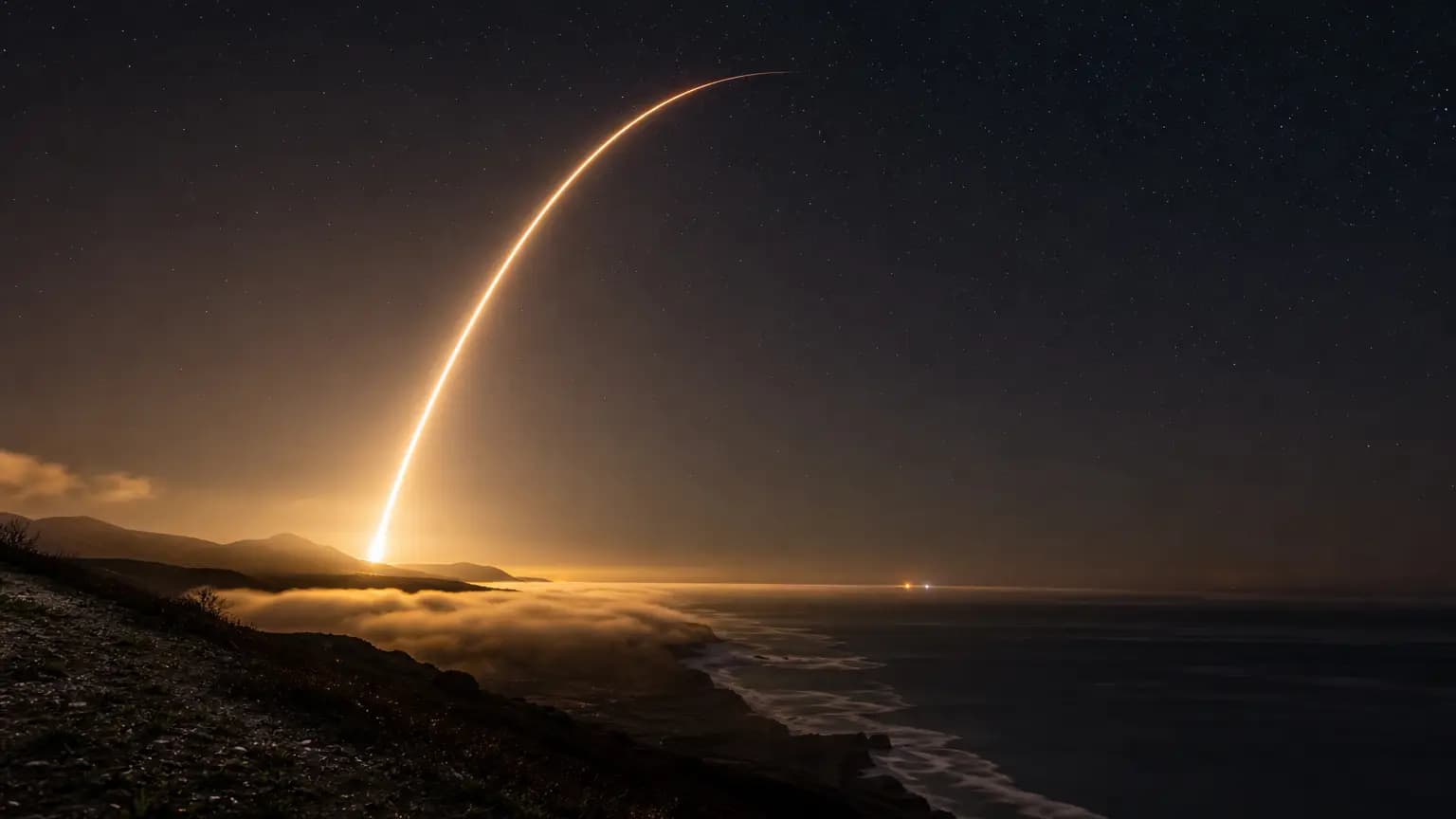
Central Coast launch watchers who set their alarms for just after midnight on Tuesday, July 7, 2026, were treated to a headline SpaceX rideshare mission streaking south from Vandenberg Space Force Base.
The Transporter-17 mission lifted off from Space Launch Complex 4 East at 12:12 a.m. PDT, kicking off another busy Smallsat Rideshare Program flight. According to Spaceflight Now, the Falcon 9 carried 81 payloads into a Sun-synchronous orbit — the tried-and-true polar corridor that makes Vandenberg the go-to launch site for Earth-observation and remote-sensing satellites.\n
A Midnight Workhorse
The mission used Falcon 9 first stage booster B1097, which was flying for the 11th time. Spaceflight Now reported that this booster's previous missions included Twilight, NROL-172, Sentinel-6B, and seven Starlink flights — a testament to how routine booster reuse has become for Vandenberg operations.
About 8.5 minutes after liftoff, B1097 touched down on the drone ship Of Course I Still Love You in the Pacific Ocean. That marked the 208th landing on that particular vessel and SpaceX's 634th booster landing overall. No Central Coast sonic boom on this one — with the booster heading offshore for a droneship landing, residents were spared the window-rattling that sometimes accompanies return-to-launch-site recoveries.
SpaceX confirmed full deployment of all 81 payloads by early morning, capping off a carefully choreographed sequence that spanned roughly 2.5 hours and multiple upper-stage engine restarts.
Wildfire Tech With California Relevance
For the 805 community, few payloads are as locally relevant as the trio of FireSat satellites that rode along on this flight. Built by Muon Space for the nonprofit Earth Fire Alliance, these spacecraft are designed to detect wildfires from orbit — technology with obvious implications for a region that lives with fire season every year.
The Earth Fire Alliance ultimately aims to have a constellation of more than 50 satellites in low Earth orbit, with an interim goal of over 20 satellites between 2027 and 2029. The system is designed to detect fires as small as five by five meters and provide revisit rates of roughly one hour, according to Spaceflight Now's reporting.
This latest trio — dubbed the Black Kite Trio (BK-3) by the nonprofit — builds on a prototype satellite launched in March 2025.
A Truly Global Rideshare
The manifest reflected SpaceX's increasingly international customer base. Exolaunch, a veteran rideshare broker that has flown on every Transporter mission since the program began in 2020, was responsible for 49 of the 81 satellites across 20 customers. Among them were four ICEYE synthetic aperture radar satellites, the UAE's first low Earth orbit positioning-and-timing satellite (Leonav-1), and France's Bro-31, the first of Unseenlabs' second-generation radio-frequency detection spacecraft.
California-based Maverick Space Systems manifested a dozen payloads, including a pair from Taiwan's National Central University studying the ionosphere and testing a fiber optic gyroscope. Seops Space coordinated 10 payloads across five countries, including a Naval Research Lab / Department of Defense technology demonstrator called SPEAR-1.
Perhaps the most technically intriguing payload was Orbital Matter's Replicator-2, a Polish-German satellite testing 3D printing directly in the vacuum of space. The spacecraft carries four Printer Assisted Deployment Systems, two of which are being used to deploy foldable solar arrays — a potential game-changer for lowering the cost of orbital power systems.
What It Means for the 805
Transporter-17 underscores Vandenberg's central role in the smallsat economy. While Starlink missions often grab the spotlight, these rideshare flights are where dozens of companies, universities, and government agencies from around the world get their hardware into orbit — and they all launch right here on the Central Coast. For local launch fans, the midnight liftoff was another reminder that the 805's skies remain some of the busiest and most strategically important in the world.
Reported by 805.life
Written for Central Coast launch fans, drawing on original reporting by Spaceflight Now.
Additional Reporting
Spaceflight NowPublished
July 6, 2026
Topic
Vandenberg
More Launch News
 Vandenberg
SpaceX Rocket Launch Now Aiming for Early Friday Morning from Vandenberg
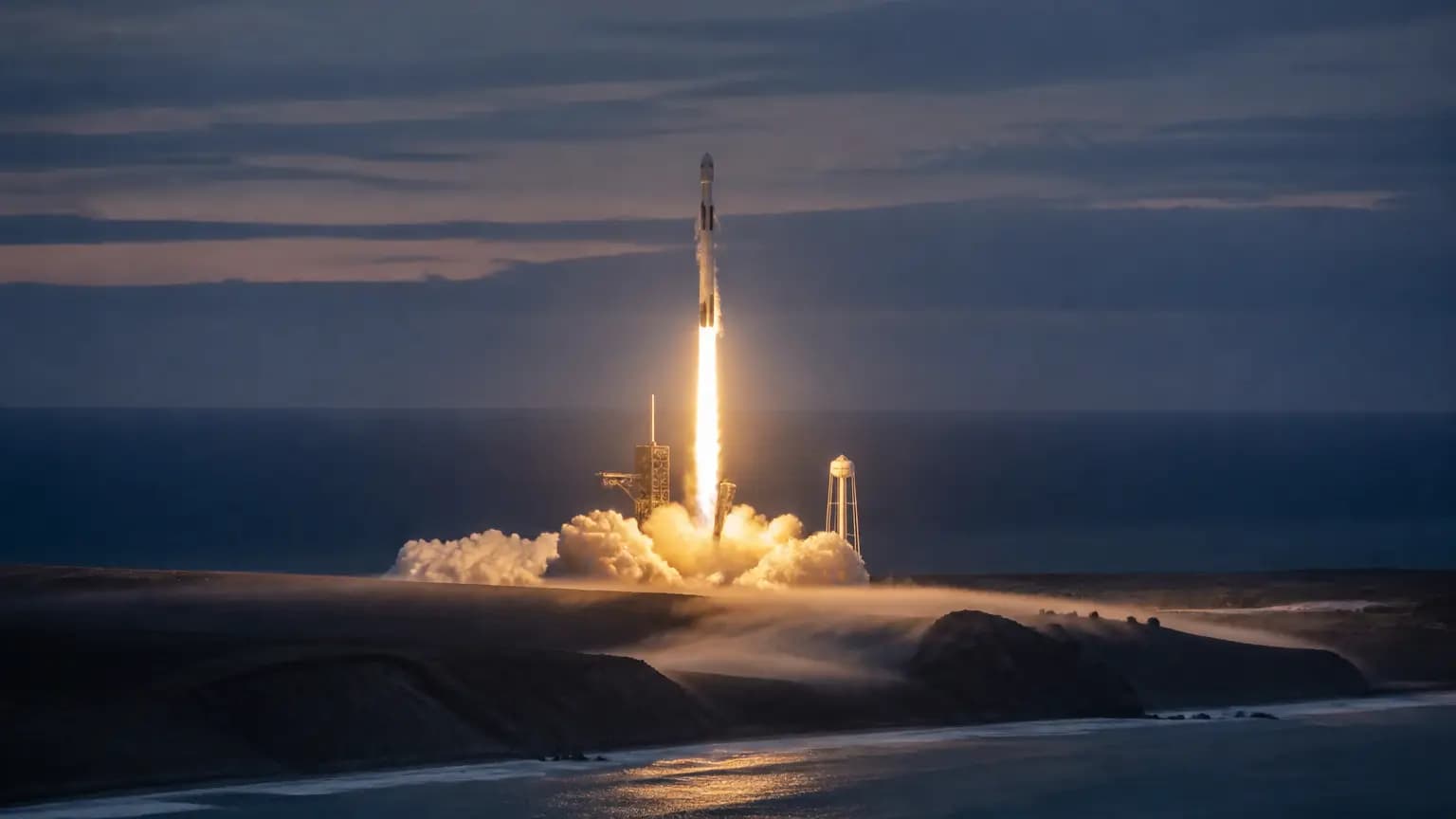
A SpaceX Falcon 9 carrying a military payload is now targeting 12:44 a.m. Friday from SLC-4 at Vandenberg, with a backup window at 12:39 a.m. Saturday. Overnight launch times like this mean Central Coast residents may see the ascent, though viewing requires being up very late or very early. The military payload suggests a NRO-class mission, consistent with Vandenberg's typical manifest.
 Vandenberg
Live coverage: SpaceX to launch 21 data transport satellites for the Space Development Agency
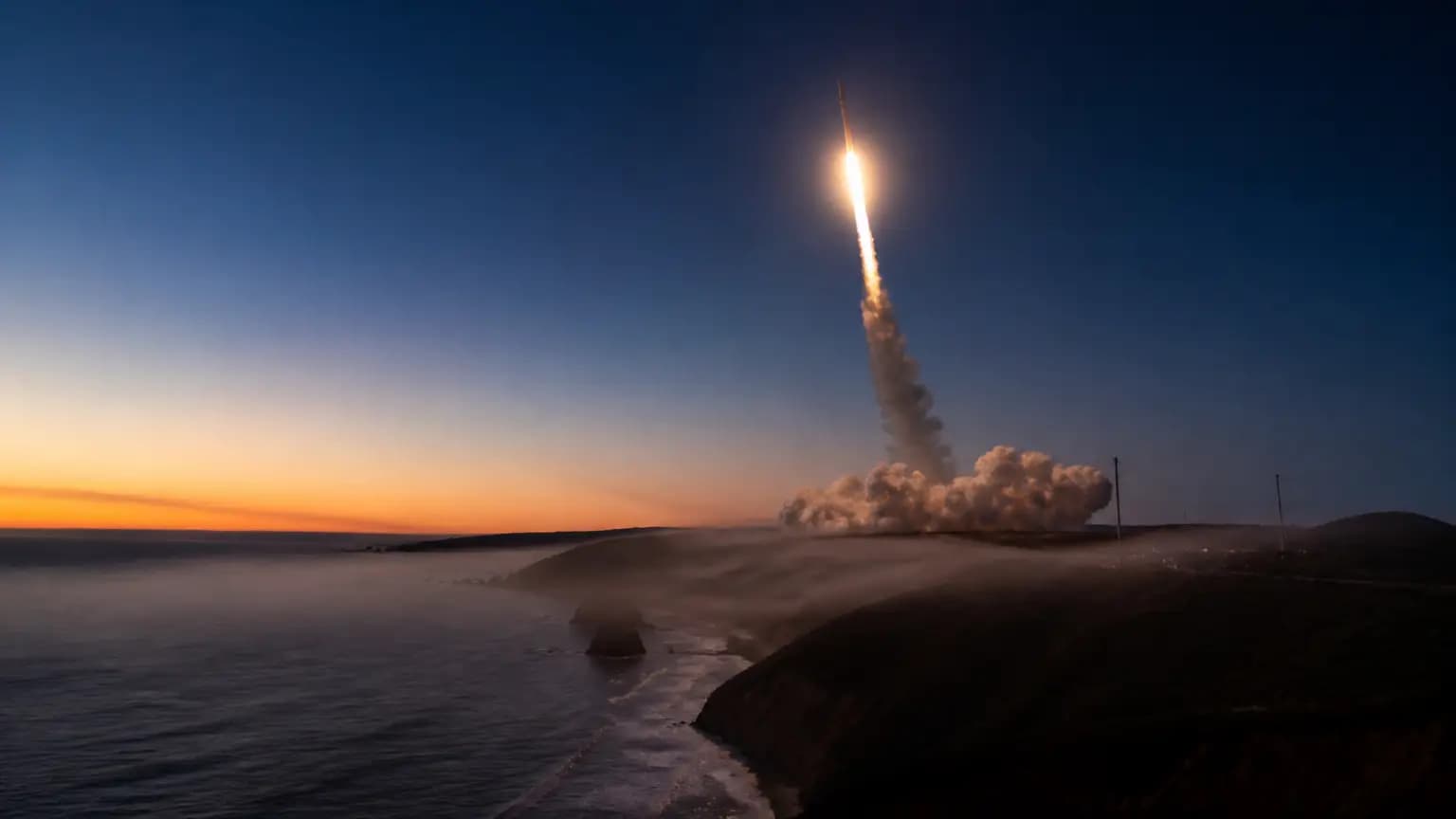
SpaceX is set to launch 21 Tranche 1 Transport Layer satellites for the Space Development Agency from pad 4E at Vandenberg SFB, with liftoff scheduled for 1:17 a.m. PDT. This is the fourth flight supporting the Proliferated Warfighter Space Architecture constellation, continuing a series of national-security missions flying from the Western Range. Overnight launch windows often bring viewing opportunities along the Central Coast and road closures near the base.
 Vandenberg
Launch preview: More than 100 spacecraft hitch a ride to orbit on SpaceX’s Transporter-18
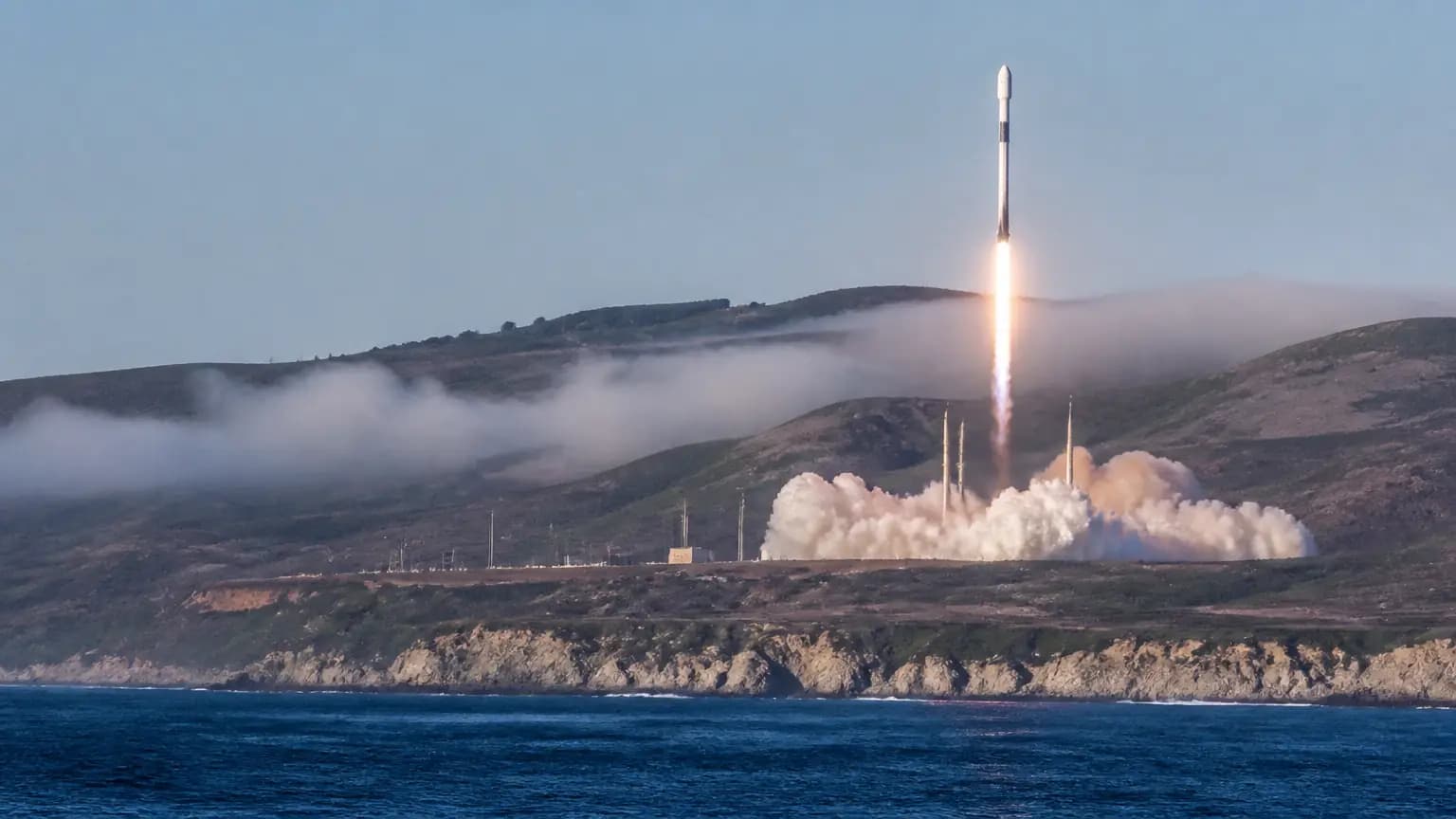
SpaceX's Transporter-18 rideshare mission lifted off from Vandenberg's SLC-4E at 11:32 a.m. PDT, carrying 130 payloads to Sun-synchronous orbit. It's a home-state rideshare launch for Central Coast fans, meaning a daytime Falcon 9 liftoff and likely a return landing at LZ-4 with associated sonic booms.