SpaceX just launched a secret payload from California
SpaceX just launched a secret payload from California
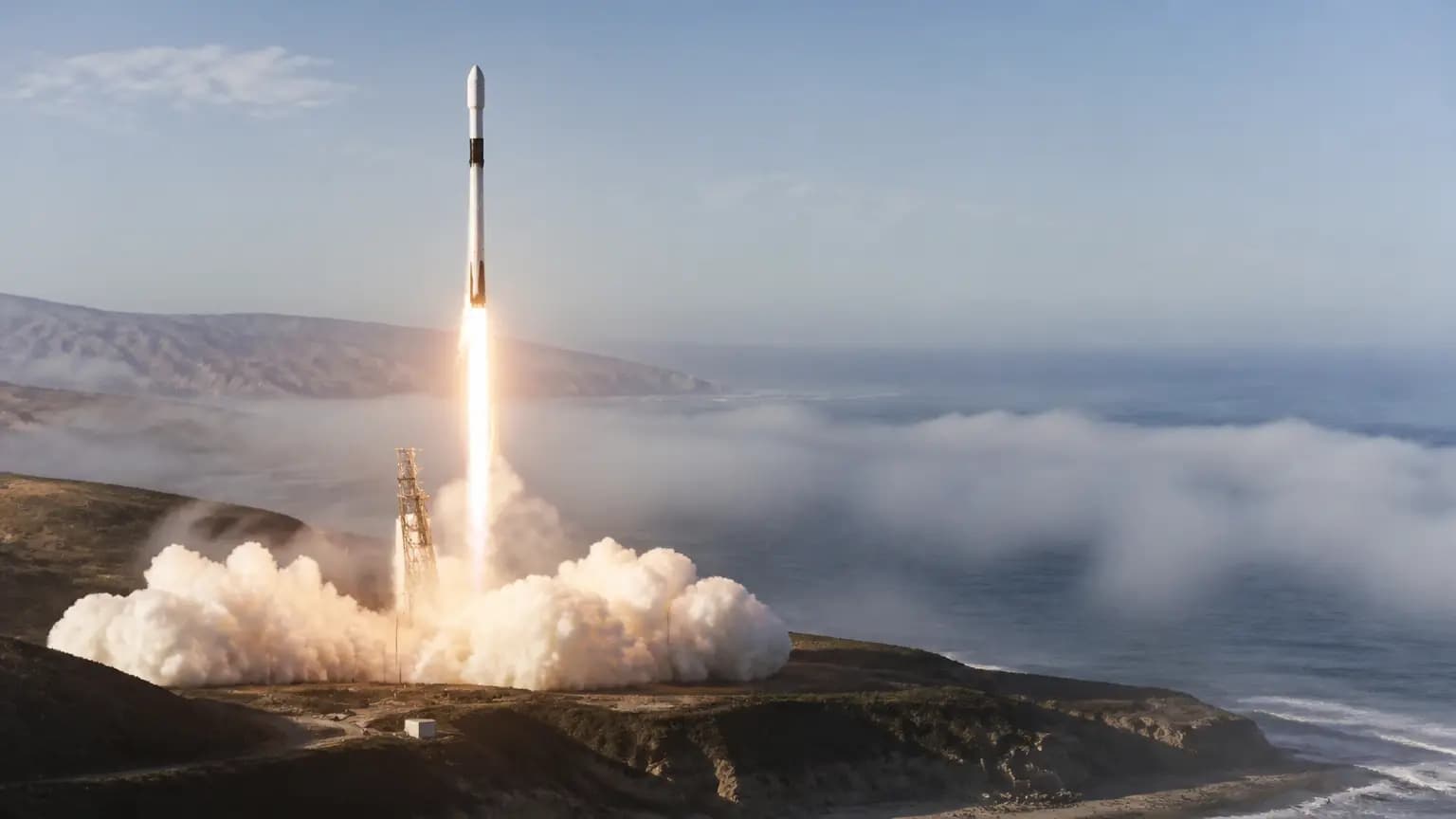
Saturday night delivered one of those classic Vandenberg moments for Central Coast launch watchers: a Falcon 9 climbing off Space Launch Complex 4E into the dark, a classified U.S. Space Force payload on top, and essentially zero official explanation of what just went up.
Teslarati reported that the mission, designated USSF-366, launched from Vandenberg Space Force Base on Saturday night, August 15, with a launch window that opened in the evening and ran into the early hours of Sunday. SpaceX confirmed the flight on its X account and pointed viewers to a livestream that began about ten minutes before liftoff. Beyond that? The payload was described only as classified.
That's familiar territory for regulars who stake out viewing spots from Surf Beach to the Santa Ynez overlook — Vandenberg handles more than its share of hush-hup national security work, and the Space Force doesn't exactly hand out mission briefings at the gate.
The Starshield theory
The lack of official detail didn't stop analysts from doing what they do. According to Teslarati's reporting, independent tracking of the rocket's stage drop zones matched the pattern SpaceX has used on previous Starlink Group 15 missions — a fingerprint that points to Starshield, SpaceX's national-security variant of the Starlink satellite bus, as the likely payload rather than a one-off government satellite.
Starshield, as Teslarati noted, is built to Pentagon specifications for Earth observation, communications, and hosted payloads. The key difference from consumer Starlink: once these satellites reach orbit, government agencies don't have to disclose what they're actually doing. So if the theory holds, what launched over the 805 on Saturday night may stay a mystery indefinitely.
The booms came back
For locals, the most tangible part of the mission was the ending. The first-stage booster returned and landed back near the launch site, delivering the twin sonic booms that have become a routine — if still startling — part of life around Lompoc and the Santa Ynez Valley.
Teslarati highlighted an interesting tension here: for a company that livestreams nearly everything, from Starship test flights to robot demos, USSF-366 is a reminder that some of SpaceX's busiest work now happens entirely out of public view. Central Coast residents get the spectacle — the glow on the horizon, the rumble overhead — but rarely the story behind it.
Vandenberg's growing role in SpaceX's Pentagon business
USSF-366 is the latest entry in a steady flow of classified and semi-classified work between SpaceX and the Space Force, and the numbers are getting big. Teslarati previously reported that SpaceX picked up a $178.5 million task order in April to launch missile-tracking satellites for the Space Development Agency, followed in July by a $1.6 billion award covering 18 additional Falcon 9 missions from Vandenberg through the end of 2027.
Add it all up, per Teslarati, and SpaceX's Pentagon business for 2026 alone tops $8 billion.
For 805 launch fans, that trajectory matters. A multi-year commitment of Falcon 9 flights out of Vandenberg means more night-sky shows, more booster landings, and more sonic booms rolling across the valley for the foreseeable future. Not every mission will come with a press kit or a payload name — many, like this one, may never be publicly explained beyond a mission number and a general orbit.
What we know — and what we won't
Neither SpaceX nor the Space Force has confirmed the Starshield connection, and programs built on commercial satellite buses are rarely identified beyond a mission designation. So if you caught Saturday night's launch from somewhere along the Central Coast, here's the honest summary: you watched a Falcon 9 carry a classified Space Force payload from SLC-4E, saw the booster flip back for a landing near the pad, and heard the booms confirm it stuck.
The rest, as usual with Vandenberg's national security launches, belongs to the classified side of the ledger. Keep an eye on 805.life for the next window — because with 18 more contracted Falcon 9 missions from Vandenberg ahead, there will absolutely be a next one.
Reported by 805.life
Written for Central Coast launch fans, drawing on original reporting by Teslarati.
Additional Reporting
TeslaratiPublished
August 16, 2026
Topic
Vandenberg
More Launch News
 Vandenberg
Starfish Otter, other payloads set to launch on Transporter 18
SpaceX's Transporter 18 rideshare mission is set to lift off on a Falcon 9 from California, consistent with Transporter missions typically flying from Vandenberg SFB. Details are thin in this summary, but rideshare missions from the Western Range often bring visible dusk launches to the Central Coast. Launch fans should watch for confirmed date, time, and sonic boom advisories.
 Vandenberg
Vandenberg’s Next Mission: SpaceX Launch, Landing Thursday
SpaceX is targeting a Thursday Falcon 9 launch from SLC-4 with a 58-minute window opening at 11:18 a.m., plus a Friday backup. The first-stage booster will attempt a return-to-Vandenberg landing roughly seven minutes after liftoff, giving Central Coast viewers both a launch and a landing to watch.
SpaceX completes another secret Pentagon launch, adding to suspected Starshield buildout
SpaceX has launched the classified USSF-385 mission for the Space Force from Vandenberg, with the booster completing its tenth flight and landing. Details are sparse given the classified NRO/Pentagon payload, but this continues the pattern of suspected Starshield deployments from the West Coast. Local watchers can expect the usual road closures and coastal viewing conditions for Western Range launches.