SpaceX Rocket Delivers Satellites for Military’s New Missile Warning/Tracking System

Vandenberg Space Force Base returned to the launch business Thursday afternoon when a SpaceX Falcon 9 carried the next batch of satellites for the military's next-generation missile warning and tracking system, Noozhawk reported.
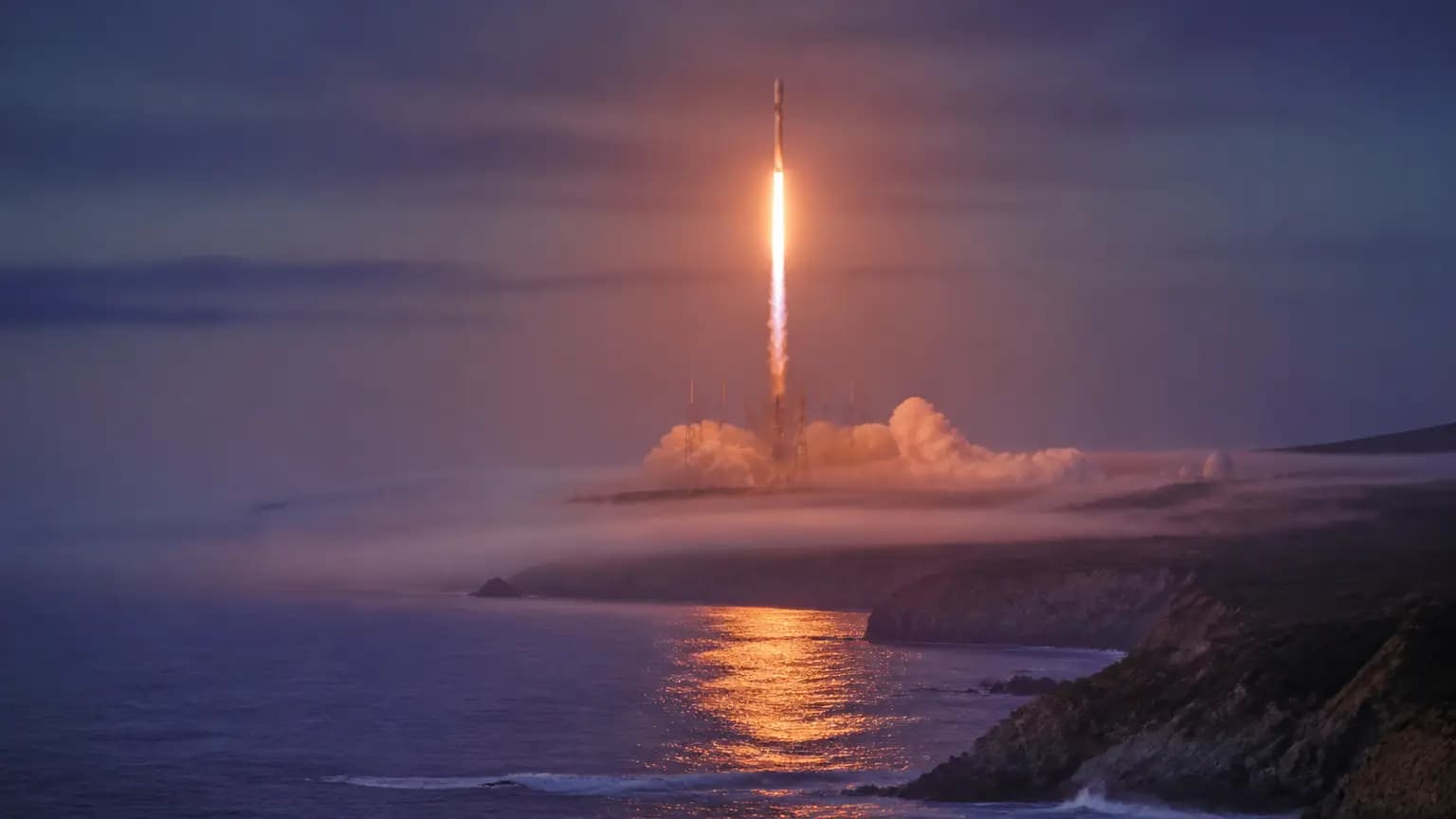
The 1:32 p.m. liftoff from Space Launch Complex-4 sent 21 satellites into orbit for the Space Development Agency's Tranche 1 program — the third such delivery from the Central Coast spaceport. For 805 launch watchers, the afternoon window offered a daylight spectacle along the coast as the Falcon 9 climbed skyward on one of its signature polar trajectories.
A Booster on Its Fourth Flight
The first-stage booster touched down on the droneship after completing its fourth flight, Noozhawk reported — a testament to the reuse model that has become routine for SpaceX operations at SLC-4. Two hours after liftoff, SDA representatives declared the mission successful, adding 21 York Space Systems-built spacecraft to the constellation's data transport layer.
The satellites are designed to detect and track just-launched missiles as part of what the military calls its Proliferated Warfighter Space Architecture. The approach swaps out the old model — a few massive, expensive satellites — for hundreds of smaller, distributed spacecraft. If one fails or a launch doesn't go as planned, the constellation can keep functioning.
A Pause, Then a Course Correction
Thursday's launch came after a deliberate hold. The SDA had paused Tranche 1 deliveries following two earlier launches from Vandenberg in September and October after discovering glitches in the on-orbit satellites built by York and Lockheed Martin Corp.
SDA Director GP Sandhoo told reporters this week that the agency used the downtime to address known issues on the ground rather than discover them in space. Most of the previously launched satellites were "functioning," according to Noozhawk, though orbit-raising problems left some short of their ideal positions. One early satellite remained out of contact with ground controllers entirely.
Contractors implemented both software fixes and hardware changes during the pause. Sandhoo framed the hiccups as part of building complex systems, comparing them to early production aircraft issues — and pointed to the urgency of the threat environment, noting that U.S. forces and allies have faced regular missile attacks during Operation Epic Fury.
Halfway to a Full Tranche
With Thursday's delivery, half of the Tranche 1 transport layer satellites are now in orbit. The full architecture calls for 154 spacecraft: 126 for data transport, 28 for tracking, and four missile-defense demonstration satellites. Three more launches are expected for the transport layer, plus four tracking-layer satellites. The military projects Tranche 1 will become operational in 2027.
Sandhoo said the deployment will deliver "continuous overwatch" to warfighters worldwide — data delivered nearly instantaneously to neutralize any adversary's first-mover advantage.
Why It Matters for the 805
Vandenberg continues to serve as a critical launch site for national defense space missions, and Tranche 1 is shaping up to be a multi-year cadence of SDA deliveries visible — and sometimes audible — from the Central Coast. The SDA's original plan called for roughly monthly launches, but officials now emphasize operational readiness over launch frequency. That means 805 launch fans can expect more SDA missions from SLC-4, but on a schedule tuned to getting the constellation working, not just filling the sky.
Thursday's mission also underscores the growing role of commercial reuse in defense space launches. A booster flying for the fourth time and landing on a droneship — then being prepped for a fifth — is exactly the kind of cycle that makes the proliferated satellite architecture affordable.
For local observers, the takeaway is straightforward: Vandenberg's launch calendar stays busy, SDA missions are a recurring thread, and the Central Coast remains front and center in the nation's space-based missile defense buildout.
Reported by 805.life
Written for Central Coast launch fans, drawing on original reporting by Noozhawk.
Additional Reporting
NoozhawkPublished
July 16, 2026
Topic
Vandenberg
More Launch News
 Vandenberg
SpaceX launches a classified payload for U.S. Space Force
SpaceX launched a classified payload for the U.S. Space Force from Vandenberg's SLC-4E on Oct. 15 at 5:01 p.m. PDT. Classified National Security Space Launch missions mean no webcast or payload details, but this is a local Western Range launch — the kind of event Central Coast skywatchers can see firsthand. Landing or recovery details weren't noted in the summary.
 Vandenberg
SpaceX Falcon 9 rocket launches 27 Starlink satellites from California
SpaceX launched 27 Starlink satellites on the Starlink 15-25 mission from Space Launch Complex 4 East at Vandenberg SFB, lifting off at 5:28 p.m. PDT. This is a routine but core item for local fans: a Western Range Falcon 9 launch with likely booster return to LZ-4 and Central Coast viewing opportunities.
 Vandenberg
SpaceX to make another attempt to launch 21 data satellites for the Space Development Agency
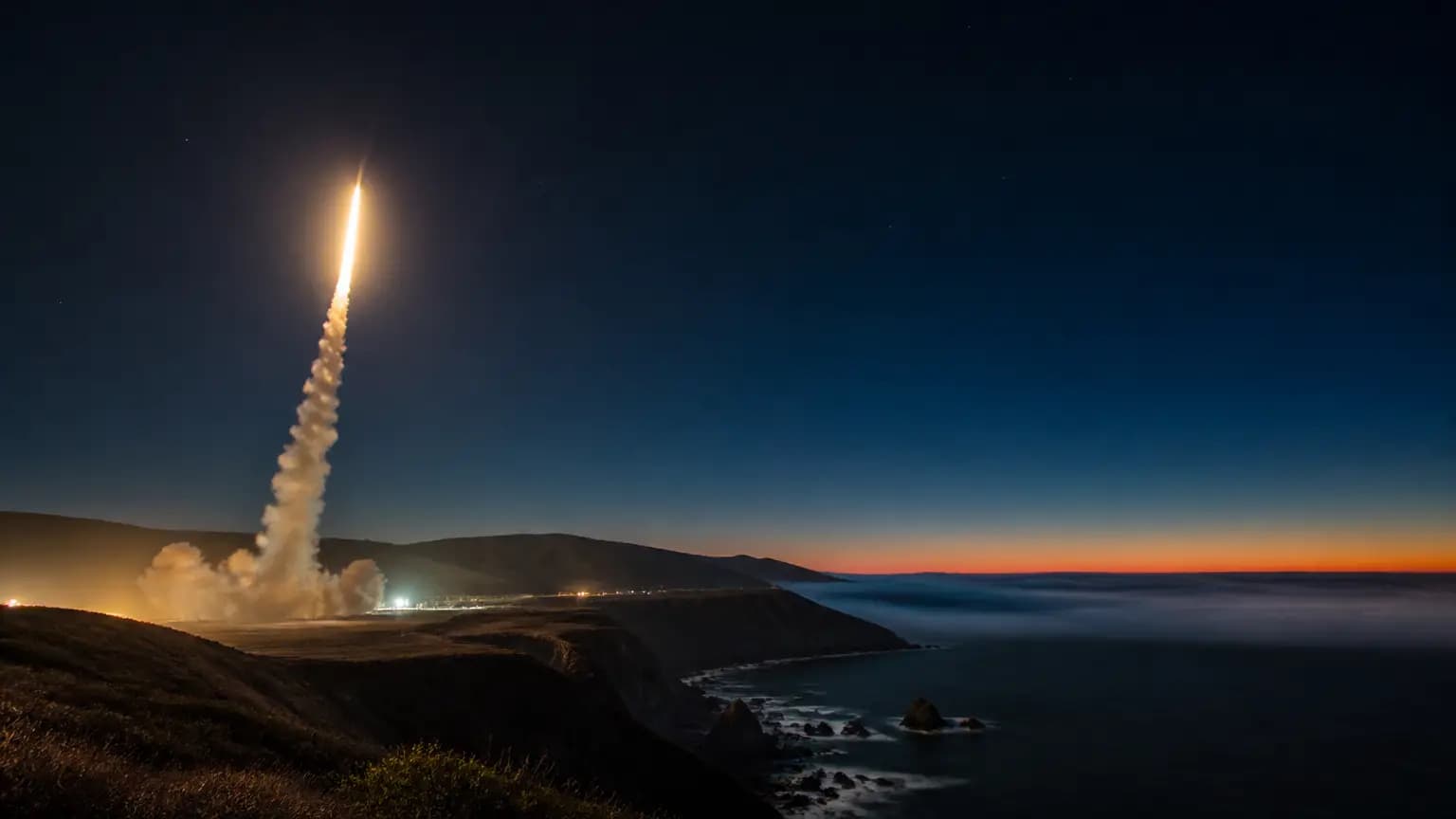
This is a direct Vandenberg launch: a Falcon 9 lifting off from the Central Coast carrying 21 Space Development Agency satellites for the Proliferated Warfighter Space Architecture. Night owls should note the early 12:39 a.m. PDT window, which typically offers dramatic southbound trajectories visible along the coast. Watch for updates on weather or scrub announcements as the window approaches.