Stoke Space’s Nova Pathfinder booster arrives at SLC-14 ahead of 2027 debut
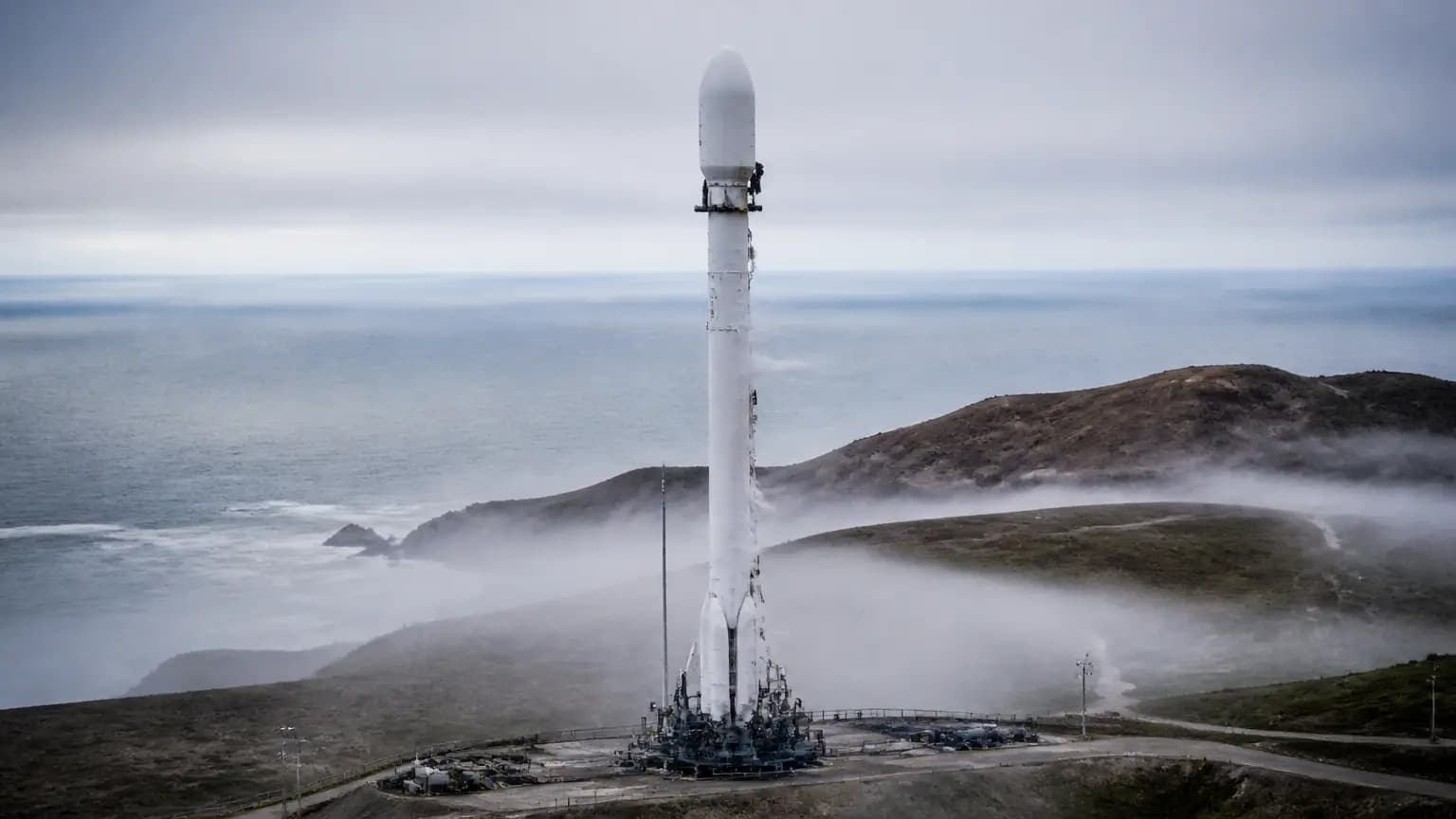
While Central Coast launch fans have been keeping one eye on SpaceX's SLC-4 operations at Vandenberg, an important piece of the next era of reusable launch is taking shape on the other side of the country — and it's worth paying attention to now.
As NASASpaceflight reported, Stoke Space's first Nova Pathfinder booster arrived at Space Launch Complex 14 (SLC-14) at Cape Canaveral Space Force Station on Nov. 22, following a 17-day cross-country road trip from Washington. The booster has entered the pad's Horizontal Integration Facility ahead of a wet dress rehearsal campaign — the first time a rocket has occupied the historic pad since the 1960s.
Why Vandenberg fans should care
The immediate action is in Florida, but there's a real reason 805 launch watchers should track Stoke. Nova is designed as a fully reusable two-stage rocket, and that second stage is the genuinely novel part. Rather than using ablative materials or ceramic tiles for reentry — the approach that has shaped how every reusable booster flown from Vandenberg comes home — Nova's upper stage integrates its hydrolox Andromeda propulsion system directly into an actively cooled, ductile metallic heat shield. Per NASASpaceflight, circulating cryogenic propellant through the shield during entry is designed to let the stage endure repeated thermal cycles with minimal inspection between flights.
If that architecture works, it changes the economics of the small-to-medium launch market that Vandenberg serves so well with polar and sun-synchronous orbits. And for a community that has grown used to watching boosters land on droneships and barges off the coast, a vehicle whose second stage also flies back is a whole new kind of show — someday potentially visible from our coastline.
Stoke has Vandenberg ties, too: the company has been public about its plans to serve polar and sun-synchronous orbits from the West Coast once Nova is flying from Florida, and SLC-14's activation is a meaningful step in building out the multi-pad infrastructure a launch provider needs to reach that point. The rebuilt Florida pad proves the company can stand up a launch complex from a dormant historic site — a playbook that matters for any future Vandenberg expansion of Nova operations.
From 'Tiny Tanks' to a flight-ready booster
The road to SLC-14 was long. NASASpaceflight detailed a structural qualification campaign at Stoke's Moses Lake Test Site in Washington that included 46 structural test objectives over three weeks, with the flight stage loaded to 115% of expected flight loads and hundreds of strain gauges verifying behavior. Earlier groundwork included material coupon testing and full-diameter, shortened ground test articles — "Tiny Tank 1" was pushed to failure and burst in 2025, while "Tiny Tank 2" stayed within design margins and qualified the Stage 1 aft barrels.
The seven Zenith engines powering the first stage have been put through roughly 10,000 seconds of hot-fire testing over five months, with two qualification engines accumulating 7,647 seconds across 91 starts — about ten times the engine's initial service-life requirement of 760 seconds. Four of the seven flight engines have completed acceptance testing so far.
What's next before launch
Stoke is now targeting an early 2027 inaugural launch. The next milestones, per NASASpaceflight: wet dress rehearsals at SLC-14 that will fill the booster with cryogenic propellants and exercise the newly rebuilt pad infrastructure, followed by installation of the remaining Zenith engines, a first-stage static fire, and eventual mating with the second stage.
The second stage — which completed structural proof testing at Moses Lake in November, including tanks taken to 110% of design pressure and a full hydrolox wet dress rehearsal — is expected to undergo a static fire in December once it's mated with its Andromeda engine. Andromeda itself has logged 242 total starts across 50 hardware configurations since February 2024, with a qualification campaign reaching twice the engine's rated flight life.
For 805 launch fans, the scoreboard now includes one more countdown to watch — even if the first Nova liftoff happens three time zones ahead of us, a successful debut would put a fully reusable rocket one step closer to polar-orbit missions of the kind Vandenberg flies best. Keep your eyes on early 2027.
Reported by 805.life
Written for Central Coast launch fans, drawing on original reporting by NASASpaceflight.
Additional Reporting
NASASpaceflightPublished
November 27, 2026
Topic
Vandenberg
More Launch News
 Vandenberg
Live coverage: SpaceX to launch satellites for U.S. Space Force’s data network
A Falcon 9 is set to launch the USSF-380 mission from Vandenberg SFB, continuing the Space Force's data-relay constellation — this would be the seventh flight in the series. The window opens at 8:39 p.m. PST on Nov. 28, a good evening viewing opportunity for Central Coast launch watchers. Spaceflight Now is providing live coverage.
 Vandenberg
’s Next Mission: SpaceX Rocket Launch Tuesday
A Falcon 9 is set to lift off from SLC-4 on South Base during a Tuesday morning window from 7:55 to 11:55 a.m., with a Wednesday backup window starting at 7:46 a.m. The first-stage booster flying this mission is on its 29th flight, among the more seasoned in the fleet. Morning windows like this often mean good viewing from the Lompoc Valley and surrounding Central Coast vantage points.
 Vandenberg
Live coverage: SpaceX to launch classified payload for the U.S. Space Force
SpaceX is launching a classified U.S. Space Force payload from pad 4E at Vandenberg SFB, with liftoff scheduled during a window opening 7:55 a.m. PST. As the third flight with a 'TH' designation, details will be limited, but this is a homegame launch for Central Coast viewers—watch for possible sonic booms and road closures around the base.