Will Bruey on rethinking the role of pharmaceuticals in low Earth orbit
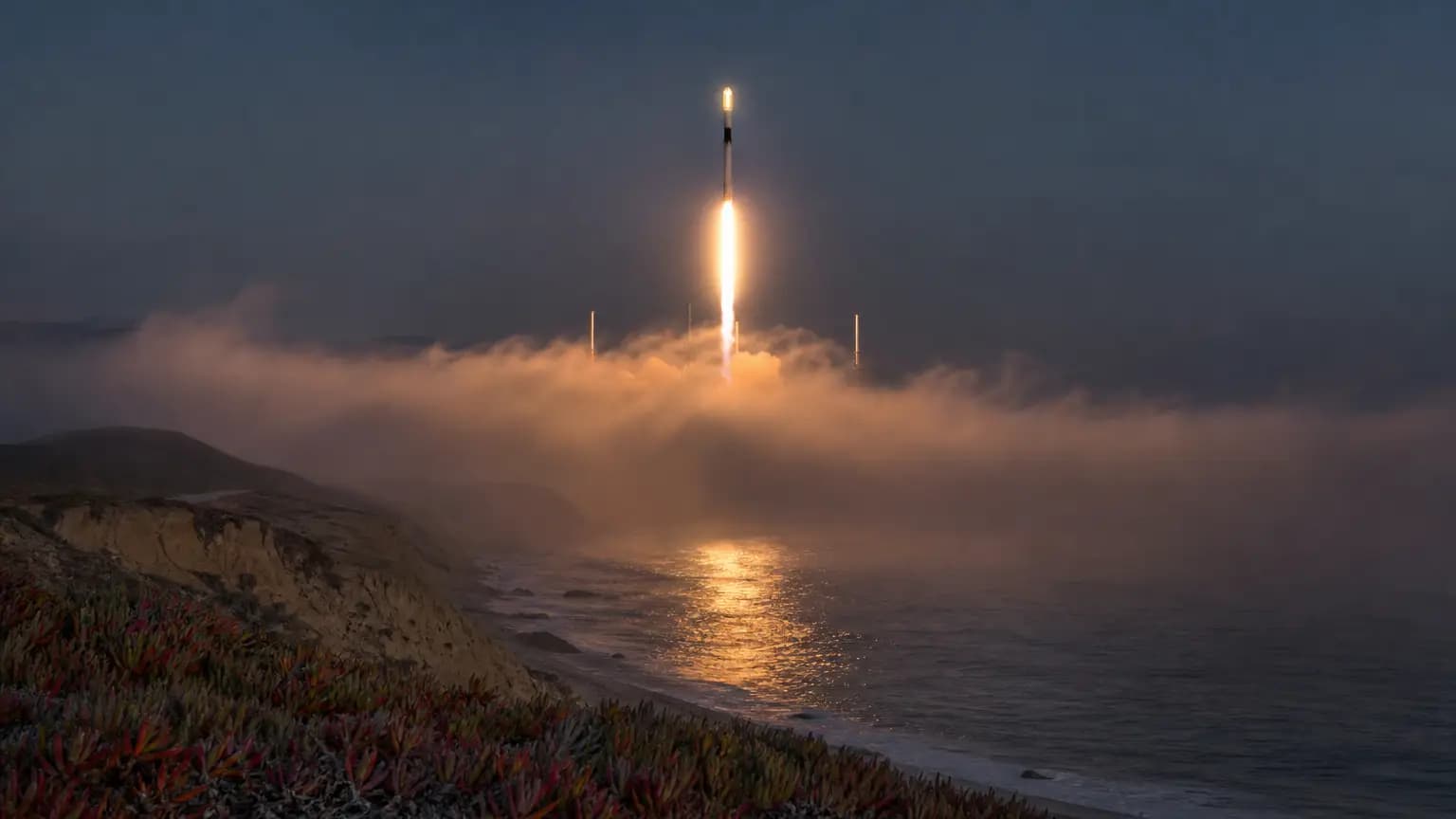
Central Coast launch watchers are used to tracking Starlink missions, NASA payloads, and the occasional classified NRO flight streaking out of Vandenberg Space Force Base. But the emerging market of in-space manufacturing — specifically pharmaceuticals produced in low Earth orbit — represents a quietly growing slice of the launch pie, and it's one that 805 residents should keep on their radar.
That's the takeaway from a recent SpaceNews interview with Varda Space Industries CEO Will Bruey, conducted at the Ascend conference by David Ariosto for the Space Minds podcast. The conversation covered Varda's vision for bridging medicine and low Earth orbit, as well as the company's successful re-entry of its space vehicle over Australia.
What Varda Is Doing — and Why 805 Watchers Should Care
Varda's business model is built on a concept that sounds like science fiction but is becoming routine: sending autonomous manufacturing capsules into orbit, producing pharmaceutical compounds in microgravity, and returning them to Earth for analysis and commercial use. The microgravity environment offers unique conditions for crystal growth and chemical processes that are difficult or impossible to replicate on the ground.
For Vandenberg launch fans, the relevance is twofold. First, Varda's capsules need rides to orbit, and SpaceX's Falcon 9 — the workhorse of SLC-4E at Vandenberg — has already demonstrated it can carry smallsat and rideshare payloads into polar and sun-synchronous orbits. As Varda scales operations, the demand for reliable, frequent launch slots from the West Coast could increase, adding variety to a manifest already packed with Starlink and government missions.
Second, Varda's re-entry operations are worth watching. The company's first successful capsule recovery touched down over Australia, as SpaceNews reported, but future mission profiles and landing zones will evolve as the company refines its approach. Re-entry dynamics, trackable from multiple vantage points depending on trajectory, are always a draw for the dedicated observers who line Highway 1 and the surrounding Santa Barbara County coastline whenever hardware comes home.
The Bigger Picture for the Central Coast
Vandenberg's unique advantage has always been its polar and sun-synchronous launch trajectories, which send vehicles southward rather than eastward. That geometry makes the base ideal for Earth observation satellites, weather spacecraft, and increasingly, commercial payloads that need specific orbital inclinations. In-space manufacturing companies like Varda represent a new customer category that doesn't fit neatly into the traditional telecom or defense boxes.
SpaceNews noted that Bruey discussed the "evolving space sector" during the Ascend panel, and that evolution is visible right here on the Central Coast. The 805 has watched Vandenberg transform from a purely military and government installation into a hub for commercial activity, with SpaceX's presence at SLC-4E driving an unprecedented launch cadence. Companies like Varda are part of the next wave — commercial firms that aren't just launching satellites but treating orbit as a place to do business and manufacture products.
The implications for the local launch-watching community are practical. More diverse payloads mean more varied mission profiles, which could translate into different launch windows, trajectory variations, and potentially new types of re-entry events to track. Sonic booms from booster recoveries have become familiar to Lompoc and Santa Maria residents, but capsule re-entries — if future missions route over or near the Pacific — would add another dimension to the local space-watching experience.
Looking Ahead
Varda is still in its early stages, and the company has plenty of technical and regulatory hurdles to clear before in-space pharmaceutical manufacturing becomes routine. But the trajectory is clear: low Earth orbit is transitioning from a place we visit to a place we use. For a Central Coast community that has front-row seats to some of the most active launch operations in the country, that transition is worth following closely.
As the commercial space sector continues to diversify, expect to see more missions like Varda's filling out Vandenberg's manifest — and more reasons to look up from the 805.
Reported by 805.life
Written for Central Coast launch fans, drawing on original reporting by SpaceNews.
Additional Reporting
SpaceNewsPublished
July 23, 2026
Topic
Vandenberg
More Launch News
 Vandenberg
SpaceX Falcon 9 to launch classified mission for U.S. Space Force from West Coast
A classified U.S. Space Force mission launching from the West Coast points to Vandenberg SFB, where national security Falcon 9 flights originate from SLC-4E. The 7 a.m. PDT window offers Central Coast fans a convenient morning viewing opportunity. As a classified payload, details will be sparse, but expect typical Western Range road and beach closures ahead of liftoff.
 Vandenberg
Google just picked SpaceX for its first step into orbital AI
Google's first Project Suncatcher AI satellite is set to fly on SpaceX's Transporter-18 rideshare, another sign of growing rideshare demand from tech and AI companies. Transporter missions typically lift off from Vandenberg SLC-4E, so Central Coast launch watchers may get a local viewing opportunity. Details are thin, so check the official mission page for launch date and range status.
 Vandenberg
Live coverage: SpaceX to launch 27 Starlink V2 Mini satellites on Falcon 9 rocket from Vandenberg
A Falcon 9 is set to carry 27 Starlink V2 Mini satellites from Vandenberg's SLC-4E, with the launch window opening at 6:47 p.m. PDT — an evening liftoff that should be visible across the Central Coast. It marks the 81th Starlink mission of the year, continuing SpaceX's high launch cadence on the Western Range.