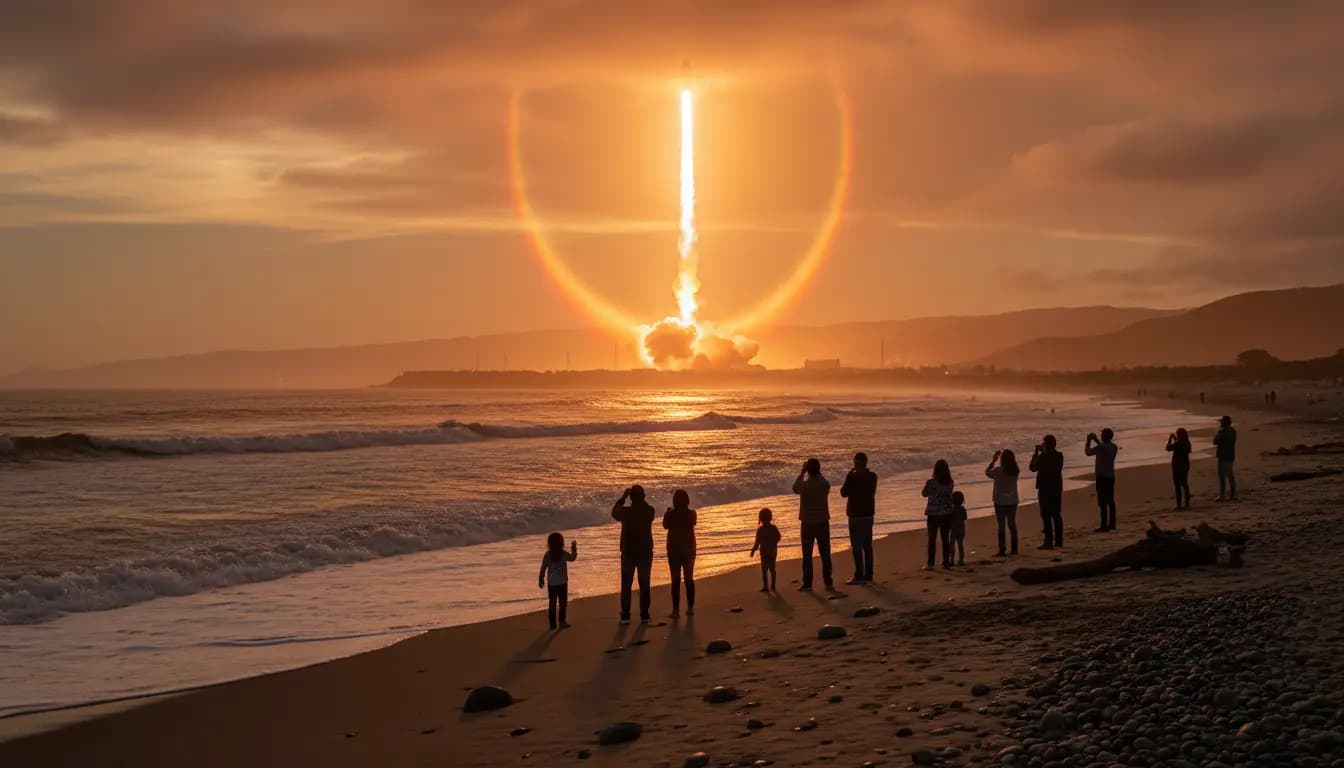
Your First Vandenberg Launch: A Beginner's Guide to Watching Rockets from the 805
Never seen a rocket launch in person? Here's everything you need to know about watching SpaceX and other rockets lift off from Vandenberg, right here on the Central Coast.
Watching a rocket launch from Vandenberg Space Force Base is one of the most awe-inspiring experiences you can have on California's Central Coast. Whether you're a longtime resident of the 805 or just visiting, witnessing these magnificent machines defy gravity and soar into space will leave you speechless and eager for the next launch.
The sensory experience of a rocket launch is unlike anything else. During daylight launches, you'll see the rocket as a bright white dot ascending into the sky, trailing a distinctive plume of exhaust that can stretch for miles. Night launches, however, are truly spectacular and worth staying up late for. The rocket appears as an intensely bright light that can illuminate the entire coastline, visible for hundreds of miles up and down California. The exhaust plume glows against the dark sky like a cosmic brushstroke, often creating ethereal shapes as it disperses in the upper atmosphere.
The sound arrives several minutes after you see the rocket, since light travels much faster than sound. When it does hit, you'll hear a deep rumbling that builds in intensity, followed by crackling sounds as the sonic waves reach you. The ground beneath your feet will vibrate, and you might feel the vibrations in your chest. If the rocket has a booster that lands back on the base, you'll experience additional sonic booms that can rattle windows and car alarms for miles around.
For the best viewing experience, plan to arrive at your chosen spot at least 30 to 45 minutes before the scheduled launch time. This gives you time to find parking, set up your equipment, and settle in. Launches can be delayed or scrubbed due to weather, technical issues, or marine traffic, so patience is essential. Sometimes you might wait hours, and occasionally launches are postponed entirely.
The closest public viewing location is Surf Beach and Ocean Park in Lompoc, sitting just three miles from the launch pads. This proximity offers an unparalleled view and the most intense sound experience, but parking can be challenging during popular launches. Jalama Beach County Park, about 20 miles south, provides excellent views and is particularly favored by photographers for its dark skies and dramatic coastal foreground. If you prefer a more urban setting with amenities nearby, Shoreline Park in Santa Barbara offers wonderful views about 60 miles south, with the added benefit of restaurants and hotels within walking distance.
Dressing appropriately is crucial for your comfort during what can be a long wait. The Central Coast can be surprisingly cold, especially during early morning or evening launches, so bring layers including a warm jacket, hat, and comfortable shoes. Binoculars will enhance your viewing experience, allowing you to see details of the rocket's ascent that are invisible to the naked eye. For night launches, bring a camera with a tripod if you want to capture the spectacular light show, though don't spend so much time behind the lens that you miss experiencing the moment firsthand.
To stay informed about upcoming launches, check 805.life/launches/schedule for the most current information. Launch times can change frequently, and this resource will help you plan accordingly. Many launches occur in the early morning hours when weather conditions are most favorable, so be prepared for some very early wake-up calls.
Several things consistently surprise first-time viewers. Night launches are incredibly bright, often lighting up the landscape like daylight and creating dramatic shadows. The delay between seeing the rocket and hearing it can be confusing initially, but this lag time is completely normal. Those sonic booms from landing boosters can be startling if you're not expecting them, arriving several minutes after the initial launch sounds and sometimes multiple times as different rocket stages complete their missions.
The rocket's exhaust plume often persists in the sky long after the rocket disappears from view, creating beautiful, slowly dispersing clouds that can last for 30 minutes or more. During twilight launches, these plumes can be illuminated by the sun while the ground is still dark, creating an otherworldly spectacle.
Watching a Vandenberg launch connects you to humanity's greatest adventure while showcasing the natural beauty of California's coast. Whether it's your first launch or your fiftieth, each one offers a unique experience that reminds you of the incredible achievements possible when science, engineering, and human determination come together under the vast Pacific sky.
More Articles
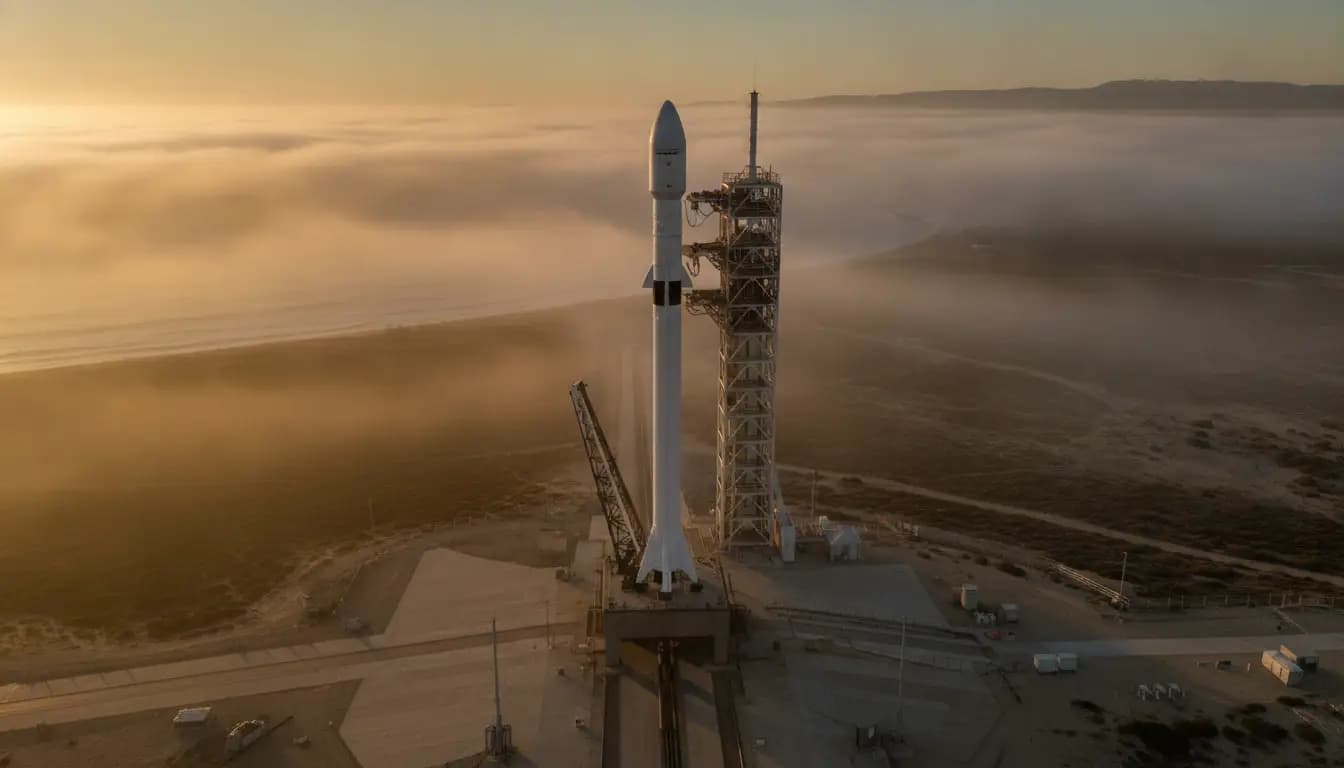
Falcon 9 Set to Launch Starlink Group 15-15 on October 20
Everything you need to know about the upcoming SpaceX Falcon 9 launch from Vandenberg Space Force Base, targeting Tuesday, October 20, 2026.
Launches Oct 20, 2026
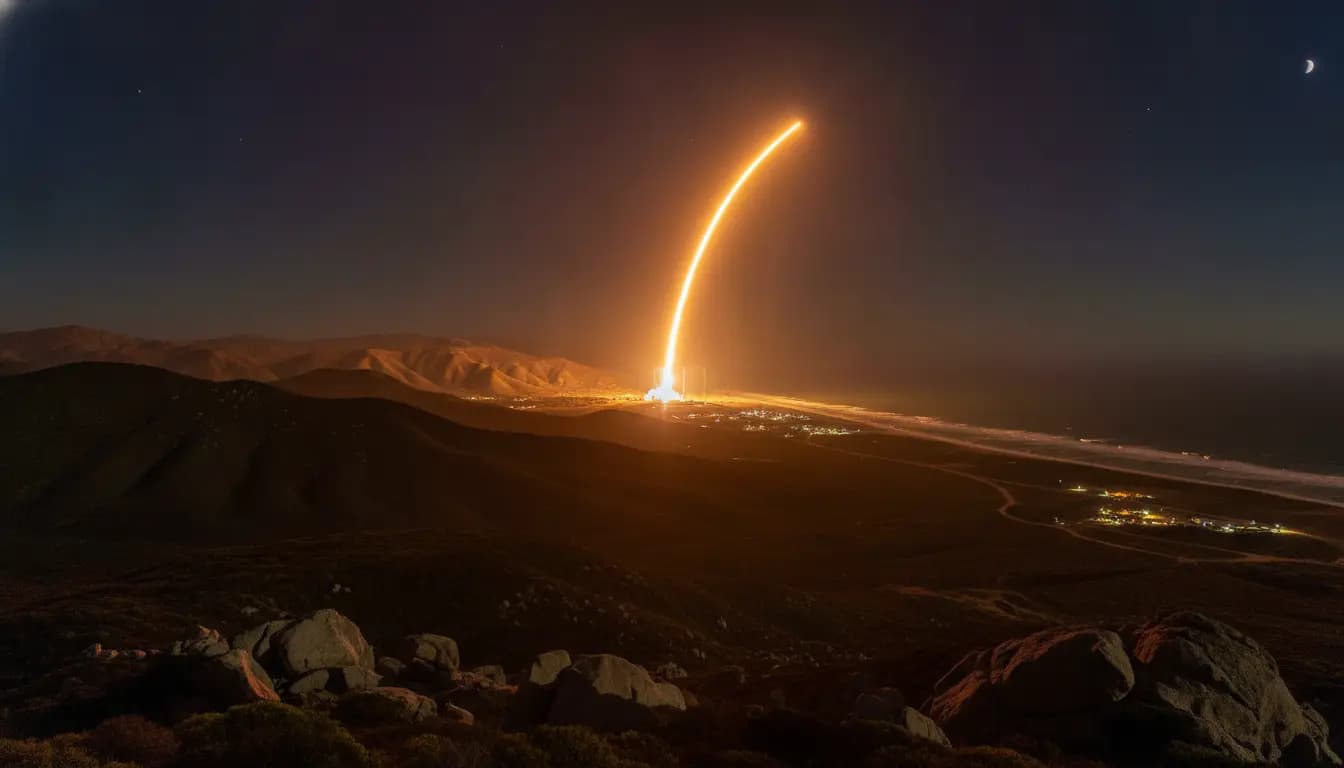
SpaceX Falcon 9 Successfully Launches Starlink Group 15-25
Recap of the SpaceX Falcon 9 launch from Vandenberg Space Force Base on Monday, October 12, 2026. Mission successful.
Launched Oct 12, 2026
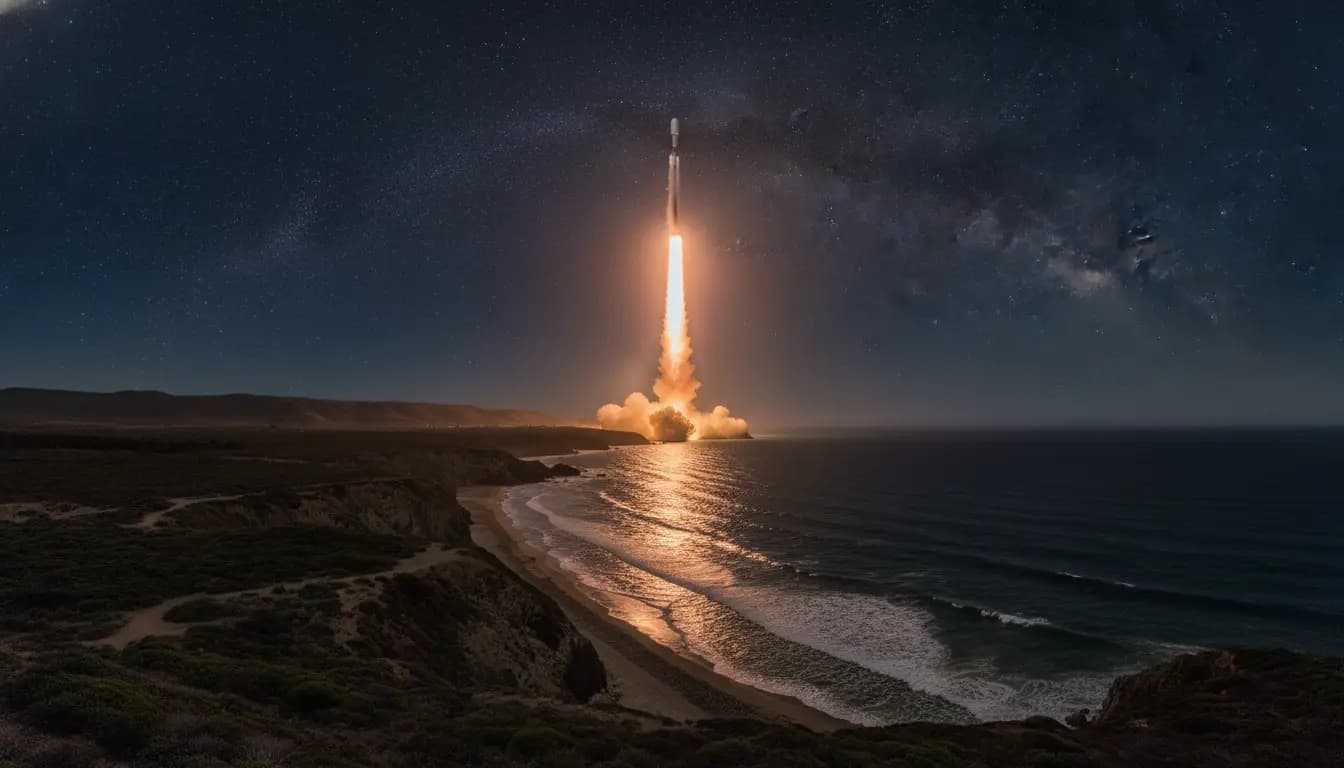
SpaceX Falcon 9 Successfully Launches SDA Tranche 1 Transport Layer A
Recap of the SpaceX Falcon 9 launch from Vandenberg Space Force Base on Saturday, October 10, 2026. Mission successful.
Launched Oct 10, 2026