Vandenberg's Record-Breaking 2026: A Launch Cadence Like Never Before
With multiple launches per week, Vandenberg Space Force Base is on pace for its busiest year ever. Here's what's driving the surge and what it means for the 805.
**The Central Coast's Space Age Renaissance: How Vandenberg is Launching the Region into Economic Orbit**
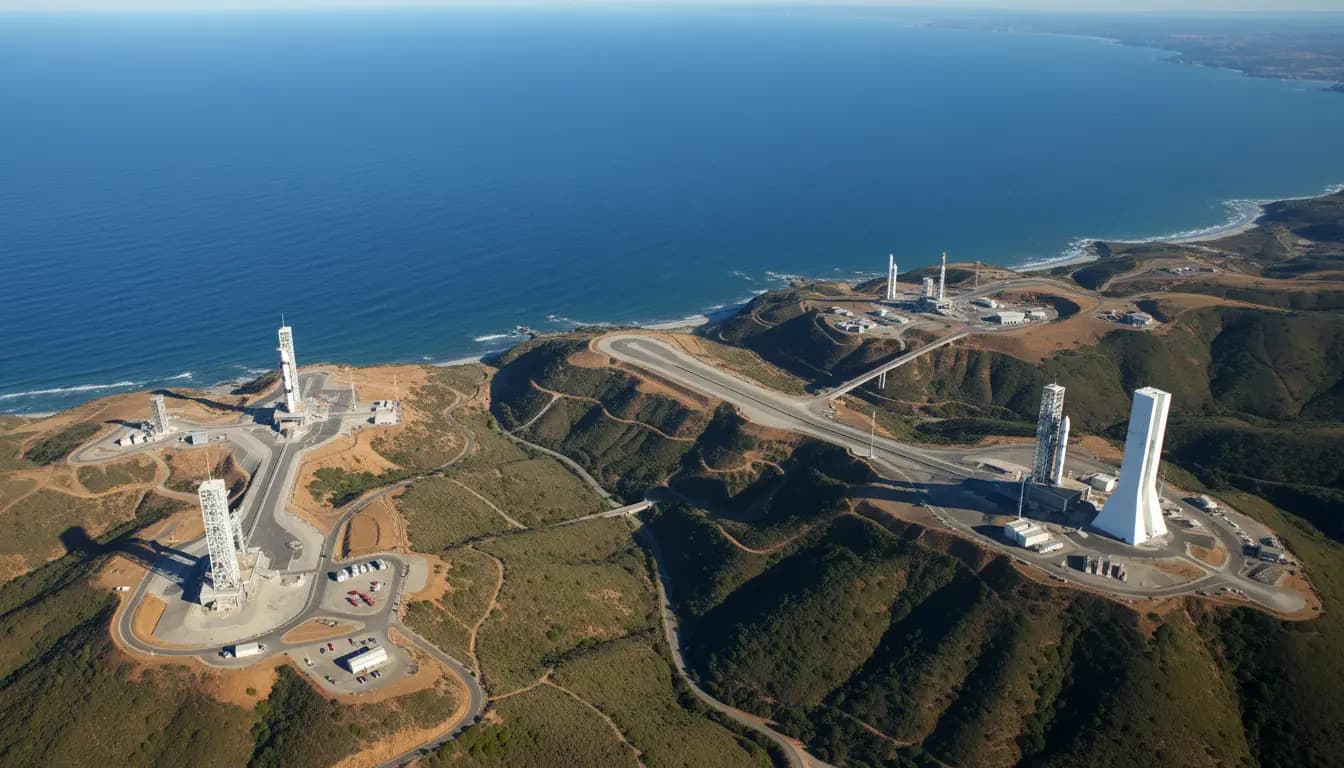
The sleepy agricultural communities of northern Santa Barbara County are experiencing something unprecedented: a space boom that's transforming the 805 region into one of America's premier launch destinations. Vandenberg Space Force Base, long overshadowed by Florida's Cape Canaveral, has emerged as the nation's go-to location for polar orbit missions, with an increasingly frenetic launch schedule that's bringing new energy and economic opportunity to the Central Coast.
The numbers tell the story of this remarkable transformation. What was once a modest launch facility conducting perhaps six missions annually has evolved into a bustling spaceport averaging two to three launches per month in 2026. The primary driver of this surge is SpaceX's relentless expansion of its Starlink internet constellation, which requires the polar and sun-synchronous orbits that Vandenberg's geography makes possible. From Space Launch Complex 4 East, Falcon 9 rockets regularly pierce the marine layer, carrying dozens of internet satellites that will eventually provide global broadband coverage to underserved communities worldwide.
This consistent launch tempo from SLC-4E represents more than just technological achievement—it's a economic engine that's breathing new life into communities from Lompoc to Santa Maria. Local hotels that once struggled to fill rooms outside of peak tourist season now maintain healthy occupancy rates year-round, as aerospace contractors, media crews, and space enthusiasts flock to the region. The Hampton Inn in Lompoc reports booking months in advance for launch weekends, while bed-and-breakfasts in Solvang have discovered an entirely new clientele of engineers and space industry professionals.
Adding to this momentum is the return of Northrop Grumman's Minotaur IV rocket program from Space Launch Complex 8, focusing on critical military and intelligence payloads that require the security and specialized capabilities that Vandenberg provides. These missions, while less frequent than the commercial Starlink deployments, bring a different economic dynamic to the region. The Minotaur program attracts defense contractors and government personnel who often extend their stays, exploring the Central Coast's wine country and coastal attractions while conducting business at the base.
Local restaurants have adapted to serve this new wave of visitors, with establishments like the Industrial Eats in Buellton and Far Western Tavern in Guadalupe becoming unofficial gathering spots for the aerospace community. The economic ripple effects extend beyond hospitality, as local suppliers, transportation companies, and service providers have all benefited from the increased activity. The city of Lompoc estimates that launch-related tourism now contributes over $15 million annually to the local economy, a significant boost for a region historically dependent on agriculture and defense employment.
Perhaps most remarkably, Vandenberg's launch surge has democratized space exploration for Central Coast residents. Unlike Cape Canaveral, where viewing opportunities are often crowded and commercialized, locals can watch rockets climb toward the stars from pristine beaches at Surf and Jalama, or gather at Surf Beach County Park just miles from the launch pads. These launches have become community events, with families spreading blankets on the sand to witness history in the making.
The transformation extends beyond economics to regional identity. The Central Coast, long known for wine, agriculture, and coastal beauty, now proudly claims its place in the space age. Local schools have expanded their STEM programs, inspired by having a world-class spaceport in their backyard, while tourism boards have begun marketing "space coast" experiences alongside traditional attractions.
As 2026 progresses, Vandenberg's position as America's polar orbit capital appears secure, with additional commercial providers expressing interest in using the facility. For the 805 region, this represents more than just increased air traffic—it's a fundamental shift toward a future where the Central Coast serves as a gateway to the stars, bringing prosperity and pride to communities that are literally launching the next chapter of human space exploration.
More Articles
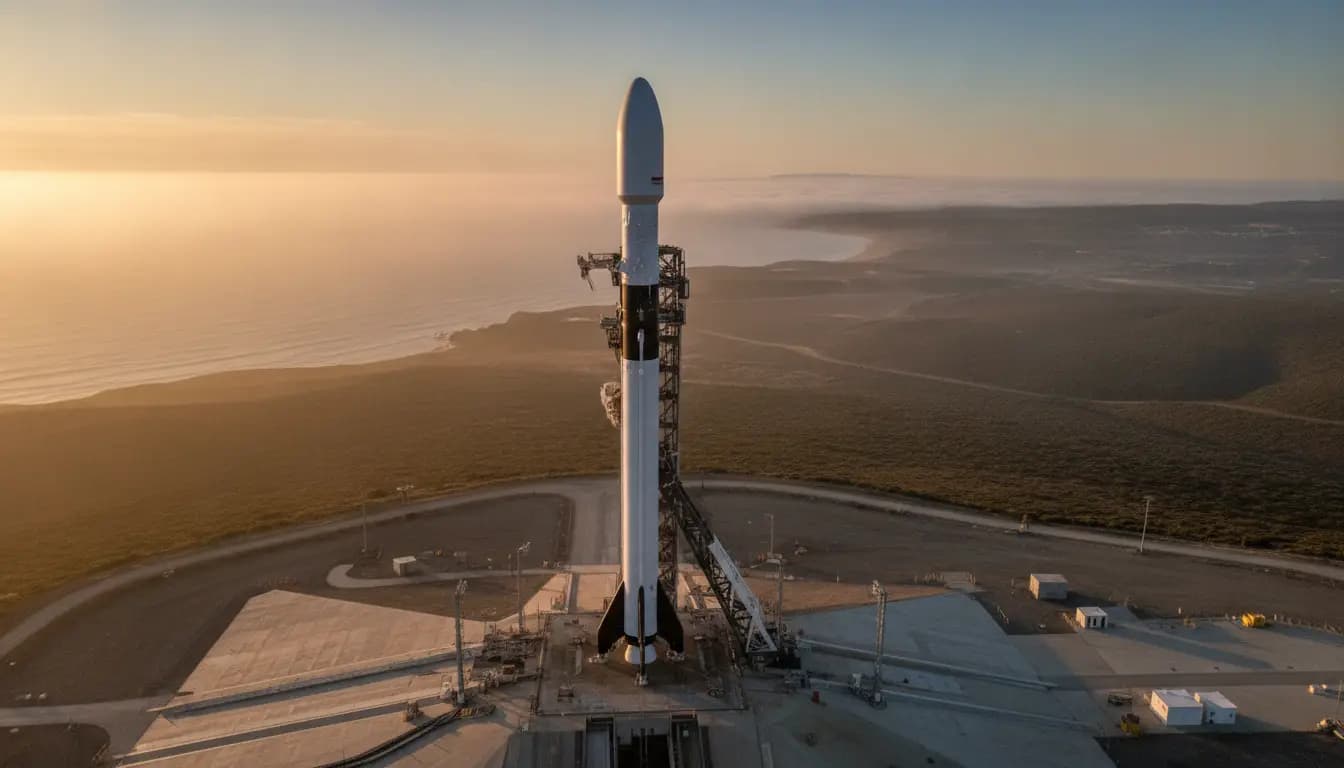
Falcon 9 Set to Launch Starlink Group 15-16 on October 23
Everything you need to know about the upcoming SpaceX Falcon 9 launch from Vandenberg Space Force Base, targeting Friday, October 23, 2026.
Launches Oct 23, 2026
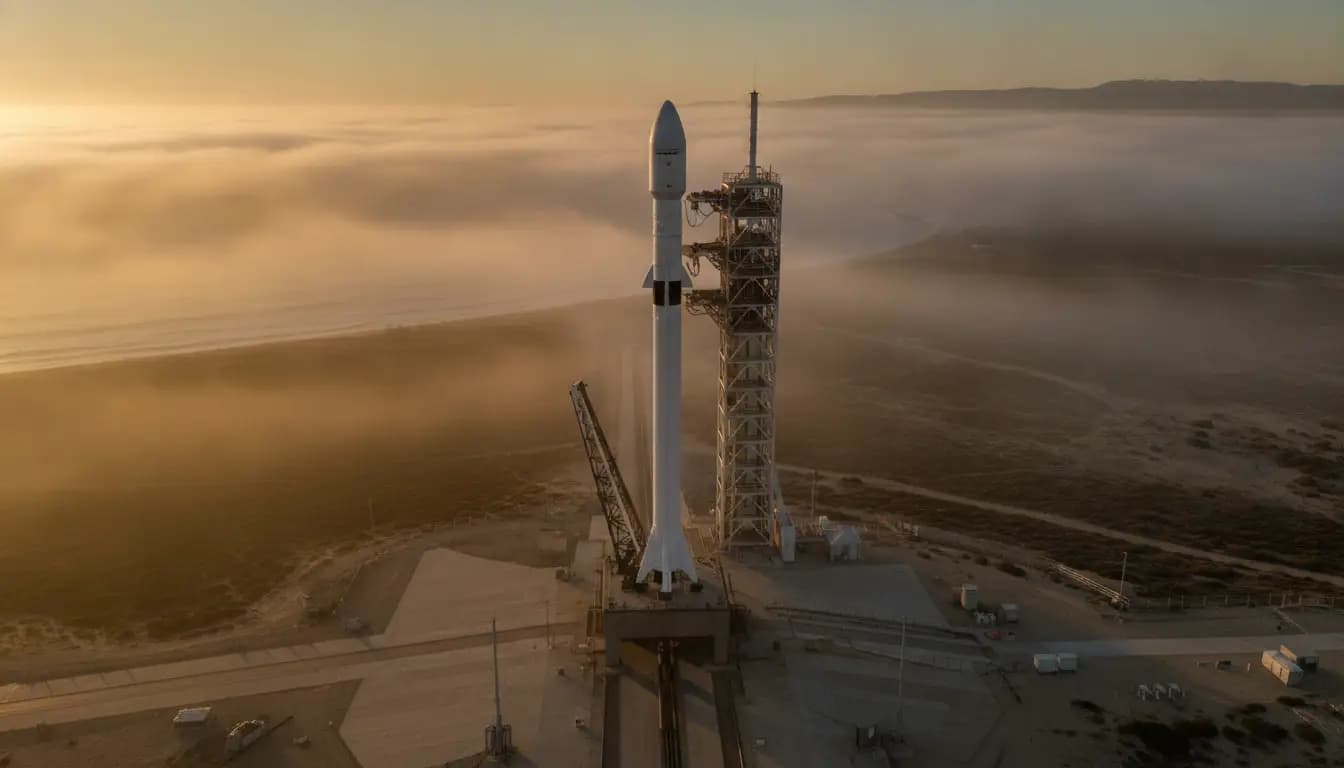
Falcon 9 Set to Launch Starlink Group 15-15 on October 20
Everything you need to know about the upcoming SpaceX Falcon 9 launch from Vandenberg Space Force Base, targeting Tuesday, October 20, 2026.
Launches Oct 20, 2026
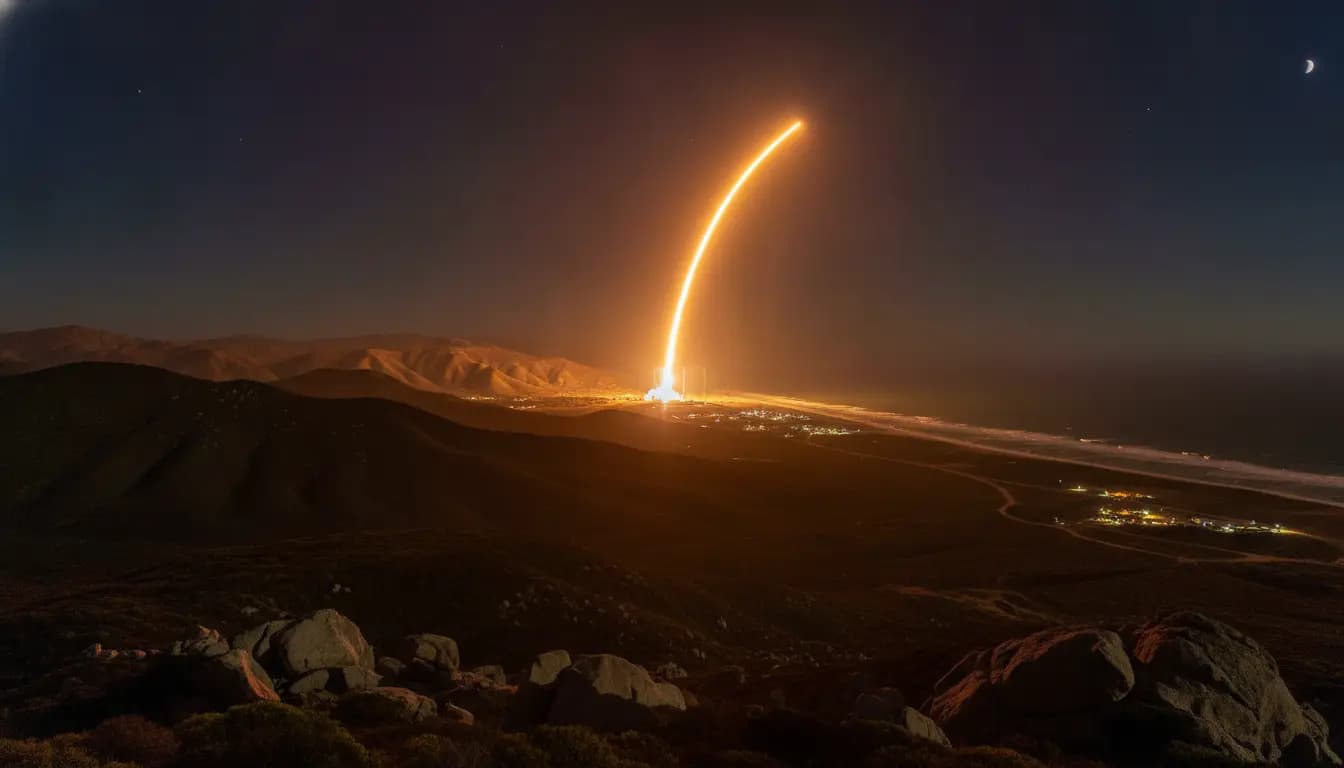
SpaceX Falcon 9 Successfully Launches Starlink Group 15-25
Recap of the SpaceX Falcon 9 launch from Vandenberg Space Force Base on Monday, October 12, 2026. Mission successful.
Launched Oct 12, 2026