Why Do So Many Rockets Launch from Vandenberg? The Geography Behind the Pad
There's a reason Vandenberg is one of only two major launch sites in the US. It comes down to physics, geography, and a clear shot over the Pacific Ocean.
**Why Vandenberg Space Force Base Is America's Gateway to the Poles**
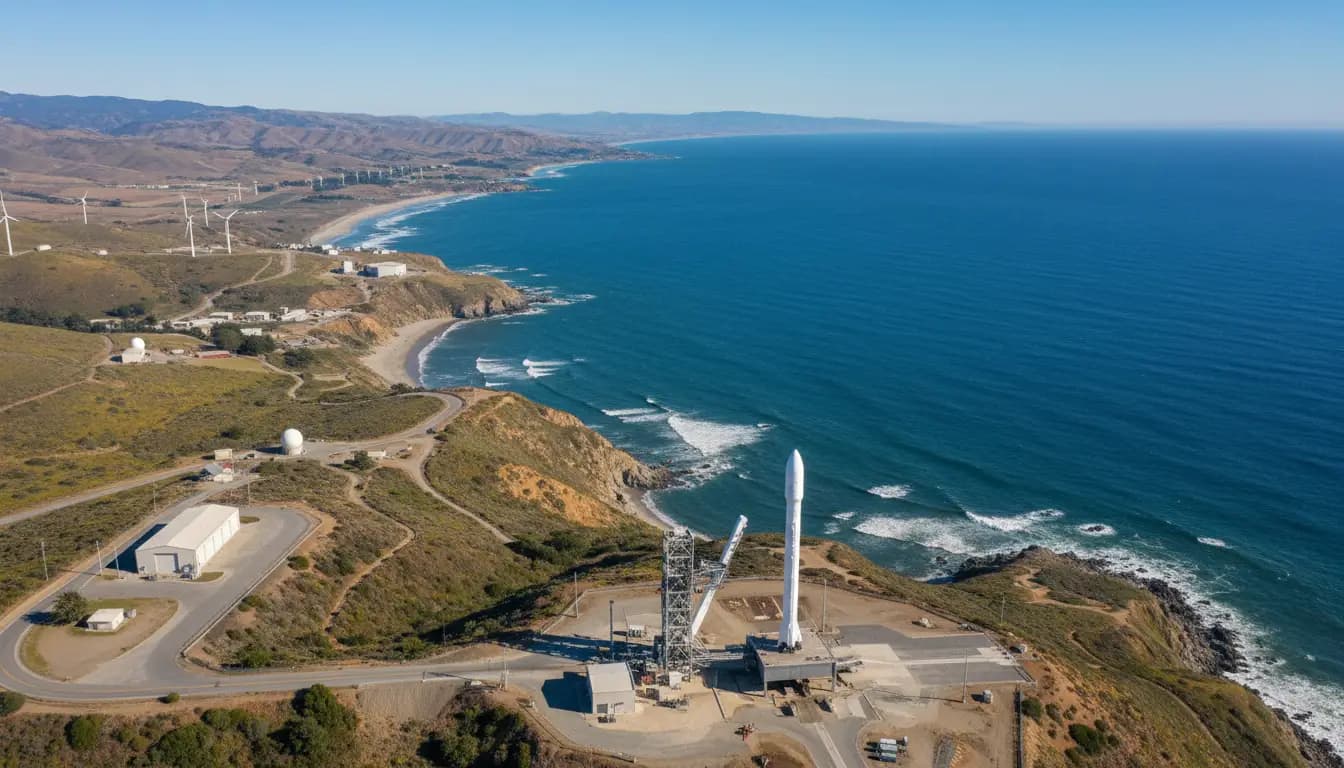
On California's scenic Central Coast near Lompoc, Vandenberg Space Force Base serves as America's premier launch site for missions requiring polar and sun-synchronous orbits. While most people associate space launches with Florida's Cape Canaveral, Vandenberg plays an equally crucial role in our space infrastructure, thanks to its unique geographic advantages and specialized mission profile.
The key to understanding Vandenberg's importance lies in orbital mechanics and geography. When launching satellites into polar orbits—trajectories that pass over Earth's north and south poles—rockets must travel southward from the launch site. From Vandenberg, this southern trajectory carries rockets safely over the Pacific Ocean, avoiding populated areas entirely. Attempting the same polar launch from Florida would be impossible, as the flight path would cross heavily populated regions of the Caribbean and South America, creating unacceptable safety risks.
This geographic advantage makes Vandenberg indispensable for sun-synchronous orbits, a special type of polar orbit where satellites maintain the same relationship with the sun throughout their mission. These orbits are perfect for Earth observation satellites, weather monitoring systems, and reconnaissance missions because they ensure consistent lighting conditions during each pass over any given location on Earth's surface.
Vandenberg's space launch history stretches back to 1958, when it began operations as a missile testing range during the Cold War. The site's remote location and westward-facing coastline made it ideal for testing intercontinental ballistic missiles, which needed to fly over the Pacific to designated impact zones. This military heritage naturally evolved into space operations, as the same geographic features that made it perfect for missile testing also made it ideal for polar satellite launches.
The differences between Vandenberg and Cape Canaveral reflect the fundamental physics of orbital mechanics. Florida's location provides an advantage for reaching equatorial orbits because launches can take advantage of Earth's rotational speed, which is greatest at the equator. This eastward boost helps rockets reach the high velocities needed for geostationary orbits, where satellites remain fixed above one point on Earth's surface. Conversely, Vandenberg's location is optimized for polar trajectories, where Earth's rotation provides little benefit but the southern flight path over the Pacific is essential for safety.
SpaceX's Starlink constellation perfectly illustrates how both launch sites complement each other. The company uses Cape Canaveral for most Starlink missions, placing satellites in inclined orbits that provide coverage to populated areas between approximately 53 degrees north and south latitude. However, Vandenberg handles launches for Starlink's polar shell, extending coverage to Alaska, northern Canada, Greenland, and Antarctica—regions that equatorial satellites cannot effectively serve.
The Pacific Ocean beneath Vandenberg's flight paths provides an enormous safety buffer. Unlike other potential launch sites, the rocket's trajectory encounters no populated landmasses for thousands of miles, allowing mission planners to focus on orbital requirements rather than safety constraints. This ocean corridor has enabled decades of successful missions, from early military reconnaissance satellites to today's commercial Earth observation platforms.
Today, Vandenberg continues evolving to meet modern space needs while maintaining its core advantage: providing safe, reliable access to polar orbits that would be impossible to reach from any other major U.S. launch facility.
More Articles
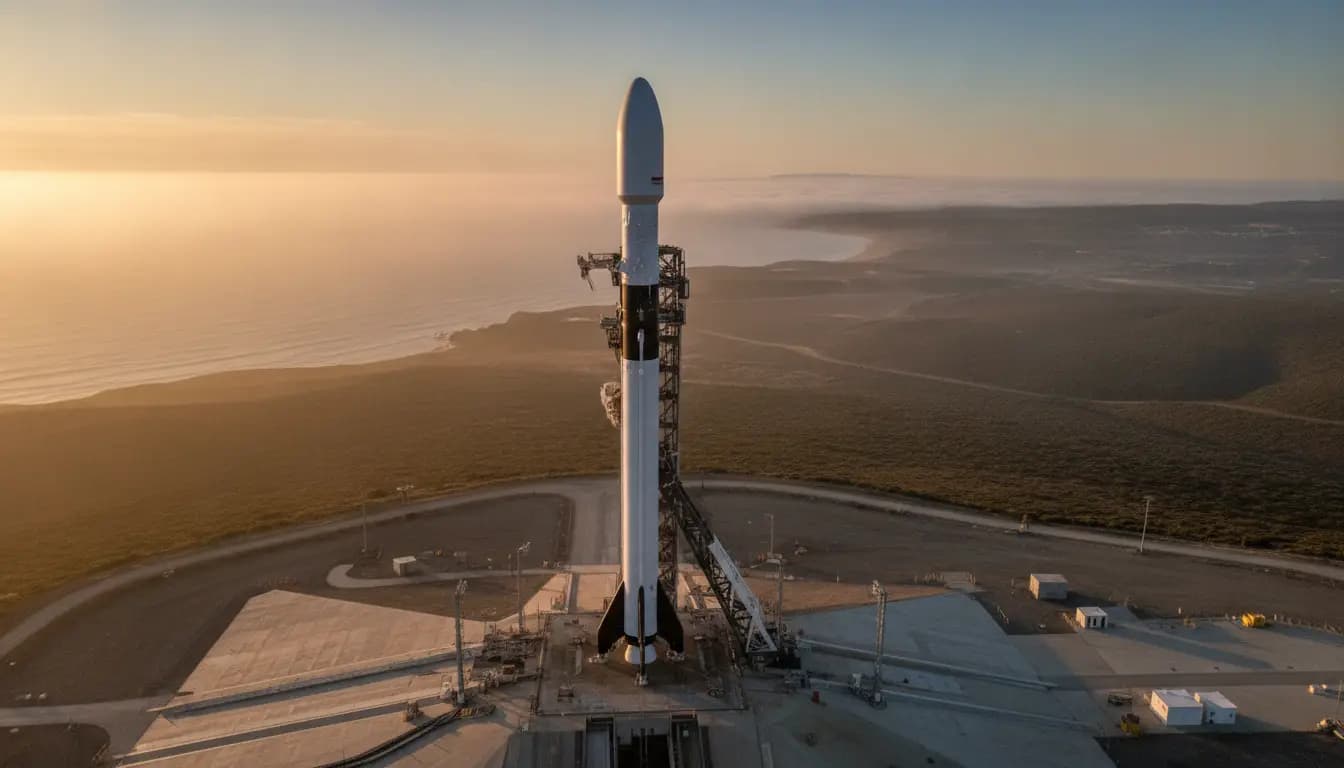
Falcon 9 Set to Launch Starlink Group 15-16 on October 23
Everything you need to know about the upcoming SpaceX Falcon 9 launch from Vandenberg Space Force Base, targeting Friday, October 23, 2026.
Launches Oct 23, 2026
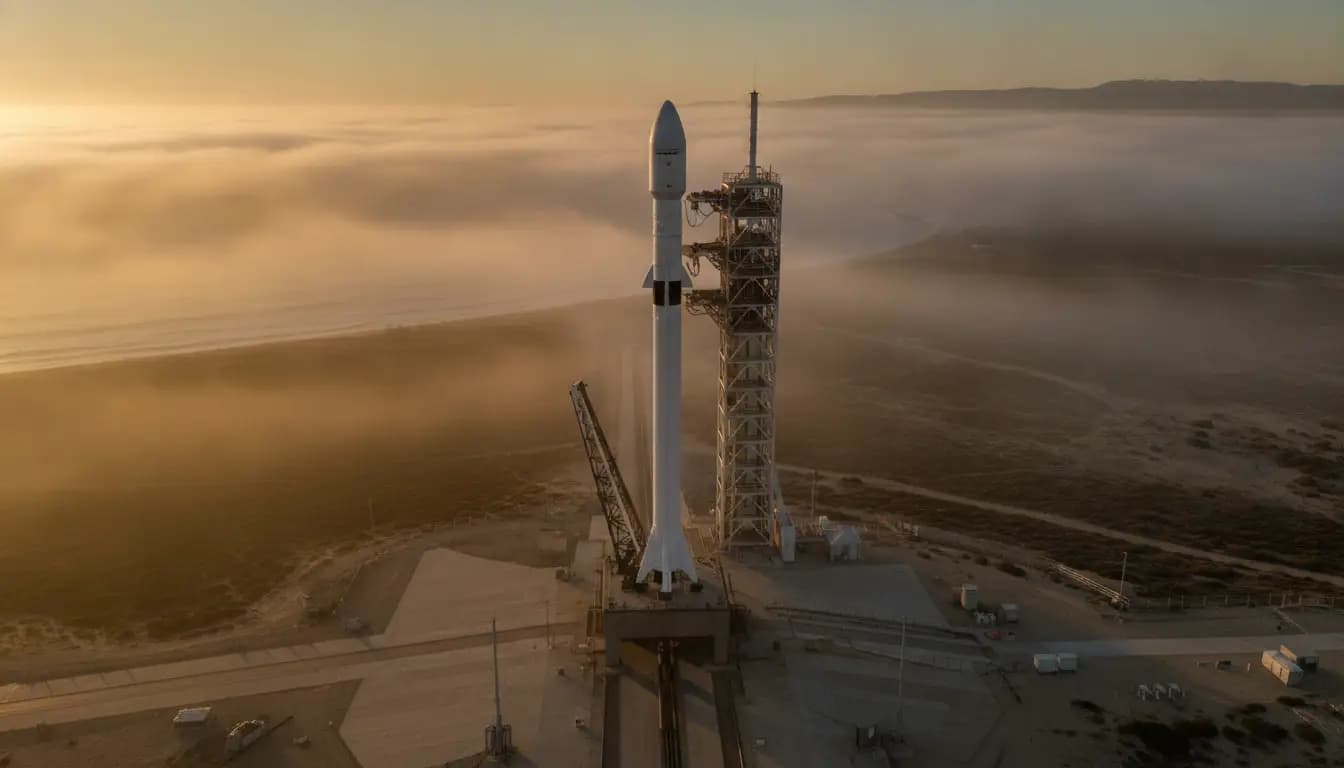
Falcon 9 Set to Launch Starlink Group 15-15 on October 20
Everything you need to know about the upcoming SpaceX Falcon 9 launch from Vandenberg Space Force Base, targeting Tuesday, October 20, 2026.
Launches Oct 20, 2026
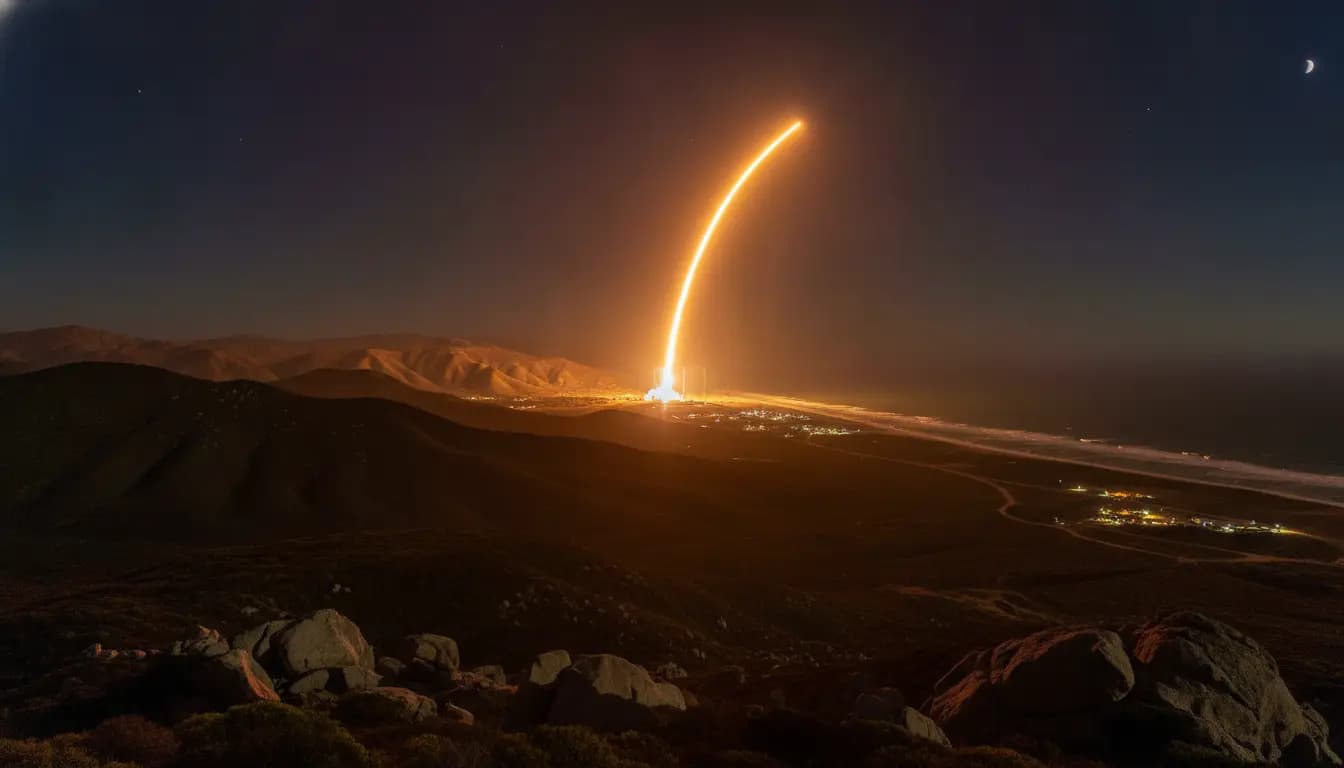
SpaceX Falcon 9 Successfully Launches Starlink Group 15-25
Recap of the SpaceX Falcon 9 launch from Vandenberg Space Force Base on Monday, October 12, 2026. Mission successful.
Launched Oct 12, 2026