Fiscalini Ranch Preserve gets updated plan for future stewardship
A Beloved Coastline, Brought Up to Date
If you've ever made the short drive up Highway 1 from Atascadero to Cambria — past the pines, past Moonstone Beach Drive, just a little farther on Windsor Boulevard — you may have stumbled onto one of the Central Coast's most quietly magnificent open spaces. The 437-acre Fiscalini Ranch Preserve hugs the Pacific coastline, threading through Monterey pine forests, coastal bluffs, riparian corridors along Santa Rosa Creek, and rolling grasslands bright with wildflowers every spring. Entry is free, trails are open from sunrise to sunset, and the place tends to convert first-time visitors into lifelong champions.
Now the organizations responsible for protecting that land have done something nearly as important as saving it: they've finally updated the rulebook for how it gets cared for.
As New Times SLO reported, the Cambria Community Services District (CCSD) approved an updated Fiscalini Ranch Public Access and Resource Management Plan on July 9, 2026 — the first major revision to the document since it was originally adopted in 2003.
More Than a Century of History Behind One Decision
To understand why this update matters, it helps to know what the preserve has survived to become.
The land carries deep Indigenous history, with the Salinan and Northern Chumash peoples calling the area home for thousands of years before European settlement. It later became part of the Rancho Santa Rosa Mexican land grant and was eventually subdivided. The Fiscalini family — Italian-Swiss agriculturalists — owned the property for nearly a century, first raising dairy cows and then beef cattle, clearing much of the original forest for grazing pasture in the process.
In 1979 it was sold, and development proposals began to stack up. Developers envisioned houses, a golf course, even a shopping center on the land. But the community of Cambria refused to let it happen. When the first executive director of Friends of the Fiscalini Ranch Preserve refused to stay off the gated property, she was arrested for trespassing — and that arrest became a rallying symbol. By 2000, a coalition of public and private funding finally purchased the land and secured it as a public preserve forever.
The Friends of the Fiscalini Ranch Preserve (FFRP) — a nonprofit born from that original citizen fight — was granted a conservation easement by the CCSD in 2003, the same year the original management plan was adopted. That easement covers the entire ranch and permanently limits land uses to protect its conservation values.
For more than two decades, volunteers with FFRP have groomed trails, removed invasive plants, restored native habitat, and organized monthly docent-led walks. In 2024 alone, FFRP volunteers donated enough hours to equal nearly 2.5 full-time employees. But while the land itself was being actively tended, the document guiding who does what — and how — had not meaningfully changed since the George W. Bush administration.
A Plan That Needed Modernizing
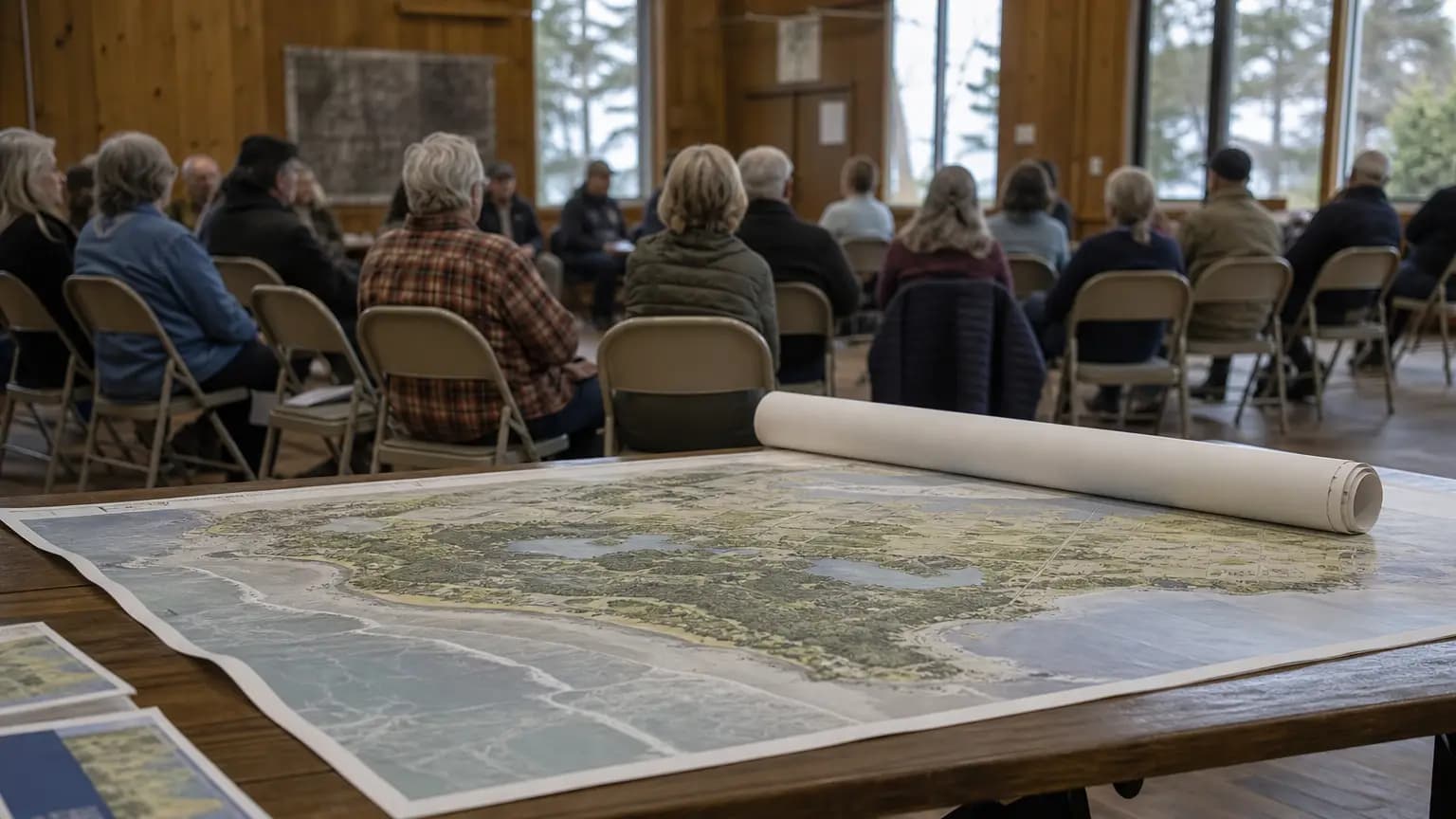
The revision process began in August 2025, when the CCSD board formed an ad hoc committee made up of district directors, staff, and FFRP representatives to examine maintenance practices, unclear expectations, and the district's role going forward. The committee's work, which stretched nearly a year, culminated in the July 9 board vote.
CCSD General Manager Matthew McElhenie said in his July 9 staff report that the update was overdue. The new plan, he said, would allow the district to "clearly define operational roles and responsibilities, establish appropriate oversight and maintenance priorities, and articulate the financial constraints associated with district resources," according to New Times SLO.
Kitty Connolly, FFRP's executive director, explained at the meeting what the practical changes look like. The updated plan, she said, "better defines CCSD's day-to-day management responsibilities, removes outdated references" — things like cattle grazing provisions that would never again apply — "and reinforces the process for making future revisions." As KSBY also reported, the plan also aligns with CCSD's current operational capacity and financial realities, and sets the stage for future projects including the removal of non-native plants and habitat revegetation.
The revised document updates maps and photographs, clarifies agency roles, and adds new sections on funding constraints, daily operations, annual action planning, and how future amendments should be handled. Under the plan, CCSD will continue managing both the East Ranch and the West Ranch unless FFRP — or its successor organization — exercises its option to assume management of the West Ranch.
Trust Built in the Hard Conversations
Perhaps the most significant outcome of the process wasn't the document itself. FFRP Board Chair Dianne Anderson told the CCSD board at the July 9 meeting that the months of negotiation had produced something less tangible but equally valuable.
"We've accomplished more than updating a document," she said. "We've actually built a stronger working relationship between CCSD and FFRP. One based on better communication, growing trust, and mutual respect."
Anderson was candid that the process wasn't always smooth. "There were difficult conversations and differing perspectives," she acknowledged, "but through it all, everyone stayed at the table." That kind of institutional patience — rare in any setting — may be the key ingredient in sustainable stewardship of a place that belongs to everyone.
A central concern throughout the review was ensuring that the updated management plan didn't inadvertently conflict with the conservation easement — the legally binding document that permanently protects the ranch and controls what can and cannot happen on the land. FFRP worked with legal counsel throughout to ensure consistency. Anderson confirmed that "nothing in the updated management plan changes or overrides the conservation easement, which continues to protect the ranch, preserve public access, and guide its stewardship."
Connolly put the two documents in plain terms: the conservation easement is the "controlling document" — permanent, legal, unchangeable — while the management plan is a living "stewardship document" that should be revisited and refreshed as conditions evolve.
The State Coastal Conservancy and FFRP both reviewed and approved the revised plan, waived the typical 45-day notice requirement, and determined no additional public meeting was necessary, according to the staff report cited by New Times SLO.
What It Means for the Central Coast
For day-hikers from Atascadero making the 45-minute drive north to walk the coastal bluffs, none of this planning work will be visible on the trail. The wildflowers will still bloom, the sea otters will still bob in the cove below the bluffs, and the Monterey pine forest — one of only three remaining native stands on the California coast — will still stand on the ridge.
But that invisibility is precisely the point. The best conservation work happens in meeting rooms and legal documents long before it shows up in the landscape. The 437-acre preserve that Cambria's community once had to fight — loudly, defiantly, and against long odds — to keep from becoming a shopping center is now supported by a clearer, stronger framework than it has had in more than 20 years.
For the 805 region's residents who value public open space on California's Central Coast, that's worth knowing.
Reported by 805.life
Researched and written drawing on primary sources. Additional reporting: New Times SLO (Atascadero).
City
AtascaderoAdditional Reporting
New Times SLO (Atascadero)Published
July 16, 2026
Reported and written by 805.life
Explore AtascaderoAll Atascadero NewsMore News from Atascadero
 Atascadero
Measure A-26 would solve nothing for Grove Beach
Grover Beach neighbors, have you been following the buzz around Measure A-26? Our friends at New Times SLO (Atascadero) ran a sharp piece arguing the measure was born from frustration rather than good governance — turning what's traditionally a professional staff role, the city clerk, into an elected position. The bar to run? Be 18, live in Grover Beach, and be a registered voter. That's it. No certification, no municipal experience required. For a job that touches public records, meeting minutes, and election integrity, that's worth a raised eyebrow. Here on the Central Coast we value plain-spoken, practical government. Whether you're in Atascadero or Grover Beach, the question is the same: does this actually fix anything, or just reshuffle the deck? Worth a read before you vote.
 Atascadero
Caribbean Love in SLO specializes in scalp health and styles for natural hair
If you've got natural hair and you've ever driven to the Bay Area or down to LA just to find someone who truly knows how to care for it, you already understand why Norma Pauline Humes matters. Her spot, Caribbean Love in SLO, has become a genuine destination for scalp health and natural-hair styling — so much so that one client flew in all the way from Connecticut just to sit in her chair. That's not just a nice compliment. It's a reminder that here on the Central Coast, certain services are still surprisingly hard to find, and the people who provide them quietly hold our community together. New Times SLO (Atascadero) highlighted her work, and it's worth celebrating. If you've been searching for someone who gets your texture, your routine, and your scalp, this is a name to know. Support the local businesses that make the 805 feel like home.
 Atascadero
Digger is an excessive and gloomy look at climate change
Neighbors, have you caught wind of the new movie "Digger"? Our friends at New Times SLO (Atascadero) ran a piece on it, and it sounds like a heavy one. Alejandro Iñárritu, who made The Revenant and Babel, directs Tom Cruise as a loudmouth oil tycoon whose company sparks a world-threatening disaster in Greenland. It's billed as a black comedy satire, but the review calls it excessive and gloomy. Now, I know what you're thinking — what does a Hollywood climate satire have to do with us here in Atascadero? Honestly, not a whole lot on the surface. But with our own drought years, wildfire seasons, and the way the Central Coast lives close to the land, stories about environmental recklessness can hit a little closer than we'd like. If you're into big, uncomfortable, think-y films, it might be worth a look. If you'd rather keep things light on a Friday night, maybe skip it and take a walk along the Salinas River instead.