Space Force triples launch contract ceiling amid rising demand

If you have spent the last few years stepping outside to watch contrails climb over the Pacific, there is good news from the Pentagon's procurement office: the cadence is poised to climb even higher.
SpaceNews reported on July 18 that the U.S. Space Force has more than tripled the ceiling of its National Security Space Launch Phase 3 Lane 1 contract, raising the maximum value from $5.6 billion to $17 billion. The increase, detailed in a July 17 government notice, expands what the military can spend on competed launch task orders through fiscal year 2029.
For Vandenberg Space Force Base and the Central Coast launch community, that matters. More contract capacity means more task orders can flow to providers — and many of those national security missions launch right here, riding polar and sun-synchronous trajectories that trace their way south along the California coastline.
What Lane 1 Actually Covers
The Phase 3 Lane 1 vehicle is the commercial-style side of the Space Force's primary launch procurement program. It covers missions that do not require the full certification and mission-assurance procedures reserved for the military's most complex and sensitive satellites. Seven companies hold spots in the Lane 1 vendor pool: SpaceX, United Launch Alliance, Blue Origin, Rocket Lab, Stoke Space, Impulse Space, and Relativity Space.
Importantly, Lane 1 is built to widen the door for newer providers. Companies admitted to the multiple-award contract become eligible to compete for individual missions as they arise, provided their vehicles have demonstrated sufficient flight readiness. That structure intentionally differs from Phase 3 Lane 2, which is limited to providers whose launch systems are certified under the National Security Space Launch program and covers the government's highest-priority payloads.
For Vandenberg followers, that means familiar players like SpaceX — launching from SLC-4E with its dependable diet of NSSL missions and returning boosters — could see more opportunities. But it also opens the door for newer entrants to bring their vehicles to the Central Coast as the demand cycle accelerates.
A Broader Surge in Mission Demand
The Lane 1 ceiling hike does not exist in isolation. SpaceNews noted that in April, Space Systems Command identified 25 additional Phase 3 Lane 2 missions beyond the 54 launches originally planned over five years. Lane 2 covers the most complex national security launches, so that increase reflects growing needs across the board.
Taken together, the two developments show that projected military launch requirements have expanded sharply since the Phase 3 acquisition strategy was established in 2024.
What It Means for the 805
More national security launches mean more of everything the local launch community tracks: pre-dawn and post-sunset contrails visible across San Luis Obispo and Santa Barbara counties, sonic booms carried by upper-level winds, and the occasional road closure or advisory near base gates.
Vandenberg's geography makes polar and sun-synchronous orbital trajectories its bread and butter, and national security satellite missions — from missile-warning spacecraft to intelligence-gathering platforms — depend on those southern flight paths. When Lane 1 and Lane 2 task orders land, many will originate from the Central Coast.
The $17 billion Lane 1 ceiling does not guarantee any single provider a specific number of launches. Each mission remains a competition among eligible companies. But the capacity to spend is there, and it is triple what it was. Providers still must meet flight-readiness requirements before bidding, so the actual pace will depend on certification timelines and manifest scheduling.
What is clear is that the foundation laid in 2024 underestimated what the Space Force would need. For 805 launch fans, that translates to more reasons to check the Vandenberg launch calendar, keep an eye on weather windows, and stay ready for those distinctive southern arcs lighting up the horizon.
Reported by 805.life
Written for Central Coast launch fans, drawing on original reporting by SpaceNews.
Additional Reporting
SpaceNewsPublished
July 18, 2026
Topic
Vandenberg
More Launch News
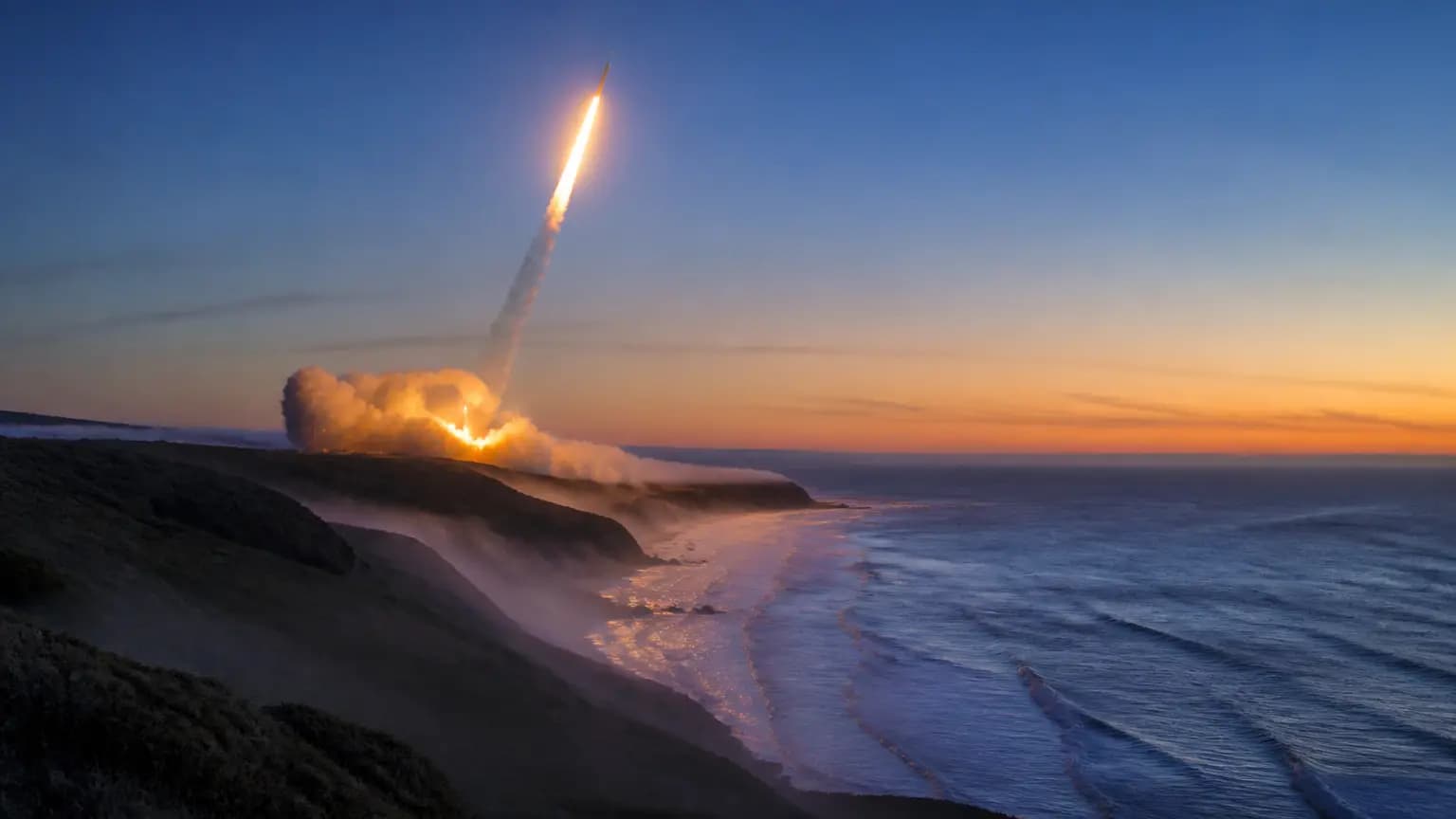 Vandenberg
SpaceX launches a classified payload for U.S. Space Force
SpaceX launched a classified payload for the U.S. Space Force from Vandenberg's SLC-4E on Oct. 15 at 5:01 p.m. PDT. Classified National Security Space Launch missions mean no webcast or payload details, but this is a local Western Range launch — the kind of event Central Coast skywatchers can see firsthand. Landing or recovery details weren't noted in the summary.
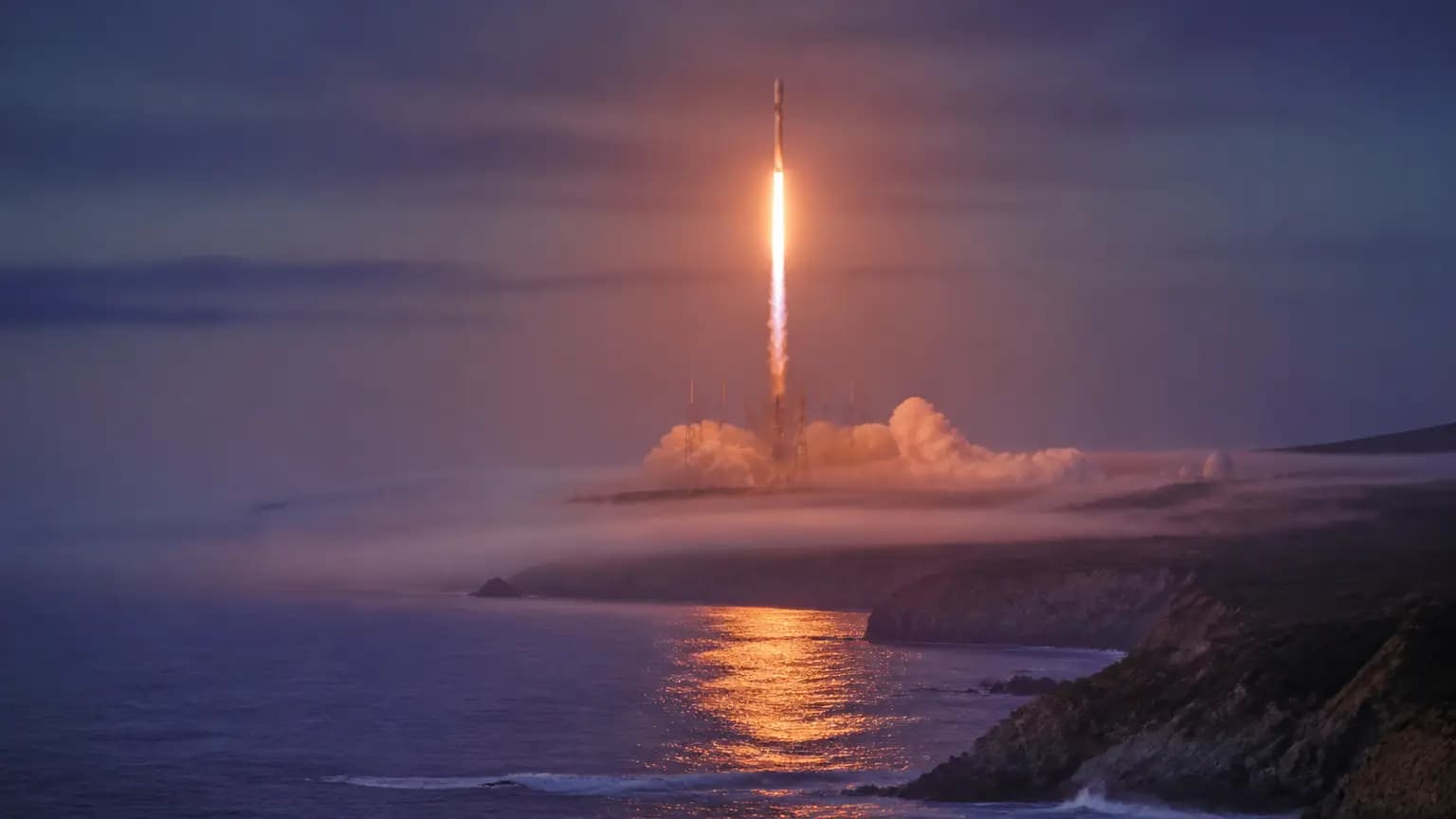 Vandenberg
SpaceX Falcon 9 rocket launches 27 Starlink satellites from California
SpaceX launched 27 Starlink satellites on the Starlink 15-25 mission from Space Launch Complex 4 East at Vandenberg SFB, lifting off at 5:28 p.m. PDT. This is a routine but core item for local fans: a Western Range Falcon 9 launch with likely booster return to LZ-4 and Central Coast viewing opportunities.
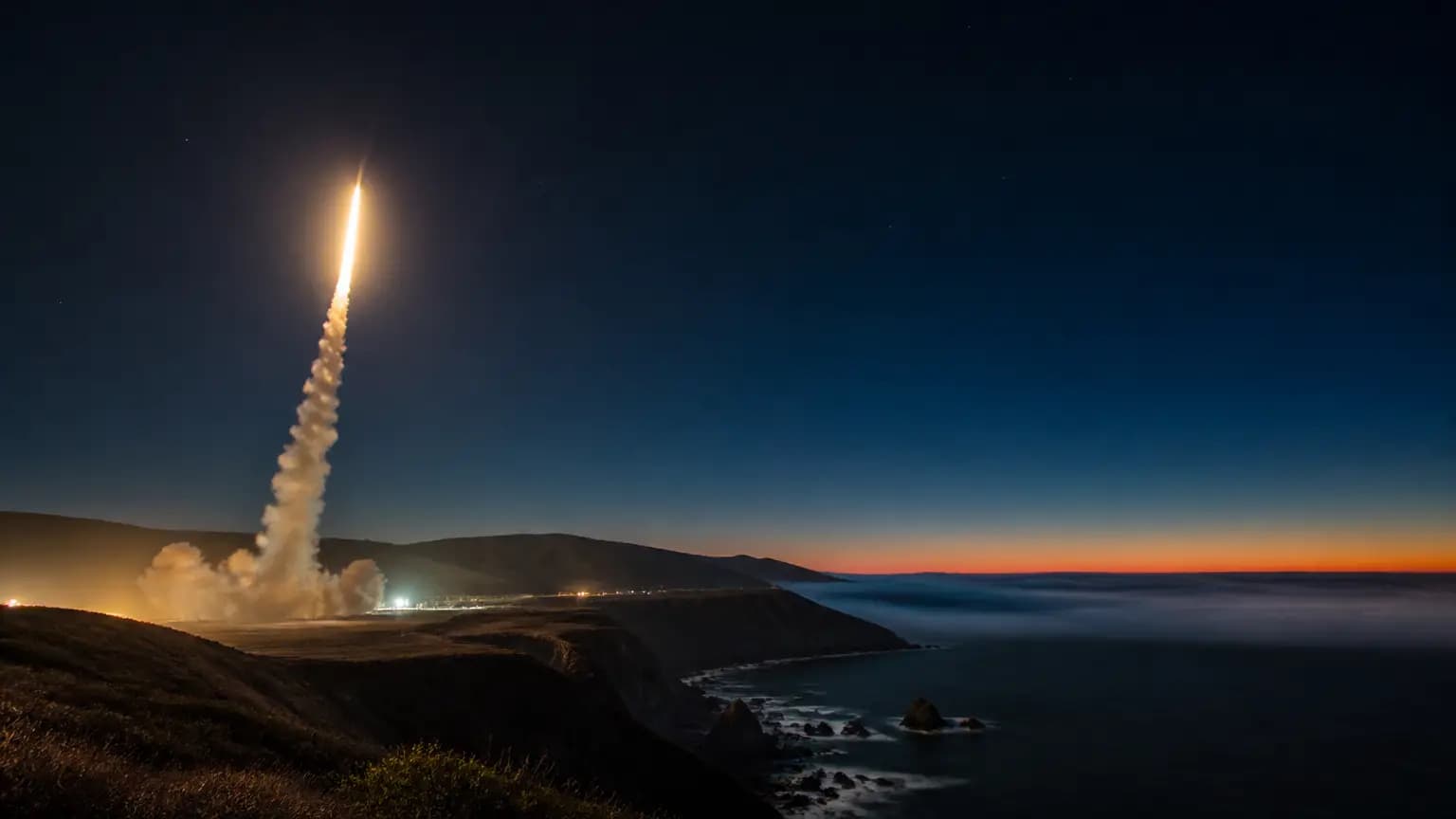 Vandenberg
SpaceX to make another attempt to launch 21 data satellites for the Space Development Agency
This is a direct Vandenberg launch: a Falcon 9 lifting off from the Central Coast carrying 21 Space Development Agency satellites for the Proliferated Warfighter Space Architecture. Night owls should note the early 12:39 a.m. PDT window, which typically offers dramatic southbound trajectories visible along the coast. Watch for updates on weather or scrub announcements as the window approaches.