Demolition pending: Pea Soup Andersen’s loses its historic building status as it crumbles
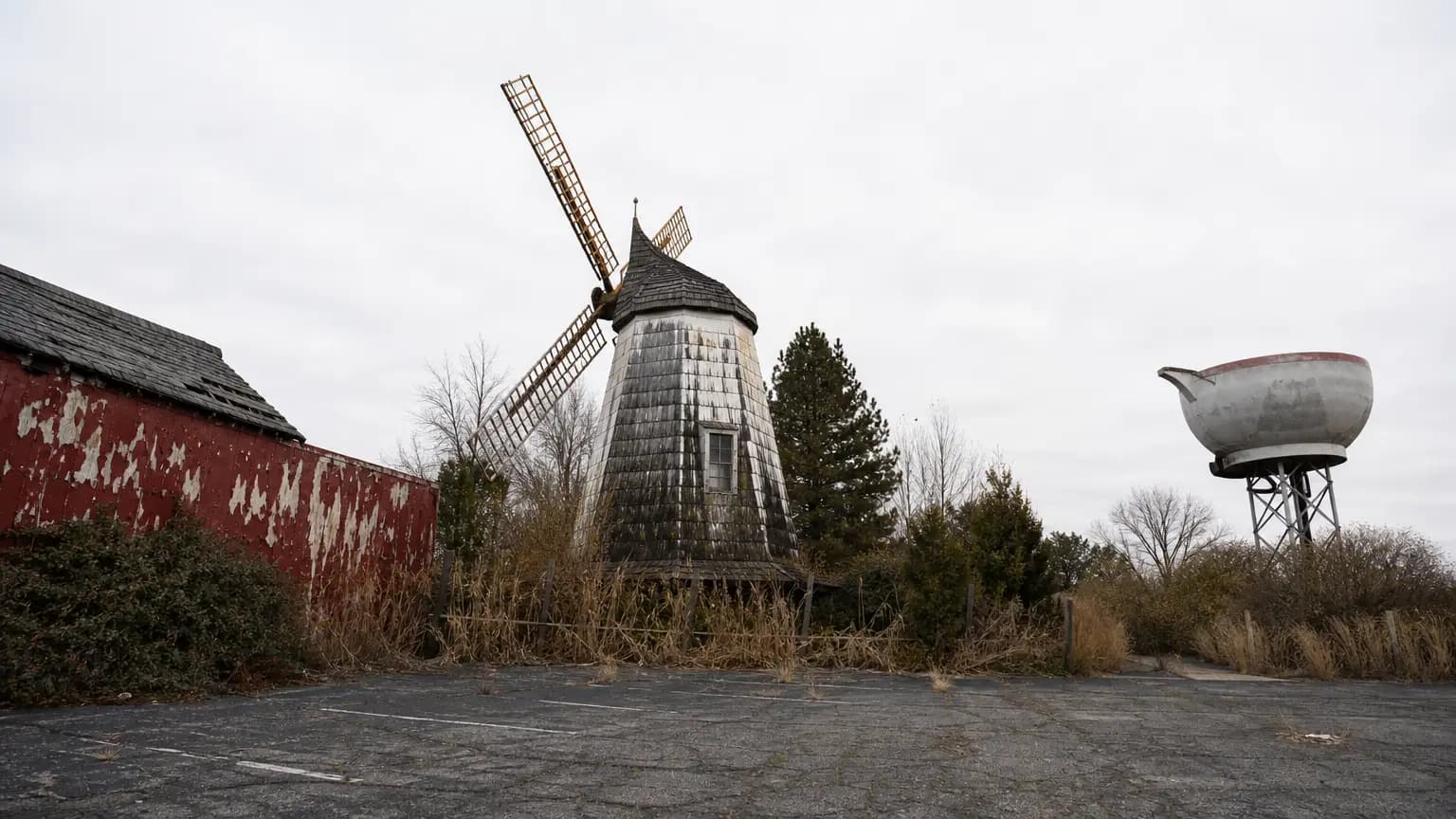
For generations of Central Coast families, the green-and-white billboards were a ritual — spotted through a car window somewhere along Highway 101, signaling that a bowl of split pea soup and a stretch of the legs were just a few miles ahead. Pea Soup Andersen's in Buellton was never just a restaurant. It was a landmark, a waypoint, a memory tied to road trips, family vacations, and the particular pleasure of stopping somewhere that felt like it had always been there and always would be.
That era is over. And now, the building is about to follow.
On July 9, the Buellton City Council voted 5-0 to strip the shuttered restaurant of its local historic landmark designation — the legal shield that had, until that evening, prevented the crumbling structure from being torn down. The vote, reported by the Santa Maria Sun, clears the way for demolition of most of the approximately 35,000-square-foot complex at 376 Avenue of Flags, while preserving one historically significant sliver of the original development.
From Hot Spot to Hazard
The story of the building's decline is as swift as it is grim. Pea Soup Andersen's closed suddenly in January 2024, just months before what would have been its 100th anniversary — a victim, like so many hospitality businesses, of struggles that followed the COVID-19 pandemic. Almost immediately, the property began its slide.
Within two years, what had been one of the Santa Ynez Valley's most beloved roadside attractions became something else entirely: a magnet for trespassers. Walls and patio spaces became enveloped in thick green overgrowth, according to the Santa Maria Sun. Squatters took up residence inside the darkened dining rooms. TikTok vloggers posted videos of themselves wandering through the wreckage. Broken glass and the remnants of drug use accumulated in corners that once held gift-shop tchotchkes and families waiting for a table.
City Manager Scott Wolfe laid out the stakes plainly at the July 9 council meeting. "We could very easily have a serious injury or death in the building," he told the council, as reported by the Sun. "We want to avoid a catastrophe. … God forbid should someone be in there and a fire starts." The Lompoc Record noted that Wolfe described repeat break-ins as so persistent that efforts to secure the property from intrusion "has proven ineffective."
The situation had grown urgent enough that even a sitting city council member felt compelled to conduct his own reconnaissance. "I actually went in there today," Councilmember John Sanchez told his colleagues before the vote, according to the Sun. "I trespassed. The door was kicked down." Mayor David Silva offered some dry comic relief: "Is there any public comment before Councilmember Sanchez incriminates himself further?" The council chamber, apparently, laughed.
Then they voted unanimously to act.
One Hundred Years, One Vote
To understand what was lost — and what little remains — you have to go back to the beginning. Anton and Juliette Andersen, immigrants from Denmark and France respectively, opened a small eatery in Buellton in 1924, naming it Andersen's Electrical Café in honor of their prized new electric stove, according to Wikipedia. The restaurant's earliest customers were exactly the kind of travelers who still stop in Buellton today: salespeople, tourists, and long-haul truckers working the corridor between Los Angeles and San Francisco.
Three months after opening, Juliette added her family's split pea soup recipe to the menu — and changed everything. By 1930, the restaurant was reportedly serving more than 400 bowls of pea soup per day, according to a contemporaneous newspaper account cited in a recent historic evaluation. Early positive write-ups in Hearst newspapers from reporters who stopped in while traveling helped launch the restaurant's regional fame. In 1928, the Andersens added a hotel to the property — the structure that would come to be known as the Bueltmore Hotel, and the one piece of the complex that may yet survive the wrecking crew.
The restaurant's son, Robert Andersen — known as "Pea Soup Junior" — later graduated from Stanford University and entered the family business, according to Wikipedia. It was Robert who established the tradition of billboards up and down the state of California and who renamed the business Pea Soup Andersen's in 1947. He also acquired the rights to cartoon characters that he turned into the restaurant's beloved mascots: Hap-Pea, the big chef with the mallet, and Pea-Wee, the little one with the chisel.
Those mascots, drawn by a former Disney animator, became a California road-trip institution. The billboards near Buellton are considered historical landmarks in their own right, according to the restaurant's history. Questions about their future are now swirling as well: KSBY News reported that one of the billboards north of Buellton is expected to come before city leaders for discussion in August, while another, owned by the Buellton Chamber of Commerce, is also being evaluated.
What the Historian Found — and What May Be Saved
Before the council could vote, it needed something more than urgency — it needed expert guidance. Local architectural historian Amber Long was commissioned by the current property owner to conduct a historical resource evaluation of the site. What she found was a building that had changed so thoroughly over a century that only one piece of it retained genuine, documentable historic significance.
"With Pea Soup Andersen's, we have tons and tons and tons of changes, and we have a little piece that has stayed the same," Long told the Santa Maria Sun. "This is the last piece that's in its original orientation." That piece is the section of the main building that began its life in 1928 as the Bueltmore Hotel — a name that local observers have noted is a nod to the famous Biltmore. Long described this section in her evaluation as "likely the last remaining original part of the Andersen's development" and found it individually eligible for listing on the California Register of Historical Resources, as reported by the Sun.
Long, who has called the Central Coast home since 2000, told the Sun she came to Buellton originally to attend Cal Poly San Luis Obispo, and had driven past the Andersen's billboards countless times. Her deep research into the property's history opened her eyes to layers of significance that go beyond nostalgia for the soup. "There's a hidden historic importance to the property beyond the sort of familiarity of the restaurant," she said.
The council's resolution reflected Long's findings. Under the terms of the 5-0 vote, most of the complex can now be demolished, but the Bueltmore Hotel section must either remain standing or come back before the council for a separate review before any future demolition is considered. That means the fate of even this surviving fragment is not yet sealed — the Santa Barbara News-Press reported that a more stringent state-mandated assessment could take a year or more before the Bueltmore is either incorporated into a new project or demolished as well.
Several other items — rooftop signs, stained-glass windows, and murals of Hap-Pea and Pea-Wee — are required to be removed and preserved before any demolition begins, according to the Lompoc Record. Historical materials that had been stored by the Buellton Historical Society were already removed after the closure; Wolfe told the council some were transferred to the Mendenhall Museum, with others potentially available for future donation to a historical society.
What Comes Next for the Property
The current owner, developer Ed St. George, purchased the building for $4.95 million after the restaurant closed, according to Edhat. Following demolition, the new owner's reported plans include an Art Deco-inspired development featuring office space, a gym, and a courtyard, according to reporting by KSBW. However, St. George told the Santa Barbara News-Press after the July 9 meeting that it was too soon to say what might ultimately replace the restaurant. Any future construction on the property will also require environmental review under the California Environmental Quality Act, per Noozhawk.
No demolition date has been set. Wolfe told KSBY News he hopes the process of removing artifacts and protecting the remaining historic section can move forward by late this year or early next year.
For many on the Central Coast, the council's vote carries a weight that goes beyond zoning and building codes. Longtime Buellton resident Jeannine Kassity captured the sentiment simply: "It's what made travelers stop in Buellton. It's why they came here."
For the communities of the 805 — families who packed into minivans on the way to San Francisco, college students who drove past the signs every semester, day-trippers from Santa Maria who knew the stained-glass windows like an old friend — what matters most now is what can still be saved from a century of history before the dust settles.
Reported by 805.life
Researched and written drawing on primary sources. Additional reporting: Santa Maria Sun.
City
Santa MariaAdditional Reporting
Santa Maria SunPublished
July 16, 2026
Reported and written by 805.life
Explore Santa MariaAll Santa Maria NewsMore News from Santa Maria
 Santa Maria
Rematch: Jeremy Ball and Jim Mosby are battling in another Lompoc race, this time to become the city’s next mayor
Lompoc voters, we've seen this matchup before. Jeremy Ball and Jim Mosby are facing off again—this time for mayor—six years after Ball won their 2020 race for the 4th District seat. Mosby bounced back in 2024 by defeating Jenelle Osborne for mayor, and now the two council incumbents are squaring off once more. It's a rematch that says a lot about how small-town politics works here on the Central Coast: familiar faces, long memories, and neighbors who've watched both men serve. Mayoral races in Lompoc shape everything from downtown revitalization to public safety and housing decisions, so this one's worth paying attention to. The Santa Maria Sun has the full story. Whatever your politics, do your homework before the ballot arrives—local races like this hit closer to home than anything in Washington.
 Santa Maria
Police use drones as first responders in Lompoc
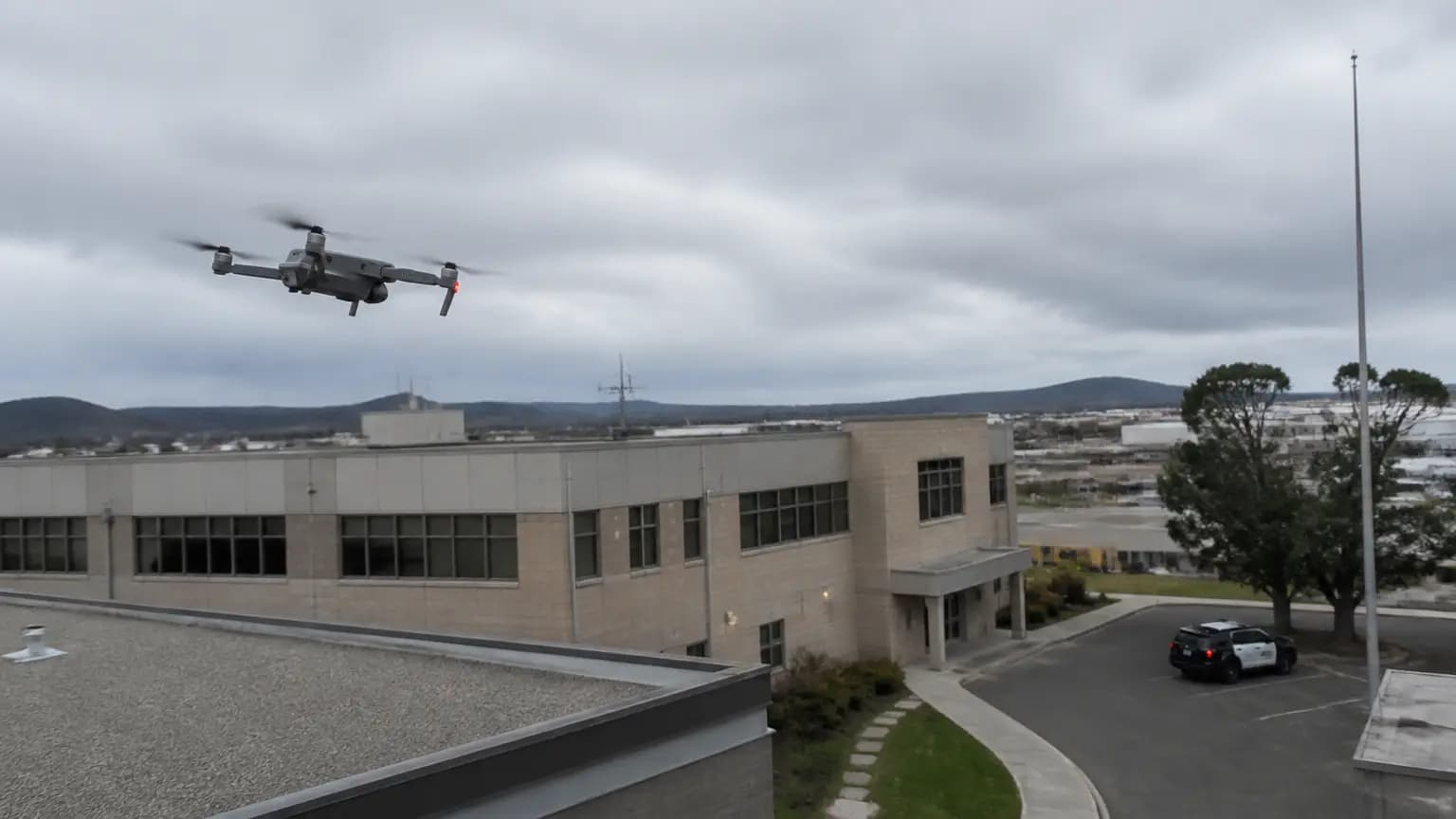
Lompoc's police department has been quietly testing something pretty futuristic since August: drones that launch from the roof of the station and get to emergencies before officers do. Two Flock Safety drones can cover a 3-mile radius, helping locate people and scope out tough terrain. Community Services Sgt. says it's been helpful in multiple cases. For those of us here in Santa Maria, it's worth watching. Lompoc is our neighbor up the 101, and what works there often shapes what other Central Coast departments try next. Drones as first responders could mean faster help in the backcountry and riverbeds, but it also raises fair questions about privacy and oversight. The Santa Maria Sun has the full story. We'll be keeping an eye on how this plays out across the 805.
 Santa Maria
State and local leaders condemn ICE arrest on Hancock campus
Santa Maria folks know the corner of College and Allan Hancock well — it's where we drop our kids off, grab a coffee, head to class. That's what makes this one hit close. A dad of five was taken into ICE custody right there while dropping his daughter off at Hancock, and by the next day the Board of Supervisors was weighing a resolution on National Immigrants Day. The timing says everything. Immigrant families are woven into the fabric of this town — our fields, our businesses, our schools. When a school drop-off turns into a detention, it shakes the trust that makes a community work. The Santa Maria Sun reports local and state leaders are speaking out, and whatever your politics, that matters here. Keep an eye on how the county votes and what support reaches this family. In Santa Maria, we look out for each other — that's not politics, that's just us.